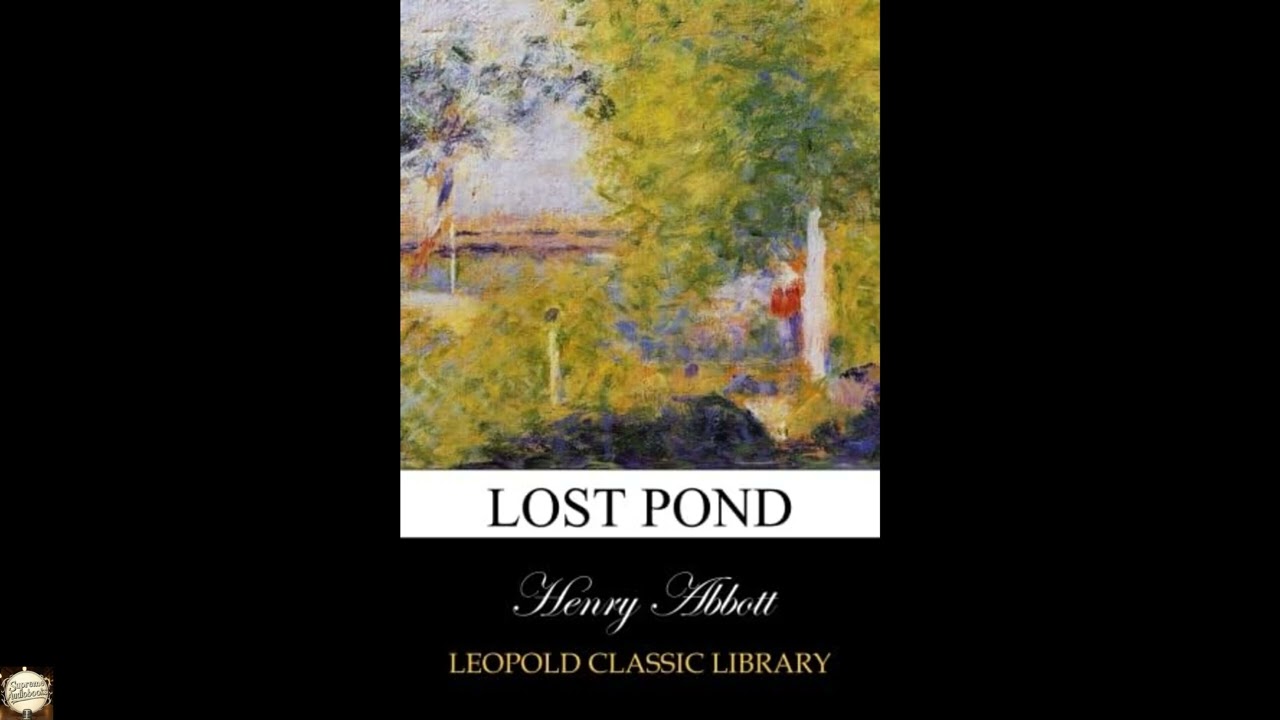
Lost Pond
Lost Pond by Henry Abbott stands as a quiet yet profound cornerstone of American classic literature, a resonant echo from an earlier age that speaks with startling clarity to modern sensibilities. This is more than a story of a physical quest; it is a meditation on memory, the solace of nature, and the persistent human longing for a place of belonging and profound peace. In an era saturated with noise and distraction, Abbott’s patient, observant prose offers an invitation to stillness, a chance to reconnect with the enduring questions of identity and our relationship to the natural world. Why should a listener care today? Because the yearning for sanctuary, the struggle to reconcile past and present, and the search for authentic selfhood in a world undergoing rapid change remain as vital and poignant now as they were when this enduring work first graced the printed page. The narrative unfolds around the solitary figure of Elias Thorne, a man haunted by the fading image of a secluded body of water he knew in his youth – the titular Lost Pond. Elias, now middle-aged and adrift in the increasingly industrialized world of the late nineteenth century, feels an acute disjunction between his inner life and the clamor around him. His memory of the pond is not merely a geographical one, but a spiritual anchor, a place of innocence and clarity that seems to hold the key to understanding his present malaise. Driven by this deep-seated yearning, Elias resolves to return to the remote region of his childhood, a landscape of dense forests, winding rivers, and forgotten byways, to find the pond once more. His quest is not without its trials. The path is overgrown, the landmarks changed by time and logging, and the human inhabitants he encounters are often as enigmatic as the wilderness itself. Elias grapples with doubt and the encroaching specter of failure, finding solace only in the stark beauty of the untouched world and the occasional, unexpected kindness of strangers. As he presses deeper into the woods, his physical journey parallels an internal one, stripping away the layers of his adult life to reveal the simpler truths that once defined him. The narrative steadily builds, drawing the listener into Elias's quiet determination and the subtle, often unspoken, revelations that accompany his search, leading him towards a destination that might be more symbolic than literal. Henry Abbott, though a figure whose life details are often shrouded in the mists of time, emerges from the quiet landscapes of late 19th-century New England, a region that profoundly shaped his literary voice. Born into a generation witnessing America’s dramatic transformation from an agrarian society to an industrial powerhouse, Abbott remained deeply rooted in the philosophical traditions that celebrated the natural world and individual contemplation. While precise biographical dates are elusive, his writings suggest a keen observer of human nature and the environment, perhaps living a life more aligned with scholarly pursuits or the quietude of rural existence than the bustling urban centers. He is often associated with a strain of American prose that valued precision, reflective sentiment, and an almost Thoreauvian reverence for the wild. Beyond Lost Pond, Abbott is remembered for several other significant, if less widely known, works that similarly explored the human relationship with nature and the passage of time. His collection of essays, Whispers of the Pine, provided insightful observations on forest ecology and the changing American wilderness, while his novella The Stone Wall examined themes of legacy and endurance through the lens of a family's attachment to their ancestral land. Abbott’s place in the literary canon is that of a quiet but influential voice, one who bridged the fading romanticism of the Transcendentalists with the emerging realism of his era, creating narratives that felt both deeply personal and universally resonant. He captured the mood of a nation grappling with its own identity, looking both forward to progress and backward to a simpler, perhaps purer, past. One of the central themes woven throughout Lost Pond is the enduring power of memory and its intricate connection to identity. Elias Thorne’s entire motivation stems from a childhood remembrance, and as he revisits familiar landscapes, he isn’t just seeking a physical location, but a lost piece of himself. For instance, an early scene describes Elias standing before a gnarled oak he believes he remembers, its massive trunk scored by years, and the narrator notes how "the tree stood not just as wood and bark, but as a living monument to his own vanished years, whispering forgotten conversations to the wind." This highlights how places and objects can become containers for our past, shaping who we are. Another prominent theme is the restorative and redemptive quality of nature. The wilderness, far from being a hostile force, acts as a balm for Elias’s weary spirit, slowly healing the wounds inflicted by modern life. During a particularly challenging stretch of his search, Elias sleeps beneath a canopy of stars, and the text describes how "the vast, indifferent silence of the forest seeped into him, washing away the anxieties of man-made clocks and obligations, leaving only the steady rhythm of his own breath and the murmur of distant crickets." This illustrates nature’s capacity to offer perspective and peace. Lost Pond also engages with the concept of the elusive ideal or the unattainable dream. The pond itself functions as a symbol, a destination that might represent ultimate peace, enlightenment, or a return to a state of grace. Elias's relentless pursuit, despite setbacks, speaks to the human propensity to chase after a perceived perfection that always seems just beyond reach. This is reinforced when he almost gives up, staring into a murky bog that is distinctly not the pond of his memories, and he faces the chilling thought that "perhaps the true pond had never existed outside the quiet waters of his own yearning heart." Finally, the book thoughtfully examines solitude versus connection. While Elias’s quest is deeply personal and often solitary, his occasional encounters with others – a gruff innkeeper, a philosophical woodsman, a sympathetic farmer – provide crucial moments of human interaction that highlight the spectrum of human experience and the subtle ways we impact one another, even in isolation. These brief connections often serve to either bolster his resolve or subtly alter his understanding of his own motivations. Historically, Lost Pond emerged during a period of immense change in America. The late nineteenth and early twentieth centuries were marked by rapid industrialization, the closing of the American frontier, and a growing intellectual movement questioning traditional values in the face of scientific advancement and urban expansion. Writers of this era often grappled with the tension between progress and preservation, the individual's place in an increasingly complex society, and the spiritual vacuum left by the decline of traditional religious certainties. Abbott’s work reflects a yearning for simplicity and a profound connection to a disappearing natural world, serving as a quiet counterpoint to the roaring engines and bustling cities that defined the age. It was a time when the concept of wilderness was shifting from a place of fear to a place of spiritual refuge, and Lost Pond captures this evolving relationship, articulating a powerful nostalgia for an imagined Eden even as the real one was being systematically altered. Listening to Lost Pond as an audiobook transforms it into an intimate, contemplative experience, perfectly suited to the story's measured pace and reflective nature. Over its several hours, a skilled narrator can evoke the deep stillness of the forest, the subtle shifts in Elias's mood, and the profound sense of longing that propels him forward. Listen for the careful pacing, which allows descriptions of the natural world to unfold like a slow walk through the woods, inviting the listener to observe and reflect alongside the protagonist. The narrator's voice becomes crucial in differentiating between Elias’s internal monologue and his sparse external dialogue, lending weight to his quiet observations and the occasional, poignant exchanges with others. The atmospheric details—the rustle of leaves, the distant call of a bird, the sound of water—can truly come alive in the audio format, drawing you completely into the elusive world of the Lost Pond and the enduring quest for peace.
Enjoyed Lost Pond? A few ways to support us
Audible & Amazon links are affiliate; we may earn a small commission at no extra cost.
About this production
Human narration by a volunteer reader from LibriVox.org, the public-domain audiobook project. LibriVox volunteers record literary works whose copyright has expired in the United States, releasing the resulting recordings into the public domain.
Lost Pond by Henry Abbott. The underlying text is in the U.S. public domain. We do not republish any modern copyrighted edition, translation, or commentary.
The 4K cinematic visuals accompanying this audiobook are generated by an AI image model from prompts derived from the source text. No copyrighted photos, paintings, or stock footage are used. AI generation is disclosed on every video on our YouTube channel as required by YouTube's altered/synthetic content policy.
English subtitles are transcribed from the LibriVox recording with OpenAI Whisper. Translations into the 11 other supported languages are produced by Meta's NLLB-200 neural translation model. No human translator's copyrighted translation is used.
Questions about sourcing or rights? See our DMCA & Sourcing policy or contact us.
Enjoyed this audiobook?
If you'd like to own a copy of Lost Pond or hear a professionally produced edition, the links below help support free audiobook production at no extra cost to you.
As an Amazon Associate we earn from qualifying purchases. Audible / print links are affiliate.