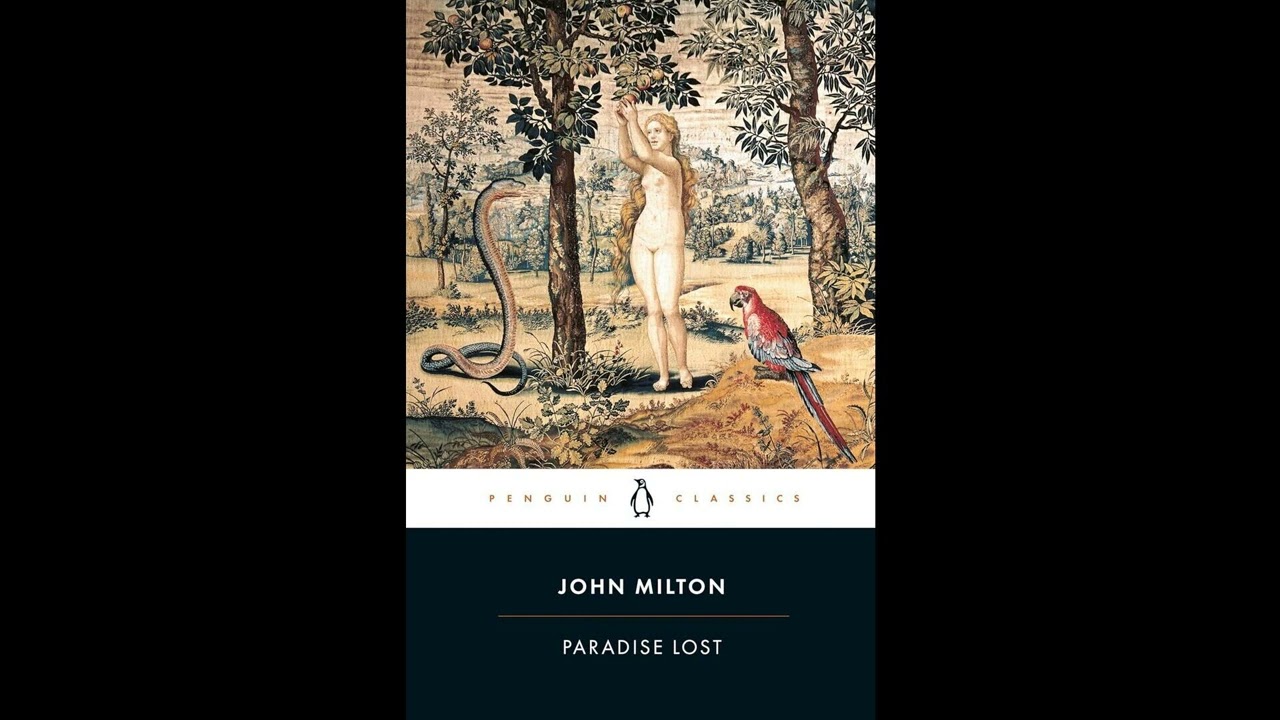
Paradise Lost
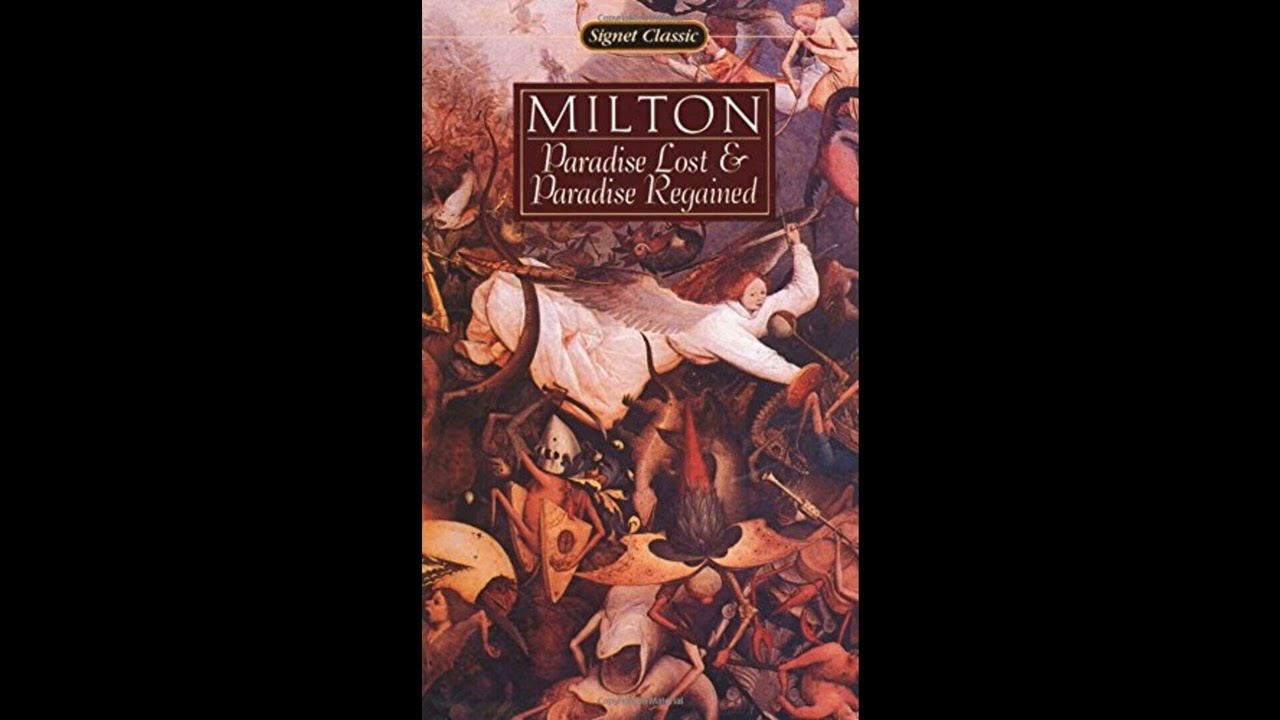
From the very first lines – "Of Man's First Disobedience, and the Fruit / Of that Forbidden Tree, whose mortal taste / Brought Death into the World, and all our woe" – a listener is drawn into a work of immense ambition. This is more than just a biblical retelling; it is an epic that grapples with the fundamental questions of existence: the origins of evil, the nature of freedom, the struggle between obedience and rebellion, and the very essence of divine justice. It asks why suffering exists, why humans make the choices they do, and what it truly means to be free. The vast scale of its vision, encompassing Heaven, Hell, and the nascent Earth, continues to resonate today, probing the depths of human nature and our place in a grand, often bewildering, cosmos. The story begins not in Eden, but in the fiery depths of Hell, where Satan and his legions of fallen angels lie vanquished after a cataclysmic war against God. Their prideful rebellion has failed, and they are cast into a realm of eternal torment. Yet, even in defeat, Satan’s spirit remains indomitable. Gathering his shattered forces, he delivers powerful, defiant speeches, stirring them from despair to a new resolve: if they cannot conquer Heaven by force, they will corrupt God’s latest creation, humankind, through deceit. He proposes a desperate and insidious plan to sabotage God's design for humanity, turning their freedom against them. Thus begins Satan's arduous journey through the chaotic void of Limbo, past Sin and Death, to discover the newly formed universe and its crowning glory: Earth, and the Garden of Eden. There, he finds Adam and Eve, the first humans, living in blissful innocence, graced with God's favor and a single, critical prohibition – not to eat from the Tree of the Knowledge of Good and Evil. Their existence is one of pure freedom, conditioned only by their obedience to this one command. Satan, disguised as a serpent, sets about his malicious task, subtly undermining Eve’s trust in divine goodness and planting seeds of doubt and ambition. His cunning persuasion leads to the fateful moment when Eve takes the forbidden fruit, forever altering the course of human destiny. Adam, witnessing Eve’s transgression, and out of a profound, misguided love, chooses to share her fate, knowingly partaking of the forbidden fruit as well. The author, John Milton, was a figure steeped in the turbulent intellectual and political currents of seventeenth-century England. Born in London in 1608, he received a rigorous education, mastering classical languages and literature, which profoundly shaped his poetic vision. A committed scholar and poet in his youth, Milton initially wrote shorter lyrical pieces and masques, demonstrating an early command of verse. However, the brewing civil strife in England pulled him into the political arena. He became a fervent supporter of the Parliamentarian cause during the English Civil War, penning powerful prose pamphlets advocating for republicanism, freedom of speech, and religious liberty, even serving as Latin Secretary for Oliver Cromwell’s Commonwealth government. This period of intense political engagement, often requiring him to defend controversial positions, reflects his deeply held Puritan beliefs and his commitment to conscience over authoritarianism. Following the restoration of the monarchy in 1660, Milton faced persecution for his anti-royalist stance and saw his political ideals shattered. It was during these years of disillusionment, and notably after he had become completely blind, that he dictated his monumental epic. He lived through a period of radical change and personal hardship, yet remained unyielding in his intellectual and poetic pursuits. Besides this grand epic, his other significant works include the pastoral elegy Lycidas and the dramatic poem Samson Agonistes, all solidifying his place as one of the most profound and influential voices in English literature. At its core, the work powerfully enacts several enduring themes. The conflict between free will and predestination is central: God states that humans are created with the capacity to choose good or evil, and their fall is a consequence of their own free choice, not divine predetermination. Satan, too, makes a conscious choice to rebel, driven by his immense pride. This choice, and its stark consequences, forms the basis of the poem's moral universe. Another prominent theme is the nature of true liberty versus tyranny. Satan presents his rebellion as a fight for freedom against a tyrannical God, famously declaring, "Better to reign in Hell than serve in Heaven." However, his "freedom" quickly devolves into self-serving ambition and the subjugation of his followers, illustrating how pride and disobedience lead not to liberation but to a new form of internal and external bondage. The work also meticulously portrays the theme of temptation and the fall from grace. Satan’s manipulation of Eve is a psychological study in subtle persuasion, playing on her vanity, curiosity, and desire for knowledge. He twists divine prohibitions into perceived restrictions, making forbidden fruit seem desirable. Adam’s subsequent choice, driven by an overwhelming love for Eve rather than outright deception, highlights a different facet of human weakness – the willingness to sacrifice principle for affection, with equally devastating results. Their single act of disobedience reverberates through eternity, illustrating the profound consequences of moral choices and the human capacity for both error and redemption. The historical context surrounding the creation of this epic is crucial to understanding its depth. Written and published in the decades following the tumultuous English Civil War, the execution of King Charles I, and the subsequent Restoration of the monarchy, the poem reflects Milton's personal and national trauma. Having dedicated much of his life to the Puritan cause and the republican ideal, he witnessed the collapse of his political aspirations. The poem can be seen as his attempt to reconcile the apparent defeat of God's chosen people (the Puritans) with divine providence, to "justify the ways of God to men" in a world that seemed to have abandoned justice. It reimagines a biblical narrative through the lens of political and theological debate prevalent in his era, drawing on contemporary ideas of governance, religious authority, and individual conscience. Milton elevates the English language to the epic grandeur traditionally reserved for Homer and Virgil, employing unrhymed iambic pentameter, or blank verse, to convey a story of cosmic proportions. Listening to this expansive work as an audiobook offers a singular opportunity to engage with its majesty and complexity. The poetic blank verse, while beautiful, can be dense on the page, but a skilled narrator breathes life into its rhythm and cadence, guiding the listener through the intricate syntax and archaic language. The run length of several hours allows for complete immersion in Milton's carefully constructed world, from the thunderous pronouncements of divine will to the nuanced rhetoric of Satan’s speeches, and the tender, tragic dialogues between Adam and Eve. A thoughtful performance can distinguish the myriad voices, conveying Satan’s charismatic malevolence, God’s reasoned justice, and the innocent fragility of the first humans, creating an atmospheric experience that truly honors the dramatic sweep and profound emotional resonance of this monumental epic poem.
Enjoyed Paradise Lost? A few ways to support us
Audible & Amazon links are affiliate; we may earn a small commission at no extra cost.
About this production
Human narration by a volunteer reader from LibriVox.org, the public-domain audiobook project. LibriVox volunteers record literary works whose copyright has expired in the United States, releasing the resulting recordings into the public domain.
Paradise Lost by John Milton. The underlying text is in the U.S. public domain. We do not republish any modern copyrighted edition, translation, or commentary.
The 4K cinematic visuals accompanying this audiobook are generated by an AI image model from prompts derived from the source text. No copyrighted photos, paintings, or stock footage are used. AI generation is disclosed on every video on our YouTube channel as required by YouTube's altered/synthetic content policy.
English subtitles are transcribed from the LibriVox recording with OpenAI Whisper. Translations into the 11 other supported languages are produced by Meta's NLLB-200 neural translation model. No human translator's copyrighted translation is used.
Questions about sourcing or rights? See our DMCA & Sourcing policy or contact us.
Enjoyed this audiobook?
If you'd like to own a copy of Paradise Lost or hear a professionally produced edition, the links below help support free audiobook production at no extra cost to you.
As an Amazon Associate we earn from qualifying purchases. Audible / print links are affiliate.