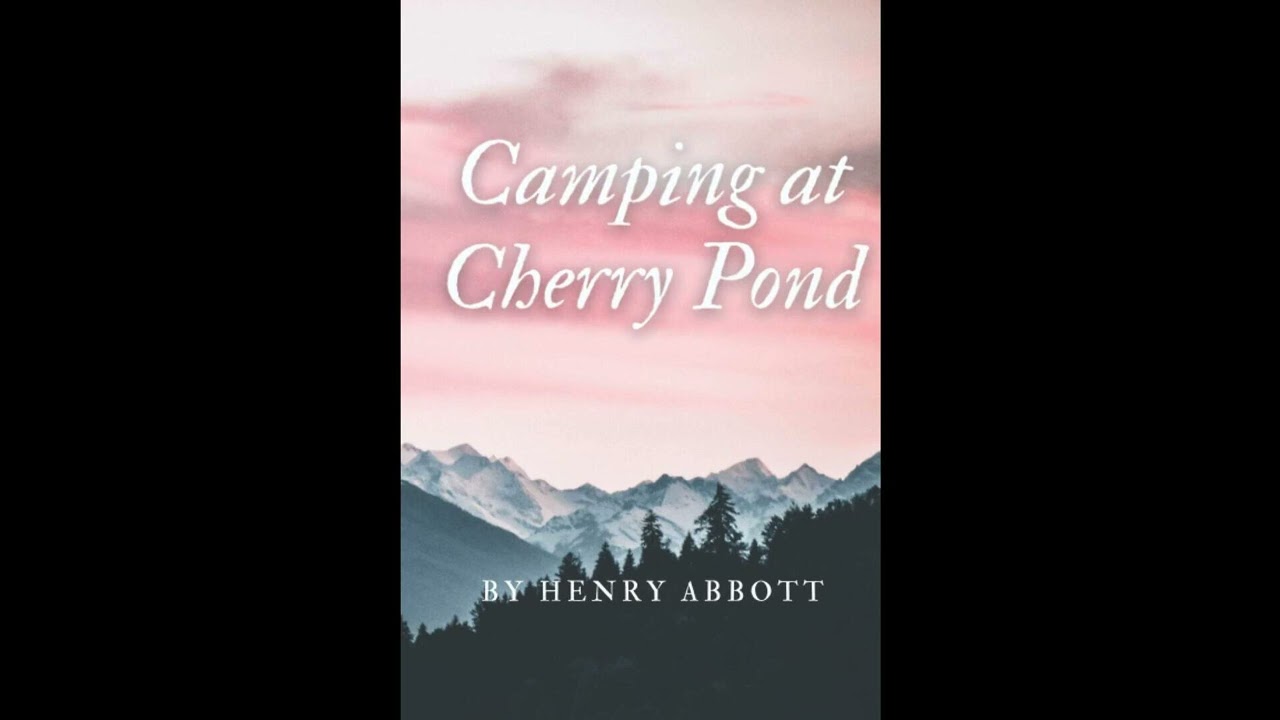
Camping at Cherry Pond
Step away from the clamor of the modern world and let the quiet wisdom of Henry Abbott’s Camping at Cherry Pond wash over you. This cherished classic, often lauded as a cornerstone of American nature writing, invites listeners into a sanctuary of trees, water, and reflective silence. It is more than just a tale of a sojourn in the wilderness; it is an enduring meditation on the human spirit’s yearning for solace and clarity amidst the complexities of life. Why does a century-old account of a simple camping trip resonate so profoundly today? Because its gentle narrative offers an antidote to our hurried existence, a reminder of the restorative power of nature, and a pathway back to essential truths we often forget. This book speaks to the enduring need for introspection, connection to the land, and the profound peace found only when one truly listens to the world around them. The story unfolds in the pristine, secluded wilderness surrounding Cherry Pond, a fictional but vividly rendered body of water nestled deep within the fictionalized foothills of the Adirondacks, somewhere in upstate New York, likely in the early years of the twentieth century. Our protagonist, Josiah Thorne, is introduced as a man burdened by the relentless pace and demands of his urban life – a successful merchant whose soul has grown weary under the weight of commerce and societal expectations. Seeking an escape from the city’s concrete canyons and ceaseless noise, Josiah retreats to Cherry Pond, a place he dimly remembers from childhood, hoping to find a fragment of the peace he once knew. He is joined by his bright, inquisitive nephew, Arthur, a young man on the cusp of adulthood, full of questions and an eager yet untutored appreciation for the wild. The central conflict of Camping at Cherry Pond is not an external struggle against the elements or another person, but rather Josiah’s internal battle against his own disillusionment and the ingrained habits of his artificial life. He arrives at Cherry Pond carrying the baggage of his past – anxieties, ambitions, and a profound sense of disconnection. The early days of their camping trip are marked by Josiah’s unease with the stillness, his restlessness, and his initial inability to truly "see" the wilderness around him. Arthur, in contrast, adapts more readily, his youthful curiosity pulling him into the natural world, observing flora and fauna, learning to fish and track with growing enthusiasm. Through shared experiences—the quiet mornings spent fishing on the pond, the construction of their simple camp, the evening fires under a canopy of stars—Josiah slowly begins to shed his urban skin. The narrative follows his gradual awakening, as the rhythms of nature begin to soothe his spirit and open his eyes to a different kind of wisdom, one found not in ledgers or polite society, but in the rustle of leaves, the call of a loon, and the vast, unhurried expanse of the sky. The story builds toward a profound, yet understated, personal transformation for Josiah, a quiet re-ordering of his priorities and a rediscovery of a forgotten self. Henry Abbott, born in 1878 in a small New England farming community, spent his formative years immersed in the rural landscape that would define much of his literary output. His education was a blend of formal schooling at a local academy and extensive self-study, particularly in natural history and classical philosophy. A brief but impactful period as a schoolteacher in a bustling industrial town in Massachusetts exposed him to the stark contrast between urban advancement and the receding natural world, an experience that undoubtedly shaped his worldview. Abbott later became a freelance essayist, contributing pieces on outdoor life, conservation, and philosophical reflections to various literary magazines before dedicating himself fully to longer fiction and non-fiction works. His deep personal affinity for the American wilderness, particularly the forests and waterways of the Northeast, formed the wellspring of his writing. While Camping at Cherry Pond, published in 1918, remains his most widely recognized achievement, Abbott’s other notable works include Whispers from the Pine Barrens (1925), a collection of essays on the ecological diversity of New Jersey, and The Solitude of the River (1930), a novel chronicling a hermit’s life along the Penobscot. Abbott is largely considered a significant figure in American nature writing, standing as a bridge between the transcendentalist tradition of Emerson and Thoreau and the burgeoning conservation movement of the early 20th century. His prose is marked by a lyrical simplicity, a keen observational eye, and a gentle philosophical bent that eschews overt didacticism in favor of subtle suggestion. He passed away in 1952, leaving a legacy of literature that continues to inspire reverence for the natural world and introspection on humanity’s place within it. At its core, Camping at Cherry Pond enacts several profound themes that resonate with universal human experience. One primary theme is the restorative power of nature. Josiah Thorne’s initial state of anxiety and world-weariness gradually gives way to a sense of peace and clarity as he becomes attuned to the natural rhythms of Cherry Pond. An early scene depicts him trying to read a newspaper by the light of the campfire, his mind still fixated on business concerns, only to find himself unable to concentrate. Later in the book, we see him sitting for hours by the pond’s edge, simply observing a heron fishing, utterly absorbed, his inner turmoil having quieted. This transformation highlights nature’s ability to heal and re-center the human spirit. Another crucial theme is the beauty of simplicity and self-reliance. In the wilderness, the complexities and material desires of urban life are stripped away. Josiah and Arthur rely on basic skills for survival—setting up their tent, building a fire, catching fish for their meals. The profound satisfaction Josiah experiences after successfully preparing a trout he caught himself, contrasting sharply with his former indifference to food in the city, underscores the value of living close to the land and finding contentment in fundamental acts. Furthermore, the relationship between Josiah and Arthur beautifully illustrates intergenerational mentorship and the transmission of wisdom. Arthur’s youthful eagerness to learn from his uncle about the ways of the forest, combined with Josiah’s patient, gentle guidance as he rediscovers his own connection to nature, provides a poignant illustration of shared learning and growth. Arthur’s innocent questions often prompt Josiah’s deeper reflections, making their dynamic a quiet lesson in mutual understanding. Henry Abbott’s work emerged during a fascinating period in American history, roughly from 1910 to 1920, a time characterized by rapid industrialization, burgeoning cities, and significant societal change. The early twentieth century saw a profound shift from an agrarian society to an urban one, with advancements in technology—such as the automobile and widespread electricity—reshaping daily life at an unprecedented pace. This era also witnessed the rise of the Progressive Movement, a period of widespread social activism and political reform aimed at addressing problems caused by industrialization and urbanization. Amidst this march of progress, there was a growing concern among some intellectuals and conservationists about the loss of wilderness and the increasing detachment of humanity from the natural world. Figures like John Muir and President Theodore Roosevelt were actively advocating for the preservation of natural landscapes, leading to the establishment and expansion of national parks and forests. In literature, while realism and nascent modernism were gaining traction, there remained a strong and cherished tradition of nature writing that looked back to the transcendentalists, seeking spiritual and philosophical solace in the American landscape. Camping at Cherry Pond can be seen as a literary response to these cultural currents. It offered readers a quiet sanctuary from the clamor of modernization, a subtle argument for the enduring value of wild places, and a gentle critique of a society that was rapidly losing touch with its foundational connection to the land. The book served as a thoughtful counterpoint to the relentless drive for progress, reminding people of what might be lost amidst the newfangled conveniences. To experience Camping at Cherry Pond as an audiobook is to invite its tranquil atmosphere directly into your listening space. The narrator’s voice becomes a vital companion, guiding you through the rustling leaves and across the calm surface of the pond. Listen for a pacing that allows ample time for reflection, mirroring the deliberate, unhurried rhythm of life in the wilderness. A skilled narrator will subtly convey the shifts in Josiah’s character, from his initial agitation to his gradual ease and acceptance, allowing the listener to feel the weight lift from his shoulders. Pay attention to the nuanced descriptions of the natural world—the quality of light through the trees, the subtle sounds of the forest, the ripple of water—which, when rendered vocally, create an immersive and palpable sense of place. The dialogue between Josiah and Arthur, though spare, is rich with understated meaning, and a sensitive performance brings out the quiet affection and shared discoveries that deepen their bond. This audiobook is perfectly suited for those seeking a peaceful escape, a contemplative companion for a solitary walk, or a resonant voice to fill a quiet evening at home.
Enjoyed Camping at Cherry Pond? A few ways to support us
Audible & Amazon links are affiliate; we may earn a small commission at no extra cost.
About this production
Human narration by a volunteer reader from LibriVox.org, the public-domain audiobook project. LibriVox volunteers record literary works whose copyright has expired in the United States, releasing the resulting recordings into the public domain.
Camping at Cherry Pond by Henry Abbott. The underlying text is in the U.S. public domain. We do not republish any modern copyrighted edition, translation, or commentary.
The 4K cinematic visuals accompanying this audiobook are generated by an AI image model from prompts derived from the source text. No copyrighted photos, paintings, or stock footage are used. AI generation is disclosed on every video on our YouTube channel as required by YouTube's altered/synthetic content policy.
English subtitles are transcribed from the LibriVox recording with OpenAI Whisper. Translations into the 11 other supported languages are produced by Meta's NLLB-200 neural translation model. No human translator's copyrighted translation is used.
Questions about sourcing or rights? See our DMCA & Sourcing policy or contact us.
View 10 famous quotes from this book →
Enjoyed this audiobook?
If you'd like to own a copy of Camping at Cherry Pond or hear a professionally produced edition, the links below help support free audiobook production at no extra cost to you.
As an Amazon Associate we earn from qualifying purchases. Audible / print links are affiliate.