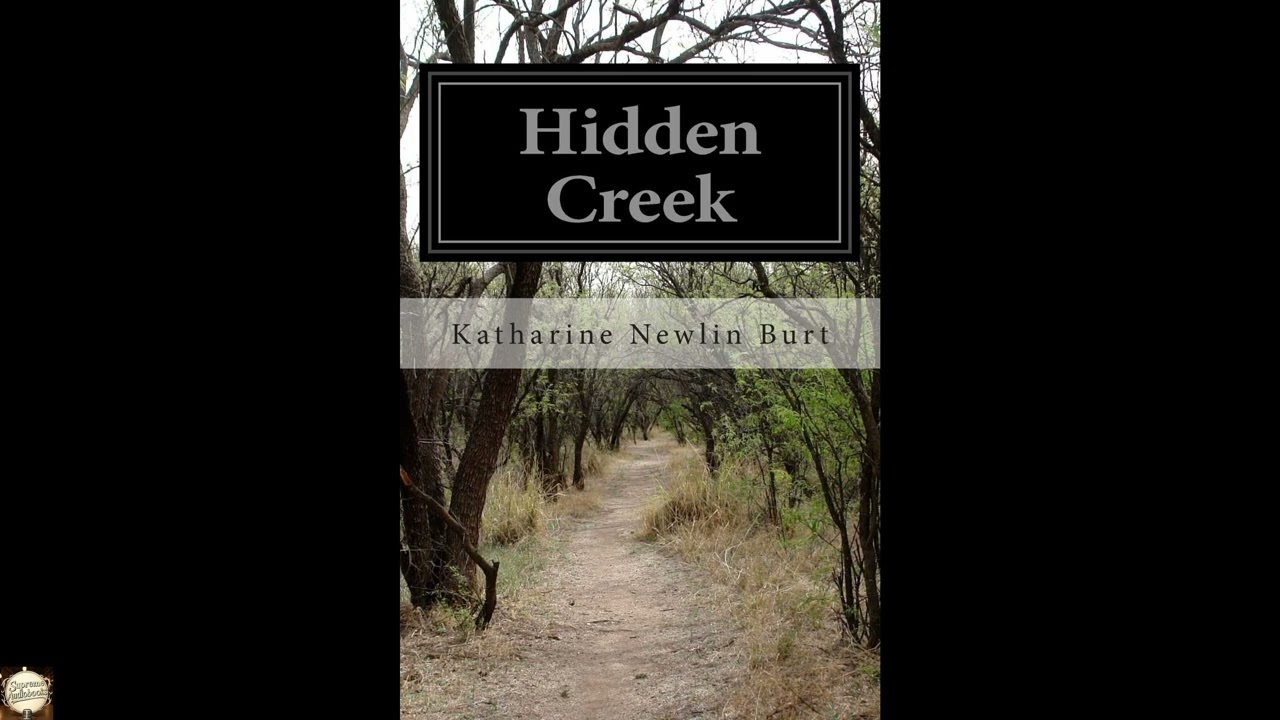
Hidden Creek
Stepping into the vast, untamed expanse of the American West, Katharine Newlin Burt's Hidden Creek offers listeners a compelling return to a frontier both dangerous and alluring. This isn't merely a tale of cowboys and horses; it is a profound examination of identity, resilience, and the unexpected ways true character is forged in isolation. At its heart, the book poses a timeless question: can one truly escape a troubled past, or does a new landscape only serve to illuminate the deepest parts of the self? For those who appreciate stories where human drama unfolds against a magnificent natural backdrop, and where every choice carries significant weight, Hidden Creek remains a powerful and relevant listening experience today. The story transports us to the rugged beauty of Wyoming, to a secluded ranch nestled in a remote valley, far from the conveniences and hypocrisies of urban life. Our central figure is Robert Wires, a man driven by a desperate need for anonymity and a fresh start. He arrives in this wild country bearing the scars of a scandalous past, seeking refuge from the judging eyes of society and the echoes of his own mistakes. He finds employment at a cattle ranch, a place seemingly devoid of the complexities he has left behind, and inhabited by a small, tight-knit group of individuals shaped by the harsh realities of their environment. Among them is Barbara, a young woman whose spirited independence and deep connection to the land both intrigue and challenge Robert. As Robert attempts to bury his former self in the demanding rhythms of ranch life—herding cattle, mending fences, enduring the elements—he quickly discovers that the wilderness has its own way of stripping away pretense. The physical challenges are immense, but the true test lies in confronting the internal landscape of his own guilt and fear. The peace he seeks is constantly threatened, not only by the unforgiving forces of nature and the potential discovery of his hidden identity, but also by the complicated relationships that inevitably form in such close quarters. The narrative meticulously builds a world where secrets simmer beneath polite exteriors and where the threat of exposure is as palpable as a brewing storm. Robert's quest for redemption becomes a precarious balance between maintaining his disguise and allowing himself to be transformed by the raw honesty of his surroundings and the quiet strength of those around him. Katharine Newlin Burt (1881-1977) was a prominent American novelist whose prolific career spanned several decades of the early twentieth century. Born Katharine Newlin in New York City, she married Maxwell Struthers Burt, himself a writer, and together they made their home, for significant periods, in Jackson Hole, Wyoming. This move West was not just a change of scenery; it was a foundational experience that profoundly influenced her writing. Burt became intimately acquainted with the landscape, the people, and the distinct challenges of frontier life, allowing her to infuse her fiction with a rare authenticity. She wasn't simply an observer; she lived the life she often wrote about. Her career saw her become a popular and widely read author, with many of her stories first appearing serialized in major magazines of the era, such as Ladies' Home Journal and McClure's. This widespread exposure meant her tales reached a vast audience, solidifying her reputation as a master of adventure, romance, and psychological drama. While perhaps best known for her Westerns—including other notable titles like The Branding Iron and Quest—her narratives often transcended the conventions of the genre by delving into deeper emotional and moral questions. She carved out a significant niche, demonstrating that popular fiction could also possess a degree of literary depth, making her a crucial figure in the popularization of the American West as a setting for complex human stories. Hidden Creek exemplifies several enduring themes that resonate powerfully through Burt's writing. One central theme is the perennial conflict between civilization and the wilderness. Robert Wires represents the former, carrying the weight of urban scandal and societal expectations, while the Wyoming landscape embodies the latter, offering both harsh realities and the potential for a clean slate. The text shows this through Robert's initial awkwardness with manual labor and his slow, often painful, adaptation to a life dictated by sun, wind, and the needs of livestock, rather than social calendars. Another significant theme is redemption and the search for a second chance. Robert’s entire presence at Hidden Creek is predicated on this desire, and the narrative questions whether true absolution can be found through geographic relocation or must be earned through internal transformation. His daily struggles and interactions with the ranch community illustrate this process, as he learns to shed old habits and respond to new demands. Further, the story skillfully illustrates the theme of self-discovery through adversity. Away from the constraints of his former life, Robert is forced to confront his authentic self, stripped of pretense. An instance of this might be his willingness to confront a dangerous animal, or to stand up for a fellow ranch hand, actions that would have been unthinkable in his previous existence. Finally, the story examines the intricate dynamics of love and loyalty in isolated communities. The bonds formed at Hidden Creek are intense, born of necessity and shared hardship. The relationships between characters, particularly the evolving dynamic between Robert and Barbara, demonstrate how trust is built slowly, tested by hardship, and ultimately reveals the strength of genuine connection. These interwoven themes give the novel a enduring quality that elevates it beyond a simple adventure tale. Hidden Creek was published in 1920, a pivotal moment in American history and culture. The nation had just emerged from the Great War, and the decade that followed, often called the "Roaring Twenties," was characterized by significant social and cultural shifts—from the rise of jazz music and flapper fashion to burgeoning women's suffrage and a general questioning of traditional values. Yet, amidst this rapid modernization, there was a persistent romanticization of the American West. Authors like Burt tapped into a national yearning for a perceived simpler, more heroic past, even as the geographical frontier had largely closed. The West remained a potent symbol of individualism, opportunity, and escape from the complexities of industrial society. Literarily, this period saw a continued appetite for adventure and romance, but also a growing interest in more psychological depth within popular narratives. Burt’s work fit neatly into this evolving landscape, offering exciting plots combined with characters grappling with internal conflicts and moral dilemmas. Her ability to blend the thrilling elements of the Western genre with nuanced portrayals of human emotion allowed her books to resonate with a broad readership, affirming the enduring power of the Western myth while also pushing its boundaries towards more introspective storytelling. The novel’s emergence in this era reflects a society both looking forward and wistfully back, finding stories of courage and reinvention particularly appealing. Listening to Hidden Creek as an audiobook transforms the experience into something deeply atmospheric and immediate. The sheer length of several hours allows the listener to become fully immersed in the unfolding drama, mimicking the slow, deliberate pace of life in the Wyoming wilderness. A skilled narrator brings the vastness of the landscape to life, painting mental pictures of towering mountains, winding rivers, and endless plains with their vocal cadence. The subtle shifts in voice for different characters—the stoic ranch foreman, the spirited Barbara, the conflicted Robert—imbue the dialogue with authenticity and emotional weight. Listen for the narrator's pacing during moments of suspense, like a lurking threat in the shadows, or during quiet, reflective passages, giving weight to Robert’s internal struggles. The spoken word emphasizes the raw honesty of the character interactions and the ever-present sounds of the natural world, creating an unforgettable aural rendering of a timeless American story.
Enjoyed Hidden Creek? A few ways to support us
Audible & Amazon links are affiliate; we may earn a small commission at no extra cost.
About this production
Human narration by a volunteer reader from LibriVox.org, the public-domain audiobook project. LibriVox volunteers record literary works whose copyright has expired in the United States, releasing the resulting recordings into the public domain.
Hidden Creek by Katharine Newlin Burt. The underlying text is in the U.S. public domain. We do not republish any modern copyrighted edition, translation, or commentary.
The 4K cinematic visuals accompanying this audiobook are generated by an AI image model from prompts derived from the source text. No copyrighted photos, paintings, or stock footage are used. AI generation is disclosed on every video on our YouTube channel as required by YouTube's altered/synthetic content policy.
English subtitles are transcribed from the LibriVox recording with OpenAI Whisper. Translations into the 11 other supported languages are produced by Meta's NLLB-200 neural translation model. No human translator's copyrighted translation is used.
Questions about sourcing or rights? See our DMCA & Sourcing policy or contact us.
Enjoyed this audiobook?
If you'd like to own a copy of Hidden Creek or hear a professionally produced edition, the links below help support free audiobook production at no extra cost to you.
As an Amazon Associate we earn from qualifying purchases. Audible / print links are affiliate.