Lost in the Air (Classic Books)
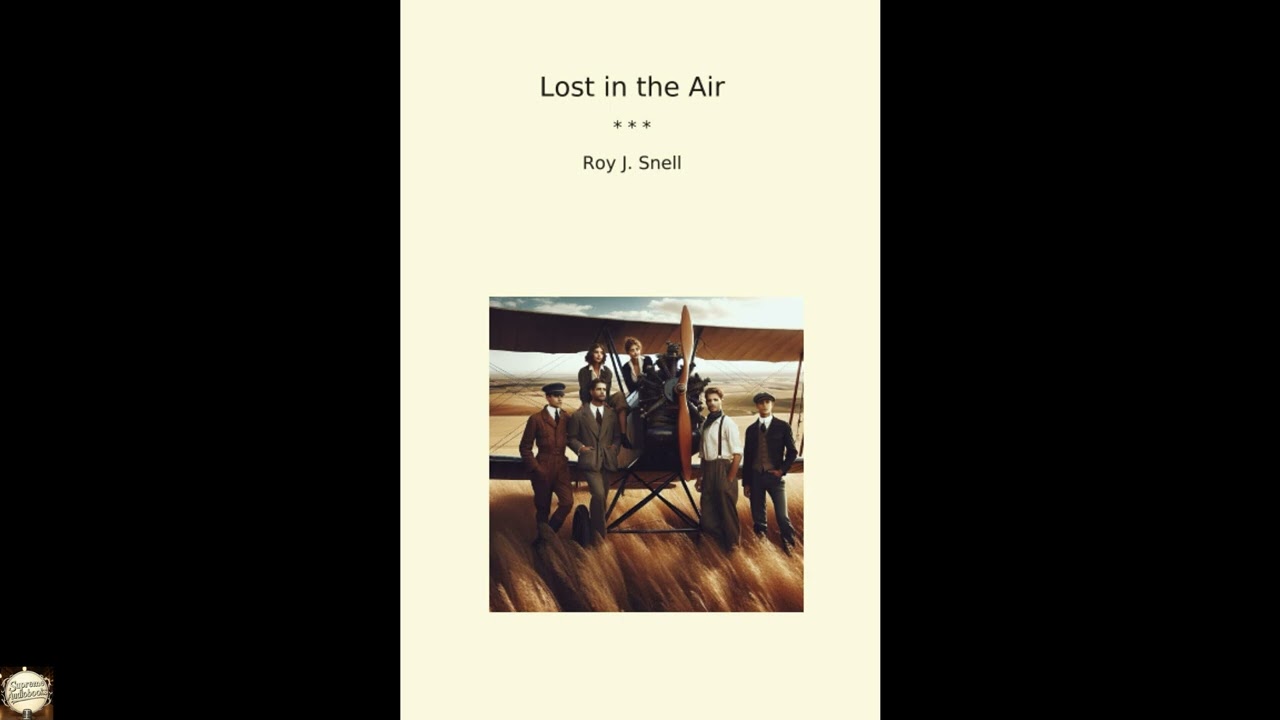
"Lost in the Air" by Roy J. Snell invites listeners into a realm where the vast, open sky was still largely unconquered, a frontier as mysterious and perilous as any ocean. This classic adventure tale, born from an era when flight was both a miraculous innovation and a grave risk, transports us to a time when human courage and ingenuity were pitted directly against the raw power of nature and the unforgiving mechanics of early aviation. It is a story that, despite its period setting, resonates today through its fundamental examination of human resilience, our unyielding drive to discover, and the sometimes-stark lessons learned when technology falters far from the comforts of civilization. For anyone who has ever dreamed of soaring above the clouds or faced an unexpected challenge that tests their very spirit, Snell’s narrative offers both thrilling escapism and a profound reflection on what it means to survive against all odds. The narrative plunges us into the gripping saga of Roger Thornton, a young, ambitious pilot, and his companions as they undertake an audacious long-distance flight. Their journey begins with the heady optimism characteristic of early aerial endeavors – a marvel of engineering carrying them across landscapes few had ever witnessed from above. The plane itself, a testament to human ingenuity, becomes an extension of their pioneering spirit. However, the delicate balance between ambition and the limitations of early twentieth-century technology is soon starkly revealed. A sudden, catastrophic mechanical failure sends their aircraft spiraling, forcing an emergency landing in an unforgiving, uncharted wilderness, far beyond the reach of conventional aid. Stripped of their technological advantage and severed from the modern world, Roger and his fellow survivors must confront the stark realities of survival. Their immediate challenge is not merely to repair their damaged craft, but to find food, water, and shelter in an alien environment, all while battling the creeping despair of isolation. The story unfolds as a tense drama of resourcefulness and strategic thinking, as they apply every ounce of their knowledge – from basic engineering principles to wilderness lore – to simply stay alive. They face not only the threats of the natural world, but also the internal struggles of maintaining morale and cooperation under extreme duress, forging a deeper understanding of each other and themselves amidst the vast, indifferent silence of the wild. Roy J. Snell, the author behind this and countless other adventure narratives, was born in 1878 and passed away in 1959. An American writer, he dedicated his prolific career to crafting thrilling tales for young readers, cementing his reputation as a master of the adventure genre. Before turning to full-time writing, Snell spent time as a teacher, an experience that likely influenced his clear, direct prose and his emphasis on practical skills and moral lessons within his stories. His early life and travels, particularly his extensive experiences in Alaska and the Far North, provided him with a wealth of authentic detail and inspiration for the rugged, often remote settings that characterize much of his fiction. Snell was remarkably productive, writing over eighty books during his lifetime. His work encompassed several popular series, including the "Radio Girls" series, various "Arctic Series" titles, and numerous standalone mystery and adventure stories designed to inspire and entertain young boys and girls. "Lost in the Air" fits squarely within this tradition, showcasing his ability to combine exciting plots with themes of courage, ingenuity, and self-reliance. While perhaps not as widely known today as some of his literary contemporaries, Snell held a significant place in the popular literature of the early to mid-twentieth century, playing a key role in shaping the adventure story format for a generation of young readers and instilling in them a sense of wonder for the world and the potential for human heroism. The narrative of "Lost in the Air" enacts several compelling themes that elevate it beyond mere escapism. One central theme is the triumph of human ingenuity against the forces of nature. When their sophisticated machine fails, Roger and his group are forced to improvise, using their wits and what limited resources they have. For instance, a scene might depict them salvaging parts from the wreckage to create a signal device or fashioning tools from natural materials, demonstrating how intellect and practical skill can overcome seemingly insurmountable obstacles. Another prominent theme is courage and resilience in the face of adversity. The characters repeatedly confront moments of intense fear, physical exhaustion, and emotional despair, yet they push forward. We witness this not only in their daring acts of survival, but also in the quieter moments of resolve, like sharing the last meager rations or offering words of encouragement when hope seems dim. Furthermore, the story touches upon the allure and perils of the unknown, a consistent thread in adventure literature. The vast, uncharted expanse where they crash-land represents humanity's eternal fascination with what lies beyond the familiar. While it promises discovery, it also brings unforeseen dangers and challenges that test the limits of their preparation and understanding. Finally, Snell implicitly comments on technological optimism and its limitations. The airplane, a symbol of progress and mastery over the elements, ultimately proves fallible, reminding us that even the most advanced human creations are still subject to the unpredictable whims of the natural world. The initial glory of flight gives way to the stark reality of mechanical frailty, urging a more balanced perspective on our relationship with technology. This story emerged at a particularly fascinating juncture in history. The early 1920s, when "Lost in the Air" was published, were a period of immense public excitement surrounding aviation. Airplanes, having proven their tactical value in the First World War, were rapidly transitioning into symbols of speed, progress, and adventure for the civilian population. Groundbreaking flights and attempts to break distance records filled newspaper headlines, capturing the public imagination and inspiring a new generation of dreamers and inventors. Lindbergh's famous transatlantic flight was still a few years away, but the skies were already alive with pioneers pushing the boundaries of what was possible. This fascination with aerial daring provided a fertile ground for Snell’s narrative, allowing him to tap into a widespread cultural wonder about the conquest of the air. It was also a time when adventure stories for young readers flourished, offering vicarious experiences of courage and discovery in an increasingly industrialized world, often imparting moral lessons through exciting exploits. Listening to "Lost in the Air" as an audiobook offers a uniquely immersive way to experience this classic adventure. The inherent suspense of a plane disaster and the subsequent struggle for survival translates exceptionally well to the auditory medium. A skilled narrator can amplify the tension of mechanical failure, the awe of soaring above unexplored lands, and the quiet desperation of being utterly lost, using nuanced pacing and vocal inflections to bring each scene to life. The several hours of run time allow for a deep dive into the characters' predicament and the slowly unfolding arc of their struggle, making it an ideal companion for long drives, focused chores, or simply an evening of relaxed listening. Pay close attention to the narrator's portrayal of the mechanical sounds of the plane in flight, the sudden silence after the engine dies, and the varied voices given to the characters as they grapple with fear, hope, and determination. This auditory presentation will undoubtedly heighten the atmosphere, making the vastness of the wilderness and the ingenuity of the survivors feel incredibly real.
Enjoyed Lost in the Air (Classic Books)? A few ways to support us
Audible & Amazon links are affiliate; we may earn a small commission at no extra cost.
About this production
Human narration by a volunteer reader from LibriVox.org, the public-domain audiobook project. LibriVox volunteers record literary works whose copyright has expired in the United States, releasing the resulting recordings into the public domain.
Lost in the Air (Classic Books) by Roy J. Snell. The underlying text is in the U.S. public domain. We do not republish any modern copyrighted edition, translation, or commentary.
The 4K cinematic visuals accompanying this audiobook are generated by an AI image model from prompts derived from the source text. No copyrighted photos, paintings, or stock footage are used. AI generation is disclosed on every video on our YouTube channel as required by YouTube's altered/synthetic content policy.
English subtitles are transcribed from the LibriVox recording with OpenAI Whisper. Translations into the 11 other supported languages are produced by Meta's NLLB-200 neural translation model. No human translator's copyrighted translation is used.
Questions about sourcing or rights? See our DMCA & Sourcing policy or contact us.
Enjoyed this audiobook?
If you'd like to own a copy of Lost in the Air (Classic Books) or hear a professionally produced edition, the links below help support free audiobook production at no extra cost to you.
As an Amazon Associate we earn from qualifying purchases. Audible / print links are affiliate.