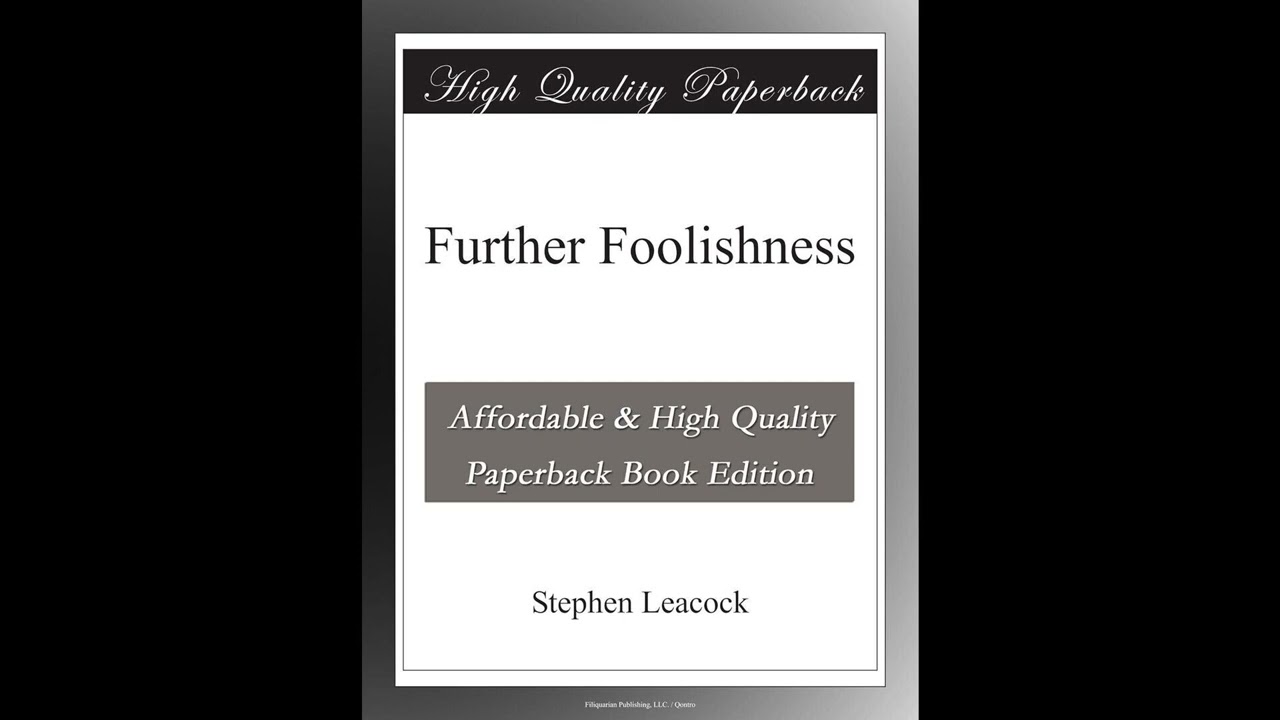
Further Foolishness
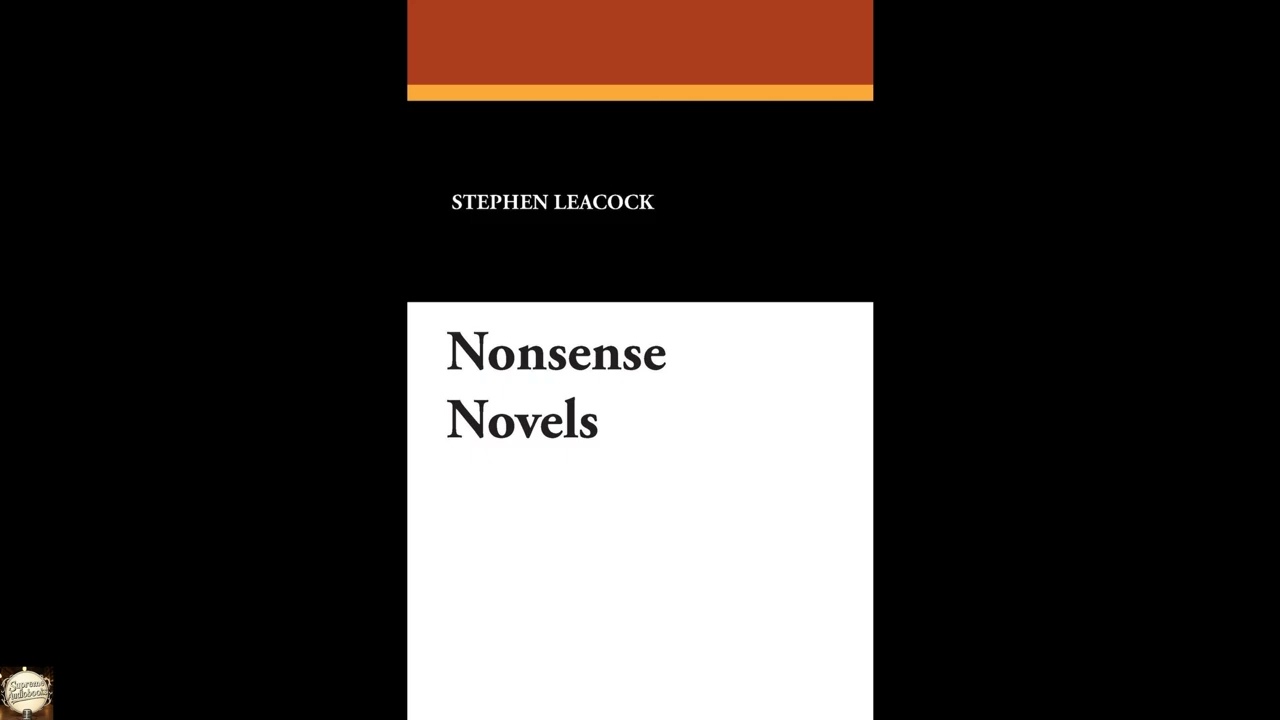
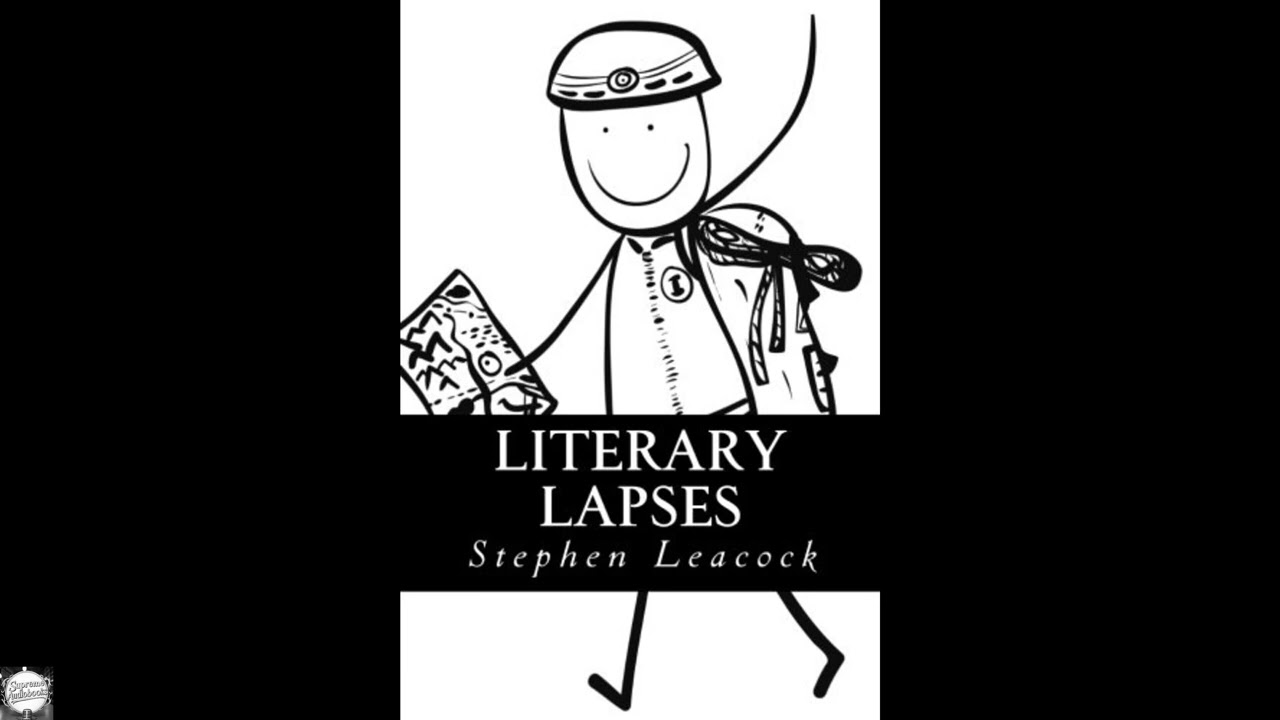
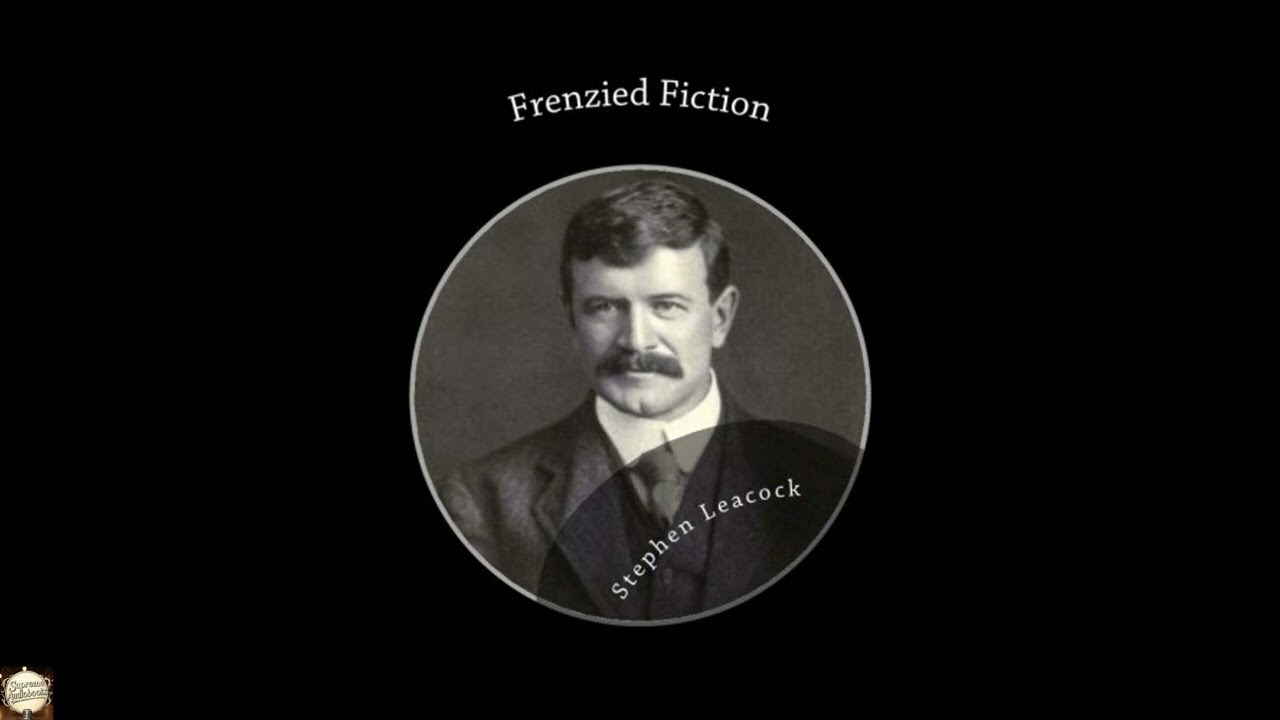
Step into a world where logic takes a holiday and common sense is an endangered species, where the absurdities of human nature are laid bare with a smile and a knowing wink. Stephen Leacock's "Further Foolishness" invites you to reconsider the seemingly serious aspects of life through a lens of gentle, yet incisive, satire. This collection of essays and sketches, penned by a master humorist, challenges listeners to question the conventions of society, the pomposity of politicians, the pretensions of the educated, and the often baffling economics of everyday existence. More than a century after its initial appearance, Leacock's wit remains surprisingly fresh, offering a delightful escape and a timeless commentary on the unchanging quirks that make us human, proving that folly, indeed, knows no era. This delightful assemblage is not a traditional narrative with a single protagonist or a linear unfolding of events. Instead, "Further Foolishness" acts as a grand tour through the eccentricities and illogical constructions of early 20th-century society, often with a particular focus on North American sensibilities. Listeners encounter a gallery of types: the earnest but misguided reformer, the bombastic orator, the befuddled citizen grappling with modern conveniences, and the academic lost in his own intellectual fog. Each piece presents a distinct scenario, a brief, comedic case study in the numerous ways humanity manages to complicate the simple, misunderstand the obvious, and generally stumble through life with an air of profound self-importance. The collection introduces a myriad of "characters" through their actions and speeches, even if they appear only for a few pages. Leacock frequently adopts a persona—sometimes the bewildered observer, sometimes the mock-serious expert—to deliver his skewering observations. The central conflict isn't between individuals, but rather between the clear-eyed perception of the author and the widespread foolishness he observes in economics, politics, education, and social etiquette. From proposals for incredibly inefficient civic improvements to the profound pronouncements of pseudo-intellectuals, the narrative arc is one of consistent comedic revelation, as Leacock peels back layers of pretense to expose the simple, often hilarious, truth underneath. The story, if one can call it that, is the ongoing, quiet triumph of common sense over the forces of habit, illogic, and human vanity, presented with an unmistakable warmth that tempers the sharpness of the satire. The author behind this incisive humor was Stephen Leacock, a figure whose life was as fascinatingly dual-natured as his writing. Born in Swanmore, Hampshire, England, in 1869, he immigrated to Canada with his family at a young age, settling on a farm in Ontario. This formative experience in rural Canada profoundly influenced his observations of North American life. Leacock initially pursued a career in education, teaching at Upper Canada College before earning his Ph.D. in political economy from the University of Chicago. For many years, he was a distinguished professor and the head of the Department of Economics and Political Science at McGill University in Montreal, a position he held until his retirement in 1936. While his professional life was dedicated to academia, his true passion, and what earned him enduring fame, was his prodigious output as a humorist and satirist. Leacock began publishing humorous sketches in magazines and quickly gained recognition for his unique blend of wit, absurdity, and social commentary. His earliest successes, like "Literary Lapses" (1910) and "Nonsense Novels" (1911), established his reputation. He followed these with the beloved "Sunshine Sketches of a Little Town" (1912) and "Arcadian Adventures with the Idle Rich" (1914), both of which painted vivid, humorous portraits of small-town and big-city Canadian life. Leacock’s place in the literary canon is that of Canada's foremost humorist, often compared to Mark Twain for his ability to find humor in everyday situations and use it to comment on broader societal trends. He passed away in 1944, leaving behind a legacy of laughter and thoughtful observation. "Further Foolishness" enacts several core themes that resonate even today. One prominent theme is the absurdity of bureaucracy and modern organization. Leacock frequently lampoons the complex systems humans devise, often showing how these systems become ends in themselves, detached from their original purpose. For example, he presents scenarios where committees and official bodies generate endless paperwork and convoluted plans, resulting in inaction or ridiculous outcomes, a commentary on the burgeoning administrative states of the early 20th century. Another recurring theme is human pretension and intellectual snobbery. Leacock deftly pricks the balloons of those who take themselves too seriously, whether they are self-proclaimed experts, academic theorists, or socialites obsessed with superficial concerns. He might sketch a scene where a seemingly profound lecture is revealed to be full of meaningless jargon, or where a "philosophical" discussion devolves into trivialities, highlighting the gap between appearance and reality. A third significant theme is the folly of economic and political rhetoric. As a political economist, Leacock was uniquely positioned to critique the often-unfounded claims and impractical solutions put forth by politicians and financial figures. He demonstrates how grand pronouncements about prosperity or progress often mask underlying inefficiencies or outright illogical thinking. He often uses hyperbole to underline his point, proposing solutions that are logically sound but practically insane, thereby exposing the inherent flaws in real-world proposals. Finally, the collection touches on the broader idea of the unchanging nature of human folly. Despite technological advancements or societal shifts, Leacock suggests that certain fundamental human weaknesses—vanity, gullibility, the tendency towards self-deception—persist across generations. His humor, therefore, doesn't simply poke fun at his contemporaries but offers a mirror to all eras. When "Further Foolishness" was published in 1916, the world was in the throes of immense change. World War I was raging, casting a long shadow over global affairs and challenging pre-war notions of progress and civilization. This period also saw significant shifts in social structures, technological advancements, and the rise of new political ideologies. Leacock, writing from North America, captured the anxieties and sometimes bewildering pace of this evolving world, even as he chose to focus his wit on the more mundane, domestic absurdities. His work stood as a counterpoint to the growing seriousness of the modernist literary movement, offering a comedic perspective that, while light-hearted on the surface, often contained sharp critiques of contemporary life. He emerged from a tradition of gentle, observational humor, yet his targets—the complexities of urban living, the foibles of nascent consumer culture, and the often-ridiculous pronouncements of public figures—were distinctly modern, reflecting the particular brand of progress and confusion that characterized the early 20th century. To truly appreciate the understated brilliance of Stephen Leacock's "Further Foolishness," there is no better medium than the audiobook. The subtle ironies, the carefully placed pauses, and the shifts in tone that define Leacock's writing come alive through skilled narration. Hearing the mock-serious pronouncements or the bewildered internal monologues adds an entirely new dimension to the humor, allowing the listener to catch nuances that might be missed on the page. With a runtime of several hours, it's the perfect companion for leisurely afternoons, daily commutes, or as a welcome distraction during household tasks. Listen for the narrator's pacing, which will undoubtedly enhance the comedic timing, allowing the gentle punchlines to land with precision. The careful crafting of distinct voices for the various characters or types Leacock introduces will create an atmosphere of witty engagement, transforming the solitary act of reading into a shared experience of laughter and contemplation.
Enjoyed Further Foolishness? A few ways to support us
Audible & Amazon links are affiliate; we may earn a small commission at no extra cost.
About this production
Human narration by a volunteer reader from LibriVox.org, the public-domain audiobook project. LibriVox volunteers record literary works whose copyright has expired in the United States, releasing the resulting recordings into the public domain.
Further Foolishness by Stephen Leacock. The underlying text is in the U.S. public domain. We do not republish any modern copyrighted edition, translation, or commentary.
The 4K cinematic visuals accompanying this audiobook are generated by an AI image model from prompts derived from the source text. No copyrighted photos, paintings, or stock footage are used. AI generation is disclosed on every video on our YouTube channel as required by YouTube's altered/synthetic content policy.
English subtitles are transcribed from the LibriVox recording with OpenAI Whisper. Translations into the 11 other supported languages are produced by Meta's NLLB-200 neural translation model. No human translator's copyrighted translation is used.
Questions about sourcing or rights? See our DMCA & Sourcing policy or contact us.
Enjoyed this audiobook?
If you'd like to own a copy of Further Foolishness or hear a professionally produced edition, the links below help support free audiobook production at no extra cost to you.
As an Amazon Associate we earn from qualifying purchases. Audible / print links are affiliate.