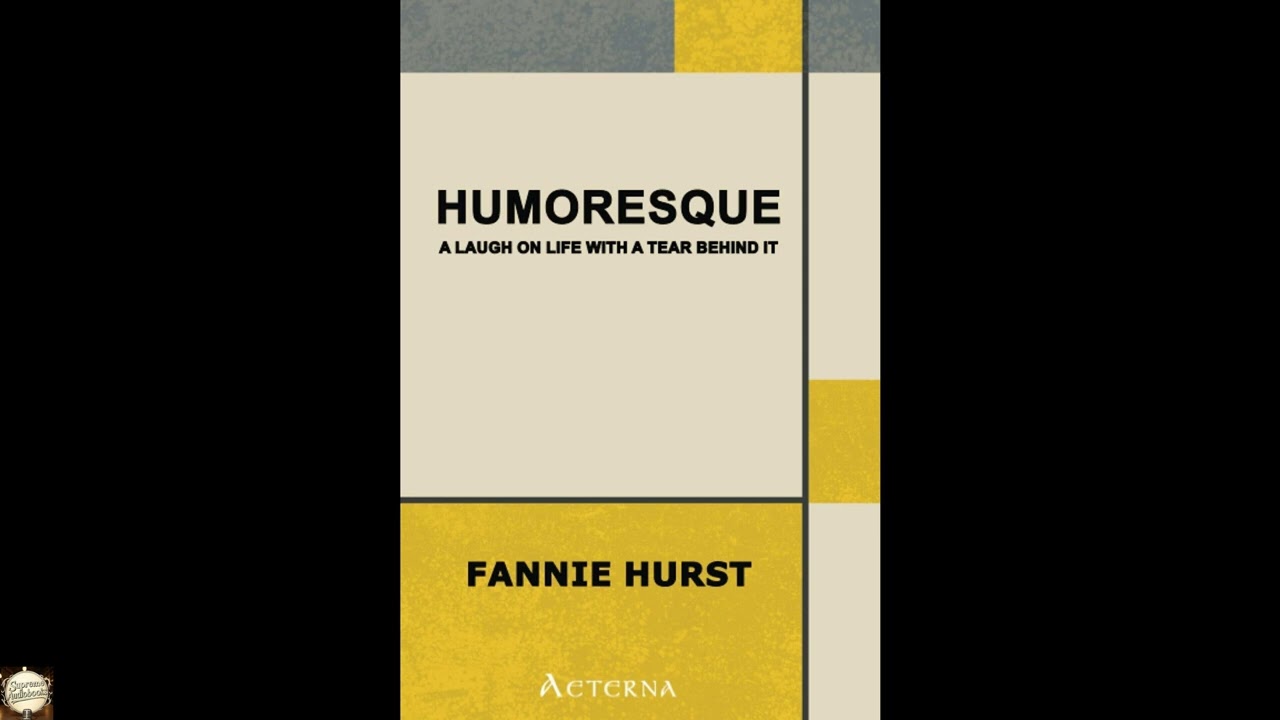
Humoresque: A Laugh on Life with a Tear Behind It
Step into the bustling, tenement-lined streets of New York's Lower East Side in the early twentieth century with Fannie Hurst's Humoresque: A Laugh on Life with a Tear Behind It. This enduring story, first published in 1919, offers a poignant and unvarnished look at the immigrant experience, the unbreakable bonds of family, and the often-painful pursuit of artistic dreams against the backdrop of poverty and sacrifice. It’s a narrative that, despite its period setting, speaks with remarkable clarity to contemporary audiences about the universal struggles of ambition, identity, and the profound, sometimes suffocating, power of a mother’s love. Far from a dusty relic, Humoresque remains a vibrant testament to the human spirit's capacity for both soaring aspiration and profound devotion, reminding us that life’s greatest triumphs are often intertwined with its deepest sorrows. The story centers on the Kantor family, Jewish immigrants striving for a better life in the crowded, vibrant melting pot of New York City. At its heart is Sara Kantor, a formidable and fiercely devoted matriarch whose entire being is consumed by her children's welfare and future. Her eldest, Rudolph, embodies practicality and responsibility, working to support the family. Then there is Leon, her youngest son, who emerges as the family's golden hope. From his earliest years, Leon displays an undeniable, almost miraculous, talent for the violin. His music transcends the squalor of their surroundings, offering a glimpse of beauty and potential that seems almost divine. As Leon's prodigious gift becomes evident, Sara channels all her energy, every spare cent, and every ounce of her indomitable will into nurturing his musical career. She sacrifices her own needs, often going without so that Leon can have lessons, a better instrument, or the opportunities to perform. The narrative meticulously tracks Leon's trajectory from a child prodigy playing for pennies in neighborhood cafes to a celebrated violinist gracing prestigious concert halls. Yet, with each step toward fame, the invisible threads of his family's love, particularly his mother's all-consuming devotion, tighten around him, creating a profound tension between his burgeoning independence and the immense emotional debt he carries. The path to stardom is not paved with ease, and the story keenly observes the immense pressures, both internal and external, that threaten to derail Leon's career and perhaps even his spirit, highlighting the bittersweet reality that the fulfillment of one dream often comes at a steep personal cost. Fannie Hurst, the author behind this affecting tale, was one of the most commercially successful and widely read American writers of the early to mid-twentieth century. Born in St. Louis, Missouri, in 1889, Hurst moved to New York City after college, determined to make her mark as a writer. Her early years were marked by struggle, living in boarding houses and working odd jobs, experiences that deeply informed her empathetic portrayals of immigrant and working-class life. She achieved enormous popularity by tapping into the emotional lives of ordinary people, particularly women, navigating social change and personal ambition. Her works often appeared in popular magazines before being published as novels, cementing her place as a literary sensation. Hurst’s prolific output included bestsellers like Lummox (1923), which depicted the arduous life of a domestic servant, and Imitation of Life (1933), a groundbreaking story about race, motherhood, and identity, twice adapted into highly acclaimed films. She was renowned for her vivid characterizations, her ability to craft compelling narratives, and her unflinching examination of social issues, often couched within melodramatic plots. While critics sometimes dismissed her work as sentimental, her profound influence on popular culture and her consistent championing of marginalized voices, along with her own activism for women's rights and social justice, secure her a significant, if complex, position within American literary history until her passing in 1968. Humoresque artfully articulates several powerful themes. Foremost among them is the theme of motherly devotion and sacrifice, embodied by Sara Kantor. Her character is a force of nature, driven by an almost primal need to see her son succeed. We witness her constant self-denial—from scrimping on food to enduring the scorn of her more prosperous relatives—all for the sake of Leon's violin lessons, which represent the family's only hope for ascension out of poverty. Her love is fierce and unconditional, yet it also presents an emotional burden for Leon, as he grapples with the immense gratitude and responsibility he feels towards her. Another key theme is the immigrant experience and assimilation. The Kantor family lives in a vibrant, close-knit Jewish community where old-world traditions clash and coalesce with new-world opportunities. The story illustrates the tension between maintaining cultural heritage and striving for integration into American society. Leon’s music becomes a bridge between these worlds, a universal language that allows him to transcend his origins, while his family’s struggles underscore the economic and social challenges faced by countless newcomers hoping to realize the American Dream. The narrative also keenly observes the inherent bittersweetness of life, a sentiment perfectly encapsulated by the book's title. Moments of joyous triumph, like Leon’s early successes or a particularly moving performance, are often tinged with an underlying sadness—the weight of past sacrifices, the loneliness of ambition, or the recognition that even great achievement can bring its own forms of loss and isolation. Humoresque was published in 1919, a pivotal year in American history. The nation was emerging from the shadows of World War I, grappling with its newfound global power, and undergoing rapid social and cultural transformation. The "Roaring Twenties" were just around the corner, promising unprecedented prosperity and a dramatic loosening of social mores. Simultaneously, the country was experiencing massive waves of immigration, particularly from Eastern and Southern Europe, leading to crowded urban centers and significant cultural shifts. This period saw the rise of modern mass media, including popular magazines and eventually radio and film, which would dramatically broaden the reach of stories like Hurst's. Her work resonated deeply with a public fascinated by rags-to-riches narratives, the struggles of immigrants, and the evolving roles of women in society. Humoresque captured the anxieties and aspirations of an America in flux, where the promise of opportunity existed alongside profound class divisions and the enduring power of familial and cultural ties. Listening to Humoresque as an audiobook transforms this classic into a deeply immersive experience. A skilled narrator brings Sara Kantor’s indomitable spirit and Leon’s artistic passion to life, lending authentic voices to the characters and capturing the emotional nuances of their dialogue. The pace of the narration allows listeners to truly absorb the period atmosphere of the Lower East Side—the clamor of the streets, the warmth of the community, and the quiet intensity of Leon’s musical practice. Over several hours of listening, the subtleties of Hurst's prose, her keen observations of human nature, and the dramatic arc of the Kantor family’s struggles and triumphs unfold gradually, giving full weight to the story's emotional impact. Hear the laughter, the tears, and the haunting melody of a life lived for art and love.
Enjoyed Humoresque: A Laugh on Life with a Tear Behind It? A few ways to support us
Audible & Amazon links are affiliate; we may earn a small commission at no extra cost.
About this production
Human narration by a volunteer reader from LibriVox.org, the public-domain audiobook project. LibriVox volunteers record literary works whose copyright has expired in the United States, releasing the resulting recordings into the public domain.
Humoresque: A Laugh on Life with a Tear Behind It by Fannie Hurst. The underlying text is in the U.S. public domain. We do not republish any modern copyrighted edition, translation, or commentary.
The 4K cinematic visuals accompanying this audiobook are generated by an AI image model from prompts derived from the source text. No copyrighted photos, paintings, or stock footage are used. AI generation is disclosed on every video on our YouTube channel as required by YouTube's altered/synthetic content policy.
English subtitles are transcribed from the LibriVox recording with OpenAI Whisper. Translations into the 11 other supported languages are produced by Meta's NLLB-200 neural translation model. No human translator's copyrighted translation is used.
Questions about sourcing or rights? See our DMCA & Sourcing policy or contact us.
Enjoyed this audiobook?
If you'd like to own a copy of Humoresque: A Laugh on Life with a Tear Behind It or hear a professionally produced edition, the links below help support free audiobook production at no extra cost to you.
As an Amazon Associate we earn from qualifying purchases. Audible / print links are affiliate.