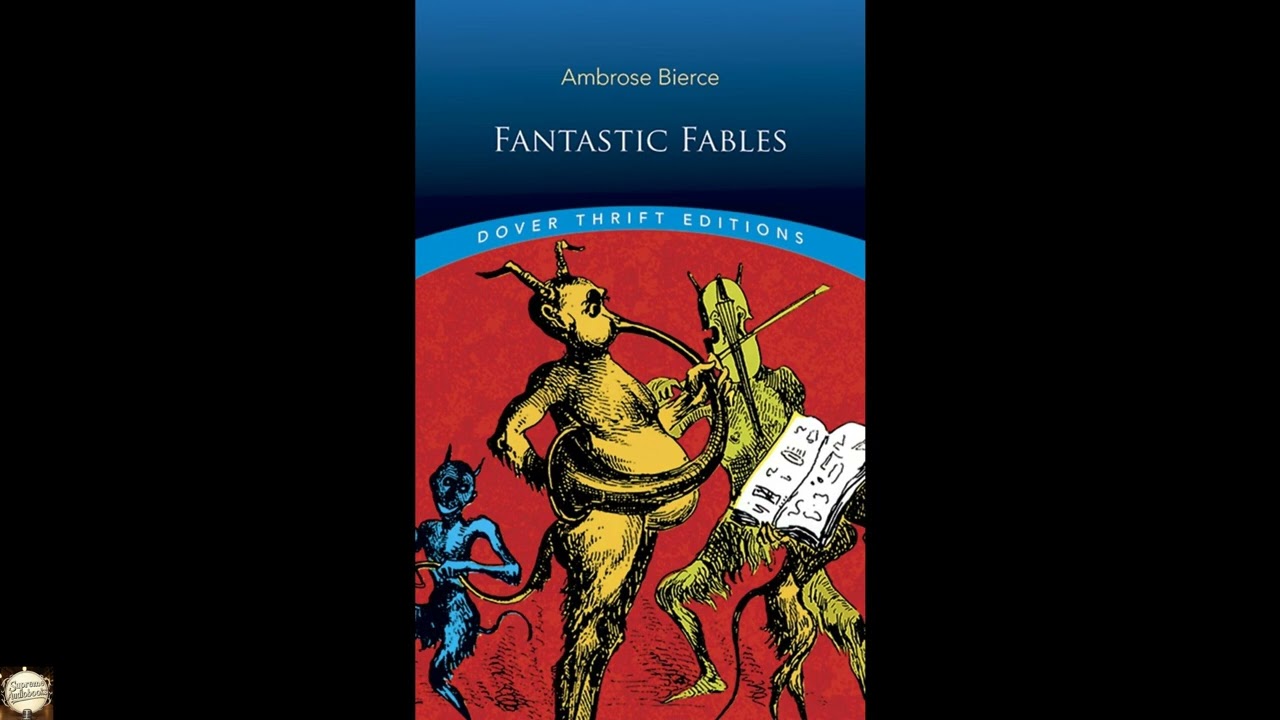
Fantastic Fables
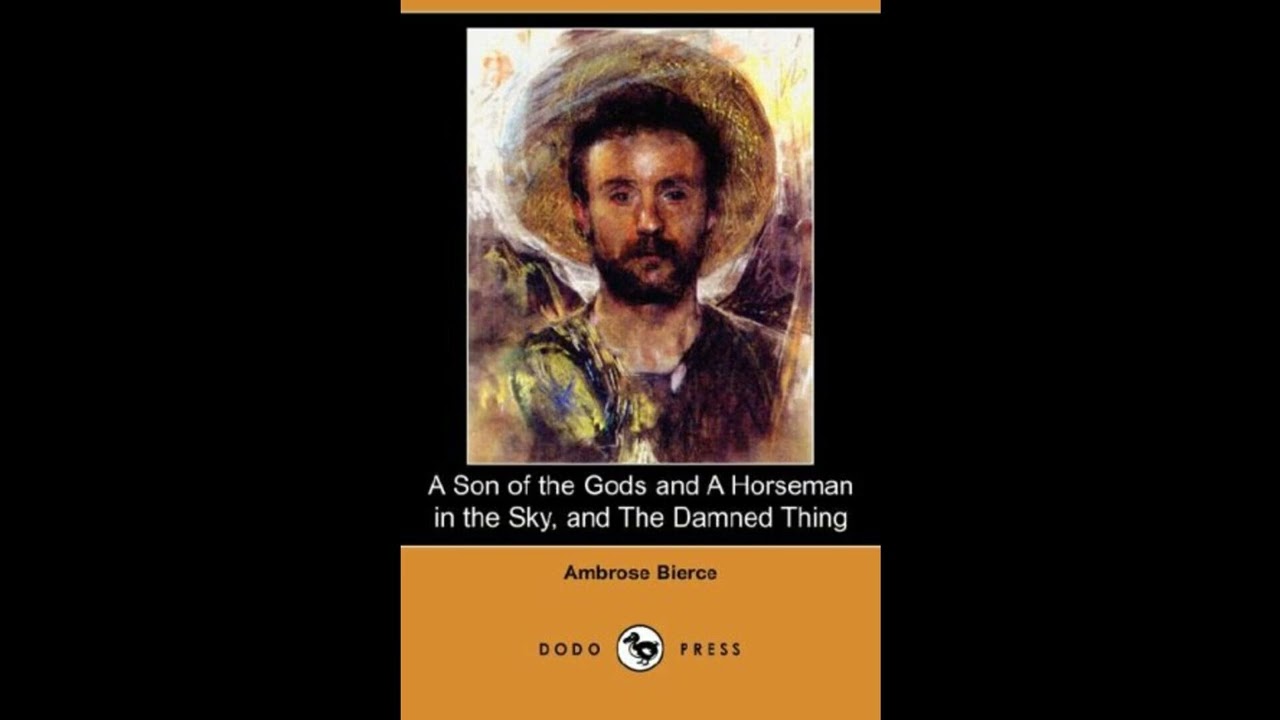
For listeners seeking a collection of stories that challenge expectations and deliver satire with a razor-sharp edge, Ambrose Bierce's Fantastic Fables offers a bracing experience. Far from the gentle moral instruction typically associated with the genre, these brief, pointed narratives gleefully upend conventional wisdom, expose human folly, and frequently conclude with an ironic twist that sticks in the mind long after the final word. This is not the stuff of childhood lessons, but rather a sophisticated, often dark, commentary on society, politics, and the enduring absurdities of human nature. Even a century after its initial publication, Bierce's unsparing wit and profound skepticism speak to our own complex times, making these fables surprisingly fresh and relevant for anyone who appreciates a good dose of cynical humor and intellectual provocation. The collection, first published in 1899, presents a series of short, allegorical pieces that borrow the structure of Aesop's fables but invert their purpose. Instead of clear-cut lessons in virtue, Fantastic Fables frequently deliver a punchline of disillusionment or a pointed observation about hypocrisy. The setting for these tales is often deceptively simple: a meeting of animals, a conversation between personified abstractions like "Truth" and "Falsehood," or mundane interactions between ordinary people. You might encounter a wolf and a lamb debating justice, or a group of citizens discussing the nature of government, only for the dialogue to reveal layers of self-interest, muddled logic, or outright deception. The central conflict in many of these pieces arises from the clash between appearance and reality, or between professed ideals and cynical actions. Characters, be they creatures of the forest or figures representing societal roles, almost invariably act from motives less pure than they initially declare, or find their best intentions thwarted by a world that rewards cunning over honesty. The arc of each fable is swift, leading to a concise, often biting, conclusion that subverts the listener's expectations, forcing a reconsideration of the supposed moral high ground. The stories rarely offer comfort; instead, they prod and provoke, leaving one with a wry smile or a thoughtful frown at the enduring imperfections of existence. Ambrose Bierce was a figure as compelling and enigmatic as his writings. Born in 1842 in Ohio, he was the tenth of thirteen children, all given names beginning with "A." His early life was marked by rural poverty and a sporadic education. The defining experience of his youth, however, was the American Civil War. He enlisted in the Union Army's 9th Indiana Infantry and served with distinction, rising to the rank of brevet major. His harrowing experiences at battles like Shiloh and Chickamauga, where he sustained serious head wounds, profoundly shaped his worldview, infusing his later work with a stark realism and a profound cynicism about war and human nature. After the war, Bierce moved to San Francisco, where he began a prolific career as a journalist and literary critic, earning the nickname "Bitter Bierce" for his sharp wit and unsparing critiques. He wrote for various newspapers, notably William Randolph Hearst's San Francisco Examiner, contributing a popular column called "Prattle." It was during this period that he produced much of his most famous fiction, including the collection Tales of Soldiers and Civilians (also known as In the Midst of Life), which contains some of the most chilling and psychologically complex stories about warfare ever written. He also compiled The Devil's Dictionary, a satirical lexicon defining words with ironic and often misanthropic humor. In late 1913, at the age of 71, Bierce famously traveled to Mexico to report on the Mexican Revolution and disappeared without a trace, his fate becoming one of American literature's most enduring mysteries. His work often placed him within the Naturalist and Realist literary movements, characterized by an unsentimental portrayal of life and a focus on how environment and heredity shape human destiny. Fantastic Fables brilliantly enacts several profound themes. One prominent thread is the absurdity of conventional morality and societal hypocrisy. Bierce frequently presents scenarios where characters profess noble intentions or adhere to social etiquette, only for their actions or the outcome to expose a deep-seated selfishness or a blatant disregard for ethical principles. For instance, a fable might depict a politician making grand promises for the public good, while the underlying dialogue or subsequent events reveal a cynical pursuit of personal power or wealth. Another recurring theme is disillusionment with ideals and institutions. Bierce's fables often chip away at romantic notions of justice, love, or heroism, showing them as fragile constructs easily undermined by human weakness or the harsh realities of the world. A tale might feature a well-meaning reformer whose efforts are met with indifference or actively subverted by those who benefit from the status quo, illustrating the futility of individual virtue against systemic corruption. He also skillfully satirizes human vanity and self-deception. Characters often delude themselves about their own importance, intelligence, or goodness, and Bierce's narrative voice subtly — or not so subtly — punctures these illusions. A particularly telling example might involve a character convinced of their own wisdom or moral superiority being led astray by simple greed or flattery, proving that even the most confident minds are prone to folly. Moreover, the collection often touches on the arbitrary nature of power and the oppression of the weak by the strong. These fables frequently highlight how those in positions of authority use their might not for justice, but for personal gain or to maintain their dominance, regardless of the suffering it inflicts on others. The moral of many of these tales is not an uplifting one, but a stark, often uncomfortable, reflection on the less admirable aspects of human interaction. Fantastic Fables emerged at a pivotal moment in American history, during the waning years of the 19th century. This was the Gilded Age, a period characterized by rapid industrialization, immense economic growth, and stark social inequalities. The vast fortunes accumulated by industrialists often existed alongside widespread poverty and labor strife. Culturally, there was a growing cynicism about the promises of progress and a questioning of traditional values, particularly after the trauma of the Civil War. The rise of muckraking journalism, of which Bierce himself was a pioneer, sought to expose corruption in politics and business, fostering an environment where a critical and often pessimistic worldview like Bierce's could resonate. Literary movements such as Realism and Naturalism gained prominence, moving away from the more idealized narratives of Romanticism to depict life with greater fidelity, often focusing on the struggles of ordinary people and the deterministic forces shaping their lives. Bierce's sharp, unsentimental style and his focus on the darker aspects of human nature were very much in tune with this intellectual current. His fables, by stripping away sentimentality and exposing uncomfortable truths, served as a literary counterpoint to the era's grand pronouncements and self-congratulatory rhetoric, offering a necessary dose of skepticism. Listening to Fantastic Fables as an audiobook presents a uniquely immersive way to appreciate Bierce's distinctive voice and sharp observations. Each fable is a self-contained miniature, perfect for savoring one or two at a time during a short commute, a break, or a quiet moment. The narrator's performance is crucial here, as the subtle shifts in tone and inflection can bring Bierce's dry wit and biting irony to life, making the often cynical conclusions land with maximum impact. A skilled reader can highlight the contrast between the seemingly innocent setup and the trenchant, often bleak, moral, ensuring that the listener catches every nuance of Bierce's intellectual playfulness. The precise pacing, the clarity of the dialogue, and the atmospheric rendering of each brief scene contribute to an experience that is both entertaining and thought-provoking, allowing the listener to fully absorb the subversive humor and profound insights embedded within these classic tales.
Enjoyed Fantastic Fables? A few ways to support us
Audible & Amazon links are affiliate; we may earn a small commission at no extra cost.
About this production
Human narration by a volunteer reader from LibriVox.org, the public-domain audiobook project. LibriVox volunteers record literary works whose copyright has expired in the United States, releasing the resulting recordings into the public domain.
Fantastic Fables by Ambrose Bierce. The underlying text is in the U.S. public domain. We do not republish any modern copyrighted edition, translation, or commentary.
The 4K cinematic visuals accompanying this audiobook are generated by an AI image model from prompts derived from the source text. No copyrighted photos, paintings, or stock footage are used. AI generation is disclosed on every video on our YouTube channel as required by YouTube's altered/synthetic content policy.
English subtitles are transcribed from the LibriVox recording with OpenAI Whisper. Translations into the 11 other supported languages are produced by Meta's NLLB-200 neural translation model. No human translator's copyrighted translation is used.
Questions about sourcing or rights? See our DMCA & Sourcing policy or contact us.
Enjoyed this audiobook?
If you'd like to own a copy of Fantastic Fables or hear a professionally produced edition, the links below help support free audiobook production at no extra cost to you.
As an Amazon Associate we earn from qualifying purchases. Audible / print links are affiliate.