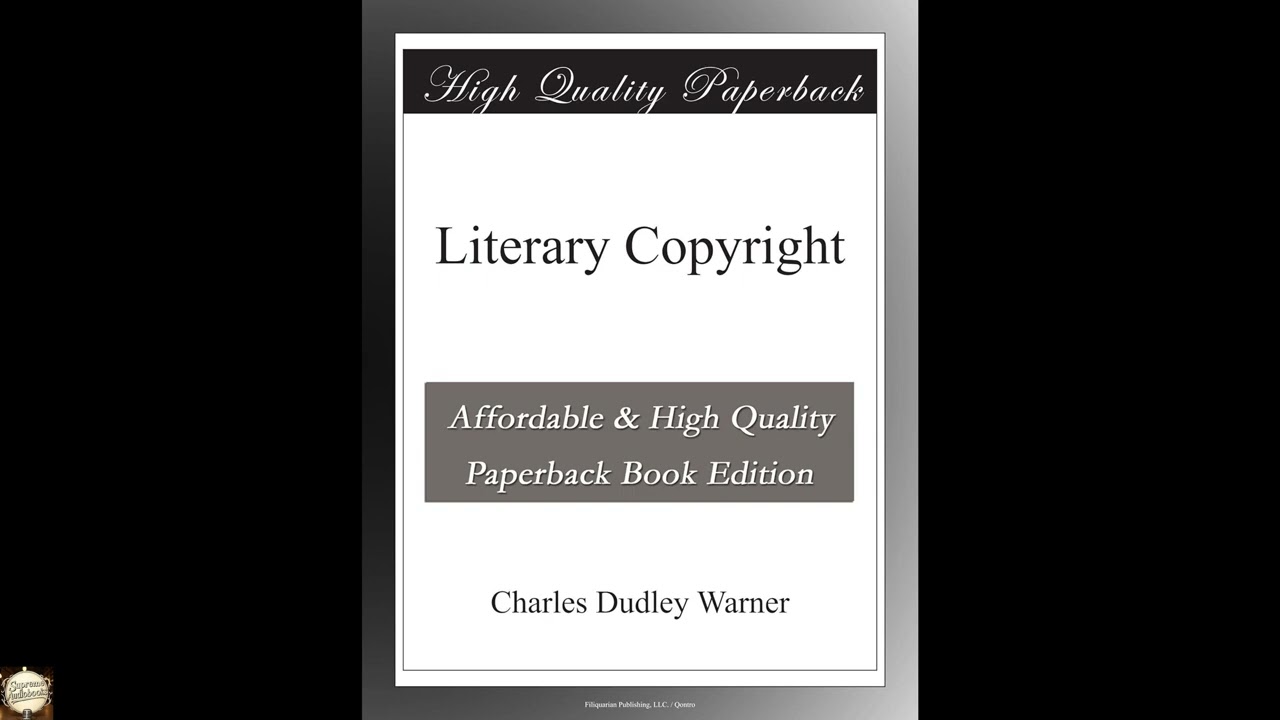
Literary Copyright
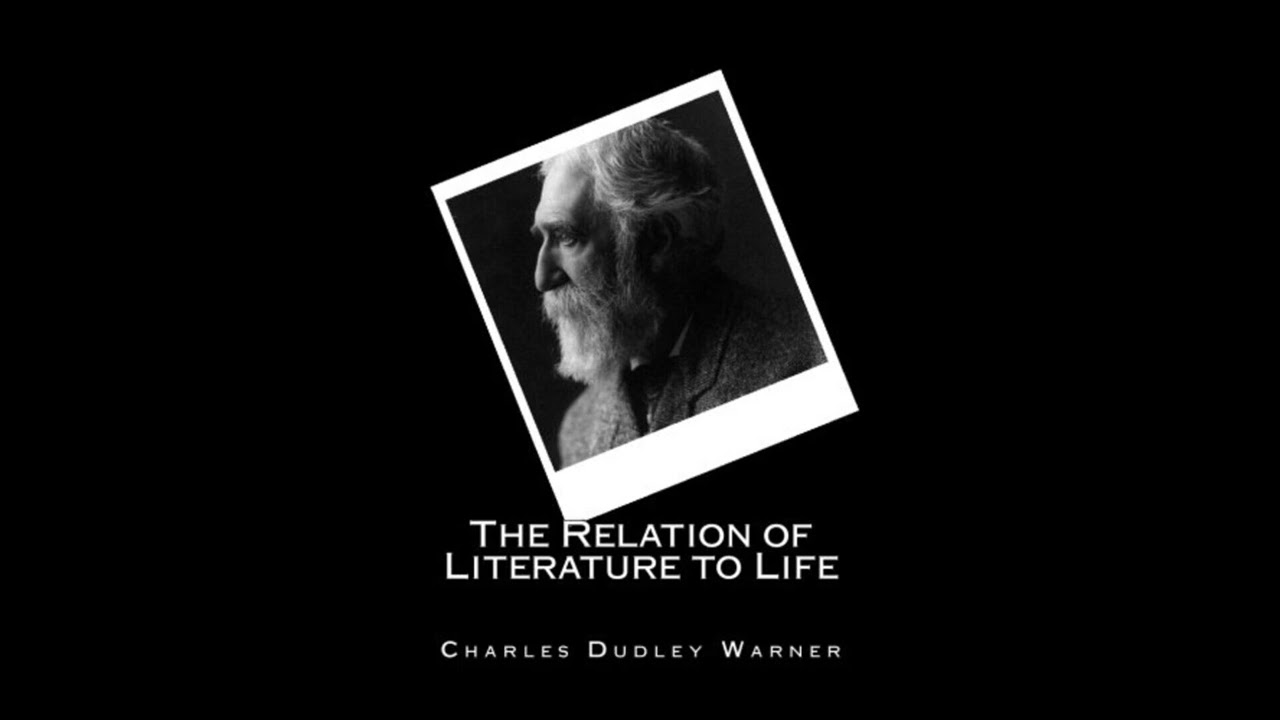
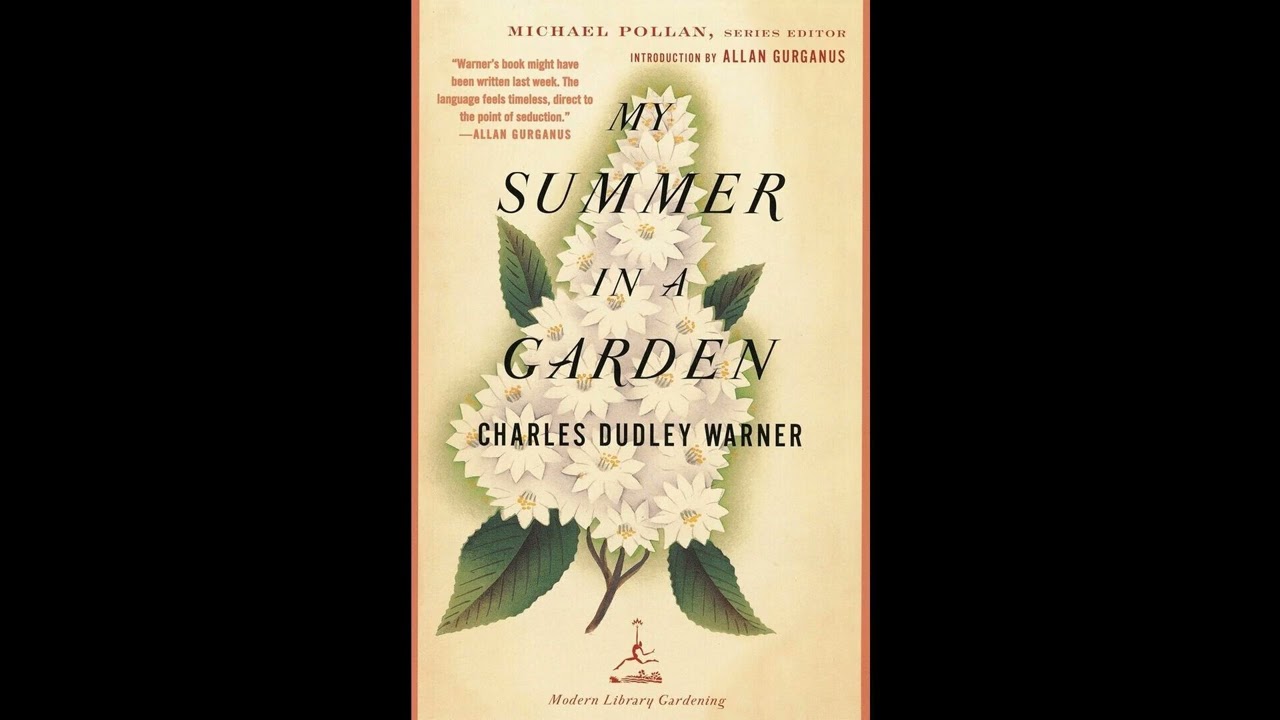
Step into the intellectual currents of an earlier era with Charles Dudley Warner's Literary Copyright, a foundational text that dissects the very concept of artistic ownership. While its origins lie in the challenges faced by writers of the late nineteenth century, its central concerns resonate profoundly today: who owns creative expression, how should creators be compensated, and what are the ethical boundaries when ideas spread across the globe? This isn't just a historical document; it's a living argument about the dignity of the artist and the economic infrastructure necessary for sustained literary creation, issues that remain at the forefront of debates surrounding digital rights, plagiarism, and the future of authorship in the internet age. Warner sets his stage in a world where the printing press has democratized literature, yet simultaneously opened Pandora's box for unauthorized replication. He doesn't tell a story in the traditional sense, but rather builds a meticulously constructed argument, guiding the listener through the complexities of intellectual property. The central conflict arises from the fundamental tension between an author's desire to benefit from their unique work and the ease with which that work can be appropriated without permission or compensation. Warner introduces us not to characters of flesh and blood, but to the archetypes involved in this struggle: the struggling author, the enterprising publisher, the hungry reader, and the ubiquitous "pirate" who undermines the entire system. The "arc" of Warner's discussion unfolds with the precision of a legal brief, albeit one infused with the wit and humanistic perspective of a seasoned man of letters. He begins by establishing the philosophical basis for copyright, asserting that a creative work is as much the property of its maker as any physical object. From there, he recounts the historical evolution of copyright law, demonstrating how societal recognition of authorial rights has slowly and unevenly progressed. His examination then turns to the immediate, pressing issues of his time – particularly the glaring inadequacies of international copyright, which allowed works to be freely copied across national borders, often impoverishing original authors and stifling literary innovation. Warner methodically lays out the economic realities for writers, illustrating how the lack of proper protection diminishes their livelihood and consequently impacts the quality and quantity of literature produced. Charles Dudley Warner, born in Plainfield, Massachusetts, in 1829, carved out a significant niche in American letters as an essayist, journalist, and humorist. After studying at Hamilton College and a brief stint as a lawyer, he turned to journalism, eventually becoming the editor of the Hartford Courant, a prominent newspaper of its day. His career coincided with a dynamic period in American history, allowing him a front-row seat to the social and cultural transformations of the post-Civil War era. Warner was known for his genial disposition, keen observational skills, and a prose style that balanced wit with serious reflection. His literary output was diverse, encompassing travelogues, personal essays, and works of social commentary. He is perhaps best remembered for his close friendship and collaboration with Mark Twain, with whom he co-authored the satirical novel The Gilded Age (1873), a book that lent its name to an entire period of American history. Other notable works include My Summer in a Garden and Backlog Studies, which showcase his talent for lighthearted, reflective essays on everyday life and nature. Warner belonged to a generation of writers who sought to define American identity in a rapidly modernizing world, often through regional detail and a distinctly American sense of humor, placing him firmly within the literary landscape of American realism and local color. He passed away in 1900, leaving a legacy of thoughtful and engaging prose. Among the specific themes Warner addresses, the fundamental right to intellectual property stands paramount. He articulates how a literary creation, far from being a common good immediately upon its making, is an extension of the author's mind and labor, deserving of legal protection. He might illustrate this by contrasting the painstaking effort of an author crafting a novel with the effortless act of a printer reprinting it without permission, highlighting the moral inequity. Another prominent theme is the economic viability of creative labor. Warner argues passionately that without enforceable copyright, authors cannot make a living from their writing, leading to a decline in literary quality and an exodus of talent from the profession. He might describe the impoverished circumstances of unprotected writers, forced to abandon their craft simply because their work provides no financial return. A third significant theme revolves around the ethics of literary piracy. Warner doesn't simply present piracy as a legal infraction but as a moral failing, an act of theft that undermines the very foundation of fair exchange and mutual respect within the literary community. He may paint a picture of publishers or individuals profiting illicitly from another's genius, contrasting their gains with the author's losses. Finally, the limitations of national copyright laws in an increasingly interconnected world form a crucial aspect of his argument. Warner highlights the absurdity and injustice of a system where a book protected in one country could be freely exploited just across a border, emphasizing the need for international cooperation and unified standards—a prescient observation given the challenges of global media distribution. Warner's work emerged during a pivotal moment for authorship and publishing in the late nineteenth century. The rapid expansion of printing technology made books more accessible than ever before, but it also exacerbated the problem of literary piracy, particularly between the United States and Great Britain. For decades, American publishers routinely reprinted British works without paying royalties, and vice versa, creating a system that benefited publishers at the expense of authors. This period also saw the rise of a professional class of authors who increasingly depended on their writing for their livelihood, making the issue of copyright not merely academic, but existential. Warner, as both an author and a journalist, was acutely aware of these challenges and contributed his voice to the growing clamor for stronger, internationally recognized copyright protections, a debate that would eventually lead to the establishment of more robust global agreements. His text provides a direct window into these pressing cultural and economic discussions. Listening to Literary Copyright as an audiobook offers a singular opportunity to engage directly with Warner's logical flow and persuasive rhetoric. A thoughtful narrator's voice can illuminate the nuances of his arguments, bringing to life the passion and conviction behind his words. The several-hour run length makes it an ideal companion for focused listening sessions, allowing you to absorb the intricacies of his historical context and legal reasoning without interruption. Pay attention to the measured pacing, which reflects the methodical build-up of his case, and the tone of earnest advocacy that underscores his call for justice for authors. While there is no traditional dialogue, the audiobook experience allows you to hear the implicit conversation between Warner's ideas and the prevailing attitudes of his time, making the enduring relevance of his commentary unmistakably clear.
Enjoyed Literary Copyright? A few ways to support us
Audible & Amazon links are affiliate; we may earn a small commission at no extra cost.
About this production
Human narration by a volunteer reader from LibriVox.org, the public-domain audiobook project. LibriVox volunteers record literary works whose copyright has expired in the United States, releasing the resulting recordings into the public domain.
Literary Copyright by Charles Dudley Warner. The underlying text is in the U.S. public domain. We do not republish any modern copyrighted edition, translation, or commentary.
The 4K cinematic visuals accompanying this audiobook are generated by an AI image model from prompts derived from the source text. No copyrighted photos, paintings, or stock footage are used. AI generation is disclosed on every video on our YouTube channel as required by YouTube's altered/synthetic content policy.
English subtitles are transcribed from the LibriVox recording with OpenAI Whisper. Translations into the 11 other supported languages are produced by Meta's NLLB-200 neural translation model. No human translator's copyrighted translation is used.
Questions about sourcing or rights? See our DMCA & Sourcing policy or contact us.
Enjoyed this audiobook?
If you'd like to own a copy of Literary Copyright or hear a professionally produced edition, the links below help support free audiobook production at no extra cost to you.
As an Amazon Associate we earn from qualifying purchases. Audible / print links are affiliate.