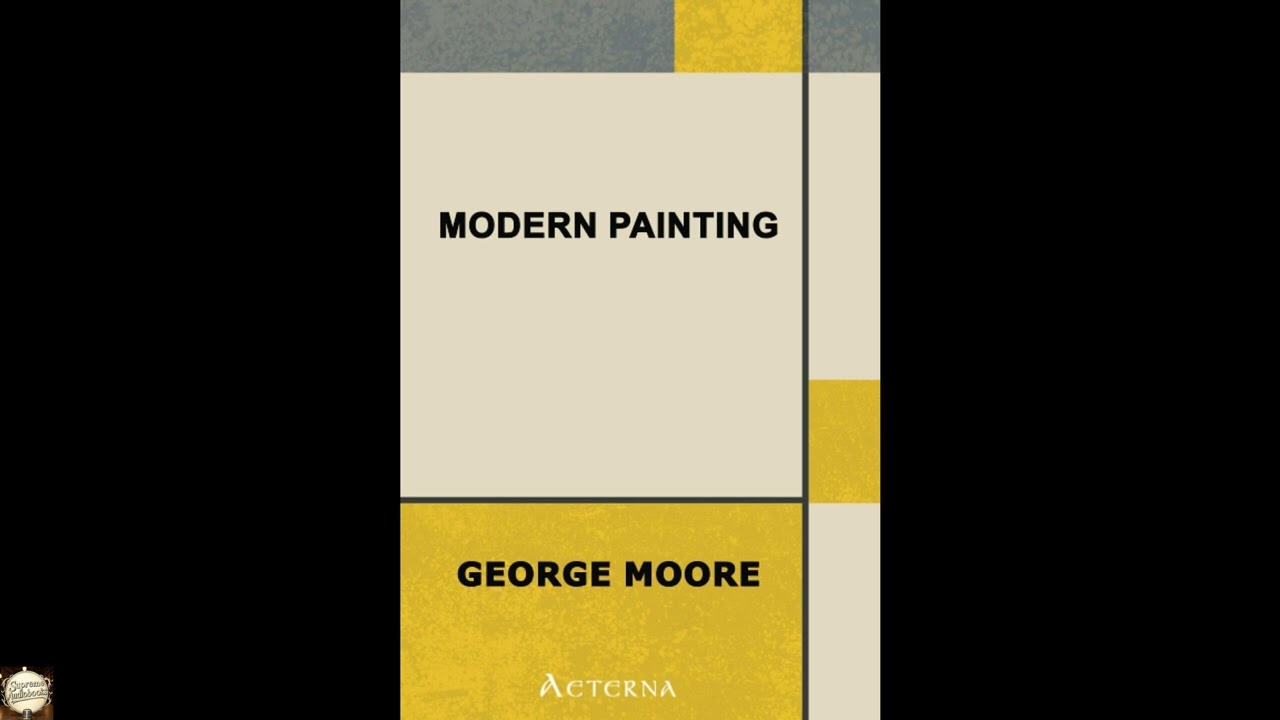
Modern Painting
Step into the bustling art salons and quiet studios of the late nineteenth century with George Moore’s incisive collection, Modern Painting. This isn't merely a historical artifact; it remains a vibrant, opinionated conversation about the very nature of art, its purpose, and its enduring ability to provoke and transform. Moore, a critic and novelist with an insider’s understanding of the European art scene, acts as our guide, dismantling academic dogma and passionately advocating for the revolutionary spirit of Impressionism and its contemporaries. For anyone who has ever pondered what makes art "modern," or struggled to reconcile tradition with innovation, Moore’s spirited arguments and profound insights continue to resonate, offering a unique perspective on a pivotal moment in cultural history that shaped the way we see art today. Moore’s collection of essays presents a fascinating "story" of the evolving art world, a dramatic shift in aesthetic sensibility played out across the canvases and critical debates of his time. The stage is primarily Paris and London, with occasional forays into other European centers, where the established order of the art academies—with their grand historical narratives, idealized figures, and meticulously rendered forms—is facing a profound challenge. Moore positions himself as a champion of the new, setting the scene by contrasting the lifeless, conventional art he sees dominating the salons with the daring, fresh vision emerging from the studios of independent artists. His narrative unfolds as a series of encounters with painters, their works, and the critical reception they garnered, illustrating the stark divide between those clinging to the past and those forging the future. The central conflict animating these pages is the struggle for recognition and understanding faced by artists like Édouard Manet, Edgar Degas, Claude Monet, and James McNeill Whistler. Moore introduces these figures not just as painters, but as courageous innovators whose rejection of accepted themes and techniques—their embrace of fleeting light, everyday subjects, and subjective experience—was often met with scorn and incomprehension. He walks the listener through their artistic philosophies, dissecting their methods and arguing for the profound impact of their vision. His arc moves from a critique of the stagnant conventions of the Royal Academy to a celebratory exposition of the Impressionists' breakthrough, showing how these artists, through sheer will and genius, were fundamentally redefining what painting could be. Moore doesn't just describe; he actively participates in the critical discourse, urging his audience to look beyond preconceived notions and truly see the beauty and truth in this burgeoning new form of expression. Born in County Mayo, Ireland, in 1852, George Augustus Moore hailed from an Anglo-Irish aristocratic family, a background that afforded him a degree of cultural exposure and independence. At the age of twenty-one, he moved to Paris, initially intending to pursue a career as a painter. This formative period in the 1870s proved pivotal, as it immersed him directly in the vibrant avant-garde art scene of the French capital. He witnessed firsthand the rise of Impressionism, frequenting studios, galleries, and the cafes where artists and critics debated the future of art. Although he eventually abandoned painting for writing, this intense exposure to modern French art and literature—particularly the naturalism of Émile Zola and Gustave Flaubert—profoundly shaped his aesthetic sensibilities and critical perspective. Upon his return to London, and later during his involvement with the Irish Literary Revival, Moore established himself as a prominent and often controversial literary figure. His novels, such as A Mummer's Wife (1885) and Esther Waters (1894), were notable for their unflinching realism and psychological depth, earning him a place as a transitional writer between Victorian and modernist sensibilities. He also penned influential autobiographical works like Confessions of a Young Man (1888) and the three-volume Hail and Farewell. His prose style was characterized by its clarity, directness, and an almost conversational rhythm, often laced with sharp critical observations and a keen eye for detail. Moore’s unique position, bridging Irish, French, and English cultural spheres, allowed him to offer fresh, often provocative, insights into the artistic currents of his age, solidifying his role as both a significant author and an acute art critic. One of the central themes Moore addresses in Modern Painting is the very nature of artistic modernity itself. He argues that modern art is not simply about being new, but about a fundamental shift in perception—a move away from idealized historical subjects towards the immediate, the personal, and the observation of light and atmosphere. For example, he praises Manet's daring decision to paint contemporary figures with unvarnished honesty, as seen in works that challenged conventional beauty and mythological allegories, compelling viewers to confront art on its own terms, rather than through a lens of academic expectation. This advocacy for a direct, experiential engagement with art underscores his belief that true modernity resides in an artist's authentic vision, rather than adherence to prescribed rules. Another significant theme is the dynamic tension between artistic truth and convention. Moore passionately champions artists who dared to portray the world as they genuinely saw it, even if their vision clashed with established norms. He highlights how Impressionists like Monet broke from the studio tradition to capture the changing light and moods of landscapes and cityscapes, painting outdoors to seize the ephemeral quality of a moment. This commitment to representing the "truth" of perception, even if it meant sacrificing the smooth finishes and precise forms favored by the academies, illustrates Moore's argument that artistic vitality lies in authenticity, not in imitation or rigid adherence to past formulas. He shows how these artists, in rejecting conventional subject matter and technique, opened up new possibilities for seeing and representing the world. Modern Painting emerged at a fascinating juncture in European cultural history, specifically in 1893. The late nineteenth century was a period of immense change, marked by rapid industrialization, burgeoning urban centers, and a shifting social landscape. Photography had become widely accessible, challenging painting's traditional role as a recorder of reality and pushing artists to redefine their purpose. While Impressionism had already made its initial, often controversial, splash in France decades earlier, it was still largely misunderstood and dismissed by the more conservative art establishments in England. Academic art, with its emphasis on classical subjects, moralizing narratives, and polished technique, continued to dominate institutions like the Royal Academy, shaping public taste and critical opinion. Moore, having lived in Paris and directly witnessed the early struggles and eventual triumphs of the Impressionists, felt a profound need to act as an interpreter and advocate. He understood that English audiences and critics were often resistant to the radical departures of French art, viewing it as crude or unfinished. His collection of essays served as a crucial bridge, explaining the philosophies, techniques, and sheer brilliance of these "modern" painters to a largely skeptical Anglophone world. It was a time when the very definition of "art" was undergoing a seismic re-evaluation, and Moore, with his sharp wit and deep aesthetic conviction, played a significant role in guiding his audience through this thrilling, often bewildering, revolution. Listening to Modern Painting as an audiobook offers a unique opportunity to immerse oneself in Moore's critical voice. Imagine a thoughtful, articulate companion guiding you through the debates and visual innovations of a bygone era. The several hours of listening provide ample space for Moore’s detailed analyses and persuasive arguments to unfold, making it an ideal companion for focused sessions or for absorbing complex ideas during walks or commutes. Pay attention to the clarity and precision of his language, his occasional flashes of wit, and the way he passionately constructs his case for artistic freedom and innovation. Hearing his words spoken aloud brings a distinct vibrancy to his descriptions of light, color, and form, allowing his insights into the very act of seeing and painting to feel as fresh and compelling today as they were when he first penned them.
Enjoyed Modern Painting? A few ways to support us
Audible & Amazon links are affiliate; we may earn a small commission at no extra cost.
About this production
Human narration by a volunteer reader from LibriVox.org, the public-domain audiobook project. LibriVox volunteers record literary works whose copyright has expired in the United States, releasing the resulting recordings into the public domain.
Modern Painting by George (George Augustus) Moore. The underlying text is in the U.S. public domain. We do not republish any modern copyrighted edition, translation, or commentary.
The 4K cinematic visuals accompanying this audiobook are generated by an AI image model from prompts derived from the source text. No copyrighted photos, paintings, or stock footage are used. AI generation is disclosed on every video on our YouTube channel as required by YouTube's altered/synthetic content policy.
English subtitles are transcribed from the LibriVox recording with OpenAI Whisper. Translations into the 11 other supported languages are produced by Meta's NLLB-200 neural translation model. No human translator's copyrighted translation is used.
Questions about sourcing or rights? See our DMCA & Sourcing policy or contact us.
Enjoyed this audiobook?
If you'd like to own a copy of Modern Painting or hear a professionally produced edition, the links below help support free audiobook production at no extra cost to you.
As an Amazon Associate we earn from qualifying purchases. Audible / print links are affiliate.