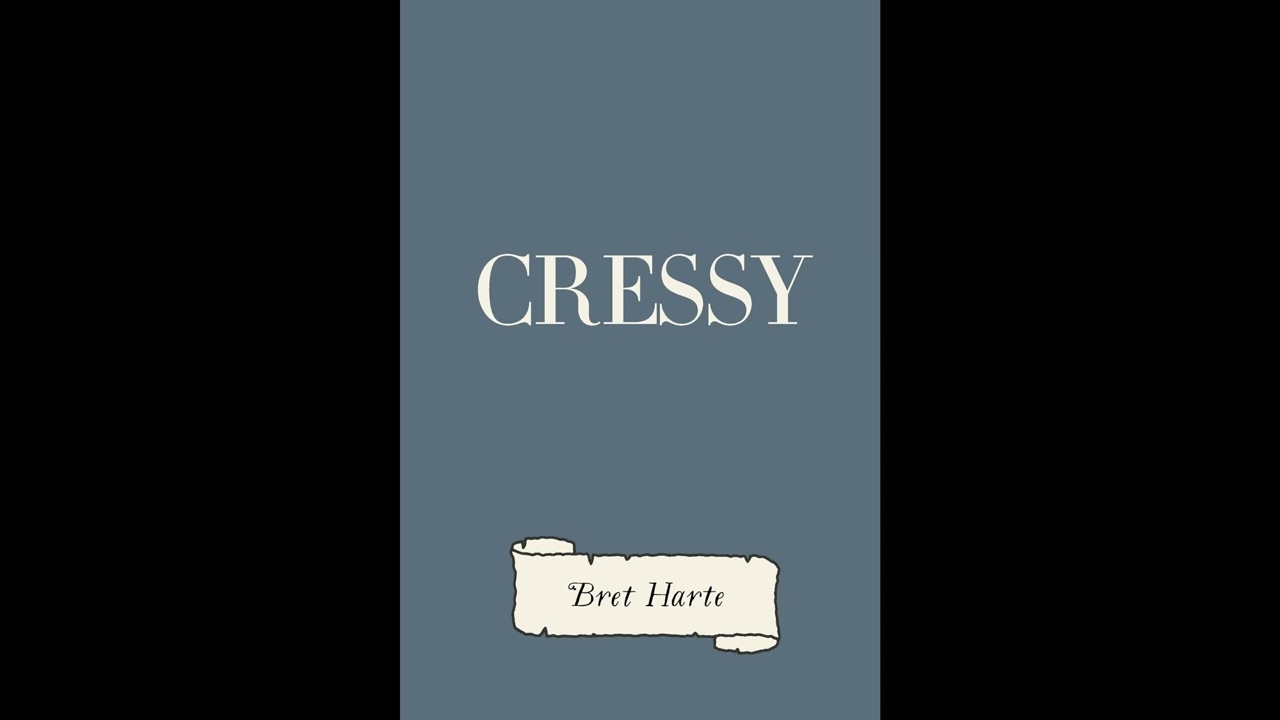
Cressy
Bret Harte's "Cressy" presents a fascinating portrait of a young woman's untamed spirit colliding with the conventions of civilization in the American West. Published at a moment when the frontier was rapidly receding, this novel offers listeners a chance to consider what constitutes true education, genuine independence, and societal expectation. It is a story that, despite its late 19th-century setting, continues to resonate, asking us to question the definitions of refinement and the enduring power of an authentic personality. At its heart, "Cressy" champions the wild, unapologetic character of its namesake, inviting us to root for a protagonist who defies easy categorization and stands firm in her unique identity. The narrative unfolds in a rugged Sierra Nevada mining community, a place where the air is as crisp and untamed as its inhabitants. Here lives Cressy McKinstry, a young woman defined by her raw intelligence, striking beauty, and an upbringing far removed from genteel society. She moves with the freedom of the mountains themselves, her speech blunt, her manners unconventional, and her spirit fiercely independent. Her father, an amiable but somewhat feckless prospector, has raised her with little formal schooling but an abundance of practical wisdom and a deep connection to the natural world around them. Cressy is a force of nature, beloved by the rough-hewn locals yet often misunderstood by anyone from "the outside." Into this close-knit, idiosyncratic world arrives a young schoolteacher, a man of education and refinement hailing from the East. Mr. Ford is accustomed to order and established norms, and he initially views Cressy with a mixture of bewilderment and academic curiosity. Their first encounters are marked by a clash of cultures—his polite formality against her unvarnished honesty. While Cressy initially scorns the very idea of formal education, her sharp wit and natural cleverness soon become apparent, drawing Mr. Ford into a complex dance of attraction and exasperation. The story follows Cressy as she navigates the teacher's attempts to "civilize" her, the expectations of the community, and her own dawning understanding of love and self-discovery. Her relationships with the various men who admire her, from earnest local suitors to the sophisticated Mr. Ford, form the central emotional tension, highlighting her struggle to remain true to herself while confronting the possibilities of a different kind of life. The author, Francis Bret Harte (1836-1902), holds a distinctive place in American literature as a master of the short story and a key figure in establishing the genre of "local color." Born in Albany, New York, Harte moved to California in 1854, drawn by the allure of the Gold Rush era. He immersed himself in the unique culture of the rapidly developing state, working in various capacities—as a miner, express messenger, journalist, and eventually as the editor of the influential Overland Monthly magazine. It was during his time at the Overland Monthly that he began to publish the stories that would make him famous, tales that captured the rough-and-tumble spirit, the dramatic landscapes, and the often-pivotal moral dilemmas of the California frontier. Harte's most celebrated works, such as "The Luck of Roaring Camp" and "The Outcasts of Poker Flat," depicted the lives of miners, gamblers, and other frontier characters with a blend of sentiment, realism, and humor that instantly captivated readers. He developed a distinctive narrative voice, using regional dialect and vivid descriptions to bring his settings to life, thereby defining a new school of American writing. Although he spent the latter part of his life living abroad, serving as a U.S. consul in Krefeld, Germany, and later in Glasgow, Scotland, his literary reputation remained firmly tied to the romanticized California he so memorably depicted, allowing his stories to shape the popular imagination of the American West for generations. "Cressy" enacts several important themes that give it enduring literary significance. One central idea is the perennial conflict between nature and civilization. Cressy herself is the embodiment of the untamed natural world—unpolished, authentic, and free. Her rough-hewn manners, her instinctive knowledge of her surroundings, and her frank, often startling honesty stand in stark contrast to the more refined, structured world represented by the schoolteacher. For instance, her effortless command of a horse and her ability to navigate the mountain terrain speak to a different kind of wisdom than that found in books, challenging the notion that civilization always represents progress. Another significant theme involves the meaning of education and independence, particularly for women in the late 19th century. Cressy's initial resistance to schooling forces the reader to consider whether formal academic knowledge is superior to the hard-won wisdom of experience. She possesses a keen intellect and a strong will, demonstrating that intelligence takes many forms, not all of which are recognized by conventional institutions. Her struggle to assert her autonomy while navigating societal pressures and romantic expectations speaks to a larger conversation about female agency and the constraints placed upon women who dared to live outside prescribed norms. The novel also touches on themes of class distinction and the evolving American identity, as the rough frontier yields to more structured societies. "Cressy" emerged during a particularly poignant moment in American history, the late 19th century, when the idea of the American frontier was undergoing a profound transformation. Frederick Jackson Turner's influential "frontier thesis" would soon formalize the notion that the frontier was "closed," leading to a widespread sense of nostalgia for a simpler, wilder past. Bret Harte, though living in Europe at the time of the novel's publication in 1889, continued to look back to the California of his youth, a period of rapid change and formation. His writing became a crucial part of the local color movement, an effort by writers across the country to capture the distinct customs, dialects, and landscapes of specific regions before they vanished under the tide of modernization. "Cressy" therefore offers both a loving remembrance and a thoughtful examination of the shifting values of a nation grappling with its own development. Listening to "Cressy" as an audiobook offers a unique opportunity to immerse oneself fully in Harte's vividly drawn world. A skilled narrator can bring to life the distinctive regional dialects and speech patterns that characterize the inhabitants of the Sierra Nevada, adding layers of authenticity and humor to the dialogue. The pacing, often reflective of the quiet grandeur of the mountain setting but punctuated by moments of intense emotion and sharp wit, becomes particularly engaging when delivered by an accomplished voice artist. The subtle atmosphere of the remote community, the rustle of the pines, and the clash of personalities are enhanced through carefully modulated tones and inflections, allowing listeners to visualize the scenes and connect deeply with Cressy's untamed spirit and her journey of self-discovery. The several hours of narrative provide ample time to savor the unfolding story and its memorable characters.
Enjoyed Cressy? A few ways to support us
Audible & Amazon links are affiliate; we may earn a small commission at no extra cost.
About this production
Human narration by a volunteer reader from LibriVox.org, the public-domain audiobook project. LibriVox volunteers record literary works whose copyright has expired in the United States, releasing the resulting recordings into the public domain.
Cressy by Bret Harte. The underlying text is in the U.S. public domain. We do not republish any modern copyrighted edition, translation, or commentary.
The 4K cinematic visuals accompanying this audiobook are generated by an AI image model from prompts derived from the source text. No copyrighted photos, paintings, or stock footage are used. AI generation is disclosed on every video on our YouTube channel as required by YouTube's altered/synthetic content policy.
English subtitles are transcribed from the LibriVox recording with OpenAI Whisper. Translations into the 11 other supported languages are produced by Meta's NLLB-200 neural translation model. No human translator's copyrighted translation is used.
Questions about sourcing or rights? See our DMCA & Sourcing policy or contact us.
Enjoyed this audiobook?
If you'd like to own a copy of Cressy or hear a professionally produced edition, the links below help support free audiobook production at no extra cost to you.
As an Amazon Associate we earn from qualifying purchases. Audible / print links are affiliate.