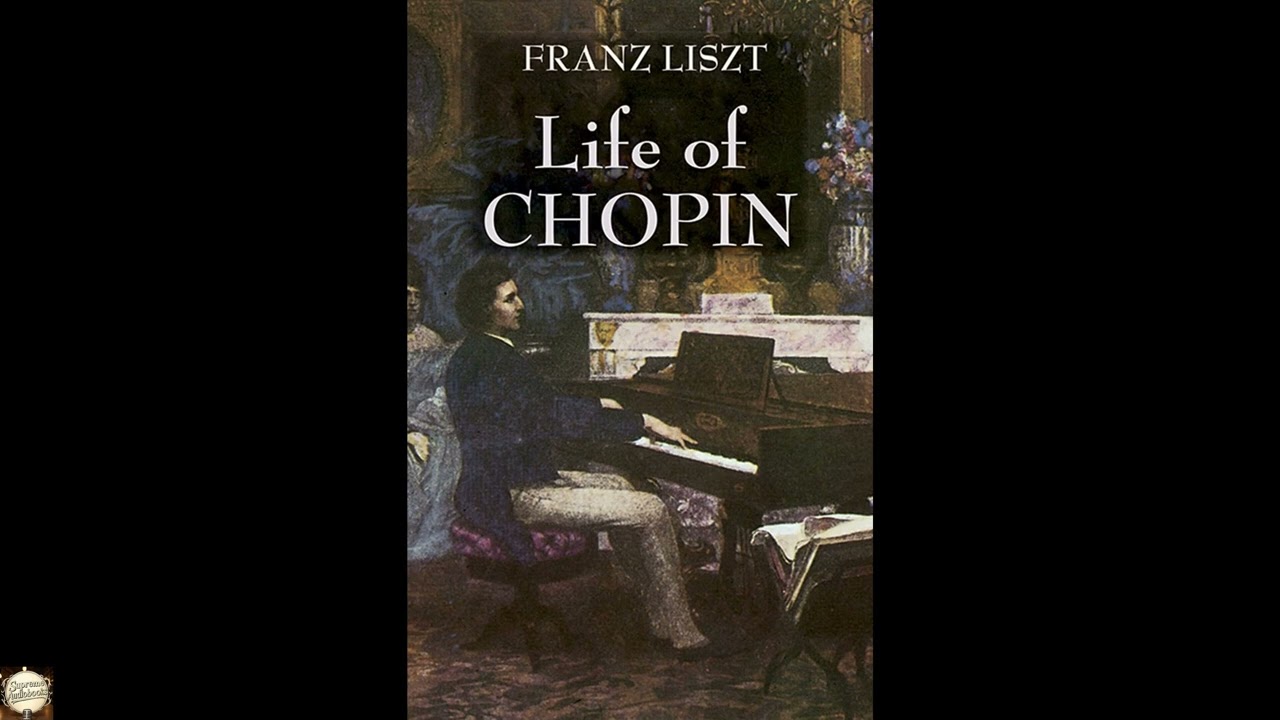
Life of Chopin
To encounter Franz Liszt’s Life of Chopin is to step into a bygone era, a world where the lives of artistic titans unfolded in salons and concert halls, observed and interpreted by their equally celebrated peers. This isn't merely a biography; it's a personal testament, a profound act of one musical genius reflecting upon another. For listeners today, it offers an unparalleled window into the creative mind of Frédéric Chopin, filtered through the appreciative, yet discerning, lens of his friend and contemporary. What emerges is not just the chronicle of a composer, but a vivid portrait of an artist striving for perfection, grappling with frailty, and pouring the very essence of his being into sounds that would define an age. To hear Liszt’s words is to gain not only historical insight but also a deeply empathetic understanding of the human cost and triumph of artistic creation. Liszt's account of Chopin's life unfolds across the rich backdrop of 19th-century Europe, primarily focusing on the vibrant intellectual and artistic milieu of Paris, the city that became Chopin's spiritual home. The narrative follows the delicate yet resolute Frédéric Chopin from his early prodigy days in Warsaw, where his singular talent was already evident, to his eventual arrival in the French capital. Here, among fellow luminaries like Liszt himself, Hector Berlioz, and the enigmatic George Sand, Chopin refined his unique musical voice, distinguishing himself with an intimate, poetic style that stood apart from the more flamboyant virtuosity prevalent at the time. Liszt meticulously charts Chopin's evolution, detailing his intense dedication to composition and his distinctive approach to the piano, an instrument he transformed with his innovative harmonies and subtle dynamics. The central narrative thread in Liszt's telling is Chopin's persistent pursuit of artistic integrity amidst personal challenges. Liszt portrays a man intensely sensitive, often reserved, whose profound inner life was the wellspring of his creative power. We see Chopin struggling with his delicate health, a constant shadow throughout his adult years, which often limited his public performances but perhaps intensified the introspective quality of his compositions. Liszt, through his close observation, illuminates the conflicts inherent in Chopin's existence: the desire for privacy contrasted with the demands of a public persona, the struggle against physical ailments, and the unyielding drive to translate deeply felt emotions into precise, exquisite musical forms. His relationships, particularly with George Sand, are presented as influences on his emotional state and, consequently, his music, without revealing the ultimate outcomes of these connections. Franz Liszt, born in 1811 in Raiding, Hungary, stands as one of the most influential and revolutionary figures in the history of music. A child prodigy on the piano, he quickly became renowned as the greatest piano virtuoso of his era, often compared to the legendary violinist Niccolò Paganini. His extensive concert tours across Europe cemented his fame before he largely retired from the performing stage to focus on composition and conducting, notably at the court in Weimar, where he championed new music and mentored many young musicians. Beyond his prodigious output of piano works, which include the groundbreaking Transcendental Études and Hungarian Rhapsodies, Liszt innovated the symphonic poem, a new orchestral form. Later in life, he took minor orders in the Catholic Church, becoming an abbé, and composed significant sacred music. His place in the musical canon is secured not just by his technical brilliance and compositions, but by his profound impact on the Romantic movement, pushing the boundaries of musical expression and performance. Liszt's prose itself holds a place in classic literature for its passionate advocacy of the Romantic ideals—the genius of the individual, emotional intensity, and the intertwining of art with life's struggles. His Life of Chopin demonstrates this literary bent, offering a deeply personal and often poetic interpretation rather than a dry factual chronology. He wrote other literary pieces, including essays and letters, reflecting the widespread Romantic ideal of the artist as a polymath, equally adept with words and notes. Among the prominent themes Liszt brings to the fore is artistic genius and solitude. He presents Chopin as an artist whose greatest work emerged from a profound introspection, often shunning the grand stages preferred by his contemporaries for the more intimate setting of Parisian salons. Liszt describes Chopin’s painstaking dedication to composition, his continuous refinement of scores, and his preference for private audiences where his delicate touch and nuanced interpretations could be fully appreciated. This focus on the artist's inner world highlights how Chopin’s music was a direct extension of his unique, sensitive spirit. Another theme that threads throughout the book is the suffering artist and creation. Liszt directly links Chopin’s delicate constitution and his ongoing battle with illness to the melancholic beauty and intense emotional depth found in his compositions. For example, he illustrates how Chopin’s physical frailty, while limiting his public activities, seemed to intensify his creative output in solitude, shaping the poignant, elegiac qualities often heard in his nocturnes and preludes. Furthermore, Liszt emphasizes the theme of national identity and exile. Though living in Paris, Chopin remained deeply connected to his Polish heritage, a sentiment Liszt shows infused his music. Liszt meticulously discusses how Chopin's mazurkas and polonaises are far more than mere dance forms; they are expressions of the Polish soul, embodying the longing for a lost homeland and the resilience of a nation under foreign rule. Liszt provides insights into how Chopin, through his music, carried the spirit of Poland with him, painting vivid sonic pictures of its landscapes and traditions for audiences far from his native soil. These themes, interwoven throughout the narrative, make Liszt’s account a powerful statement on the nature of art, suffering, and national pride, seen through the specific lens of Chopin's extraordinary life. Life of Chopin emerged into a Europe still reverberating from the political upheavals of the 1848 revolutions and deeply steeped in the cultural currents of Romanticism. Published in 1852, a few years after Chopin’s death in 1849, the book appeared at a moment when the Romantic era was perhaps at its zenith, and the cult of the artistic genius—the solitary, often tormented, yet supremely gifted individual—was intensely celebrated. Paris, the backdrop for much of Chopin’s adult life, was the undisputed cultural capital of the world, a magnet for artists, writers, and musicians from across the continent. Liszt's work captures this specific historical moment, when a composer could be a celebrity, and personal memoirs and biographies of celebrated figures were highly prized, serving both as eulogy and analysis. The work also reflects the burgeoning sense of nationalism in Europe, showcasing how an artist's personal identity could become inextricably linked with the fate and spirit of their homeland. Listening to Life of Chopin as an audiobook offers a unique intimacy with Liszt's prose, allowing his insights and admiration for Chopin to wash over the listener without the demands of decoding complex historical names or musical terms on the page. The narrator's voice becomes crucial, ideally capturing the reflective and often passionate tone of Liszt, bringing a thoughtful and articulate presence to his observations. With a run time of several hours, this work provides ample opportunity for deep immersion—perfect for quiet contemplation, during a long drive, or for moments of focused attention where the rich detail of Chopin's world can truly unfold. One can listen for the deliberate pacing, designed to allow Liszt’s poetic descriptions of music and personality to resonate, and the way the narrator breathes life into his sometimes florid, yet always insightful, language. It cultivates an atmosphere akin to sitting in a 19th-century salon, listening to one master speak reverently of another, transporting you directly into the heart of Romantic artistry.
Enjoyed Life of Chopin? A few ways to support us
Audible & Amazon links are affiliate; we may earn a small commission at no extra cost.
About this production
Human narration by a volunteer reader from LibriVox.org, the public-domain audiobook project. LibriVox volunteers record literary works whose copyright has expired in the United States, releasing the resulting recordings into the public domain.
Life of Chopin by Franz Liszt. The underlying text is in the U.S. public domain. We do not republish any modern copyrighted edition, translation, or commentary.
The 4K cinematic visuals accompanying this audiobook are generated by an AI image model from prompts derived from the source text. No copyrighted photos, paintings, or stock footage are used. AI generation is disclosed on every video on our YouTube channel as required by YouTube's altered/synthetic content policy.
English subtitles are transcribed from the LibriVox recording with OpenAI Whisper. Translations into the 11 other supported languages are produced by Meta's NLLB-200 neural translation model. No human translator's copyrighted translation is used.
Questions about sourcing or rights? See our DMCA & Sourcing policy or contact us.
Enjoyed this audiobook?
If you'd like to own a copy of Life of Chopin or hear a professionally produced edition, the links below help support free audiobook production at no extra cost to you.
As an Amazon Associate we earn from qualifying purchases. Audible / print links are affiliate.
More by Franz Liszt
More Audiobooks
Correspondence of Wagner and Liszt, Volume 2. 1854-1861

The Letters of Wolfgang Amadeus Mozart - Volume 01
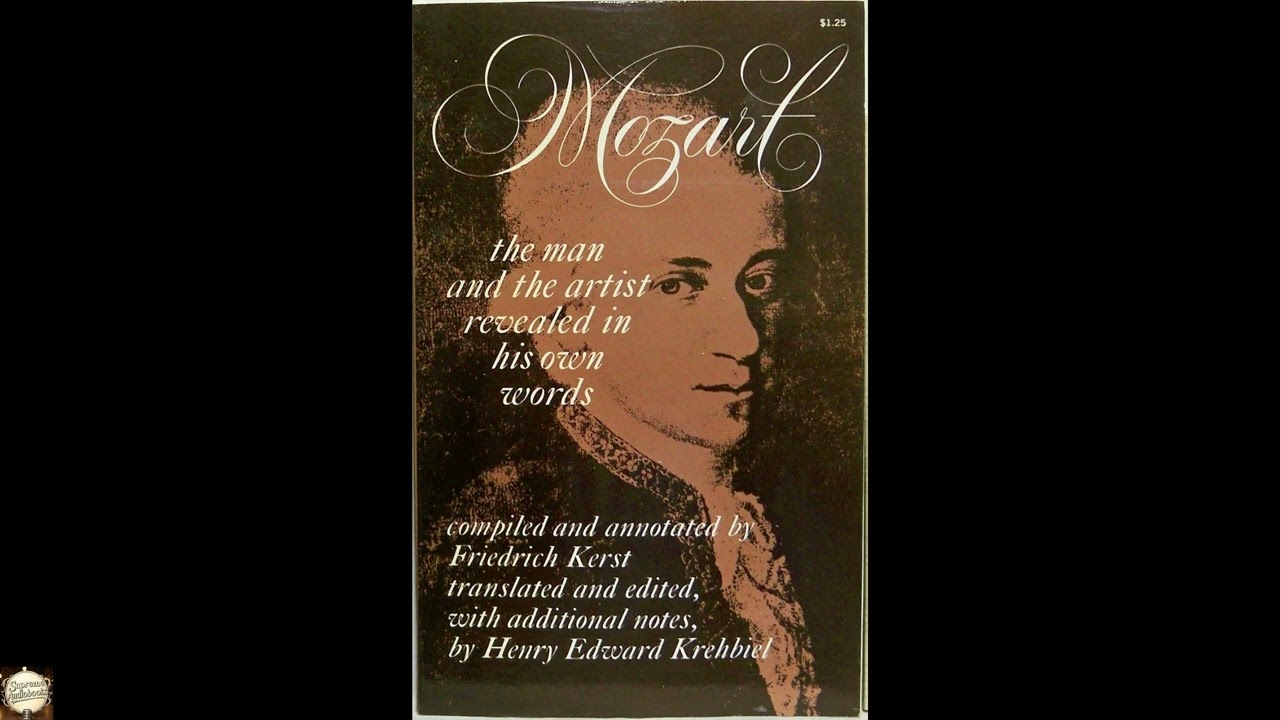
Mozart: The Man and the Artist Revealed in His Own Words Dover Books On Music: Comp osers- Audiobook
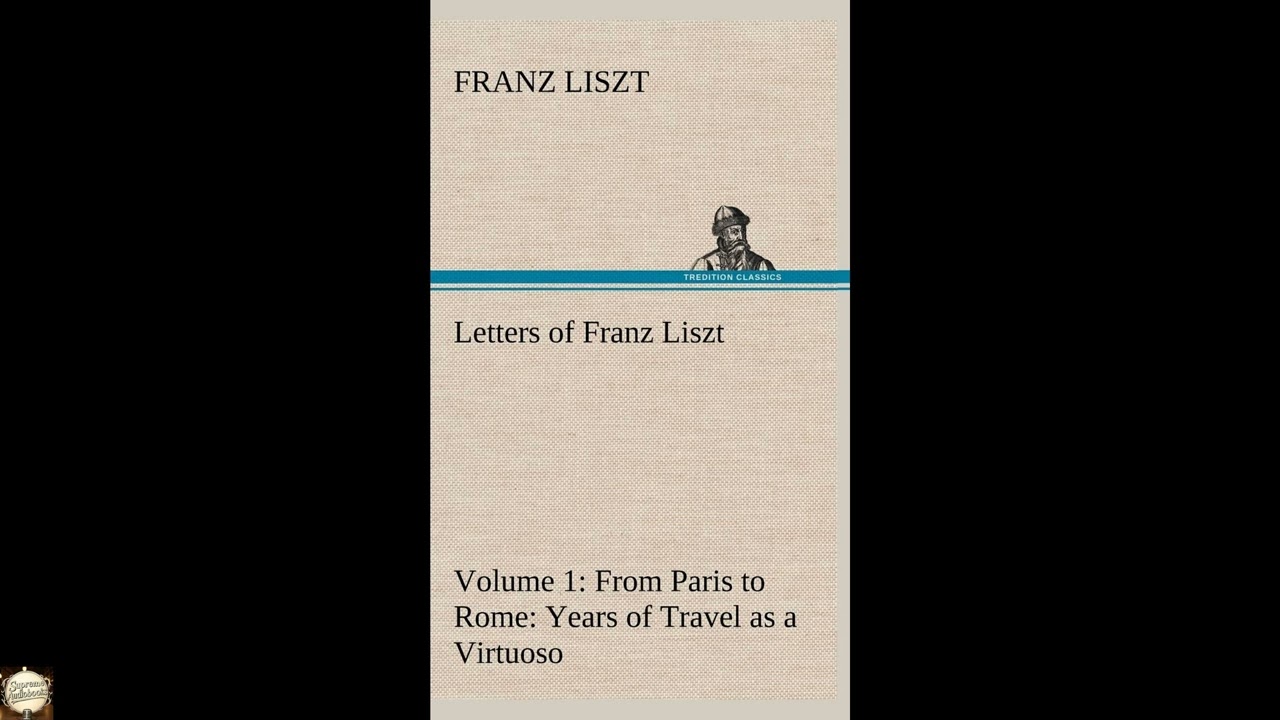
Letters of Franz Liszt -- Volume 1 from Paris to Rome: Years of Travel as a Virtuos