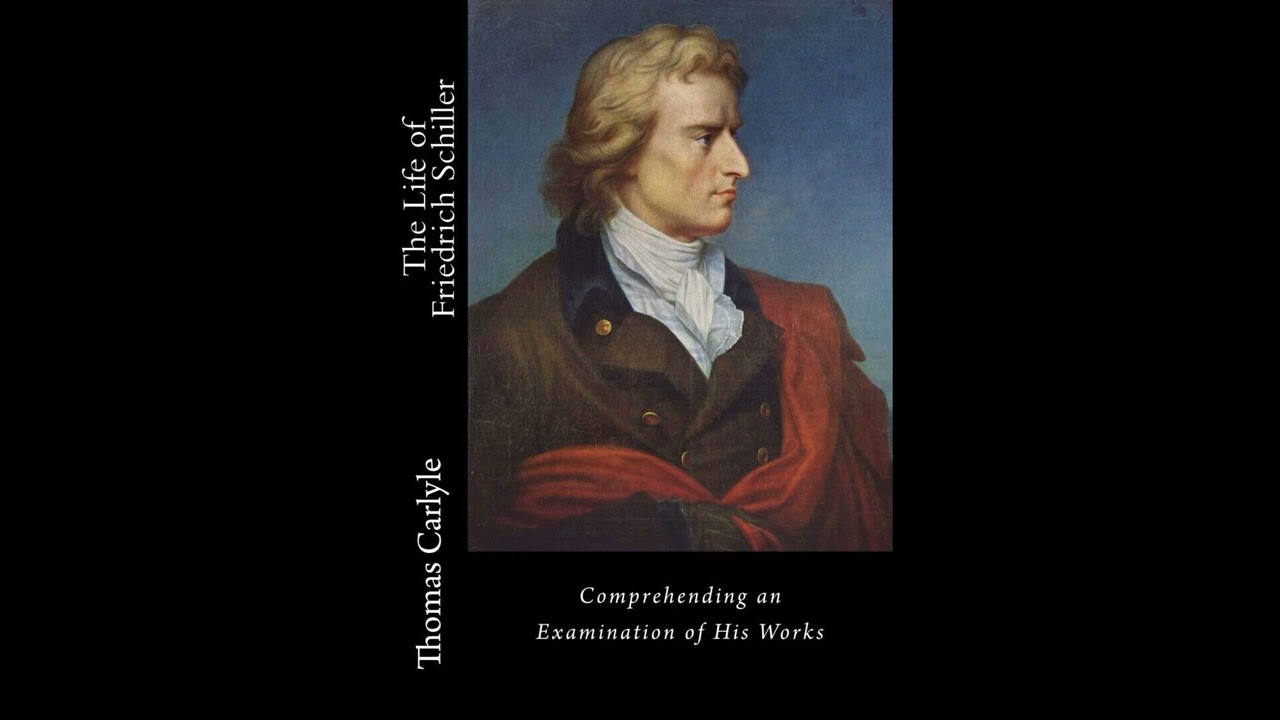
The Life of Friedrich Schiller: Comprehending an Examination of His Works
To truly understand the spirit of an age, one must often look to its most incandescent voices. "The Life of Friedrich Schiller: Comprehending an Examination of His Works" offers listeners more than a mere chronology; it presents a profound engagement with one of Germany's literary titans, a figure whose dramas, poetry, and philosophical essays shaped the very contours of European thought. This isn't just a historical account; it's an impassioned argument for the enduring relevance of intellectual courage and artistic freedom, a story that resonates powerfully even today in our own complex times, reminding us of the artist's struggle and triumph against formidable odds. This substantial work invites a deep dive into the making of a genius and the forces that both inspired and opposed him. The narrative unfolds around the meteoric, though tragically brief, existence of Friedrich Schiller, tracing his journey from the constrained confines of eighteenth-century Württemberg to the cultural pinnacle of Weimar. Born into a relatively humble family, young Schiller was conscripted by Duke Karl Eugen into the strict Karlsschule military academy, where he was compelled to study law, then medicine. Despite this rigid environment, the fire of his poetic ambition could not be extinguished. In secret, he penned his first drama, The Robbers, a searing indictment of tyranny and societal injustice, which upon its clandestine publication and subsequent stage debut, ignited a sensation across Germany, transforming the young doctor into an overnight literary rebel. This audacious literary debut came at a heavy personal cost. The Duke, enraged by Schiller's unauthorized literary pursuits and the play's subversive message, forbade him from writing anything but medical treatises. Faced with an oppressive regime that stifled his very soul, Schiller made the perilous decision to flee, becoming a literary refugee adrift in a fragmented Germany. The book details his years of precarious existence, reliant on the patronage of sympathetic figures, and his tireless dedication to his craft, even amidst illness and financial hardship. Listeners will follow Schiller through his friendships with intellectual luminaries like Christian Gottfried Körner, his development as a historian, his prolific output of plays like Don Carlos and the monumental Wallenstein trilogy, and ultimately, his legendary collaboration with Johann Wolfgang von Goethe, a partnership that would define the era of Weimar Classicism and leave an indelible mark on German letters. The narrative closes before his final years, focusing on the formation of his genius and the triumphs of his mature dramatic vision. The insightful analysis presented in this biography comes from Thomas, an author celebrated for his keen intellect and distinctive prose style. Born in Ecclefechan, Scotland, in the late eighteenth century, Thomas grew to become a prominent essayist, historian, and philosopher, recognized for his powerful critiques of society and his pioneering role in introducing German literature and philosophy to the English-speaking world. His early career saw him grappling with personal doubts and financial hardship, much like the subject of his biography, before he found his voice as a compelling advocate for moral earnestness and heroic leadership. His other notable works include Sartor Resartus, a philosophical novel masquerading as an eccentric biography, and The French Revolution: A History, a vivid, almost hallucinatory recounting of that pivotal European upheaval. Thomas’s writing is characterized by its moral intensity, its often-unconventional sentence structures, and a deep-seated belief in the power of individual will and genius to shape history. His unique voice, combining poetic fervor with rigorous historical scrutiny, established him as a towering figure in Victorian literature and thought, securing his place as an inimitable commentator on the great figures and movements of his time. One of the central themes running through "The Life of Friedrich Schiller" is the unrelenting struggle of the individual artist against authoritarian structures. Schiller’s forced enrolment in the military academy, his secret writing, and his eventual flight from the Duke of Württemberg vividly exemplify this tension. The book powerfully portrays how creative expression, in Schiller’s case, was not merely a pastime but a profound act of defiance and a quest for personal freedom. This theme is embodied in the very genesis of The Robbers, a play born from the author's desperate need to voice outrage against injustice and limitation. Another significant theme is the formation and endurance of genius despite adversity. Thomas compellingly argues that Schiller's early hardships, rather than crushing his spirit, forged a resilience and a depth of understanding that informed his greatest works. The biography details how Schiller transformed his lived experiences of oppression and uncertainty into universal artistic statements about liberty, fate, and human dignity. For instance, the multi-part historical drama Wallenstein, with its intricate depiction of political ambition and moral compromise, reflects a hard-won maturity, a world-weary wisdom that emerged from Schiller’s own personal and intellectual trials. This biography emerged from a specific moment in the early nineteenth century when Britain was experiencing a surge of interest in German Romanticism and Idealist philosophy. Thomas himself was a key figure in this cultural exchange, serving as a translator and interpreter of German thinkers like Goethe and Novalis. The period was marked by intellectual ferment, a questioning of traditional authority, and a growing appreciation for the individual’s spiritual and creative life. Thomas, grappling with the complexities of his own age, saw in Schiller a kindred spirit – a genius who battled against the constraints of his era, articulating universal truths through art. The work thus reflects not only an objective recounting of Schiller's life but also Thomas's personal engagement with the ideas of heroism, duty, and artistic purpose, making it a pivotal bridge between German literary tradition and British intellectual discourse. Listening to "The Life of Friedrich Schiller" as an audiobook offers a unique gateway into this period and its profound ideas. The several hours of narration provide ample opportunity to settle into the distinctive rhythm of Thomas's prose. Listeners will appreciate the careful pacing, allowing the sometimes dense but always rewarding arguments to unfold naturally. A skilled narrator brings a vital dimension to the text, ensuring that Thomas's literary voice – at once scholarly and passionate, occasionally grandiloquent but always earnest – comes through with clarity and emotional resonance. The spoken word allows the atmosphere of Schiller’s revolutionary zeal and Thomas’s reflective admiration to envelop the listener, transforming a historical account into an intimate conversation with two extraordinary minds across time.
Enjoyed The Life of Friedrich Schiller: Comprehending an Examination of His Works? A few ways to support us
Audible & Amazon links are affiliate; we may earn a small commission at no extra cost.
About this production
Human narration by a volunteer reader from LibriVox.org, the public-domain audiobook project. LibriVox volunteers record literary works whose copyright has expired in the United States, releasing the resulting recordings into the public domain.
The Life of Friedrich Schiller: Comprehending an Examination of His Works by Thomas. The underlying text is in the U.S. public domain. We do not republish any modern copyrighted edition, translation, or commentary.
The 4K cinematic visuals accompanying this audiobook are generated by an AI image model from prompts derived from the source text. No copyrighted photos, paintings, or stock footage are used. AI generation is disclosed on every video on our YouTube channel as required by YouTube's altered/synthetic content policy.
English subtitles are transcribed from the LibriVox recording with OpenAI Whisper. Translations into the 11 other supported languages are produced by Meta's NLLB-200 neural translation model. No human translator's copyrighted translation is used.
Questions about sourcing or rights? See our DMCA & Sourcing policy or contact us.
Enjoyed this audiobook?
If you'd like to own a copy of The Life of Friedrich Schiller: Comprehending an Examination of His Works or hear a professionally produced edition, the links below help support free audiobook production at no extra cost to you.
As an Amazon Associate we earn from qualifying purchases. Audible / print links are affiliate.