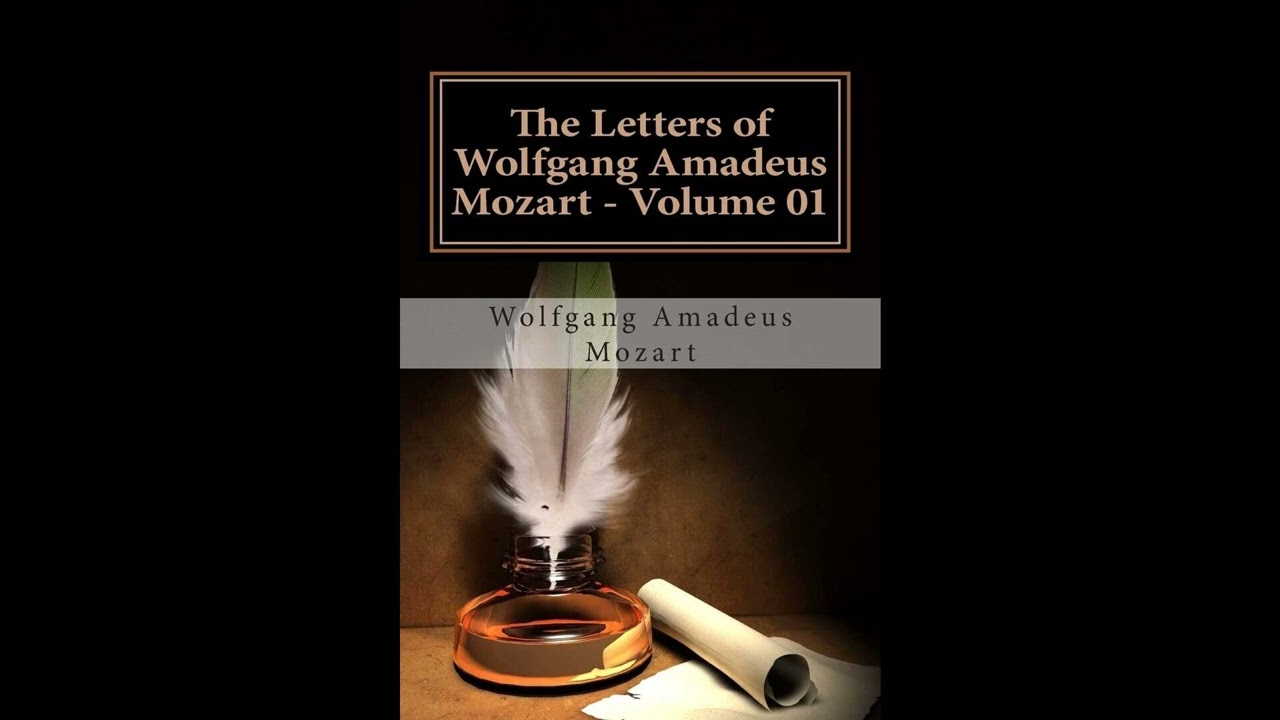
The Letters of Wolfgang Amadeus Mozart - Volume 01
Open a unique window onto the inner world of one of history's most celebrated musical minds with The Letters of Wolfgang Amadeus Mozart - Volume 01. Far from a dry collection of historical documents, these personal communications reveal the raw humanity, aspirations, and daily struggles of Wolfgang Amadeus Mozart as he navigated the tumultuous waters of 18th-century Europe. This is not simply a record of a composer's work; it is a direct conversation with a genius—a chance to witness his personality, his relationships, and the world he inhabited through his own candid, often witty, and sometimes startlingly direct words. For anyone who has ever been moved by a Mozart symphony or opera, these letters offer an unparalleled understanding of the individual behind the enduring music, making his legend feel profoundly, touchingly real. Volume 01 of these letters traces Mozart's formative years and the burgeoning of his extraordinary talent, beginning with his early tours as a child prodigy and continuing through his adolescence and young adulthood. The setting is a shifting panorama of 18th-century European courts and bustling cities—Salzburg, Vienna, Mannheim, Paris, and many stops in between. We witness the young Wolfgang, accompanied by his ambitious and often overbearing father, Leopold, and sometimes his mother, Anna Maria, as they traverse the continent. The narrative thread woven through these letters is Mozart's evolving relationship with his family, particularly his father, who served as his manager, teacher, and primary confidant. We see the delicate balance between filial respect and an emerging artistic independence, a constant negotiation as Wolfgang sought to forge his own path. The central progression of this first volume follows Mozart's efforts to establish a stable and creatively fulfilling career. He grapples with the rigid system of aristocratic patronage, the struggle to find suitable employment, and the sometimes-disappointing reception of his music. He writes of the grind of travel, the frustrations with meager pay, and the ever-present yearning for recognition that matched his immense skill. While there is no traditional "plot" in a fictional sense, the letters create a compelling human story: the triumphs and heartbreaks of a young artist coming into his own, searching for love, and attempting to reconcile his lofty artistic ideals with the practical demands of making a living in a world that often failed to appreciate his true worth. Wolfgang Amadeus Mozart, born in Salzburg in 1756, remains one of the most recognizable figures in Western classical music. His father, Leopold, himself a respected composer and musician, quickly recognized his son's prodigious gifts and dedicated his life to nurturing and showcasing them. From a very young age, Wolfgang and his sister, Nannerl, embarked on extensive European concert tours, performing for royalty and aristocrats across France, England, and the Holy Roman Empire, astounding audiences with their precocious talents. These early travels provided Mozart with invaluable exposure to diverse musical styles and influences, shaping the young composer’s sophisticated aesthetic. As an adult, Mozart eventually sought to break free from the constraints of his employment at the Salzburg court, longing for greater artistic freedom and opportunity. He eventually settled in Vienna, then a vibrant musical capital, where he composed some of his most significant works. His output was astonishingly prolific, encompassing over 600 pieces, including beloved operas like The Marriage of Figaro, Don Giovanni, and The Magic Flute, numerous symphonies, piano concertos, string quartets, and sacred music. Despite his genius, Mozart often faced financial hardship and died relatively young in 1791, leaving behind a legacy that has profoundly shaped the course of music history and continues to resonate with audiences worldwide. The letters reveal several potent themes that run consistently through Mozart’s life and work. One dominant theme is the complex nature of family dynamics and artistic mentorship. The voluminous correspondence between Wolfgang and his father, Leopold, stands as a testament to their intertwined lives, marked by both deep affection and underlying tension. For example, Leopold's letters are frequently filled with detailed advice on social conduct and career strategy, reflecting his unwavering ambition for his son. Wolfgang’s replies, while respectful, sometimes hint at his growing desire for independence, as he might write of pursuing a specific commission or expressing a personal preference that diverged from his father's plans, showing a budding assertiveness beneath the filial deference. Another significant theme is the enduring struggle between artistic aspiration and economic reality. Mozart, despite his exceptional talent, was continuously preoccupied with money, patrons, and securing a stable income. His letters often describe the practicalities of making a living as a musician—complaints about low fees for performances, the search for new students, or the sheer effort involved in composing a new piece while simultaneously trying to manage household finances. We read his frustrations with patrons who were slow to pay or failed to appreciate the depth of his compositions, alongside his fervent hopes for new opportunities in cities like Mannheim or Paris, always chasing the promise of financial and artistic fulfillment. These moments ground his genius in the very real, often difficult, circumstances of his daily existence. Mozart's letters emerge from a period of profound change in Europe, often referred to as the Enlightenment. This intellectual and cultural movement emphasized reason, individualism, and a critical approach to traditional authority. While Mozart himself was not a philosopher, his pursuit of an independent career, attempting to break free from the traditional patronage system of the church and aristocracy, reflects some of these emerging ideals. Musically, the era saw a transition from the ornate complexity of the Baroque style toward the clarity, balance, and emotional directness characteristic of the Classical period—a transition Mozart profoundly influenced and perfected. Politically, Europe was a patchwork of monarchies and smaller states, with travel between them being a slow and often arduous endeavor. The social hierarchy remained rigid, with artists largely dependent on the favor of wealthy patrons. Mozart's correspondence gives us a firsthand account of this world, detailing the conditions of his travels, his interactions with various societal strata, and the expectations placed upon an artist by his powerful benefactors. His works, while often serving the established order, also contained a spirit of humanism and individual expression that subtly challenged the prevailing norms, particularly in his operas which often depicted social critique and the dignity of the common person. Hearing these letters spoken aloud transforms them from historical documents into an intimate, living narrative. The carefully chosen narrator's voice lends an additional dimension to Mozart's own words, conveying the youthful exuberance, the moments of frustration, the deep affection he felt for his family, and his often surprising, earthy wit. The pacing of the narration allows listeners to absorb the nuances of his prose, to reflect on his observations about the world, and to truly hear the voice of a man who was both a towering genius and a deeply human individual. With several hours of content, this audio production offers a sustained and immersive encounter, allowing the listener to fully enter Mozart's world and gain an understanding of the challenges, joys, and everyday realities that shaped his extraordinary life and music.
Enjoyed The Letters of Wolfgang Amadeus Mozart - Volume 01? A few ways to support us
Audible & Amazon links are affiliate; we may earn a small commission at no extra cost.
About this production
Human narration by a volunteer reader from LibriVox.org, the public-domain audiobook project. LibriVox volunteers record literary works whose copyright has expired in the United States, releasing the resulting recordings into the public domain.
The Letters of Wolfgang Amadeus Mozart - Volume 01 by Wolfgang Amadeus Mozart. The underlying text is in the U.S. public domain. We do not republish any modern copyrighted edition, translation, or commentary.
The 4K cinematic visuals accompanying this audiobook are generated by an AI image model from prompts derived from the source text. No copyrighted photos, paintings, or stock footage are used. AI generation is disclosed on every video on our YouTube channel as required by YouTube's altered/synthetic content policy.
English subtitles are transcribed from the LibriVox recording with OpenAI Whisper. Translations into the 11 other supported languages are produced by Meta's NLLB-200 neural translation model. No human translator's copyrighted translation is used.
Questions about sourcing or rights? See our DMCA & Sourcing policy or contact us.
Enjoyed this audiobook?
If you'd like to own a copy of The Letters of Wolfgang Amadeus Mozart - Volume 01 or hear a professionally produced edition, the links below help support free audiobook production at no extra cost to you.
As an Amazon Associate we earn from qualifying purchases. Audible / print links are affiliate.
More by Wolfgang Amadeus Mozart
More Audiobooks
Correspondence of Wagner and Liszt, Volume 2. 1854-1861
Frederick Chopin As A Man and Musician Volumes 1
History of Friedrich II of Prussia - Volume 04
Letters of Franz Liszt -- Volume 1 from Paris to Rome: Years of Travel as a Virtuos