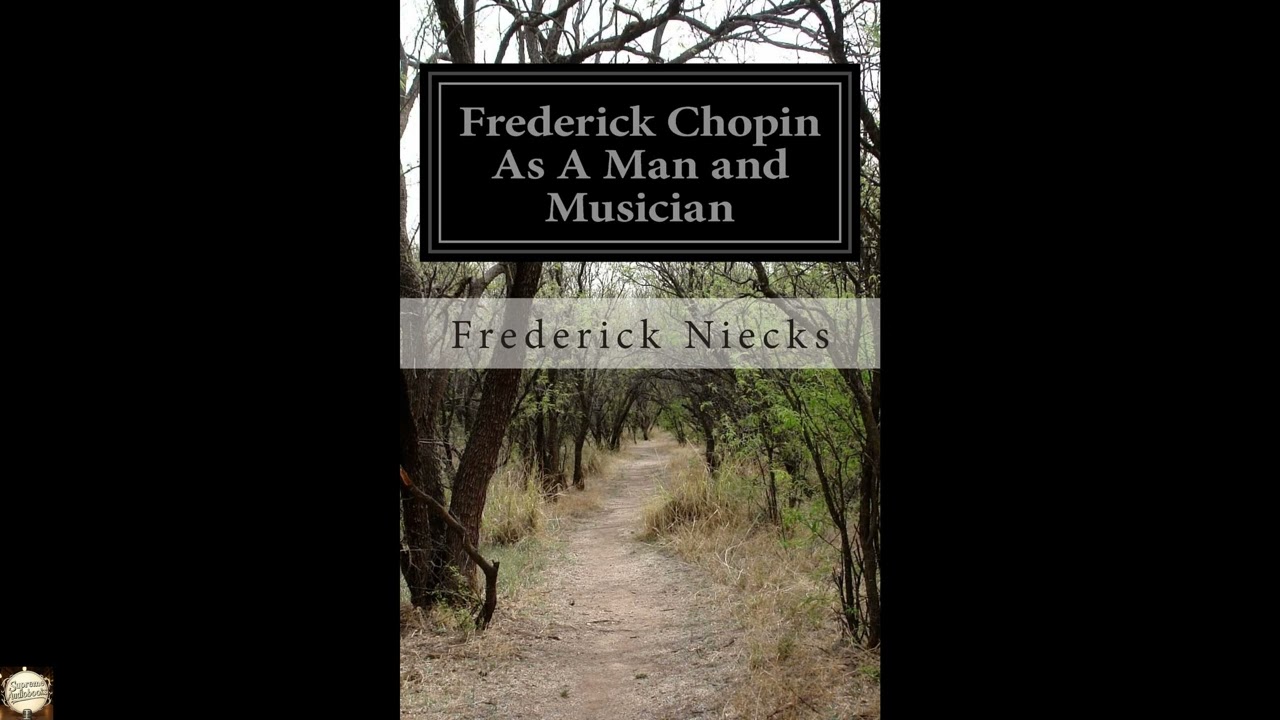
Frederick Chopin As A Man and Musician Volumes 1
To truly understand the soulful, revolutionary piano music of Frédéric Chopin, one must first endeavor to grasp the man behind the melodies. Frederick Niecks's monumental "Frederick Chopin As A Man and Musician, Volumes 1" offers precisely that opportunity, serving as the foundational stone for nearly all subsequent biographical studies of the Polish-French composer. Published in 1888, it represents the first exhaustive, meticulously researched account of Chopin's life in English, pulling back the curtain on the private struggles, intellectual currents, and profound emotional depths that shaped one of music's most revered figures. Why should listeners care today? Because Niecks, with a scholar's rigor and a music lover's devotion, pieced together a human story that resonates far beyond the concert hall, revealing the universal challenges of genius, identity, and the relentless pursuit of artistic expression against a backdrop of personal frailty and national upheaval. Volume one of Niecks's magisterial biography begins by meticulously tracing the lineage and early life of Fryderyk Franciszek Chopin, born in Żelazowa Wola, Poland, in 1810. We are introduced to his parents, his sisters, and the cultured, intellectually stimulating environment of his childhood home in Warsaw, which fostered his prodigious musical talents from an astonishingly young age. Niecks details Chopin's initial lessons with Adalbert Żywny and then Józef Elsner, illuminating the foundational classical training that underpinned his later Romantic innovations. The narrative patiently follows Chopin through his student years at the Warsaw Lyceum and the High School of Music, chronicling his earliest compositions—polonaises, mazurkas, and waltzes that already hinted at the unique harmonic and melodic language he would develop. The story progresses through Chopin's burgeoning fame in Warsaw's salons and his early public performances, which quickly established him as a national prodigy. Niecks carefully reconstructs the social and political milieu of early 19th-century Poland, a nation yearning for independence under Russian rule, which deeply influenced the young composer's patriotism and artistic sensibilities. We then follow Chopin as he ventures beyond Poland's borders, first to Vienna and then, decisively, to Paris in 1831, a city that would become his permanent home in exile. This crucial transition marks a pivotal shift in the composer's life, as he navigates the vibrant artistic circles of the French capital, grappling with the challenge of establishing himself as a foreign artist while yearning for his distant homeland, a central emotional conflict that colored his entire creative output and personal existence. Niecks's work in this volume sets the stage for Chopin's ascendance as a virtuoso pianist and composer, deeply embedded in the intellectual and artistic ferment of Romantic Paris, even as he carried the weight of his Polish identity. Frederick Niecks, born in Düsseldorf, Germany, in 1845, was a towering figure in late 19th and early 20th-century musicology. His academic career led him to Scotland, where he served as Professor of Music at the University of Edinburgh from 1891 until his retirement in 1914, becoming the first scholar to hold this esteemed position. Before his professorship, Niecks established himself as a respected critic, author, and translator, demonstrating an exceptional command of languages and a meticulous approach to historical research. His lifelong dedication to musical scholarship was characterized by a profound commitment to accuracy and a desire to elevate music biography from mere anecdote to rigorous academic pursuit. Niecks’s most celebrated achievement, the Chopin biography, was the culmination of years of dedicated research, involving extensive travel, correspondence with Chopin's surviving friends and family, and painstaking review of primary sources—letters, reviews, and contemporary accounts. This diligent methodology set a new standard for music biographies of its era. Beyond his seminal work on Chopin, Niecks also penned a significant biography of Robert Schumann and contributed numerous articles to Grove's Dictionary of Music and Musicians, solidifying his reputation as an authoritative voice in the field. His contributions helped shape the nascent discipline of modern musicology, influencing generations of scholars to approach musical figures not just as creators of sound, but as complex individuals situated within specific historical and cultural contexts. Niecks passed away in Edinburgh in 1924, leaving behind a legacy as a foundational figure in the scholarly understanding of Romantic composers. One of the central themes woven through Niecks's biography is the interplay between genius and fragility. He meticulously documents Chopin's early, almost preternatural gifts—his ability to compose at seven, his sensitivity to music and emotion—while simultaneously revealing the chronic ill health that shadowed his entire life. For instance, Niecks describes Chopin's frequent bouts of illness, his delicate constitution, and how these physical limitations contrasted sharply with the profound strength and innovation of his musical ideas. This constant tension between the ephemeral body and the transcendent spirit offers a poignant illustration of the artist's struggle, providing insight into the melancholic beauty and intense emotionality often found in Chopin’s works, a beauty perhaps born from his own physical vulnerability and the fleeting nature of life. Another compelling theme that Niecks brings to the forefront is national identity and exile. Though he spent most of his adult life in Paris, Chopin remained fiercely Polish, and Niecks vividly portrays this enduring patriotism. He details Chopin's profound connection to Polish folk music, particularly the mazurkas and polonaises, which he elevated into sophisticated art forms. Niecks recounts Chopin's sorrow over the November Uprising of 1830, a rebellion against Russian rule that he could only observe from abroad. This sense of longing for his homeland, of being an outsider looking in, is subtly conveyed through Chopin's letters and contemporary observations, demonstrating how his expatriate status infused his music with a distinct nationalistic fervor, even as he refined it with a cosmopolitan elegance. This dual identity—Polish heart, Parisian mind—is a recurring motif that Niecks skillfully elucidates, offering a deeper appreciation for the cultural roots of Chopin's compositions. Niecks's work emerged during a fascinating period in European intellectual history, the late 19th century, a time when serious academic inquiry was increasingly applied to the arts. Romanticism, which Chopin himself embodied, was still a powerful force, but it was being tempered by a growing positivist desire for historical accuracy and scientific rigor. Biographies of major cultural figures, once often hagiographic or anecdotal, were beginning to evolve into comprehensive, source-based studies. Niecks's "Chopin" perfectly encapsulates this transition. It appeared nearly forty years after the composer's death, at a point where many of his contemporaries and first-hand witnesses were still alive, but also when his legend had begun to solidify. This timing allowed Niecks to collect invaluable oral testimonies and primary documents that might have been lost to later generations, while also providing enough historical distance to assess Chopin's contributions with a degree of objectivity. His work thus represented a pioneering effort to blend the reverence of a fan with the methodical approach of a scholar, establishing a benchmark for future musicological research and positioning Chopin firmly within the pantheon of great composers, understood not just as a creator of beautiful sounds but as a product of his time and a testament to the human spirit. Listening to "Frederick Chopin As A Man and Musician, Volumes 1" as an audiobook offers a uniquely immersive experience, allowing the listener to truly sink into Niecks's detailed narrative over its many hours. The human voice of a skilled narrator can transform Niecks’s meticulously researched prose from dense text into an accessible, engaging account, making the biographical details and historical context flow with a natural rhythm. The careful pacing allows ample time to absorb the intricacies of Chopin's early life, his family dynamics, and the specific musical influences that shaped him. Listen for the narrator’s nuanced delivery when Niecks quotes from Chopin's letters or describes his interactions with fellow artists and patrons; these moments bring the composer's personality and the atmosphere of 19th-century Europe vividly to life. This format is particularly well-suited for those who appreciate absorbing historical accounts gradually, perhaps while commuting, exercising, or engaged in other activities, letting the story of Chopin's formative years unfold like a personal conversation with a knowledgeable guide.
Enjoyed Frederick Chopin As A Man and Musician Volumes 1? A few ways to support us
Audible & Amazon links are affiliate; we may earn a small commission at no extra cost.
About this production
Human narration by a volunteer reader from LibriVox.org, the public-domain audiobook project. LibriVox volunteers record literary works whose copyright has expired in the United States, releasing the resulting recordings into the public domain.
Frederick Chopin As A Man and Musician Volumes 1 by Frederick Niecks. The underlying text is in the U.S. public domain. We do not republish any modern copyrighted edition, translation, or commentary.
The 4K cinematic visuals accompanying this audiobook are generated by an AI image model from prompts derived from the source text. No copyrighted photos, paintings, or stock footage are used. AI generation is disclosed on every video on our YouTube channel as required by YouTube's altered/synthetic content policy.
English subtitles are transcribed from the LibriVox recording with OpenAI Whisper. Translations into the 11 other supported languages are produced by Meta's NLLB-200 neural translation model. No human translator's copyrighted translation is used.
Questions about sourcing or rights? See our DMCA & Sourcing policy or contact us.
Enjoyed this audiobook?
If you'd like to own a copy of Frederick Chopin As A Man and Musician Volumes 1 or hear a professionally produced edition, the links below help support free audiobook production at no extra cost to you.
As an Amazon Associate we earn from qualifying purchases. Audible / print links are affiliate.