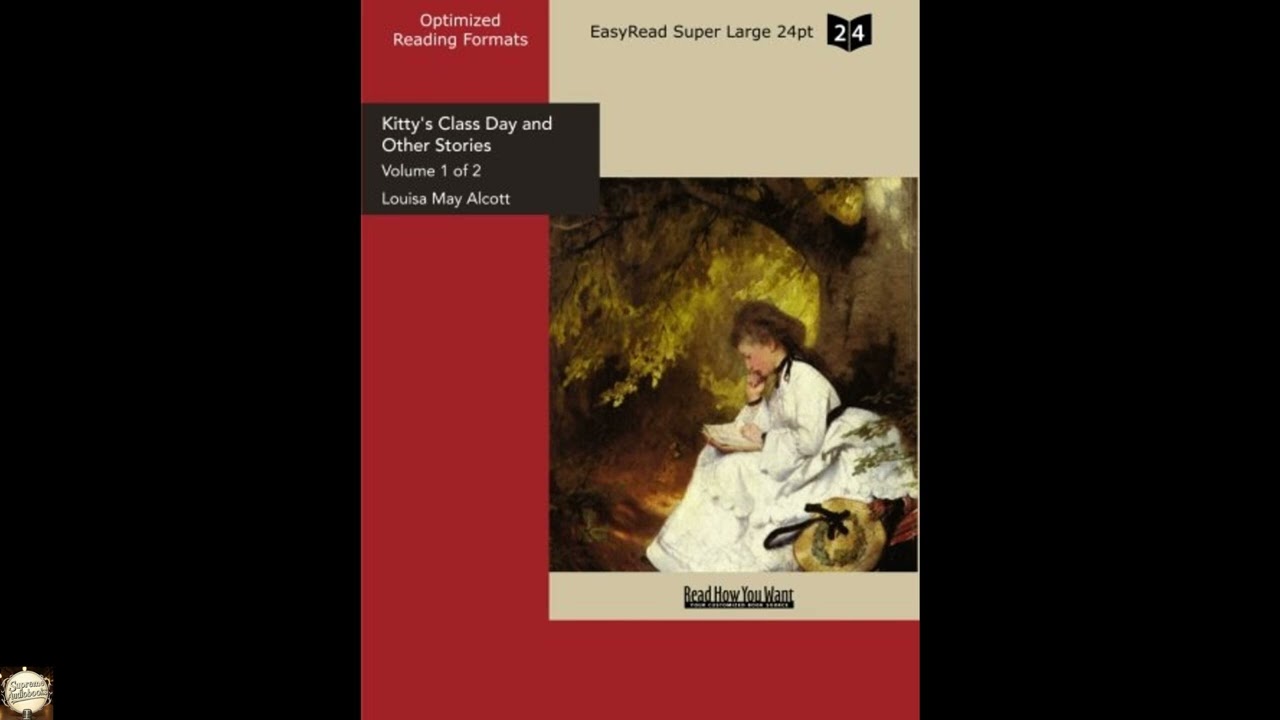
Kitty's Class Day and Other Stories
For listeners who know Louisa May Alcott only through the beloved saga of the March sisters, a delightful expansion of her world awaits within the pages of Kitty's Class Day and Other Stories. This collection offers a charming glimpse into the everyday lives, small triumphs, and minor tribulations of young people, primarily girls, navigating the gentle currents of late nineteenth-century American domestic life. It presents a more intimate, sometimes instructional, but always deeply felt portrait of childhood and adolescence, revealing Alcott's profound understanding of youthful hearts and the formative experiences that shape character. These tales, brimming with gentle humor and quiet wisdom, remain remarkably resonant, speaking to enduring concerns about friendship, integrity, ambition, and the search for one's place in the world. They offer a comforting return to a simpler time, yet one where the fundamental lessons of human kindness and perseverance still shine brightly. The collection's titular story, "Kitty's Class Day," centers on Kitty, a diligent but somewhat anxious student at a girls' boarding school, as she prepares for the momentous annual event that marks the culmination of their academic year. Class Day is a highly anticipated occasion, a chance for the girls to showcase their talents, present their hard-earned achievements, and, perhaps most importantly, to shine in the eyes of their teachers, parents, and peers. Kitty, like many young people, grapples with self-doubt and the pressures of expectation. Her personal conflict arises not from grand external forces, but from the very relatable anxieties of striving for academic excellence, yearning for social acceptance, and overcoming minor personal flaws. As Class Day approaches, Kitty faces a series of small but significant challenges. She learns lessons about humility when her efforts are not immediately recognized, and about perseverance when faced with the demands of her studies. The narrative follows her through the flurry of preparations—the rehearsing of recitations, the careful crafting of speeches, the quiet competition among friends. She observes her classmates, each with their own unique strengths and struggles, and through these interactions, she begins to understand the diverse ways people contribute and cope under pressure. The stories that accompany "Kitty's Class Day" often share this focus on youthful protagonists grappling with similar issues: learning to share, understanding the value of honesty, or finding courage in unexpected moments. They typically feature settings such as bustling homes, quiet schoolrooms, or peaceful village greens, where the drama unfolds through dialogue and small, meaningful actions rather than sweeping events. These are narratives of growth, where the central arc is always an internal one, focusing on a character's moral or emotional development. Louisa May Alcott, the celebrated author of these enduring tales, was born in 1832 in Germantown, Pennsylvania, though she spent much of her formative years in Concord, Massachusetts, a hub of transcendentalist thought. Her father, Amos Bronson Alcott, was an educational reformer and philosopher who counted Ralph Waldo Emerson and Henry David Thoreau among his friends. Growing up in a household often plagued by poverty, Alcott began writing at an early age to help support her family. Her life was marked by a strong sense of duty and an independent spirit; she worked as a seamstress, governess, and teacher, and famously served as a nurse during the American Civil War, experiences which profoundly influenced her later writings. While Little Women (published in 1868) remains her most famous work, catapulting her to international fame, Alcott was a prolific writer of both sensational thrillers (often published under pseudonyms) and more didactic tales for children and young adults. Her other notable contributions to literature include Little Men, Jo's Boys, An Old-Fashioned Girl, and Eight Cousins, all of which further cemented her reputation as a keen observer of human nature and a proponent of strong, independent female characters. Alcott championed women's rights, including suffrage, and her personal beliefs often found their way into her fiction, shaping characters who questioned societal norms and sought lives of purpose beyond traditional expectations. Her place in the literary canon is secure, recognized for her pioneering contributions to children's literature and her realistic portrayal of domestic life and female aspirations during a period of significant social change. The stories within this collection enact several key themes that resonate deeply with Alcott's larger body of work. One prominent theme is moral education and character development. In "Kitty's Class Day," for instance, Kitty's initial nervousness about performing and her quiet envy of a more outwardly confident classmate give way to a deeper understanding of self-worth and the importance of genuine effort over superficial display. She learns that true success is not just about applause, but about having done one's best with integrity. Another recurring theme is the significance of domestic life and family bonds. Even in stories set in schools, the characters often reflect on their homes or express affection for siblings, underscoring the late nineteenth-century belief in the home as the primary crucible for moral upbringing. A minor character in one of the "Other Stories," perhaps a slightly mischievous brother or a doting grandmother, often provides the impetus for a young protagonist to learn a lesson about patience or forgiveness, illustrating how everyday interactions within a household contribute to personal growth. A third theme woven through these narratives is the burgeoning agency of young women, particularly within the context of education. While Alcott's characters generally operate within the societal constraints of their time, they are often shown striving for intellectual accomplishment and personal autonomy. Kitty's dedication to her studies and her desire to excel are representative of this drive. The collection also quietly emphasizes humility and the value of self-improvement. Characters frequently make small errors in judgment, only to learn from their mistakes through gentle guidance or the natural consequences of their actions. An example might be a girl who boasts about a possession and then learns a lesson in modesty when it is accidentally damaged, understanding that true value lies beyond material things. These stories emerged during a period of considerable cultural and literary ferment in America. The post-Civil War era saw a renewed emphasis on national unity, moral uplift, and the education of the young as a means of societal progress. There was a burgeoning market for children's literature, moving away from purely didactic tracts towards narratives that were both entertaining and gently instructive. Alcott, with her background in transcendentalism and her lived experience of hard work and self-reliance, was perfectly positioned to address these cultural appetites. Her works offered comfort and guidance in a rapidly industrializing nation, providing readers with wholesome entertainment that subtly reinforced virtues like industry, kindness, and filial piety. The stories reflect a society that valued community, personal responsibility, and the cultivation of character, particularly for young women who were increasingly seen as crucial to the moral fabric of the home and, by extension, the nation. Listening to Kitty's Class Day and Other Stories as an audiobook offers a uniquely immersive experience, allowing the gentle rhythms of Alcott's prose to unfold directly in your mind. The several hours of narration provide ample opportunity to settle into the period, absorbing the details of school life, parlor conversations, and quiet moments of reflection. A skilled narrator will bring Alcott's varied cast to life with distinct voices, differentiating between Kitty's youthful earnestness, the stern but kind pronouncements of a headmistress, or the lively chatter of schoolmates. The pacing often mirrors the unhurried nature of the tales themselves, allowing moments of introspection to breathe and humorous exchanges to land with their intended charm. Pay attention to the subtle shifts in tone and dialogue that reveal a character's inner world, or the atmospheric descriptions that transport you to a New England schoolroom or a cozy domestic setting. This format encourages a deeper appreciation for Alcott's gift for capturing the nuanced emotions of childhood and the timeless lessons embedded within her deceptively simple narratives.
Enjoyed Kitty's Class Day and Other Stories? A few ways to support us
Audible & Amazon links are affiliate; we may earn a small commission at no extra cost.
About this production
Human narration by a volunteer reader from LibriVox.org, the public-domain audiobook project. LibriVox volunteers record literary works whose copyright has expired in the United States, releasing the resulting recordings into the public domain.
Kitty's Class Day and Other Stories by Louisa May Alcott. The underlying text is in the U.S. public domain. We do not republish any modern copyrighted edition, translation, or commentary.
The 4K cinematic visuals accompanying this audiobook are generated by an AI image model from prompts derived from the source text. No copyrighted photos, paintings, or stock footage are used. AI generation is disclosed on every video on our YouTube channel as required by YouTube's altered/synthetic content policy.
English subtitles are transcribed from the LibriVox recording with OpenAI Whisper. Translations into the 11 other supported languages are produced by Meta's NLLB-200 neural translation model. No human translator's copyrighted translation is used.
Questions about sourcing or rights? See our DMCA & Sourcing policy or contact us.
Enjoyed this audiobook?
If you'd like to own a copy of Kitty's Class Day and Other Stories or hear a professionally produced edition, the links below help support free audiobook production at no extra cost to you.
As an Amazon Associate we earn from qualifying purchases. Audible / print links are affiliate.