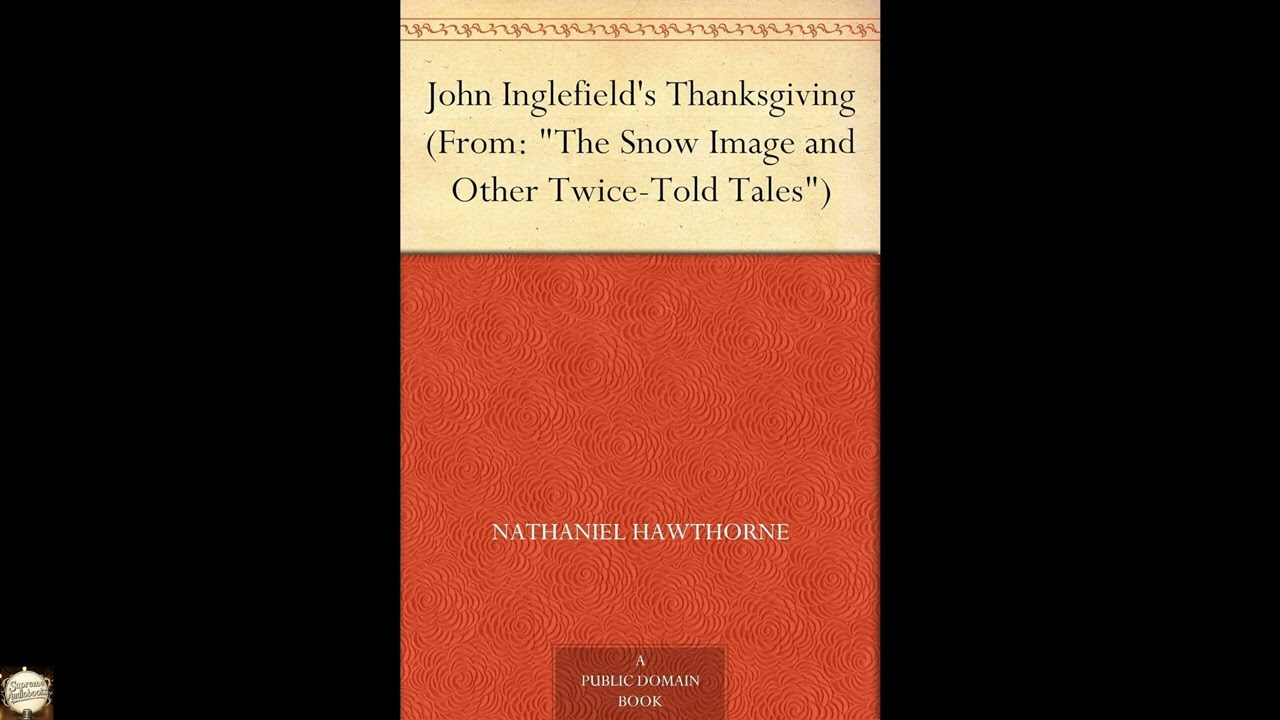
John Inglefield's Thanksgiving (From: "The Snow Image and Other Twice-Told Tales"
Thanksgiving—a holiday synonymous with warmth, gratitude, and familial harmony. Yet, beneath the veneer of festive tradition often lie complex human emotions, unspoken tensions, and the heavy weight of the past. "John Inglefield's Thanksgiving," a potent and quietly unsettling tale from the esteemed collection "The Snow Image and Other Twice-Told Tales," invites listeners to look beyond the idealized façade of a holiday gathering into the intricate heart of a family struggling with appearances, judgment, and the possibility of reconciliation. This is a story that resonates profoundly today, questioning how we define forgiveness, the price of reputation, and the persistent shadows cast by choices made long ago. It is a piercing examination of human nature, making it as relevant in our time as it was when first conceived. The story opens on a crisp New England Thanksgiving morning, where the respectable John Inglefield, a man of rigid piety and unbending principles, prepares for the celebratory feast. His home, a picture of domestic virtue, is filled with his dutiful wife and grown children, all seemingly content in their shared traditions. The atmosphere is one of decorum and expected cheer, setting the stage for what should be a perfectly conventional holiday. However, the carefully constructed peace of the Inglefield household is shattered by an unexpected arrival: Rosina, John Inglefield's long-estranged daughter. She returns after years away, having eloped and lived a life that has brought shame upon the family name, her past actions a constant source of unspoken disapproval and public scandal for her stern father. Rosina's sudden appearance introduces a profound disharmony into the festive day. Her presence forces the family to confront not only her, but also their own unyielding judgments and the deeply ingrained social conventions of their time. The ensuing dinner table scene is a study in discomfort and unspoken conflict, as the family attempts to navigate the awkwardness of Rosina’s return amidst the forced gaiety of the occasion. The tension hangs heavy, palpable in the strained pleasantries and the profound chasm between John Inglefield's public demeanor and his private sorrow and condemnation. The tale carefully draws out the psychological drama, focusing on the various reactions to Rosina—from her father's severe disapproval to the discomfort of her siblings, all grappling with the challenge she poses to their ordered lives. The collection "The Snow Image and Other Twice-Told Tales," from which "John Inglefield's Thanksgiving" is drawn, stands as a cornerstone of American literary tradition. Published in the mid-19th century, it gathered some of the most enduring short fiction of its period, showcasing a distinct style that would profoundly influence future generations of writers. These stories are renowned for their psychological depth, their often allegorical nature, and their keen ability to probe the darker aspects of the human psyche and the moral dilemmas inherent in society. They frequently employ historical or domestic settings to explore universal themes of sin, guilt, redemption, and the pervasive impact of a Puritanical legacy on the American character. The works within this collection helped to solidify the short story as a significant and respected form in American letters, moving it beyond mere entertainment to a vehicle for profound philosophical and social commentary. Writers working within this tradition often focused on the internal lives of their characters, using subtle hints and symbolic imagery to convey complex emotional states. Their narratives are characterized by a meticulous attention to atmosphere and mood, often creating a sense of foreboding or quiet intensity. They excelled at portraying the intricate interplay between individual desires and societal expectations, frequently setting their tales in historical New England, where the echoes of Puritanical morality continued to shape everyday life. This particular story, in its understated yet powerful drama, exemplifies these characteristics, making it an essential entry in the canon of classic American short fiction and offering a window into the prevailing moral and literary concerns of its time. At its heart, "John Inglefield's Thanksgiving" foregrounds themes of hypocrisy and the dissonance between public and private morality. John Inglefield himself embodies this, presenting an image of righteous severity while perhaps wrestling with an internal struggle he cannot openly acknowledge. His stern countenance and the forced, artificial cheer of the Thanksgiving dinner starkly contrast with the raw, unresolved pain and judgment simmering beneath the surface. The story subtly suggests that the family's adherence to societal expectations, particularly on such a symbolic holiday, prevents genuine connection or emotional honesty. This is vividly portrayed in the stiff, uncomfortable dialogue and the meticulous descriptions of their interactions around the table, where politeness barely masks resentment. Additionally, the story grapples with questions of redemption and forgiveness, or the distinct lack thereof. Rosina's return forces the family, particularly John, to confront whether they are capable of offering true forgiveness for her past transgressions, or if their ingrained moral code precludes it. The weight of her past actions looms large, hindering any possibility of a joyful reunion and transforming a day meant for gratitude into one of judgment and lingering resentment. This internal and external conflict powerfully illustrates the lasting impact of personal choices and societal condemnation. The narrative also examines the enduring weight of the past and its ability to shape the present, showing how Rosina’s previous life decisions continue to cast a long shadow over the current family dynamic, making genuine celebration impossible. The period from which "John Inglefield's Thanksgiving" emerges, the mid-19th century, was a time of significant cultural and social evolution in America, particularly in New England. Strong moral codes and religious piety, rooted in the region's Puritan heritage, heavily influenced daily life and societal expectations. The importance of family reputation and public decorum was paramount, and deviations from prescribed behavior, especially for women, often met with severe social ostracism. Thanksgiving, while not yet a federally recognized holiday, was a growing and cherished tradition, particularly in New England, serving as a powerful symbol of family unity, gratitude, and moral rectitude. This cultural backdrop is critical to understanding the profound tension in the story; Rosina's actions directly challenge these deeply held values, and her return on Thanksgiving day is an affront to the very essence of what the holiday represented. Literarily, this era saw the flourishing of American Romanticism, often tinged with a "Dark Romantic" sensibility that sought to probe the complexities of human nature, sin, and the psychological impact of moral dilemmas. Writers of the period were keenly interested in the individual's struggle against societal norms and the internal conflicts arising from guilt and conscience. "John Inglefield's Thanksgiving" is a product of this literary landscape, using the intimate setting of a family holiday to shine a light on universal human failings and the challenging interplay between personal judgment and societal pressures. The story's emergence at this time reflects a broader cultural fascination with the consequences of transgression and the often-harsh realities of moral judgment. Listening to "John Inglefield's Thanksgiving" as an audiobook, likely as part of a longer program spanning several hours, offers a unique opportunity to immerse oneself in its subtle emotional landscape. The skilled narrator can breathe life into the often-unspoken tensions, allowing listeners to truly feel the stifling atmosphere of the Inglefield home. The pacing of the reading, the careful modulation of voices during dialogue, and the subtle inflections can highlight the internal turmoil of John Inglefield, the quiet suffering of Rosina, and the discomfort of the other family members. The auditory experience makes the forced pleasantries and the heavy silences particularly potent, drawing attention to the psychological nuances that might be missed in a quick reading. A good narrator can build the palpable sense of unease and the simmering resentments, turning this short but powerful story into a vivid and memorable emotional encounter within a broader collection.
Enjoyed John Inglefield's Thanksgiving (From: "The Snow Image and Other Twice-Told Tales"? A few ways to support us
Audible & Amazon links are affiliate; we may earn a small commission at no extra cost.
About this production
Human narration by a volunteer reader from LibriVox.org, the public-domain audiobook project. LibriVox volunteers record literary works whose copyright has expired in the United States, releasing the resulting recordings into the public domain.
John Inglefield's Thanksgiving (From: "The Snow Image and Other Twice-Told Tales" by Nathaniel Hawthorne. The underlying text is in the U.S. public domain. We do not republish any modern copyrighted edition, translation, or commentary.
The 4K cinematic visuals accompanying this audiobook are generated by an AI image model from prompts derived from the source text. No copyrighted photos, paintings, or stock footage are used. AI generation is disclosed on every video on our YouTube channel as required by YouTube's altered/synthetic content policy.
English subtitles are transcribed from the LibriVox recording with OpenAI Whisper. Translations into the 11 other supported languages are produced by Meta's NLLB-200 neural translation model. No human translator's copyrighted translation is used.
Questions about sourcing or rights? See our DMCA & Sourcing policy or contact us.
Enjoyed this audiobook?
If you'd like to own a copy of John Inglefield's Thanksgiving (From: "The Snow Image and Other Twice-Told Tales" or hear a professionally produced edition, the links below help support free audiobook production at no extra cost to you.
As an Amazon Associate we earn from qualifying purchases. Audible / print links are affiliate.