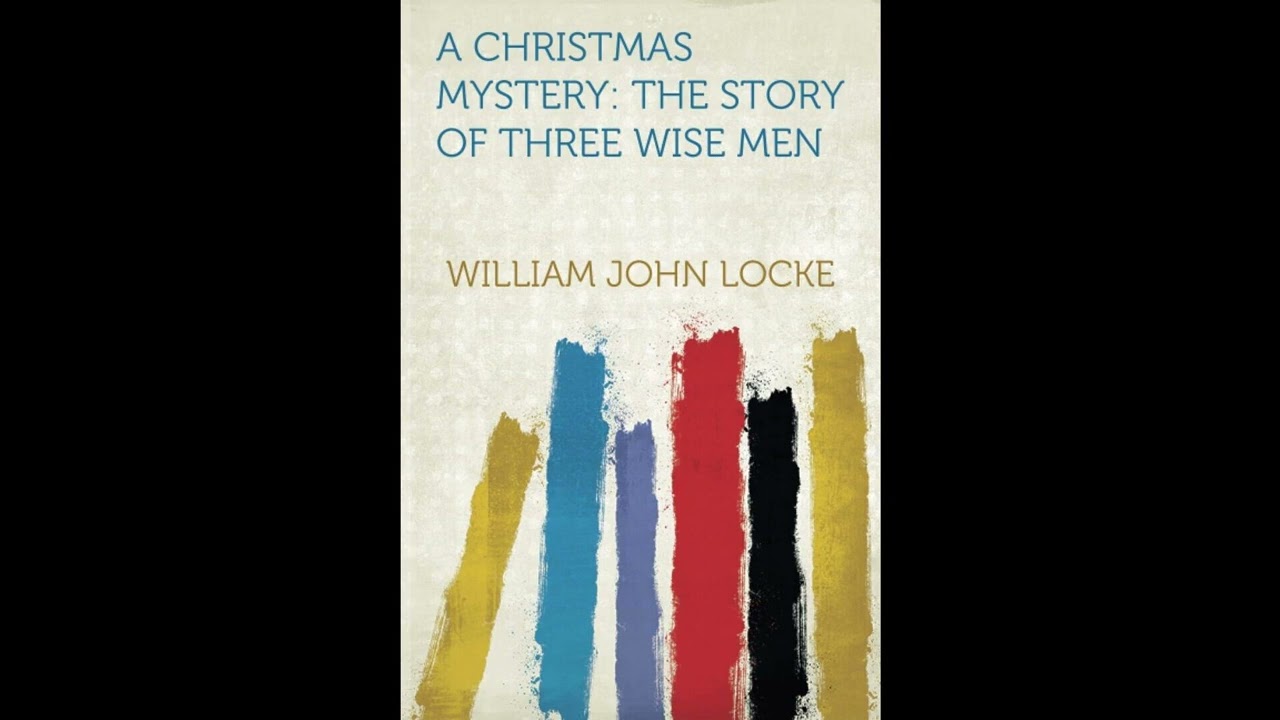
A Christmas Mystery: The Story of Three Wise Men
In the vast constellation of Christmas stories, where familiar tales of goodwill and miraculous transformation often glow with a reassuring warmth, William John Locke’s "A Christmas Mystery: The Story of Three Wise Men" shines with a unique, quietly profound light. Far from a simple fable or a saccharine seasonal diversion, this novel, originally published in 1910, invites listeners to consider the true meaning of wisdom and generosity through the lens of a compelling, human-scale puzzle. It asks us to look beyond the tinsel and carols, prompting reflection on whether the spirit of Christmas resides in grand gestures or in the unexpected connections forged between disparate souls. For anyone seeking a narrative that combines the comfort of holiday tradition with the intellectual stimulation of a well-crafted mystery, offering both solace and thoughtful inquiry, this audiobook promises a truly distinctive experience that resonates just as strongly today as it did over a century ago. The story unfolds in a quaint English village during the festive bustle of the Christmas season. Our narrative centers on three men, seemingly unconnected strangers, each burdened by his own past, his own secrets, and his own unique brand of world-weariness. There is Lord Algy, a seemingly carefree but fundamentally decent gentleman who carries a hidden sorrow; a reclusive scholar known only as Professor Rameses, whose vast intellect is matched only by his social awkwardness; and a charismatic yet enigmatic figure named John Christmas, whose sudden appearance and unusual demeanor stir curiosity among the villagers. Their paths converge under curious circumstances when they each receive a mysterious invitation — or perhaps, a summons — to a remote, secluded country house. The host remains elusive, the purpose of their gathering unclear, and the only clue they possess is a cryptic message suggesting they are to fulfill a role akin to the biblical Magi. As the three men reluctantly gather, an atmosphere of polite tension and mutual suspicion initially pervades their interactions. Each arrived expecting a specific form of holiday entertainment or a conventional social engagement, only to find themselves drawn into an unfolding riddle that challenges their preconceptions and tests their individual strengths. They must piece together fragmented clues, decipher veiled instructions, and confront their own biases as they attempt to understand the true nature of their summons. The story follows their uneasy alliance, charting their tentative steps towards collaboration as the central conflict emerges: What exactly is the "mystery" they are meant to solve, and what does it demand of them? Locke masterfully builds a sense of quiet intrigue, layering small revelations and character interactions that slowly draw the listener deeper into the heart of the puzzle, all against the backdrop of a snow-dusted, expectant English countryside. William John Locke was a celebrated English novelist who found considerable popularity in the late nineteenth and early twentieth centuries. Born in 1863, he initially pursued a career in architecture, a profession he eventually left to devote himself entirely to writing. His formal education at St. John's College, Cambridge, provided a strong intellectual foundation, which often manifested in his novels through characters of wit and intelligence, grappling with moral or philosophical questions. Locke’s literary output was prodigious, encompassing over two dozen novels and numerous short stories before his passing in 1930. He was known for his distinctive narrative voice, which blended a gentle humor with a profound understanding of human nature and a fondness for eccentric, endearing characters who often defied societal expectations. Among his other notable works are "The Morals of Marcus Ordeyne," published in 1905, which brought him significant critical and commercial success, and "The Beloved Vagabond" from 1906, a picaresque tale that cemented his reputation for crafting engaging, character-driven narratives. His stories frequently featured protagonists who, often through unconventional means, found redemption or a renewed sense of purpose. Locke belonged to a literary era that saw the transition from Victorian earnestness to more modern, less rigid sensibilities, and his works are often seen as exemplifying the Edwardian novel, with its blend of social commentary, romanticism, and a slightly whimsical outlook. While perhaps not as widely studied as some of his contemporaries today, his enduring appeal lies in his ability to create genuinely charming and thought-provoking stories that offer both entertainment and gentle introspection, earning him a significant place in the popular fiction of his time. "A Christmas Mystery" enacts several enduring themes, foremost among them the transformative power of genuine human connection. As the three protagonists, initially isolated by their individual concerns and personalities, are forced into proximity, their tentative interactions gradually chip away at their guarded exteriors. A moment when Lord Algy shares a surprisingly vulnerable anecdote with the reserved Professor Rameses, for example, illustrates how shared experience, even under unusual circumstances, can forge unexpected bonds. Another central theme is the search for meaning beyond superficial appearances. The mystery itself prompts the characters, and by extension the listener, to consider what constitutes true "wisdom" in a modern context, moving beyond the literal interpretation of the biblical Magi to a more personal, ethical understanding. The story subtly suggests that altruism and a willingness to look past one's own immediate needs are essential components of this wisdom. Furthermore, the novel touches upon the idea of redemption and second chances. Each of the three men carries a measure of regret or unfulfilled potential, and their unusual Christmas quest presents an opportunity for self-reckoning. The narrative portrays how external challenges can serve as catalysts for internal change, leading characters to confront their past choices and redefine their futures. This is exemplified in the subtle shifts in John Christmas's demeanor, as he moves from a somewhat detached observer to a more actively engaged participant, hinting at a personal awakening prompted by the shared endeavor. Ultimately, Locke’s story suggests that the true spirit of Christmas lies not just in festivities, but in the willingness to open one's heart, to understand others, and to contribute positively to the lives around us, even when the path is unclear or unconventional. When William John Locke penned "A Christmas Mystery" in 1910, the cultural and political landscape of Britain was poised on the brink of significant change. The Edwardian era, characterized by a veneer of optimism and prosperity, was subtly undermined by social inequalities and nascent anxieties that would soon erupt into the First World War. Literature of the period reflected this blend of tradition and dawning modernity. The tradition of Christmas stories, popularized by figures like Charles Dickens, remained strong, offering a blend of moral uplift and sentimental escapism. Locke’s work fits into this tradition but also subtly reinterprets it, moving away from overtly moralistic fables towards a more psychologically nuanced narrative. The novel emerged at a time when the British Empire was at its zenith, yet there was also a growing introspection about national identity and individual purpose. Locke's focus on three distinct male archetypes, drawn from different social strata and intellectual backgrounds, allowed him to comment on the various ways individuals grappled with the demands of society and their own spiritual yearnings. His gentle humor and character-driven plots provided a welcome counterpoint to some of the heavier social realism or nascent modernism appearing in other literary circles, offering readers a thoughtful yet entertaining escape that affirmed human decency amidst a world growing increasingly complex. Listening to "A Christmas Mystery: The Story of Three Wise Men" as an audiobook offers an exceptionally immersive and rewarding experience. The story’s gradual unveiling of its central puzzle, combined with Locke’s nuanced character development, is perfectly suited to the spoken word. A skilled narrator can bring to life the distinct personalities of Lord Algy, Professor Rameses, and John Christmas—their initial reserve, their moments of dry wit, and their eventual vulnerability—allowing their inner lives to unfold with compelling immediacy. The pacing of the narration can enhance the sense of quiet suspense, building the mystery bit by bit, allowing listeners to savor the unfolding clues and the evocative descriptions of the English Christmas setting. Hearing the dialogue directly adds layers of charm and authenticity to Locke’s prose, making the listener feel like a confidant in this unique holiday quest. It’s an ideal listen for cozy evenings, long drives, or any moment when you wish to be transported to a time and place where wit, kindness, and a touch of the unexplained create a truly memorable Christmas tale.
Enjoyed A Christmas Mystery: The Story of Three Wise Men? A few ways to support us
Audible & Amazon links are affiliate; we may earn a small commission at no extra cost.
About this production
Human narration by a volunteer reader from LibriVox.org, the public-domain audiobook project. LibriVox volunteers record literary works whose copyright has expired in the United States, releasing the resulting recordings into the public domain.
A Christmas Mystery: The Story of Three Wise Men by William John Locke. The underlying text is in the U.S. public domain. We do not republish any modern copyrighted edition, translation, or commentary.
The 4K cinematic visuals accompanying this audiobook are generated by an AI image model from prompts derived from the source text. No copyrighted photos, paintings, or stock footage are used. AI generation is disclosed on every video on our YouTube channel as required by YouTube's altered/synthetic content policy.
English subtitles are transcribed from the LibriVox recording with OpenAI Whisper. Translations into the 11 other supported languages are produced by Meta's NLLB-200 neural translation model. No human translator's copyrighted translation is used.
Questions about sourcing or rights? See our DMCA & Sourcing policy or contact us.
View 10 famous quotes from this book →
Enjoyed this audiobook?
If you'd like to own a copy of A Christmas Mystery: The Story of Three Wise Men or hear a professionally produced edition, the links below help support free audiobook production at no extra cost to you.
As an Amazon Associate we earn from qualifying purchases. Audible / print links are affiliate.