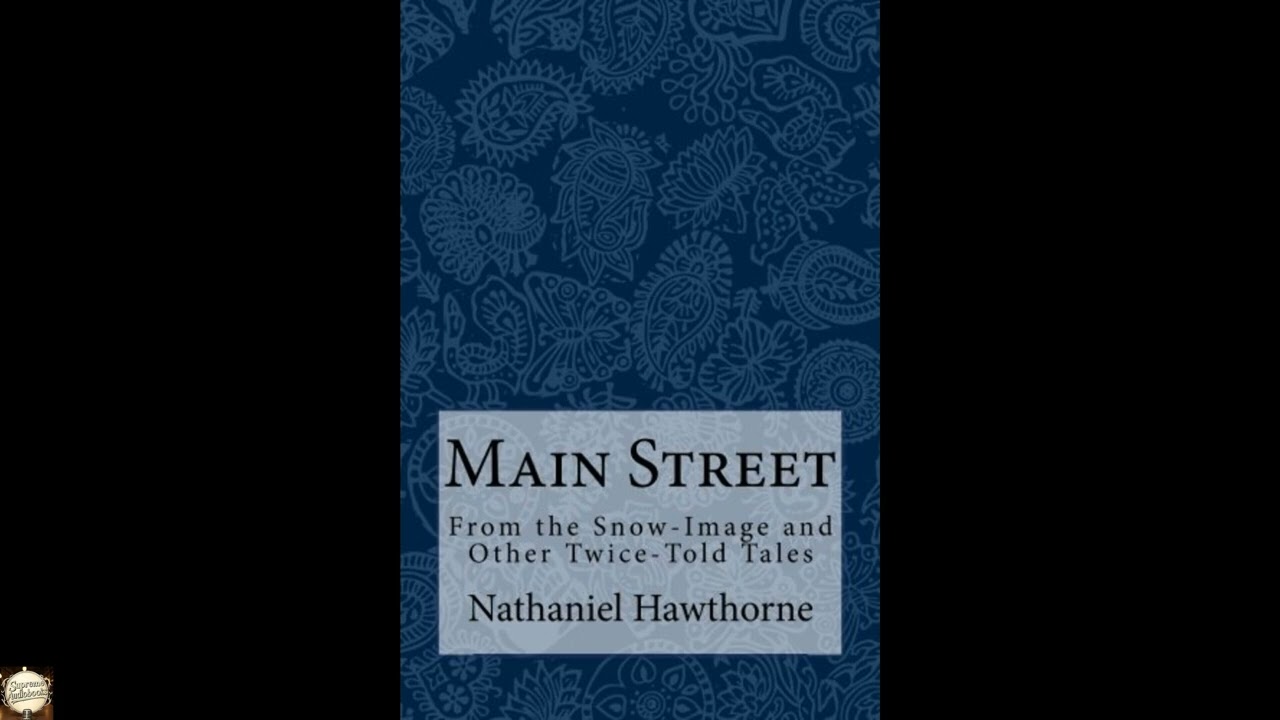
Main Street: From the Snow-Image and Other Twice-Told Tales
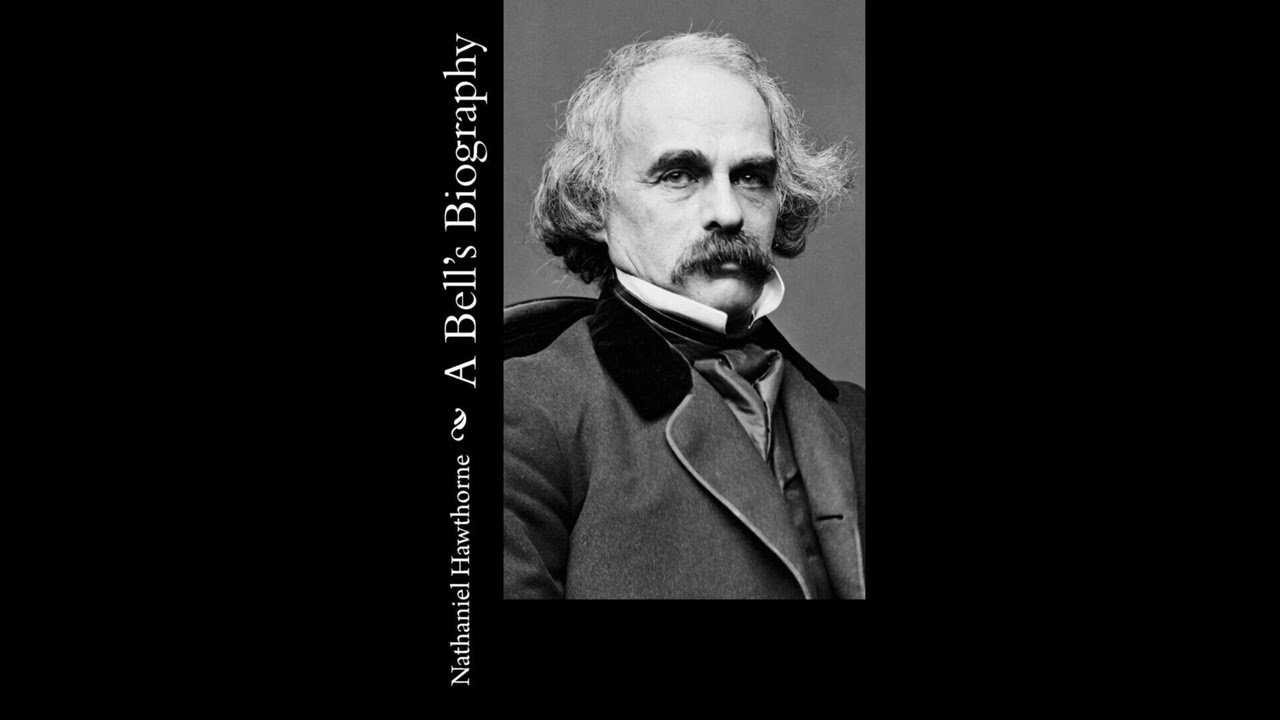
Step onto the cobblestone path of a bygone era with Nathaniel Hawthorne's "Main Street," a vivid historical sketch that transcends mere documentation to become a profound meditation on memory, transformation, and the enduring spirit of a community. While a shorter work often found within the larger collection The Snow-Image, and Other Twice-Told Tales, "Main Street" stands as a captivating micro-history of Salem, Massachusetts, painted with Hawthorne's characteristic blend of keen observation and imaginative insight. In an age saturated with fleeting digital imagery, this work invites the listener to slow down, to engage with the layered narrative of a place, and to consider how the stories of our past – both factual and imagined – continue to shape our present landscape and our understanding of who we are. It is an invitation to witness the relentless march of time through the microcosm of a single street, an experience that remains deeply resonant for anyone reflecting on the roots and evolution of American identity. The narrative of "Main Street" unfolds not as a conventional story with a linear plot, but as a meticulously rendered historical pageant, presented as if through a magic lantern. The scene is set in Salem, Massachusetts, a town forever etched into the consciousness of its author. Our narrator acts as an almost spectral guide, conjuring images from the deep past onto the familiar thoroughfare of Main Street. We begin with the raw, untamed wilderness, where the first English settlers, stern and unyielding, carve out their existence, driven by a fervent, often harsh, Puritan faith. The street, initially a mere track through the forest, slowly takes form, witnessing the solemn arrival of Governor Endicott, the hushed fear surrounding the infamous witchcraft trials, and the gradual establishment of a bustling colonial port. As the centuries turn, the street itself transforms. Its humble log cabins give way to more substantial framed houses, its muddy paths to paved surfaces. The narrative sweeps us through the Revolutionary War era, depicting patriotic fervor and the quiet resilience of the town's inhabitants, and then into the flourishing maritime trade that brought wealth and worldly goods to Salem's wharves. We see generations come and go: the austere Puritans succeeded by pragmatic merchants, then by a society grappling with the changes of a nascent republic. The story progresses, always anchored to the shifting physical and social landscape of Main Street, illustrating how each generation builds upon, alters, and sometimes erases the traces of those who came before. This visual progression—from forest trail to colonial artery to a modern street—forms the central arc, demonstrating the relentless tide of human endeavor and the inevitable fading of every present into the realm of history. Nathaniel Hawthorne, born in Salem, Massachusetts, in 1804, was a towering figure in nineteenth-century American literature whose life was deeply intertwined with the historical and moral complexities of his Puritan ancestry. A descendant of Judge John Hathorne, one of the magistrates involved in the Salem Witch Trials, Hawthorne grappled throughout his career with themes of inherited guilt, sin, and the lasting impact of the past. After graduating from Bowdoin College alongside future luminaries like Henry Wadsworth Longfellow and Franklin Pierce, Hawthorne spent years in relative seclusion, honing his literary craft and immersing himself in the local history and folklore that would become the bedrock of his most celebrated works. His professional life saw periods of public service, including stints at the Boston Custom House and, later, the Custom House in Salem, experiences that provided material for the "Custom-House" introduction to his most famous novel, The Scarlet Letter. This groundbreaking work, published in 1850, cemented his reputation as a master of psychological fiction and moral allegory. Other notable contributions include The House of the Seven Gables, which further explored ancestral curses and the decay of old New England families, and The Blithedale Romance, a fictionalized account of his time at the utopian Brook Farm community. Hawthorne is considered a central figure of American Romanticism and Dark Romanticism, distinguished by his profound moral seriousness, his use of symbolism and allegory, and his penetrating insight into the human heart's darker corners. "Main Street" powerfully enacts several enduring themes, beginning with the pervasive influence of history and the weight of ancestral memory. Hawthorne, ever conscious of his own lineage, shows how the very ground of Salem is imbued with the spirits and struggles of its past inhabitants. The early Puritan settlers, with their rigid convictions and severe judgments, cast a long shadow, demonstrating how founding principles and initial traumas reverberate through generations, shaping the moral landscape of the community long after their physical presence has faded. The narrative provides concrete examples as it revisits the site of the witchcraft trials, reminding us how historical injustices continue to haunt the collective consciousness of a place. Another significant theme is the delicate balance between historical fact and imaginative reconstruction. The narrator openly admits to the act of "calling up" these images, acknowledging that his historical tableau is as much a product of his creative vision as it is a recitation of verifiable events. This interplay is evident in the detailed descriptions of daily life—the sounds, smells, and sights—that could only be conjured through a vivid imagination filling in the gaps of historical record. Furthermore, the piece grapples with the tension between progress and preservation. As each new era sweeps over Main Street, older structures are torn down, new ones erected, and the physical manifestations of the past are gradually effaced. This constant evolution forces a contemplation of what is gained and lost in the name of advancement, highlighting the fragility of historical sites and the importance of remembering what once was. This particular work emerged from a specific cultural and literary moment in mid-nineteenth-century America, first published in 1851 within the collection The Snow-Image, and Other Twice-Told Tales. It was a period of intense national self-definition and rapid change for the young republic. Industrialization was accelerating, westward expansion was redefining geographical boundaries, and discussions about American identity were fervent. In this environment, there was a growing fascination with American history, particularly the colonial and early national periods, as people sought to understand the nation's origins and character. Hawthorne, with his deep roots in New England and his preoccupation with its Puritan past, was uniquely positioned to address these themes. His writing often offered a counterpoint to the optimistic individualism of Transcendentalism, instead looking backward to explore the inherent flaws, moral compromises, and psychological burdens that he believed were foundational to the American experience. "Main Street" serves as a microcosm of this larger national introspection, using a localized history to comment on universal questions of human progress, the nature of memory, and the enduring legacy of our forebears, giving voice to anxieties about what was being lost as the nation hurtled into its modern future. Listening to "Main Street" as an audiobook offers a uniquely immersive experience, perfectly suited to Hawthorne's thoughtful and descriptive prose. The narrator's voice becomes your personal guide, leading you through the historical pageant with a pacing that allows for contemplation and appreciation of the author's rich, evocative language. At several hours in length, it is substantial enough to transport you fully into the evolving landscape of Salem, making it ideal for a leisurely afternoon listen or for accompanying you on walks where you can mentally superimpose Hawthorne's visions onto your own surroundings. You will notice the careful rhythm of his sentences, the subtle shifts in tone as he moves from one historical period to the next, and the nuanced way he brings both the physical environment and the fleeting lives of its inhabitants into vivid focus. The spoken word enhances the sense of being shown something precious, a window into a past that feels both distant and intimately connected to the present.
Enjoyed Main Street: From the Snow-Image and Other Twice-Told Tales? A few ways to support us
Audible & Amazon links are affiliate; we may earn a small commission at no extra cost.
About this production
Human narration by a volunteer reader from LibriVox.org, the public-domain audiobook project. LibriVox volunteers record literary works whose copyright has expired in the United States, releasing the resulting recordings into the public domain.
Main Street: From the Snow-Image and Other Twice-Told Tales by Nathaniel Hawthorne. The underlying text is in the U.S. public domain. We do not republish any modern copyrighted edition, translation, or commentary.
The 4K cinematic visuals accompanying this audiobook are generated by an AI image model from prompts derived from the source text. No copyrighted photos, paintings, or stock footage are used. AI generation is disclosed on every video on our YouTube channel as required by YouTube's altered/synthetic content policy.
English subtitles are transcribed from the LibriVox recording with OpenAI Whisper. Translations into the 11 other supported languages are produced by Meta's NLLB-200 neural translation model. No human translator's copyrighted translation is used.
Questions about sourcing or rights? See our DMCA & Sourcing policy or contact us.
Enjoyed this audiobook?
If you'd like to own a copy of Main Street: From the Snow-Image and Other Twice-Told Tales or hear a professionally produced edition, the links below help support free audiobook production at no extra cost to you.
As an Amazon Associate we earn from qualifying purchases. Audible / print links are affiliate.