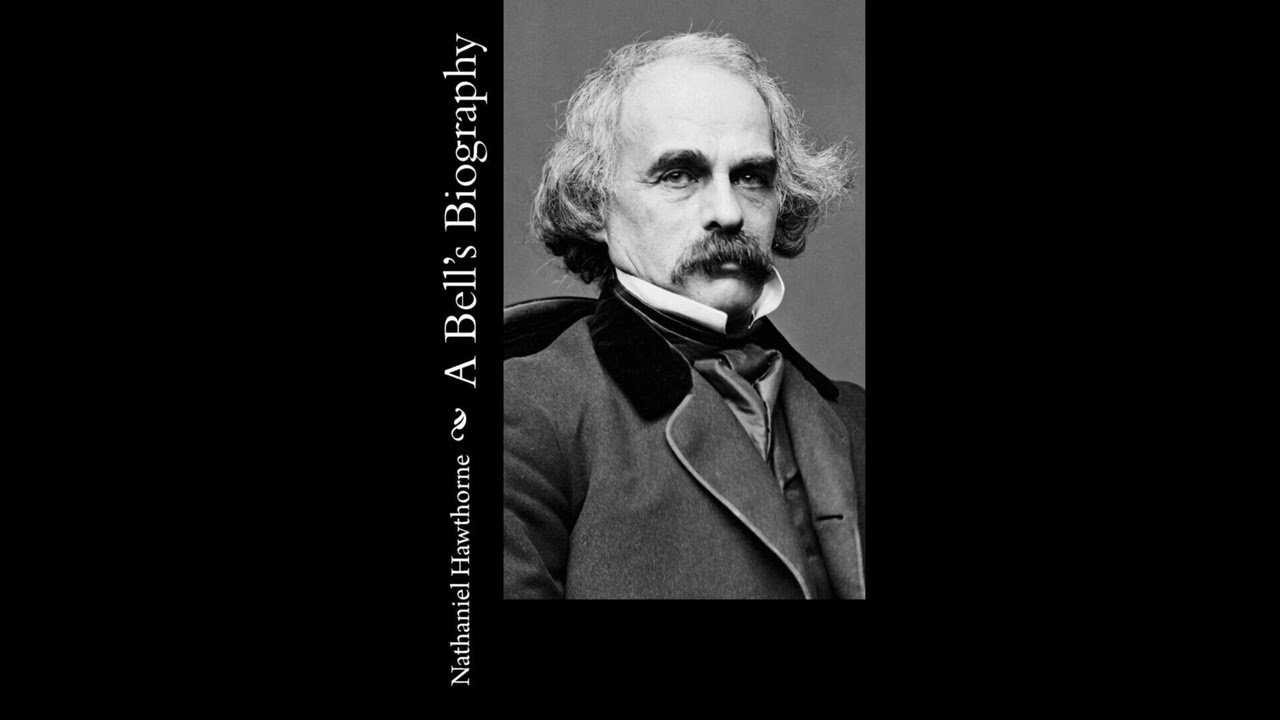
A Bell's Biography
Enter a world observed not by human eyes, but by the steadfast, resonant presence of a bell. Nathaniel Hawthorne’s “A Bell’s Biography” invites listeners into a truly unique narrative, one where an inanimate object becomes the silent chronicler of generations. This isn't merely a story about a bell; it is the bell’s own autobiography, a chronicle spanning centuries, told with the characteristic depth and allegorical precision that define Hawthorne’s finest writing. The story offers a profound meditation on the passage of time, the enduring nature of community, and the subtle ways history is etched into the very fabric of our surroundings. Its unconventional narrator allows us to witness the grand sweep of human endeavor and emotion from a detached yet deeply moving perspective, making it a piece that resonates with anyone contemplating the legacy of time and place in their own lives. The narrative commences with the bell’s creation in a European foundry, a fiery birth that imbues it with its voice and purpose. We are present for its journey across the Atlantic, a symbol of nascent hope and ambition accompanying settlers to the New World. Upon its arrival in a fledgling New England village, it is hoisted into a newly constructed steeple, where it assumes its central role. From this lofty perch, the bell becomes an omniscient observer, its existence intertwined with the lifeblood of the growing community. It rings out calls to worship, marking the solemnity of Sunday mornings, and tolls mournfully for the passing of village patriarchs and matriarchs. It peals with joyous abandon for weddings and festivals, celebrating the cycles of life and renewal, and sounds the urgent clang of alarm in times of peril, whether from fire or impending invasion. As decades turn into centuries, the bell watches families rise and fall, witnesses the slow evolution of customs, language, and belief. The landscape transforms around it: dirt paths become cobbled streets, wooden shacks give way to grander homes, and the quiet hamlet blossoms into a bustling town. The central arc of the story is this sustained observation, the bell’s constant, unchanging presence against the backdrop of ceaseless human activity and the relentless march of progress. Its “memory” accumulates the stories of countless lives, a silent archive of the community’s joys, sorrows, triumphs, and transgressions, all filtered through the dispassionate yet profoundly insightful lens of an object whose only task is to announce the passage of time. Nathaniel Hawthorne, born in Salem, Massachusetts, in 1804, was a towering figure in American literature. His family lineage, stretching back to early Puritan settlers and including a judge from the infamous Salem Witch Trials, profoundly influenced his recurring themes of ancestral guilt, moral ambiguity, and the dark undercurrents beneath a seemingly pious surface. After graduating from Bowdoin College alongside future president Franklin Pierce and poet Henry Wadsworth Longfellow, Hawthorne spent a decade in relative solitude, meticulously honing his craft before finding widespread acclaim. His output during this period included many short stories, which would later be collected in volumes like Twice-Told Tales—the collection where “A Bell’s Biography” first appeared in 1837. Hawthorne's later career saw the publication of his enduring novels: The Scarlet Letter (1850), a searing examination of sin and hypocrisy in Puritan society; The House of the Seven Gables (1851), a Gothic tale delving into the legacy of family curses and inherited guilt; and The Blithedale Romance (1852), inspired by his brief sojourn at the utopian Brook Farm community. A quintessential writer of American Romanticism, and more specifically Dark Romanticism, Hawthorne distinguished himself through his intricate symbolism, psychological depth, and his persistent exploration of the moral and ethical dilemmas inherent in the human condition. He held a unique and pivotal place in the American literary canon, bringing a distinct voice and thematic gravity to a nascent national literature before his death in 1864. “A Bell’s Biography” elegantly enacts several key themes that run through Hawthorne’s larger body of work. Foremost among them is the passage of time and the inevitability of change. The bell, an immobile sentinel, remains physically unchanged as the world around it undergoes constant metamorphosis. Its long life allows for a sweeping perspective on human generations, highlighting how individual lives are fleeting moments in a larger historical continuum. We see this through its ringing for different generations of a single family, each marked by the same bell, yet each living in a vastly altered world. Another significant theme is the nature of community and the social fabric. The bell serves as the auditory heart of the village, its sound literally orchestrating the communal rhythm—calling citizens to gather, marking sacred moments, and signaling shared dangers. Its existence underscores the interconnectedness of individual lives within a collective identity. A third theme is the power of memory and the weight of history. The bell, through its enduring presence, becomes a silent repository of the community’s past. It doesn't forget the events it has witnessed, offering a metaphorical "memory" that transcends individual human recollection, embodying the collective historical consciousness. It reminds us how structures and objects absorb the essence of past events. Finally, the story speaks to the concept of perspective and the value of objective observation. By choosing an inanimate narrator, Hawthorne removes the biases and emotional filters of a human observer. The bell's account, while rich in detail and human drama, is delivered with a detached, almost scientific objectivity, allowing listeners to contemplate the universal patterns of human behavior without the distraction of personal judgment. This unique perspective elevates the story beyond a simple chronicle, inviting deeper allegorical interpretations of human nature itself. The period in which Hawthorne wrote and published "A Bell's Biography" was a pivotal time for the young United States. The 1830s saw America grappling with rapid expansion, the beginnings of industrialization, and a burgeoning sense of national identity, even as regional tensions were simmering. American literature itself was striving to forge its own distinct voice, moving away from purely imitating European styles. Writers like Ralph Waldo Emerson and Henry David Thoreau were laying the groundwork for Transcendentalism, emphasizing individualism and nature, while Hawthorne, though a contemporary, often offered a more skeptical, darker view of human perfectibility and societal progress. His works, including this short story, frequently looked back at the nation's Puritan past, critically examining its legacies and how they continued to shape the American character. "A Bell's Biography" emerged from this cultural moment, a reflection on continuity and transformation in a nation eager to define itself while still haunted by its origins. Listening to “A Bell’s Biography” as an audiobook offers an exceptionally immersive experience. The very premise of a bell narrating its life demands a particular vocal interpretation—one that can convey both the stoic longevity of the object and the lively human drama it witnesses. A skilled narrator brings a unique cadence to Hawthorne's thoughtful prose, creating an atmosphere that is at once contemplative and evocative of a bygone era. The several-hour run length likely means this story is presented within a collection, offering a focused and reflective listening opportunity that can be savored or revisited. Pay attention to the narrator’s pacing, which should mirror the measured passing of time within the story, allowing the full weight of the bell's observations to settle. The voice, likely resonant and perhaps subtly aged, serves to give character to an otherwise silent observer, transforming the reading into a profound auditory journey through history and human experience.
Enjoyed A Bell's Biography? A few ways to support us
Audible & Amazon links are affiliate; we may earn a small commission at no extra cost.
About this production
Human narration by a volunteer reader from LibriVox.org, the public-domain audiobook project. LibriVox volunteers record literary works whose copyright has expired in the United States, releasing the resulting recordings into the public domain.
A Bell's Biography by Nathaniel Hawthorne. The underlying text is in the U.S. public domain. We do not republish any modern copyrighted edition, translation, or commentary.
The 4K cinematic visuals accompanying this audiobook are generated by an AI image model from prompts derived from the source text. No copyrighted photos, paintings, or stock footage are used. AI generation is disclosed on every video on our YouTube channel as required by YouTube's altered/synthetic content policy.
English subtitles are transcribed from the LibriVox recording with OpenAI Whisper. Translations into the 11 other supported languages are produced by Meta's NLLB-200 neural translation model. No human translator's copyrighted translation is used.
Questions about sourcing or rights? See our DMCA & Sourcing policy or contact us.
Enjoyed this audiobook?
If you'd like to own a copy of A Bell's Biography or hear a professionally produced edition, the links below help support free audiobook production at no extra cost to you.
As an Amazon Associate we earn from qualifying purchases. Audible / print links are affiliate.