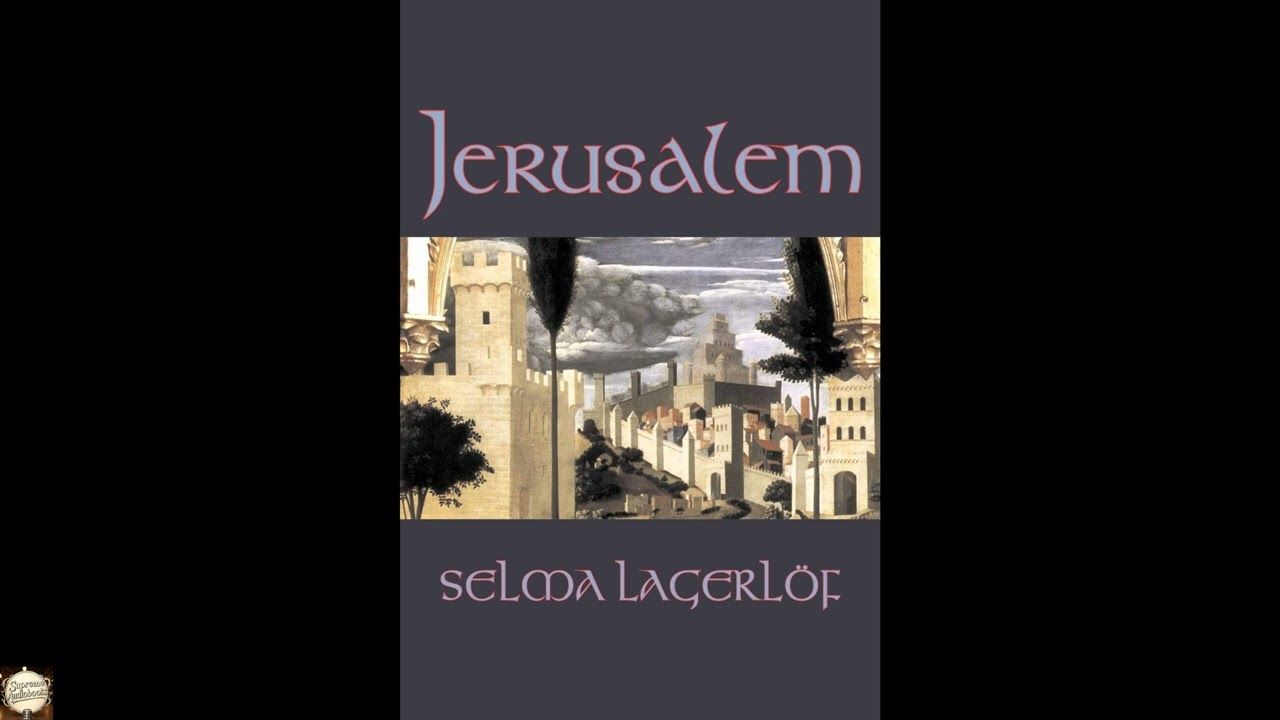
Jerusalem
What compels a person to abandon everything they know—their home, their land, their family—for a distant, idealized promise? Selma Lagerlof's "Jerusalem" asks this profound question, unfolding a powerful human drama against the backdrop of turn-of-the-century Sweden and the Holy Land. This sweeping narrative brings to life the spiritual fervor and communal upheaval that can reshape lives, making it a compelling listen even today. It speaks to the deep human need for meaning, the disruptive force of conviction, and the enduring bonds of family and place, offering a mirror to our own contemporary struggles with identity, belief, and belonging in an ever-changing world. The story begins in the isolated, close-knit farming community of Dalarna, Sweden, where life revolves around tradition, hard work, and the land passed down through generations. At its heart is the Ingmarsson family, particularly young Ingmar, the diligent heir to a prosperous farm, and Gertrud, his beloved. Their lives are rooted in the solid ground of their ancestral home, their futures seemingly clear. However, the placid surface of their world is dramatically disturbed by the arrival of a fervent religious revival. Led by a charismatic, American-influenced preacher named Hellgum, this movement preaches a radical spiritual awakening and a literal interpretation of biblical prophecy. It culminates in a stirring, almost irresistible call for followers to sell their possessions, leave their beloved Sweden, and migrate to Jerusalem to await the Second Coming. This spiritual zealotry creates a deep fissure within the community, forcing individuals and families to make impossible choices. As the fervor grows, the fabric of the village begins to fray. The Ingmarsson family, initially pillars of their community, finds itself caught in the spreading spiritual tide. Gertrud, deeply moved by the preacher's words and the promise of a purer faith, makes the agonizing decision to join the exodus, shattering her bond with Ingmar and the life they had envisioned. The narrative meticulously follows the wrenching departures, depicting the emotional and social cost of such a radical commitment. The second part of the narrative then shifts focus to the Swedish emigrants who have established a struggling colony in Jerusalem, contrasting their initial spiritual idealism with the harsh realities of their new environment, the cultural clashes, and the intense personal sacrifices demanded by their chosen path. The story follows their attempts to forge a new life and community in a foreign land, holding onto their faith amidst hardship and disillusionment, all while maintaining the thread of connection, however tenuous, with the world they left behind. Selma Lagerlof, the author of this remarkable saga, was a truly trailblazing figure in literature. Born in 1858 on the estate of Marbacka in Värmland, Sweden, her childhood home became an indelible source of inspiration for her storytelling. Despite a childhood illness that left her with a physical disability, she pursued an education and worked as a teacher for ten years before her literary career took flight with the publication of her first novel, The Story of Gosta Berling, in 1891. Lagerlof possessed a unique gift for blending the mythic and the real, drawing from Swedish folklore and personal experience to create narratives that resonated with universal human truths. She achieved global renown, becoming the first woman to be awarded the Nobel Prize in Literature in 1909, a recognition that cemented her place in literary history. Her achievements did not stop there; in 1914, she became the first woman elected to the prestigious Swedish Academy. Lagerlof's body of work, which includes children's classic The Wonderful Adventures of Nils and the poignant novel The Emperor of Portugallia, consistently showcases her deep understanding of human psychology, her lyrical prose, and her profound connection to the Swedish landscape and its people. She was not only a celebrated author but also a passionate advocate for peace, women's suffrage, and social justice, using her platform and resources to make a tangible difference in the world, even buying back her beloved Marbacka with her Nobel prize money. Her contribution to literature lies in her ability to elevate regional tales to universal parables, embedding grand themes within intimate, character-driven narratives. "Jerusalem" beautifully enacts several profound themes that resonate far beyond its specific setting. One central theme is the tension between faith and tradition. The story vividly portrays how an fervent, individualistic spiritual awakening can clash with the deep-rooted, communal traditions that define a society. The decision of Ingmar’s relatives to sell ancestral lands, generations of labor, and a settled way of life for an abstract promise of spiritual purity exemplifies this conflict, showing the agonizing choices forced upon individuals when their spiritual convictions diverge from their inherited world. Another powerful theme is the nature of community and isolation. Lagerlof meticulously constructs the vibrant, interdependent community of Dalarna only to show how it fractures under the pressure of the revival. While the emigrants seek a new community in Jerusalem, they often find themselves isolated from their past and even from each other in the face of new challenges, highlighting the complex ways people find—and lose—belonging. The novel also thoughtfully examines sacrifice and redemption. Characters make tremendous sacrifices, giving up family, home, and comfort in pursuit of what they believe is a higher calling. The physical hardships endured by the emigrants in the Holy Land, their struggles with disease, poverty, and cultural alienation, force them to confront the true meaning and cost of their choices. This raises questions about what constitutes genuine sacrifice and whether it leads to the promised redemption. Finally, the novel speaks to the lure of the ideal. Jerusalem, as both a physical place and a spiritual concept, represents an ultimate ideal for the emigrants. The story contrasts this idealized vision with the often stark and difficult reality they encounter, demonstrating the powerful, sometimes destructive, pull of an imagined perfection when confronted with the imperfect world. "Jerusalem" emerged at a critical juncture in Swedish history, published in 1901 and 1902. The late 19th and early 20th centuries were marked by widespread emigration from Sweden, primarily to North America, driven by economic hardship, social constraints, and a longing for better opportunities. While Lagerlof's novel focuses on a smaller, religiously motivated migration to Jerusalem—a real historical event involving a group of Swedish peasants from Nås, Dalarna, who joined an American colony there—it speaks to the broader phenomenon of Swedes leaving their homeland in droves. This period also saw a surge in various religious revival movements across Europe and America, challenging established churches and offering new spiritual paths. Sweden itself was undergoing significant societal changes, transitioning from a predominantly agrarian society to one grappling with industrialization and modernization. This shift led to economic pressures, the breakdown of traditional social structures, and an increased questioning of old customs and beliefs. Lagerlof's work, therefore, captures the anxieties and hopes of a nation in flux, reflecting on the profound forces that could compel people to uproot their lives in search of spiritual fulfillment or a promised land. It is a work deeply rooted in its time, yet its questions about faith, community, and the human spirit remain strikingly resonant. To truly appreciate the deep emotional current and the rich characterizations of "Jerusalem," listening to it as an audiobook offers a unique and immersive experience. A skilled narrator brings the distinct voices of the rural Swedish villagers, the fiery preacher, and the diverse inhabitants of Jerusalem vividly to life, allowing the listener to distinguish between the steadfast conviction of some and the gnawing doubts of others. The run length, several hours in total, provides ample opportunity to sink into the story's unhurried pace, allowing the complex emotions, the slow-burning conflicts, and the meticulous descriptions of both the Swedish countryside and the bustling, ancient Holy Land to unfold gradually. Listen for the narrator's subtle shifts in tone that distinguish the earthy practicality of the farmers from the evangelists' fervent rhetoric, or the changes in atmosphere as the story moves from the quiet forests of Dalarna to the sun-baked streets of Jerusalem. The contemplative nature of Lagerlof's prose, with its blend of realism and mythic resonance, lends itself exceptionally well to an audio format, creating an intimate connection between the story and the listener.
Enjoyed Jerusalem? A few ways to support us
Audible & Amazon links are affiliate; we may earn a small commission at no extra cost.
About this production
Human narration by a volunteer reader from LibriVox.org, the public-domain audiobook project. LibriVox volunteers record literary works whose copyright has expired in the United States, releasing the resulting recordings into the public domain.
Jerusalem by Selma Lagerlof. The underlying text is in the U.S. public domain. We do not republish any modern copyrighted edition, translation, or commentary.
The 4K cinematic visuals accompanying this audiobook are generated by an AI image model from prompts derived from the source text. No copyrighted photos, paintings, or stock footage are used. AI generation is disclosed on every video on our YouTube channel as required by YouTube's altered/synthetic content policy.
English subtitles are transcribed from the LibriVox recording with OpenAI Whisper. Translations into the 11 other supported languages are produced by Meta's NLLB-200 neural translation model. No human translator's copyrighted translation is used.
Questions about sourcing or rights? See our DMCA & Sourcing policy or contact us.
Enjoyed this audiobook?
If you'd like to own a copy of Jerusalem or hear a professionally produced edition, the links below help support free audiobook production at no extra cost to you.
As an Amazon Associate we earn from qualifying purchases. Audible / print links are affiliate.