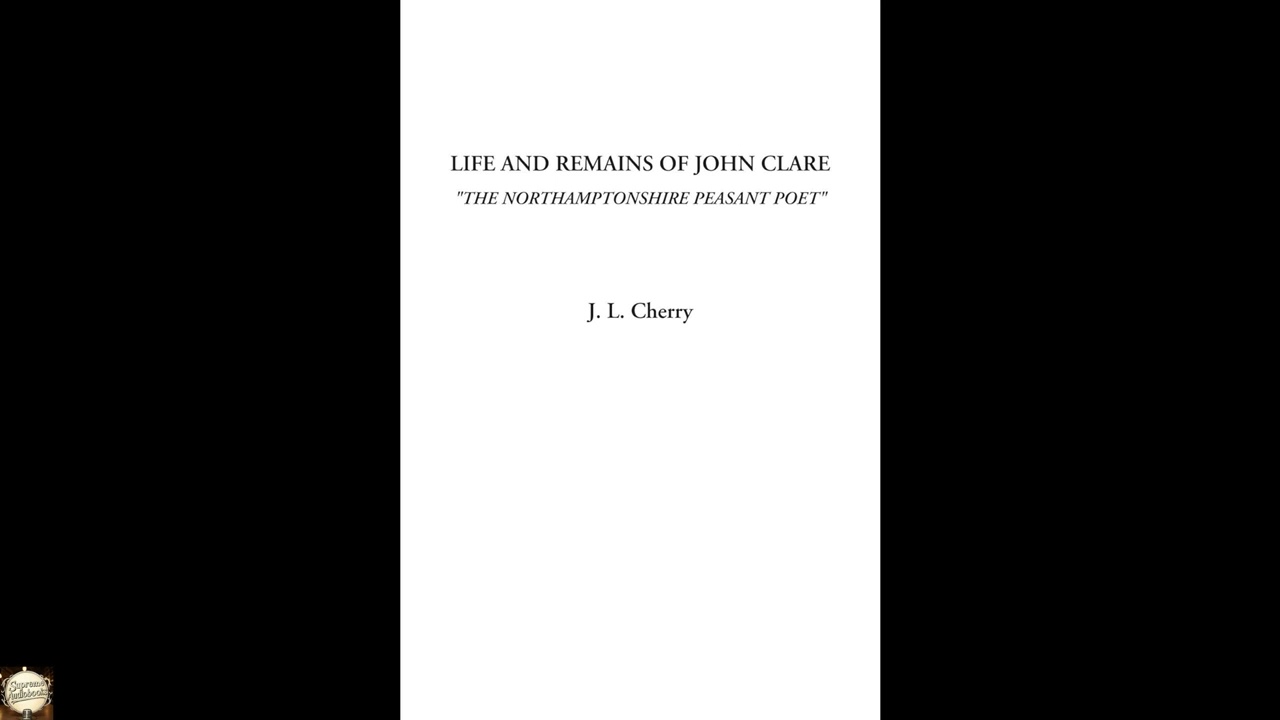
Life and Remains of John Clare ("The Northamptonshire Peasant Poet")
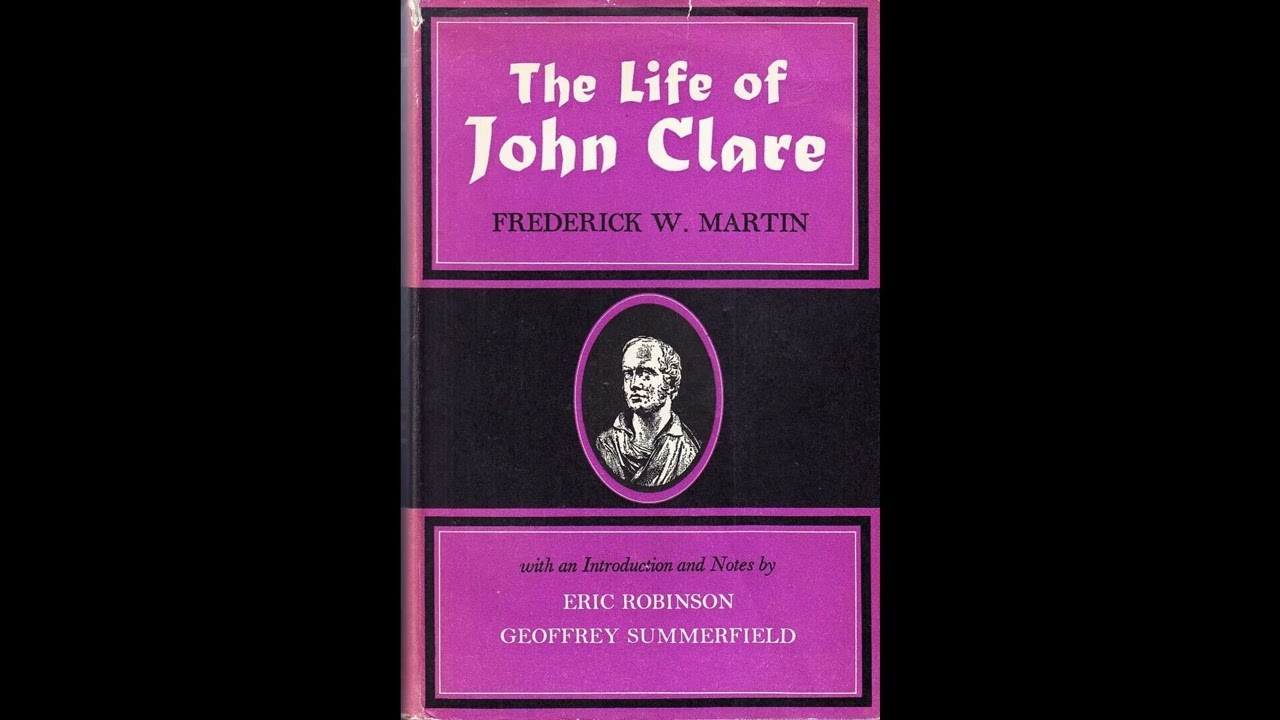
The very notion of genius often evokes images of privilege, formal education, and societal recognition. But what if a literary star emerged not from the hallowed halls of academia but from the very earth he toiled? What if his verse, exquisite in its detail and profound in its feeling, sprang from a life of unrelenting hardship and obscurity? "Life and Remains of John Clare ("The Northamptonshire Peasant Poet")" presents just such a story: the compelling, often heartbreaking narrative of John Clare, an early 19th-century English poet whose extraordinary talent flowered against a backdrop of rural poverty, social indifference, and eventually, profound mental illness. This essential collection brings together the biographical elements of his remarkable existence with a selection of his most resonant verse, inviting listeners to discover a voice that, despite its tribulations, captured the English countryside with an unparalleled intimacy and spoke to the enduring human spirit. This "Life and Remains" traces Clare's trajectory from the humblest beginnings in Helpston, a small village in Northamptonshire, where he was born into an agricultural laboring family in 1793. The narrative unfolds through his early years, depicting a childhood steeped in the rhythms of nature and the relentless grind of farm work. We follow young Clare as he teaches himself to read and write, often scrawling verses on any scrap of paper he could find, his mind absorbing every leaf, every birdcall, every changing cloud in the vast expanse of the local fields. His burgeoning talent did not go unnoticed forever; a local bookseller eventually recognized his brilliance, leading to the publication of "Poems Descriptive of Rural Life and Scenery" in 1820. This initial success catapulted Clare into a brief period of celebrity, where the "peasant poet" became a sensation in London literary circles, lauded for his authentic voice and unique perspective. However, the story soon reveals the fragility of this newfound fame. Clare's inability to navigate the complex social landscape of the literary elite, coupled with the precarious finances of his publishers and his own generous but impractical nature, led to a swift decline from public favor. The relentless pressures of supporting a growing family, the condescension of well-meaning patrons, and the devastating impact of the enclosure acts – which systematically destroyed the common lands he cherished and wrote about – began to take a heavy toll. The arc of his life, as meticulously presented in this collection, becomes a poignant testament to the clash between an artist's sensitive soul and the unyielding realities of an unforgiving world, culminating in his long years spent in various asylums, where he continued to write some of his most profound and heartbreaking poetry, often under a pseudonym, even as his mind fragmented. While the specific compiler of this particular "Life and Remains" remains unnamed, the central figure, John Clare, holds a singular and increasingly revered place in English literary history. Born in 1793, he lived until 1864, his life spanning a period of immense social and economic upheaval in Britain. Clare was a contemporary of the great Romantic poets like Wordsworth, Coleridge, Keats, and Shelley, yet his background set him apart. He did not come from a privileged family, attend university, or travel widely. Instead, his world was the immediate environment of his native Northamptonshire, and his education was entirely self-acquired. His major works, including "The Village Minstrel" and "The Shepherd's Calendar," solidified his reputation, even if intermittently. His later, deeply personal and often poignant verses written during his confinement, such as "I Am," are now recognized as powerful expressions of isolation and identity, cementing his legacy as a unique voice in the Romantic era. His meticulous descriptions of nature – often using local dialect and precise botanical terms – distinguish him from his peers, making him a proto-environmentalist in his profound lament for the vanishing rural landscape. This essential collection of Clare's life and writings beautifully enacts several profound themes. Foremost among them is the intimate connection between humanity and nature. Clare's poetry, as represented in these "remains," doesn't merely describe the natural world; it embodies a deep, almost spiritual kinship with it. For example, the detailed biographical accounts illustrate how, from childhood, Clare meticulously observed every bird, every flower, every insect, often to the point of appearing distracted from his labor. This innate connection is then vividly expressed in his verse, where a field mouse or a skylark is granted the same dignity and attention as any grand subject, revealing a world often overlooked by others. Another powerful theme is the harsh reality of social class and rural poverty in 19th-century England. The biographical sections frequently detail Clare's constant struggle for financial stability, the indignities of patronage, and the fundamental disconnect between his artistic sensibility and the expectations placed upon a "peasant." We witness his despair over the enclosure of common lands – a central conflict in his personal life and a recurring motif in his work – which stripped his community and himself of a shared heritage and livelihood, forever altering the landscape he loved and understood so deeply. A third significant theme is the fragility of the human mind and the burden of sensitivity. The "Life" portions of this book do not shy away from Clare's eventual decline into mental illness, tracing the pressures that led to his breakdown and his long years in asylums. His later poetry, included as part of his "remains," becomes a raw, unfiltered expression of loneliness, longing, and a desperate search for identity amidst confusion. These verses stand as stark testimonies to the toll exacted upon a poetic soul by a world ill-equipped to understand or support him. Finally, the collection underscores the theme of authentic voice versus societal expectation. Clare consistently resisted efforts by his patrons and publishers to "polish" his language or conform his subjects to urban tastes. This refusal, though it sometimes hampered his commercial success, ensured that his unique, unadulterated perspective on the natural world and the working-class experience remained intact, making his body of work an invaluable record of a vanishing way of life and a singular artistic vision. This "Life and Remains" emerges from a rich historical and literary context: the Regency and early Victorian periods of British history. It was a time of immense social flux, characterized by the accelerating Industrial Revolution, profound changes in agricultural practices like the enclosure movement, and widespread social unrest. Literarily, it was the zenith of Romanticism, a movement that celebrated emotion, individualism, and the sublime in nature. However, most prominent Romantic poets hailed from more privileged backgrounds. The fascination with Clare, therefore, stemmed partly from a contemporary romanticization of the "natural genius" or the "uneducated poet" – a curiosity that sometimes overshadowed a genuine appreciation of his profound talent. This work, in its compilation of his life and art, serves as a vital historical document, offering an unvarnished counterpoint to the more idealized visions of rural life prevalent in some Romantic literature, instead portraying the hardscrabble existence of the working rural poor and the devastating impact of economic change on their lives and landscapes. Listening to "Life and Remains of John Clare" as an audiobook offers an exceptionally intimate and immersive experience over its several hours of narration. A skilled reader can bring out the inherent musicality in Clare's verse, allowing the listener to truly appreciate his keen ear for the cadences of rural speech and the subtle harmonies of the natural world he described. The pacing of the narration will likely shift between the more straightforward prose of the biographical sections, detailing the events of his life, and the lyrical, often haunting rhythm of his poetry. This contrast allows for a deeper understanding of how his lived experience directly informed his art. Listeners can savor the vivid imagery and precise language that distinguish Clare's observations, letting the narrator's voice transport them to the lanes, fields, and skies of 19th-century Northamptonshire, hearing the authentic voice of a poet whose connection to the land was as profound as it was tragic.
Enjoyed Life and Remains of John Clare ("The Northamptonshire Peasant Poet")? A few ways to support us
Audible & Amazon links are affiliate; we may earn a small commission at no extra cost.
About this production
Human narration by a volunteer reader from LibriVox.org, the public-domain audiobook project. LibriVox volunteers record literary works whose copyright has expired in the United States, releasing the resulting recordings into the public domain.
Life and Remains of John Clare ("The Northamptonshire Peasant Poet") by John Clare. The underlying text is in the U.S. public domain. We do not republish any modern copyrighted edition, translation, or commentary.
The 4K cinematic visuals accompanying this audiobook are generated by an AI image model from prompts derived from the source text. No copyrighted photos, paintings, or stock footage are used. AI generation is disclosed on every video on our YouTube channel as required by YouTube's altered/synthetic content policy.
English subtitles are transcribed from the LibriVox recording with OpenAI Whisper. Translations into the 11 other supported languages are produced by Meta's NLLB-200 neural translation model. No human translator's copyrighted translation is used.
Questions about sourcing or rights? See our DMCA & Sourcing policy or contact us.
Enjoyed this audiobook?
If you'd like to own a copy of Life and Remains of John Clare ("The Northamptonshire Peasant Poet") or hear a professionally produced edition, the links below help support free audiobook production at no extra cost to you.
As an Amazon Associate we earn from qualifying purchases. Audible / print links are affiliate.