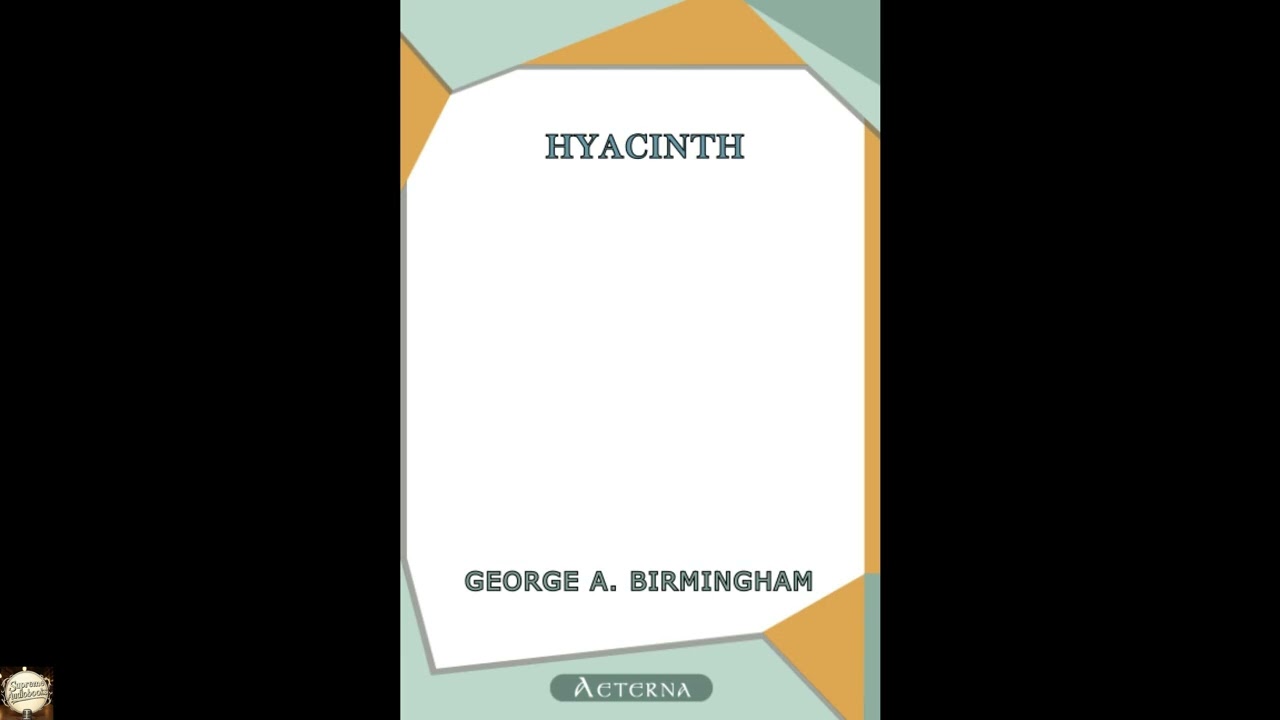
Hyacinth
Step into a delightful corner of early twentieth-century Ireland, where appearances are paramount, social conventions are a delicate dance, and the truth is often far less interesting than a well-constructed rumor. Hyacinth, a classic novel from the witty pen of George A. Birmingham, invites listeners into a world of gentle satire and charming confusion. This is more than just a historical curiosity; it’s a keen observation of human nature, of class distinctions, and of the ever-present comedy of errors that arises when people try too hard to be something they’re not, or when they misjudge others based on superficial clues. Its humor remains remarkably fresh, its insights into community dynamics still resonate, making it a perfect listen for anyone who enjoys a clever story steeped in character and clever dialogue. The story unfolds in a quiet, somewhat insular pocket of rural Ireland, where the arrival of a newcomer can send ripples through the entire social fabric. Our protagonist, the enigmatic young woman Hyacinth, makes her entrance into the respectable, if slightly stagnant, household of the Misses French. The two sisters, formidable in their adherence to Victorian propriety, are initially perturbed by Hyacinth’s arrival as a companion to their niece, Eleanor. Hyacinth, however, possesses an unusual poise and an air of quiet self-possession that hints at a background far more interesting than her demure position suggests. She carries herself with an unshakeable dignity, a hint of mystery that immediately piques the curiosity, and sometimes the suspicion, of the local gentry. As Hyacinth gradually integrates into the community, a web of social engagements, misunderstandings, and budding romances begins to form around her. The narrative cleverly plays with the local inhabitants’ attempts to deduce her true origins and status, often projecting their own desires and prejudices onto her reserved demeanor. Is she a fallen aristocrat? A secret heiress? A woman on the run from a shadowed past? Each speculation adds another layer to the comedic confusion. Hyacinth, for her part, seems to navigate these social intricacies with an almost mischievous grace, neither confirming nor denying the elaborate theories spun about her. The central conflict, therefore, becomes less about what Hyacinth is, and more about what the community believes her to be, and how these beliefs shape their interactions, ultimately leading to a series of humorous misadventures and a delightful unraveling of expectations. The author behind the pseudonym George A. Birmingham was in fact James Owen Hannay, an Anglo-Irish clergyman born in Belfast in 1865. Hannay's life was deeply rooted in the Irish landscape he so vividly depicted in his fiction. After his education at Trinity College Dublin, he was ordained in the Church of Ireland and served as a rector in various parishes, most notably in Westport, County Mayo. This firsthand experience provided him with an unparalleled understanding of rural Irish life, the intricacies of its social classes, and the distinct flavor of its Protestant gentry, who were increasingly facing the challenges of a changing political landscape. Hannay began his writing career while still serving as a clergyman, using the pen name George A. Birmingham to separate his literary endeavors from his clerical duties. His early novels, like The Seething Pot and The Northern Iron, often tackled the political tensions of early twentieth-century Ireland with a serious tone, but it was with works like Spanish Gold and General John Regan that he truly cemented his reputation as a master of humorous observation and lighthearted adventure. He was prolific, producing over fifty novels, many of which are celebrated for their wit, charm, and perceptive portrayal of the Anglo-Irish experience. His unique position as both an insider and an observer allowed him to dissect the foibles and virtues of his community with affectionate satire, a perspective that distinguishes him within the broader Anglo-Irish literary tradition. He continued to write even after moving to England in later life, and passed away in London in 1950. At its heart, Hyacinth keenly observes the themes of identity and perception. Hyacinth’s quiet presence acts as a mirror, reflecting the biases and aspirations of the community around her. Characters project their own assumptions onto her, demonstrating how readily people craft narratives about others based on meager evidence and their own preconceived notions of class and station. The subtle humor often arises from the clash between what Hyacinth actually is, and the increasingly elaborate personae the villagers invent for her. Another prominent theme is the delicate dance of social class and its inherent barriers. The novel offers a nuanced look at the stratified society of rural Ireland, where one’s lineage, perceived wealth, and proper conduct dictated one’s place. Birmingham cleverly illustrates how easily these social markers can be manipulated or misinterpreted, leading to comical faux pas and surprising alliances. For instance, the sisters French are constantly assessing Hyacinth’s every gesture and utterance for clues about her background, their judgments often betraying more about their own anxieties regarding social standing than about Hyacinth herself. The book also touches upon the nature of community and belonging, showing how an outsider can both disrupt and illuminate the established order, ultimately prompting a re-evaluation of what truly constitutes a person’s worth. Hyacinth emerged during a period of considerable flux in Ireland, published in 1906, just a few years before the seismic shifts of the Great War and the subsequent fight for Irish independence. It was a time when the Anglo-Irish gentry, often the focus of Birmingham’s satirical gaze, were grappling with their diminishing influence and the rising tide of Irish nationalism. While not overtly political, the novel subtly captures the atmosphere of a society on the cusp of change, where traditional hierarchies were being questioned, even if gently mocked. Culturally, it was also the height of the Irish Literary Revival, with figures like W.B. Yeats and Lady Gregory forging a new Irish literary identity. Birmingham, while participating in this flourishing of Irish letters, offered a distinct voice – one that often preferred the drawing-room comedy and the gentle satire of human foibles over the mythic grandeur or stark realism of some of his contemporaries. His work provides a valuable, lighter counterpoint to the more dramatic narratives of the era, showcasing the resilience and often humorous absurdity of everyday life amidst larger historical currents. Listening to Hyacinth as an audiobook offers a unique opportunity to appreciate its particular brand of wit and social commentary. A skilled narrator can truly bring to life the distinctive voices of the Anglo-Irish gentry and the rural community, highlighting the precise comedic timing of Birmingham’s dialogue and the subtle nuances of character. The story’s gentle pacing lends itself perfectly to sustained listening, allowing the listener to settle into the leisurely rhythm of early twentieth-century Irish country life. Pay close attention to the way the narrator handles the internal monologues of the characters, revealing their often-hilarious misjudgments, and how different inflections can underscore the social dynamics and the unspoken tensions of the drawing-room conversations. The oral presentation can deepen the atmosphere of charming confusion and allow the listener to fully savor the understated humor woven throughout this classic tale of identity and perception.
Enjoyed Hyacinth? A few ways to support us
Audible & Amazon links are affiliate; we may earn a small commission at no extra cost.
About this production
Human narration by a volunteer reader from LibriVox.org, the public-domain audiobook project. LibriVox volunteers record literary works whose copyright has expired in the United States, releasing the resulting recordings into the public domain.
Hyacinth by George A. Birmingham. The underlying text is in the U.S. public domain. We do not republish any modern copyrighted edition, translation, or commentary.
The 4K cinematic visuals accompanying this audiobook are generated by an AI image model from prompts derived from the source text. No copyrighted photos, paintings, or stock footage are used. AI generation is disclosed on every video on our YouTube channel as required by YouTube's altered/synthetic content policy.
English subtitles are transcribed from the LibriVox recording with OpenAI Whisper. Translations into the 11 other supported languages are produced by Meta's NLLB-200 neural translation model. No human translator's copyrighted translation is used.
Questions about sourcing or rights? See our DMCA & Sourcing policy or contact us.
Enjoyed this audiobook?
If you'd like to own a copy of Hyacinth or hear a professionally produced edition, the links below help support free audiobook production at no extra cost to you.
As an Amazon Associate we earn from qualifying purchases. Audible / print links are affiliate.