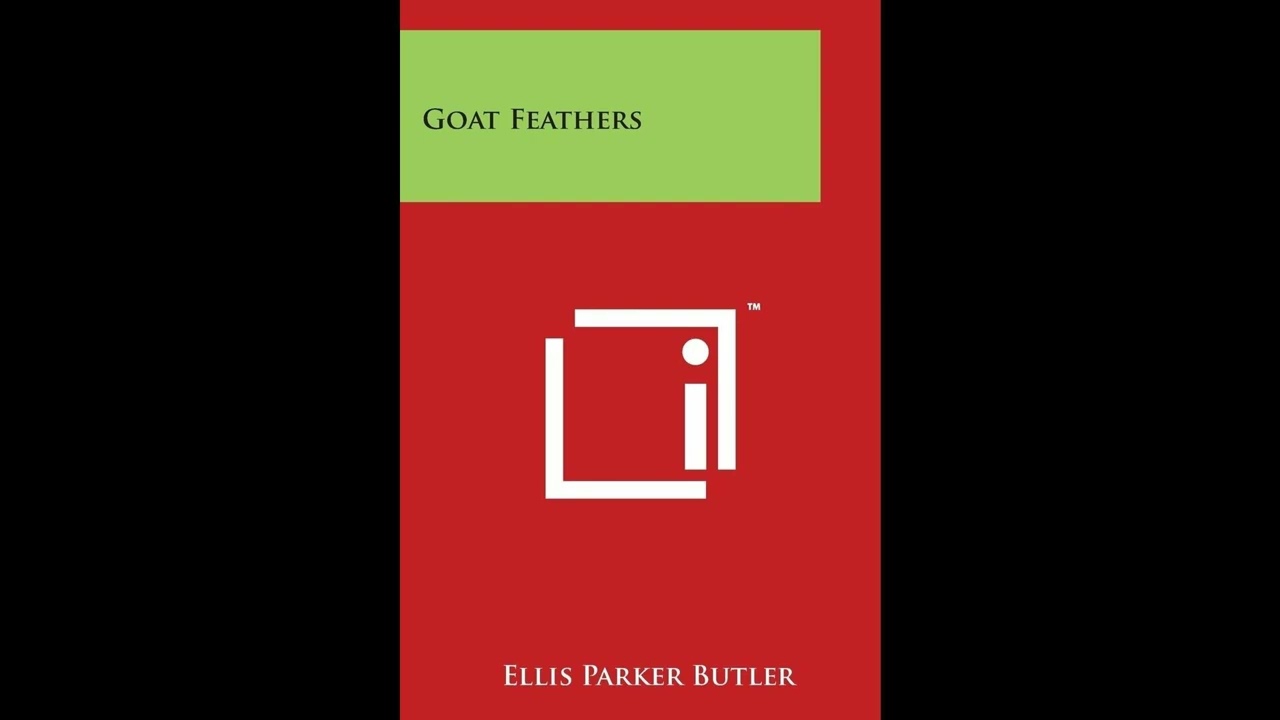
Goat Feathers
In an age where "hustle culture" reigns supreme and our digital lives overflow with distractions, Ellis Parker Butler's delightful 1920 collection, Goat Feathers, rings with an uncanny, prescient humor. Far from a dusty relic, this charming book offers a pointed and utterly relatable look at the endless, seemingly productive but ultimately useless tasks we accumulate in our daily lives. Butler coins the term "goat feathers" to describe precisely these kinds of activities – the busywork, the tangential projects, the unnecessary complications that prevent us from tackling what truly matters. It's a book for anyone who has ever felt overwhelmed by their to-do list, only to realize half of it consists of metaphorical fluff. Goat Feathers invites us to laugh at ourselves, to recognize these peculiar habits, and perhaps, even to shed a few of our own self-imposed burdens, making it as relevant a listen today as it was a century ago. Imagine the turn of the twentieth century: a world rapidly industrializing, embracing new efficiencies, yet still grappling with the human element of work and home life. Butler’s observational wit places us squarely in this landscape, presenting a series of humorous scenarios that illustrate his central thesis. The book's premise revolves around the notion that every person, in their earnest efforts to be productive or simply to appear busy, inevitably collects "goat feathers." These aren't malicious acts; they are often well-intentioned detours, bureaucratic flourishes, or obsessive tendencies that add no real value but consume precious time and energy. We meet, through Butler's vivid descriptions, the office worker who meticulously alphabetizes a stack of papers that will never be referenced again, the homemaker who devises an overly elaborate system for a simple chore, or the inventor who perfects a trivial component while the main device remains unfinished. Each essay in the collection offers a fresh angle on this universal human trait. Butler presents various individuals—from the ordinary clerk to the aspiring philosopher—who become entangled in their own self-created complexities. He does not present a single narrative arc with a protagonist facing a grand challenge, but rather a series of illustrative vignettes, each one a mini-case study in misdirected effort. The conflict isn't between characters but within them, and within the very structure of human society that encourages such inefficiencies. The unfolding humor comes from the recognition of these habits in ourselves and those around us, as Butler gently, but firmly, shines a light on the absurdities of human endeavor. He builds his argument not with academic rigor, but with the accumulative power of relatable, often laugh-out-loud examples, demonstrating how these seemingly small distractions collectively weigh us down without ever revealing a dramatic climax or a sudden, final resolution. The man behind this shrewd observation was Ellis Parker Butler, an American humorist born in Muscatine, Iowa, in 1869. His early life saw him working in a bank, a career that undoubtedly offered him ample opportunity to observe the everyday "goat feathers" of white-collar work. This practical experience later fueled his prolific writing career, which began in earnest around the turn of the century. Butler moved to New York and quickly became a popular contributor to major magazines of the era, including The Saturday Evening Post, American Magazine, and Collier's Weekly. His sharp wit and keen eye for the foibles of ordinary people quickly earned him a wide readership. Though he wrote numerous novels, plays, and hundreds of short stories, Butler is perhaps best remembered for his enduring short story "Pigs is Pigs" (1905), a classic tale of bureaucratic absurdity that continues to be anthologized today. This story, much like the essays in Goat Feathers, exemplifies his style: gentle satire rooted in everyday situations, elevating the mundane to the hilariously absurd. He wasn't a modernist innovator or a weighty literary figure shaping the great American novel, but rather a beloved humorist whose work provided comfort and amusement while subtly critiquing the rapidly changing world around him. Butler passed away in 1937, leaving behind a substantial body of work that cemented his place as a significant voice in early 20th-century American humor. Goat Feathers brilliantly illustrates several key themes, beginning most prominently with procrastination and inefficiency. Butler masterfully portrays how individuals, perhaps to avoid a more daunting task, will invent or meticulously attend to trivialities. He shows a man spending hours sorting old papers into categories he doesn't need, effectively putting off a truly important deadline. Another recurring theme is the absurdities of bureaucracy and systems. Butler often points out how rules or procedures, initially designed for efficiency, can evolve into self-serving complexities that hinder progress. Think of the elaborate form-filling required for the simplest request, or the layers of approval for a minor decision, all designed to satisfy an unseen, overarching "system" rather than the task at hand. Further, Butler subtly underscores the human tendency to rationalize and complicate. His characters aren't lazy; they genuinely believe their "goat feather" activities are essential. They construct elaborate justifications for their detours, convincing themselves of the deep importance of tasks that are, in fact, utterly extraneous. This points to a deeper theme: gentle satire of human nature. Butler's humor is rarely biting or cruel; instead, he approaches his subjects with an affectionate understanding, recognizing that these "goat feathers" are part of the human condition, born from a mix of habit, anxiety, and a misguided sense of order. He encourages self-awareness, inviting the listener to smile knowingly at the familiar follies he so deftly describes. The year 1920, when Goat Feathers was published, was a fascinating juncture in American history. The nation was emerging from the Great War, entering an era of unprecedented economic prosperity and rapid social change known as the Roaring Twenties. Culturally, there was a growing fascination with efficiency and scientific management, epitomized by figures like Frederick Winslow Taylor and his "Taylorism," which aimed to optimize industrial and administrative processes. White-collar work was expanding, with more people moving into office jobs that brought new kinds of organizational challenges and opportunities for "busywork." In the literary world, modernism was gaining traction, with writers experimenting with form and challenging traditional narratives. However, alongside these avant-garde movements, a strong tradition of popular humor flourished, addressing the anxieties and changes of the time with wit and accessibility. Butler's work emerged directly from this context, serving as a humorous counterpoint to the relentless pursuit of efficiency. He subtly critiqued the tendency to equate busyness with productivity, offering a much-needed perspective on the human element that often complicates or subverts even the best-laid plans. His observations resonated deeply with an audience navigating the increasing complexities of modern life, both at work and at home. Listening to Goat Feathers as an audiobook offers a unique and highly enjoyable experience that enhances Butler's already sharp observations. The skillful narration brings Butler’s conversational prose to life, giving voice to his distinct brand of wry humor and gentle irony. The narrator's pacing, voice, and subtle inflections become crucial to delivering the timing of each witty observation, allowing the listener to truly savor the author's insights into human behavior. With its run length of several hours, this collection is perfect for a variety of listening environments—whether you're tackling your own chores, commuting, or simply seeking a thoughtful diversion. The episodic nature of the essays makes them easy to dip into and out of, each one a self-contained gem that invites reflection and a quiet chuckle. The spoken word allows the atmosphere of an early 20th-century American sensibility to settle in, transforming Butler's observations into a kind of intimate confession, a shared understanding between author, narrator, and listener about the peculiar, endearing habits that make us all human.
Enjoyed Goat Feathers? A few ways to support us
Audible & Amazon links are affiliate; we may earn a small commission at no extra cost.
About this production
Human narration by a volunteer reader from LibriVox.org, the public-domain audiobook project. LibriVox volunteers record literary works whose copyright has expired in the United States, releasing the resulting recordings into the public domain.
Goat Feathers by Ellis Parker Butler. The underlying text is in the U.S. public domain. We do not republish any modern copyrighted edition, translation, or commentary.
The 4K cinematic visuals accompanying this audiobook are generated by an AI image model from prompts derived from the source text. No copyrighted photos, paintings, or stock footage are used. AI generation is disclosed on every video on our YouTube channel as required by YouTube's altered/synthetic content policy.
English subtitles are transcribed from the LibriVox recording with OpenAI Whisper. Translations into the 11 other supported languages are produced by Meta's NLLB-200 neural translation model. No human translator's copyrighted translation is used.
Questions about sourcing or rights? See our DMCA & Sourcing policy or contact us.
Enjoyed this audiobook?
If you'd like to own a copy of Goat Feathers or hear a professionally produced edition, the links below help support free audiobook production at no extra cost to you.
As an Amazon Associate we earn from qualifying purchases. Audible / print links are affiliate.