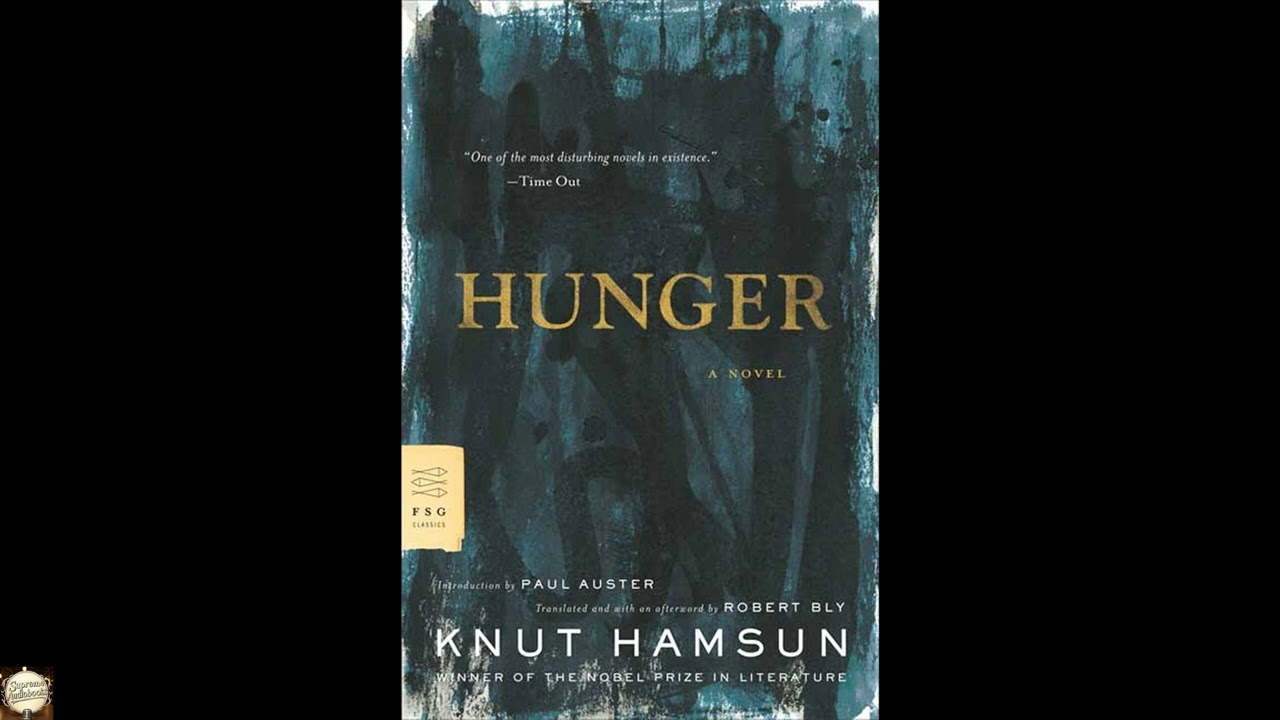
Hunger: A Novel (FSG Classics)
Knut Hamsun’s Hunger: A Novel stands as a blistering, vital challenge to perception, a work that plunged into the raw, subjective experience of existence long before such an approach became common practice in modern literature. It offers a profound, almost disorienting immersion into the psyche of a man teetering on the brink, his every thought and action dictated by the gnawing reality of extreme privation. This is not merely a story about an empty stomach; it is a meticulous, unsparing dissection of the human mind under duress, a testament to the strange, sometimes beautiful, sometimes horrifying resilience of a spirit confronting absolute despair. For listeners today, it resonates with an unsettling contemporary relevance, prompting questions about individual dignity, the indifference of urban life, and the true cost of surviving a world that seems to offer no quarter. It is a book that demands to be felt, not just read, and its power endures, unsettling and unforgettable. The story unfolds in the bleak, unforgiving landscape of late 19th-century Christiania – modern-day Oslo – a city that appears as cold and indifferent as the protagonist’s fate. We follow an unnamed young man, an aspiring writer whose fierce pride and vivid imagination are matched only by his profound destitution. He is a wanderer, a man adrift, constantly searching for a few kroner to buy a piece of bread, a scrap of paper, or a corner in a boarding house. His world is one of constant, gnawing hunger, a physical torment that steadily morphs into a profound psychological one, distorting his perceptions and coloring every interaction. He pawns his few remaining possessions – a vest, a blanket – always with a grand, if delusional, plan for their swift retrieval. His struggle is less a conventional plot and more a descent into the labyrinth of his own mind. He encounters a handful of characters: a sympathetic pawnbroker, a young woman he names Ylajali with whom he has fleeting, awkward interactions, and various strangers on the street. Yet, these external encounters are always filtered through his internal state, his growing paranoia, his erratic shifts between poetic brilliance and disturbing delusion. He writes articles he can’t sell, conjures elaborate stories to explain his poverty, and sometimes, in acts of baffling self-sabotage, gives away the little money he manages to acquire. The narrative meticulously tracks his spiraling thoughts, his desperate attempts to maintain an outward facade of dignity, even as his body and mind betray him, pushing him ever closer to an irreversible break. Knut Hamsun, born in Gudbrandsdalen, Norway, in 1859, led a life that, in many ways, paralleled the struggles of his fictional characters. From an impoverished background, he worked a variety of odd jobs – shoemaker's apprentice, itinerant laborer, seaman – before making two influential trips to America in the 1880s. These experiences, marked by hardship and disappointment, fueled his critique of modern industrial society and shaped his unique literary vision. Upon his return to Norway, Hamsun found his voice, emerging as a defiant figure in Scandinavian literature. While Hunger, published in 1890, was his breakthrough work, his extensive output included novels like Pan (1894), a lyrical ode to nature and the primitive self, and Victoria (1898), a poignant love story. His monumental novel Growth of the Soil (1917), which celebrated agrarian life and traditional values, earned him the Nobel Prize in Literature in 1920, solidifying his international standing. Hamsun's later life, unfortunately, became overshadowed by his controversial political allegiances during World War II, a complex chapter that remains a difficult part of his legacy, yet does not diminish the groundbreaking literary achievement of his earlier works. He passed away in 1952, leaving behind a body of work that profoundly altered the course of the European novel. Hunger acts as a stark theatrical presentation of several profound themes. First, it offers an unparalleled study of the psychology of hunger and destitution. Hamsun does not merely describe starvation; he embodies its effects on thought, emotion, and perception. We witness the protagonist’s bizarre hallucinations, his nonsensical internal monologues, and his irrational decision-making – like tearing up a promising article or giving away his last coin – all stemming from his physical deprivation. His mind becomes a distorted mirror, reflecting his plight back at him in increasingly cruel ways, showing how the human spirit can warp under such pressure. A second crucial theme is alienation and individual pride. The protagonist, even in a bustling city, is profoundly alone. His pride, a curious mix of intellectual arrogance and self-preservation, prevents him from seeking help or openly acknowledging his suffering. He actively pushes away potential kindness, preferring to maintain a facade of independence, illustrating how deeply interwoven self-worth can be with even the most basic human needs, especially in the face of societal indifference. Furthermore, the novel speaks to the struggle of the artist in a utilitarian world. The unnamed narrator is, at heart, a creative spirit, his mind teeming with poetic images and philosophical musings, even as his body wastes away. His attempts to write, to create, become a desperate act of self-affirmation, a way to prove his existence and worth beyond his physical state. His scribbled articles and internal poems are his last refuge against utter collapse, emphasizing the enduring, sometimes irrational, drive for artistic expression. Finally, Hunger stands as a powerful commentary on modernity and urban anomie. Christiania itself is not merely a backdrop but an active participant in the story, an indifferent, imposing force that exacerbates the protagonist’s isolation. The city’s crowds offer no comfort, its structures no solace, portraying the dehumanizing potential of burgeoning urban environments that had little space for those who fell through the cracks of a rapidly industrializing society. When Hunger was published in 1890, the literary landscape was primarily dominated by the detailed realism and social critique of authors like Henrik Ibsen and Émile Zola. Hamsun's work, however, represented a radical departure, a bold shift from external social observation to intense internal psychological exploration. It emerged during a fin-de-siècle period across Europe, a time of profound cultural and intellectual ferment. Traditional certainties were eroding, giving way to new ideas about the unconscious mind (Freud’s early work was just beginning to circulate) and existential angst (Nietzsche’s philosophy was gaining traction). Hamsun, having personally experienced the sharp edges of poverty and disillusionment, channeled these societal anxieties and intellectual currents into his writing. He sought to portray "the unchartable psychology of the soul," rejecting the neatly plotted narratives of his predecessors in favor of a raw, unmediated plunge into consciousness, anticipating the stream-of-consciousness techniques that would define much of 20th-century modernism. Listening to Hunger as an audiobook offers a uniquely powerful and intimate experience, transforming the text into an almost visceral encounter. The book’s narrative, largely an internal monologue, lends itself perfectly to a voiced performance, allowing the listener to inhabit the protagonist’s tormented mind directly. A skilled narrator can capture the subtle, chilling shifts in his sanity, conveying the growing desperation, the flashes of delusional grandeur, and the moments of profound despair with an immediate, compelling authenticity. The several hours of listening time allow for a deep, sustained immersion in his mental world, where the pacing of the narration can perfectly mirror his accelerating descent. You will discern the nuances in his voice as he hallucinates, argues with himself, or expresses fleeting moments of poetic beauty. The spoken word amplifies the oppressive atmosphere of Christiania and the protagonist’s profound isolation, drawing you into an experience that is unsettling, unforgettable, and deeply human.
Enjoyed Hunger: A Novel (FSG Classics)? A few ways to support us
Audible & Amazon links are affiliate; we may earn a small commission at no extra cost.
About this production
Human narration by a volunteer reader from LibriVox.org, the public-domain audiobook project. LibriVox volunteers record literary works whose copyright has expired in the United States, releasing the resulting recordings into the public domain.
Hunger: A Novel (FSG Classics) by Knut Hamsun. The underlying text is in the U.S. public domain. We do not republish any modern copyrighted edition, translation, or commentary.
The 4K cinematic visuals accompanying this audiobook are generated by an AI image model from prompts derived from the source text. No copyrighted photos, paintings, or stock footage are used. AI generation is disclosed on every video on our YouTube channel as required by YouTube's altered/synthetic content policy.
English subtitles are transcribed from the LibriVox recording with OpenAI Whisper. Translations into the 11 other supported languages are produced by Meta's NLLB-200 neural translation model. No human translator's copyrighted translation is used.
Questions about sourcing or rights? See our DMCA & Sourcing policy or contact us.
Enjoyed this audiobook?
If you'd like to own a copy of Hunger: A Novel (FSG Classics) or hear a professionally produced edition, the links below help support free audiobook production at no extra cost to you.
As an Amazon Associate we earn from qualifying purchases. Audible / print links are affiliate.