The Quest
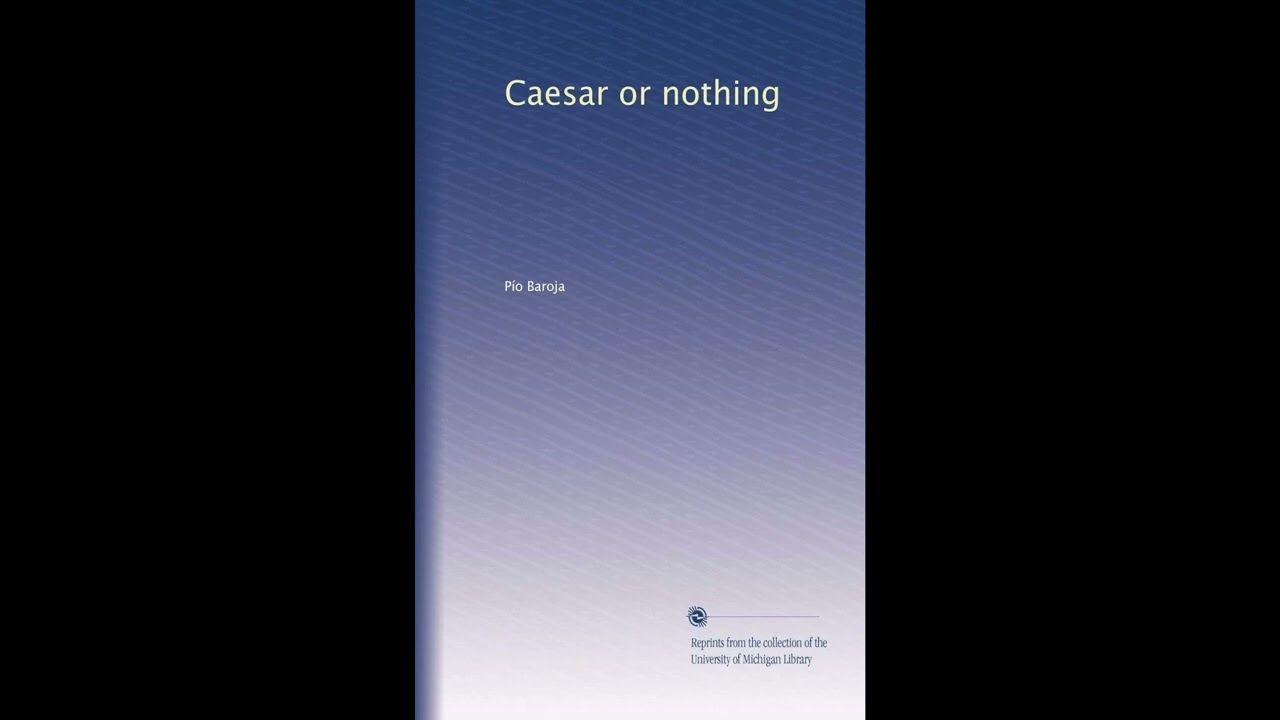
Imagine a young man, adrift in the bustling, often unforgiving streets of a great city, seeking purpose in a world that seems to offer him little more than a string of dead ends and fleeting encounters. Pío Baroja's The Quest offers precisely such a story, a profound contemplation on youth, disillusionment, and the relentless search for a place in the indifferent sprawl of early 20th-century Madrid. It is a book that speaks to anyone who has ever felt like an outsider, observing the theatre of life with a mixture of curiosity and detached cynicism, and its central character's struggle to connect with his surroundings resonates with a powerful, quiet truth even today. This is not a tale of grand heroism or dramatic revelation, but a poignant, unvarnished look at life lived on the margins, offering a window into a specific time and place that nevertheless feels profoundly human and universally resonant in its portrayal of uncertainty. The story follows Manuel, a young man from the provinces who arrives in Madrid with vague hopes but little direction. He quickly finds himself among the city's struggling classes, experiencing firsthand the grinding poverty and moral compromises that define life in the capital's lower echelons. Manuel drifts from one precarious lodging to another, from one ill-suited job to the next—a bookseller's assistant, a medical student's companion, an employee in a print shop—never quite finding his footing or a sense of belonging. His experiences serve as a lens through which Baroja portrays a panorama of turn-of-the-century Madrid, from its crowded boarding houses and bohemian cafes to its slums and the rough-and-tumble lives of its street vendors, vagrants, and petty criminals. Manuel is less an active participant in his own destiny than a keen, often melancholy observer. He encounters a wide array of vivid characters: prostitutes, anarchists, aspiring artists, impoverished intellectuals, and the many anonymous faces of the city's working poor. These encounters shape his understanding of humanity and society, fueling his growing sense of disillusionment about the possibility of meaningful work or genuine social progress. His path is marked by a series of small heartbreaks, fleeting connections that never quite solidify, and a constant, unfulfilled yearning for something more. The narrative depicts Manuel's slow, almost imperceptible growth, not through heroic acts, but through a deepening understanding of the harsh realities around him and the often-futile nature of human striving, leaving the ultimate direction of his life suspended in a delicate balance. Pío Baroja y Nessi, born in San Sebastián in 1872, initially trained as a doctor, a path he soon abandoned after a brief and unsatisfying practice in a rural village. This personal dissatisfaction, a feeling of being ill-suited to conventional careers, profoundly shaped his literary output. He briefly ran a bakery in Madrid with his family, an experience that exposed him to various social strata and provided fertile ground for his novels. Baroja dedicated himself entirely to writing from the turn of the century until his death in 1956, becoming a prolific and central figure in the Spanish literary landscape. He was a prominent member of the influential Generation of '98, a group of writers and intellectuals who reacted to Spain's national crisis following the loss of its last colonies in 1898. This collective reflected on the country's past, present, and future with a critical, often pessimistic, eye. Baroja, with his sharp observational skills and unvarnished prose, articulated the anxieties and existential doubts of his era, securing his place as one of Spain's most important modern novelists. His other notable works, such as Zalacaín el aventurero and El árbol de la ciencia, further cement his reputation as a chronicler of human nature and society's underbelly, often focusing on the individual's struggle against an indifferent world. The Quest is the first novel in his trilogy, La lucha por la vida (The Struggle for Life), followed by Weeds and Red Dawn, each continuing the story of Manuel and his encounters in Madrid. Among the central themes Baroja addresses in The Quest is the pervasive sense of alienation. Manuel remains an outsider looking in, even when surrounded by people. He might share a meal with fellow lodgers or listen to animated discussions in a cafe, but his internal world maintains a distinct distance from their concerns, emphasizing his inability to form lasting bonds or truly integrate into any social group. For example, he observes the camaraderie of street performers or political agitators but feels no real connection to their causes or their passions, highlighting his deep-seated sense of detachment. Another crucial theme is social inequality, presented with stark realism. Baroja's Madrid is a city of extremes, where the opulence of the wealthy districts contrasts sharply with the desperate squalor of the slums. Manuel's own experiences of poverty, his constant concern over rent and food, and his encounters with people driven to crime or prostitution simply to survive, offer a searing indictment of the period's social injustices and the brutal indifference of the urban system. A third significant theme is the elusive search for meaning in a seemingly absurd world. Manuel tries various avenues—work, intellectual pursuits, even fleeting romantic interests—but finds each path ultimately unsatisfying or ephemeral. His lack of ambition is not born of laziness, but rather a profound skepticism about the value or impact of any endeavor, reflecting a broader existential weariness. This philosophical uncertainty is exemplified in his internal monologues, where he grapples with the pointlessness of human existence and the arbitrary nature of suffering, frequently questioning the very foundations of societal beliefs and personal aspirations. This is coupled with the theme of disillusionment, as Manuel's initial, if vague, hopes for life in the capital slowly erode into a quiet resignation, a recognition that the "quest" for something grand may ultimately lead only to an understanding of life's mundane, often harsh, realities. The Quest emerged during a pivotal moment in Spanish history, often referred to as the "Disaster of '98." This period followed Spain's defeat in the Spanish-American War and the loss of its remaining colonial possessions, including Cuba and the Philippines. The national trauma prompted a period of intense introspection, self-criticism, and a questioning of Spanish identity and its future. Culturally, this led to a flourishing of intellectual and literary movements, with writers like Baroja seeking to re-evaluate traditional values and portray Spanish reality with unflinching honesty. Literary naturalism and realism were dominant forces, challenging romanticized depictions of life and society. Baroja's novel is firmly rooted in this tradition, offering an unsentimental, almost clinical observation of human behavior and social conditions, particularly among the marginalized. The political landscape was also turbulent, marked by social unrest, the rise of anarchism, and a widening gap between the entrenched aristocracy and a struggling working class. Baroja's Madrid, with its palpable tensions and vivid portrayal of urban squalor, directly reflects this complex and often volatile historical backdrop, explaining why his work, with its critical lens on society, resonated so deeply then. Listening to The Quest as an audiobook offers a uniquely immersive way to experience Baroja's distinctive prose and the atmosphere of turn-of-the-century Madrid. A skilled narrator can bring out the quiet intensity of Manuel's internal world, giving voice to his observations and moments of detached reflection, which are central to the novel's impact. The several hours of listening time allow the story to unfold at a natural, unhurried pace, mirroring Manuel's own meandering experiences and inviting listeners to settle into the rhythms of his life. Pay attention to how the narration delineates the various characters Manuel encounters—the boisterous street vendors, the melancholic intellectuals, the weary working-class figures—each voice painting a clearer picture of the city's diverse social fabric. The narrative's strength lies in its ability to build atmosphere through subtle detail and a clear, direct style, which an accomplished reading can enhance, transporting you directly into the sights, sounds, and unspoken emotions of Baroja's world.
Enjoyed The Quest? A few ways to support us
Audible & Amazon links are affiliate; we may earn a small commission at no extra cost.
About this production
Human narration by a volunteer reader from LibriVox.org, the public-domain audiobook project. LibriVox volunteers record literary works whose copyright has expired in the United States, releasing the resulting recordings into the public domain.
The Quest by Pío Baroja. The underlying text is in the U.S. public domain. We do not republish any modern copyrighted edition, translation, or commentary.
The 4K cinematic visuals accompanying this audiobook are generated by an AI image model from prompts derived from the source text. No copyrighted photos, paintings, or stock footage are used. AI generation is disclosed on every video on our YouTube channel as required by YouTube's altered/synthetic content policy.
English subtitles are transcribed from the LibriVox recording with OpenAI Whisper. Translations into the 11 other supported languages are produced by Meta's NLLB-200 neural translation model. No human translator's copyrighted translation is used.
Questions about sourcing or rights? See our DMCA & Sourcing policy or contact us.
Enjoyed this audiobook?
If you'd like to own a copy of The Quest or hear a professionally produced edition, the links below help support free audiobook production at no extra cost to you.
As an Amazon Associate we earn from qualifying purchases. Audible / print links are affiliate.