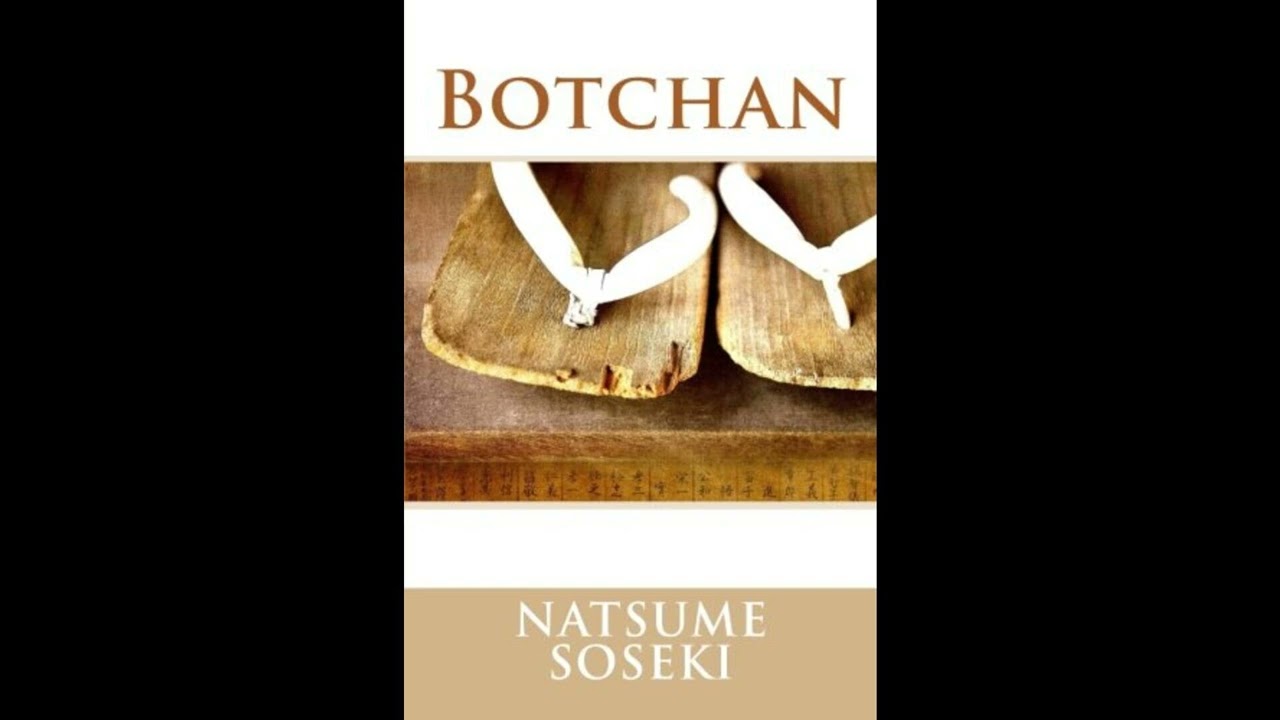
Botchan (Master Darling)
Imagine a young man, fresh out of the city, full of ideals and a burning sense of justice, thrown into a provincial world that seems determined to crush both. That is the beating heart of Natsume Soseki’s Botchan, a foundational work of modern Japanese literature, also known by its endearing English title, Master Darling. This isn't just a quaint tale from a bygone era; it is a hilariously sharp, deeply human portrayal of innocence confronting hypocrisy, a clash that resonates across centuries and cultures. Listeners today will find themselves laughing, cringing, and ultimately recognizing a piece of themselves in Botchan’s stubborn refusal to compromise, a struggle as relevant now as it was when first published over a hundred years ago. Our story begins in bustling Tokyo, where a young man, nicknamed Botchan for his reckless honesty and privileged upbringing, has always lived by a simple code: speak the truth, act justly, and never back down. Raised by his devoted, if somewhat overprotective, maid Kiyo, Botchan is fiercely independent and quick to anger, a disposition that often lands him in trouble but also reveals his innate purity of heart. After graduating from school, he accepts his first teaching position at a middle school in a remote, rural town on Shikoku, far from the familiar comforts of the capital. This new posting represents not just a job, but a plunge into an unknown world, a true test of his character. Upon his arrival, Botchan immediately finds himself a fish out of water, his straightforward Tokyo sensibilities clashing violently with the entrenched customs and subtle deceptions of provincial life. He is appalled by the petty politics among his fellow teachers, whom he quickly labels with unflattering nicknames like “Redshirt” (the sly head teacher), “Clown” (the weak-willed art teacher), and “Badger” (the manipulative mathematics teacher). The students, no less, are a rowdy and rebellious bunch, quick to test the limits of their new instructor. Botchan’s attempts to impose order and fairness are met with cunning resistance, elaborate pranks, and a general air of skepticism, forcing him to navigate a labyrinth of deceit where his honest actions are often misinterpreted or maliciously twisted. The narrative follows Botchan’s series of often-humorous misadventures and moral quandaries as he attempts to maintain his integrity in a world that seems intent on corrupting it, all while longing for the simple loyalty of Kiyo back home. Natsume Soseki, born Natsume Kinnosuke in 1867, rose to become one of the most significant literary figures in modern Japanese history. Born into a samurai family in Edo (present-day Tokyo) just before the Meiji Restoration, Soseki's life spanned a period of immense social and cultural upheaval in Japan. He was adopted and later returned to his birth family, an experience that perhaps fostered his keen sense of observation and an occasional feeling of alienation. Educated in English literature at Tokyo Imperial University, he later spent three years (1900-1902) in England on a government scholarship. This period was profoundly influential, exposing him to Western intellectual currents while also deepening his appreciation for Japanese culture and highlighting the challenges of cultural assimilation and identity. Upon his return, Soseki taught English literature at Tokyo Imperial University, succeeding the renowned Lafcadio Hearn. However, his true calling lay in writing. He eventually left academia in 1907 to become a full-time novelist for the Asahi Shimbun newspaper, a then-unprecedented move for a celebrated intellectual. His prolific output during this final decade of his life included novels such as I Am a Cat (his debut, published serially in 1905), Kokoro, Sanshiro, and Kusamakura. His works are celebrated for their psychological depth, satirical wit, and profound engagement with the complexities of modern Japanese identity as the nation grappled with Westernization and rapid social change. Soseki passed away prematurely in 1916, leaving behind an unparalleled legacy that continues to shape Japanese literature. One of the central themes Botchan enacts is the collision between idealism and the often-grubby reality of human nature. Our protagonist, for instance, arrives at his new teaching post genuinely believing in honor and straightforwardness, only to find his colleagues engaged in petty gossip, backbiting, and social maneuvering, often at each other’s expense. He is shocked when a simple act of honesty, like chastising a student for misbehavior, is twisted into an accusation against him, showing how quickly good intentions can be corrupted by a world more concerned with appearances than truth. Another potent theme is the tension between the individual and society. Botchan’s refusal to conform to provincial norms, his bluntness in the face of polite deception, and his persistent adherence to his own moral compass make him an outsider, highlighting the pressures to conform and the courage required to resist them. Furthermore, the novel subtly addresses the broader societal shifts occurring in Japan, particularly the clash between the emerging modernity of Tokyo and the lingering traditions and provincialism of the countryside. Botchan, with his urban upbringing and relatively liberal views, represents a new Japan, while the entrenched behaviors of the rural school staff exemplify the older ways of thinking. This cultural dissonance also touches upon the theme of coming-of-age; through his numerous trials and tribulations, Botchan gradually sheds some of his youthful naivete, gaining a more nuanced understanding of human nature and the complexities of the world beyond his sheltered upbringing, even if his core principles remain intact. His journey is one of self-discovery, learning to navigate the world without entirely losing himself. When Botchan was published in 1906, Japan was in the midst of the Meiji Era, a period of unprecedented transformation. Following the Meiji Restoration of 1868, the nation had rapidly embarked on a program of modernization and Westernization, striving to catch up with Western powers. Industries boomed, a new constitution was adopted, and the education system was reformed along Western lines. Japan had just emerged victorious from the Russo-Japanese War (1904-1905), a conflict that significantly boosted national pride but also highlighted the internal strains of rapid change and the anxieties surrounding national identity. Soseki’s novel emerged from this dynamic environment, offering a keen-eyed, often satirical, look at the absurdities and contradictions that arose from such swift societal evolution. It gently poked fun at the rigid hierarchies of the new education system, the pretense of intellectualism, and the enduring gap between the cosmopolitan capital and the slower pace of rural life, reflecting a nation attempting to forge a new identity while still tethered to its past. Listening to Botchan as an audiobook offers a uniquely intimate experience of this beloved narrative. The story is driven by the singular, often exasperated, voice of its narrator, Botchan himself, whose candid observations and internal monologues are perfectly suited for an aural presentation. A skilled narrator can bring Botchan’s distinctive personality to life—his quick wit, his indignation, his underlying good intentions—making his triumphs and frustrations all the more immediate and engaging. The run length, several hours in duration, makes it an ideal companion for commutes, thoughtful walks, or quiet evenings at home, allowing listeners to fully immerse themselves in Botchan’s world. Pay attention to the subtle shifts in pacing, the dramatic flair given to dialogue, and the humorous inflections that highlight Soseki's sharp satire and the rich atmosphere of early 20th-century Japan. The performance truly enhances the subtle humor and the profound insights into human nature that make Botchan such an enduring and cherished work.
Enjoyed Botchan (Master Darling)? A few ways to support us
Audible & Amazon links are affiliate; we may earn a small commission at no extra cost.
About this production
Human narration by a volunteer reader from LibriVox.org, the public-domain audiobook project. LibriVox volunteers record literary works whose copyright has expired in the United States, releasing the resulting recordings into the public domain.
Botchan (Master Darling) by Natsume Soseki. The underlying text is in the U.S. public domain. We do not republish any modern copyrighted edition, translation, or commentary.
The 4K cinematic visuals accompanying this audiobook are generated by an AI image model from prompts derived from the source text. No copyrighted photos, paintings, or stock footage are used. AI generation is disclosed on every video on our YouTube channel as required by YouTube's altered/synthetic content policy.
English subtitles are transcribed from the LibriVox recording with OpenAI Whisper. Translations into the 11 other supported languages are produced by Meta's NLLB-200 neural translation model. No human translator's copyrighted translation is used.
Questions about sourcing or rights? See our DMCA & Sourcing policy or contact us.
Enjoyed this audiobook?
If you'd like to own a copy of Botchan (Master Darling) or hear a professionally produced edition, the links below help support free audiobook production at no extra cost to you.
As an Amazon Associate we earn from qualifying purchases. Audible / print links are affiliate.