Madcap
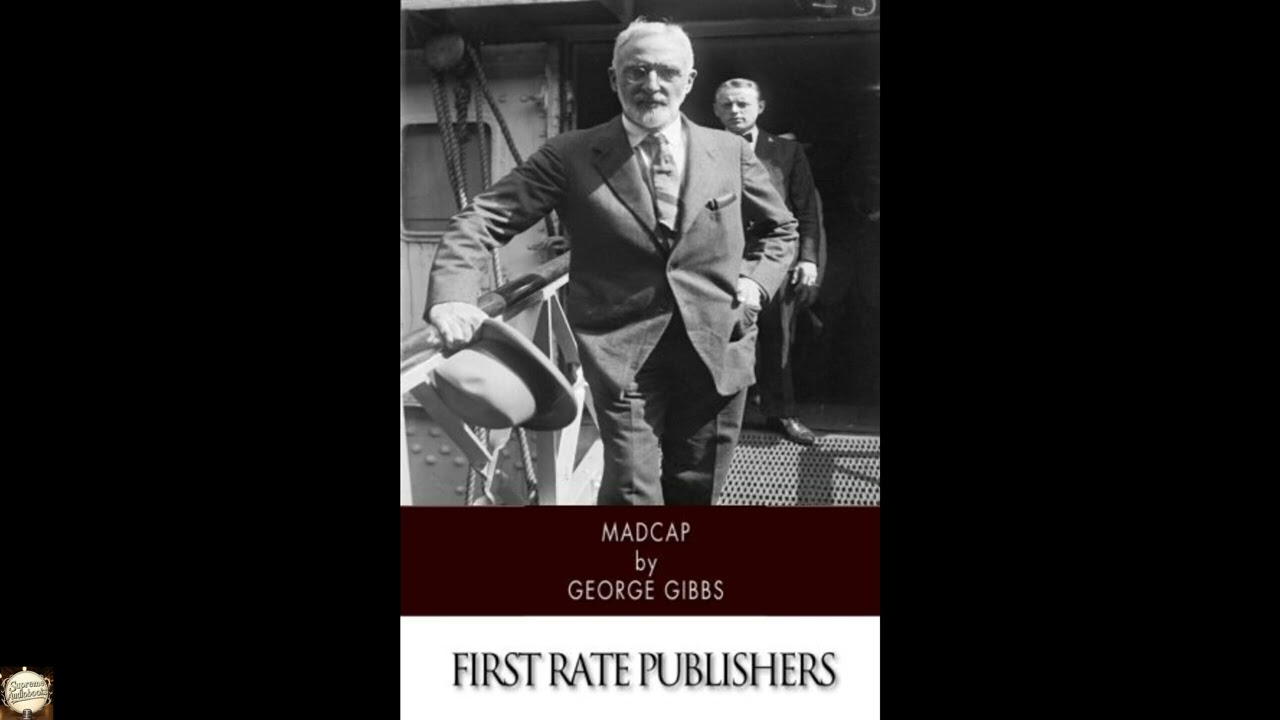
Step into a world where rigid social codes clash with an irrepressible spirit, where wit and charm navigate a labyrinth of expectations, and where the most unconventional path often leads to the truest heart. George Gibbs’s "Madcap" is a spirited tale from a bygone era, a novel that delights in the comedic chaos sparked by a fiercely independent young woman determined to live life on her own terms. At its core, this story is a celebration of individuality, a lighthearted yet keen observation of society’s foibles, and a testament to the enduring appeal of those who dare to defy convention. Even today, the spirited antics and genuine warmth of its characters offer a refreshing respite, reminding us that sometimes, the greatest adventure lies in simply being oneself. The story opens in the glittering, yet utterly staid, circles of high society, likely in a bustling East Coast city at the turn of the last century. Here we meet Diana Fanshawe, a young woman whose vivacious personality and unconventional ideas are as much a source of bewilderment as they are of admiration among her more conservative peers. Diana finds the endless round of balls, teas, and carefully orchestrated engagements stifling, dreaming instead of genuine excitement and authentic experiences. Her longing for something more than a predictable life, married to a suitable gentleman, sets the stage for the delightful complications that soon follow. Her chance for rebellion, or perhaps simply misadventure, arrives in the form of a convoluted misunderstanding. Through a series of delightful coincidences and Diana's own impetuous decisions, she finds herself in a situation where she is mistaken for someone else entirely – perhaps a distant relative, or even a foreign dignitary, whose arrival has been eagerly anticipated. This new, assumed identity provides Diana with an unexpected freedom, allowing her to shed the constraints of her former life and indulge her "madcap" tendencies without fear of immediate social repercussions. It is during this period of delightful masquerade that she crosses paths with Alistair Finch, a serious, principled gentleman whose life is as meticulously ordered as Diana’s is chaotic. Their initial encounters are, predictably, fraught with comedic friction. Alistair, entirely unaware of Diana’s true identity, is alternately charmed and exasperated by her audacious behavior, her pointed observations, and her complete disregard for the decorum he holds so dear. As Diana revels in her newfound liberty, navigating a series of increasingly elaborate predicaments, she finds herself drawn to Alistair’s steadfast nature, even as she challenges his every assumption. The plot builds on this burgeoning, yet complicated, relationship, weaving through a series of social mishaps, close calls, and heartfelt moments, all centered around the central question of how long Diana can maintain her charade and what will happen when her true identity is inevitably revealed. George Gibbs (1870-1942) was a prolific American author and illustrator whose career spanned several decades of the early twentieth century. Born in Camden, New Jersey, Gibbs initially trained as an artist, studying at the Art Students League of New York. This early immersion in visual arts profoundly influenced his later literary output; he became renowned not only for his stories but also for the striking illustrations he created for his own books and for popular magazines like Scribner's and Harper's Monthly. His detailed, often dramatic artwork played a significant role in bringing his narratives to life for his readers, creating a unique synergy between text and image. Gibbs transitioned from a successful career as an illustrator to become a popular novelist, penning dozens of books that often blended elements of adventure, romance, and historical intrigue. His writing style was characterized by its clarity, engaging plotting, and a knack for creating memorable characters that resonated with a wide readership. While "Madcap" showcases his lighter, more comedic side, he also wrote more serious works, such as The Yellow Dove, a spy novel set during World War I, and historical romances like Tony of Grand Island. Gibbs's ability to seamlessly shift between genres while maintaining a consistent quality of storytelling cemented his place as a beloved figure in American popular fiction. During a period when literature was undergoing seismic shifts with the rise of modernism, Gibbs remained a steadfast purveyor of accessible, entertaining narratives that prioritized character and plot. His work often reflects the values and concerns of his time, offering a glimpse into the social dynamics and moral landscapes of early 20th-century America. He carved out a significant niche, appealing to readers who sought thrilling adventure and heartwarming romance, and his dual talent as both a compelling storyteller and a gifted artist made his contributions particularly distinctive within the literary canon of his era. At its core, "Madcap" enacts the perennial theme of identity versus societal expectation. Diana Fanshawe’s escapades are not merely flights of fancy but a genuine struggle to forge an identity that aligns with her spirited nature rather than the restrictive roles society prescribes for young women of her standing. Her decision to adopt a false persona allows her to experiment with who she truly is, exposing the artificiality of the social conventions that bind her. For instance, in one scene, Diana, posing as a foreign visitor, is able to openly critique the dullness of a society ball, a sentiment she could never voice under her real name without severe censure, highlighting her yearning for authenticity. Another significant theme present in the story is the disruptive power of unconventionality. Diana’s "madcap" approach to life constantly upsets the established order, but it also often leads to unexpected positive outcomes, forcing other characters, particularly Alistair, to re-evaluate their rigid perspectives. Her very presence, with its refusal to conform, acts as a catalyst for change and genuine connection. We see this when her chaotic actions, initially causing an uproar in a quiet garden party, ultimately lead to a more honest and less constrained interaction between the guests than would have otherwise occurred. The novel suggests that sometimes, a little chaos is necessary to break through pretense and reveal genuine character. The narrative of "Madcap" emerged during a pivotal time in American history, roughly coinciding with the Progressive Era and the years leading up to, or immediately following, the first World War. This period was characterized by rapid social and technological change, shifting roles for women, and a growing tension between traditional values and modern aspirations. The suffrage movement was gaining momentum, and women were increasingly seeking greater independence and opportunities beyond the domestic sphere. Gibbs’s portrayal of Diana, a woman who chafes against societal strictures and actively seeks autonomy, reflects these broader cultural currents, resonating with a readership grappling with evolving definitions of womanhood and personal freedom. Furthermore, the literary landscape of the early 20th century was marked by a booming market for popular fiction, often serialized in magazines, which satisfied a public hunger for entertainment and escapism. Authors like George Gibbs provided accessible stories that offered humor, romance, and adventure, a stark contrast to the experimental and often challenging works of emerging modernists. "Madcap," with its lighthearted tone and engaging plot, perfectly fit this demand, offering readers a delightful reprieve and a celebration of individual spirit in a world undergoing profound and sometimes unsettling transformations. It was a story for its time, acknowledging the pressures of convention but ultimately championing the joy of personal expression. Listening to "Madcap" as an audiobook offers a unique opportunity to fully immerse oneself in its effervescent charm. A skilled narrator can breathe vivid life into Diana Fanshawe’s spirited dialogue and Alistair Finch’s measured responses, allowing their contrasting personalities to truly shine through. The several hours of run time make it an ideal companion for commutes, an afternoon of chores, or simply unwinding after a long day. Listen for the subtle comedic timing in the narration, the distinct voices given to each eccentric secondary character, and the way the atmosphere of a bygone era—from grand ballrooms to quiet conservatories—is conjured through careful phrasing and pacing. The auditory experience enhances the warmth, humor, and underlying messages about authenticity and freedom that make this classic story so enduringly appealing.
Enjoyed Madcap? A few ways to support us
Audible & Amazon links are affiliate; we may earn a small commission at no extra cost.
About this production
Human narration by a volunteer reader from LibriVox.org, the public-domain audiobook project. LibriVox volunteers record literary works whose copyright has expired in the United States, releasing the resulting recordings into the public domain.
Madcap by George Gibbs. The underlying text is in the U.S. public domain. We do not republish any modern copyrighted edition, translation, or commentary.
The 4K cinematic visuals accompanying this audiobook are generated by an AI image model from prompts derived from the source text. No copyrighted photos, paintings, or stock footage are used. AI generation is disclosed on every video on our YouTube channel as required by YouTube's altered/synthetic content policy.
English subtitles are transcribed from the LibriVox recording with OpenAI Whisper. Translations into the 11 other supported languages are produced by Meta's NLLB-200 neural translation model. No human translator's copyrighted translation is used.
Questions about sourcing or rights? See our DMCA & Sourcing policy or contact us.
Enjoyed this audiobook?
If you'd like to own a copy of Madcap or hear a professionally produced edition, the links below help support free audiobook production at no extra cost to you.
As an Amazon Associate we earn from qualifying purchases. Audible / print links are affiliate.