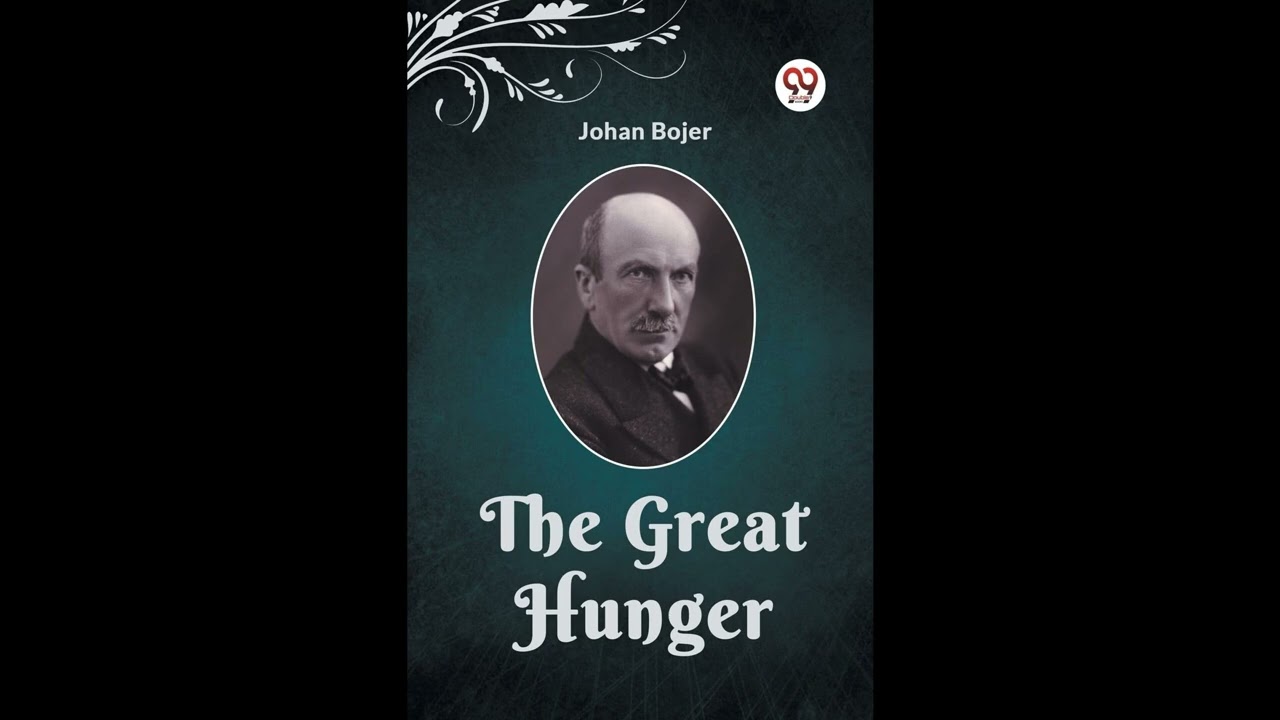
The Great Hunger Johan Bojer
Johan Bojer's The Great Hunger, originally published in 1916, stands as a stark and moving testament to the indomitable spirit of humanity in the face of crushing adversity. This powerful classic of Norwegian literature delves into the profound question of what it means to be truly human, asking whether a person can lose everything – wealth, status, family, even their physical comfort – and still find a sense of purpose and connection to the world. It is a story that resonates deeply with anyone who has ever faced an existential crisis, a sudden turn of fortune, or simply grappled with the universal search for meaning beyond material gains, making it as relevant today amidst our own complex challenges as it was over a century ago. The narrative introduces us to Peer Holm, a bright and ambitious young man born into humble circumstances in rural Norway. From an early age, Peer harbors a deep longing for intellectual achievement and a desire to escape the limitations of his birth. He pursues an education in engineering, eventually making his way to the bustling city, where he achieves considerable success, inventing new technologies and accumulating wealth. He marries a loving and intelligent woman, Merete, and together they build a beautiful home and start a family, seemingly realizing the quintessential dream of progress and prosperity. Peer believes himself to be master of his own destiny, finding satisfaction in his ingenuity and the comfortable life he has created. However, fate, in its cruel and unpredictable way, delivers a series of devastating blows. A misguided financial investment, a failed invention, and a devastating fire conspire to strip Peer of his entire fortune. The comfortable life he meticulously constructed crumbles around him, forcing him and his family into destitution. They abandon the city and return to a desolate, remote farm, where Peer, once a celebrated engineer, must now toil as a common laborer, struggling against the harsh Norwegian elements to simply put food on the table. This is the heart of the "great hunger" – not merely a physical yearning for sustenance, but a profound spiritual and emotional emptiness that threatens to consume him as he confronts the total loss of his identity and his aspirations. Johan Bojer, born in 1872 in Orkdalsøra, Norway, lived a life that in many ways mirrored the struggles and resilience of his characters. He was an illegitimate child, raised by foster parents in impoverished conditions, experiencing firsthand the hardships of rural life that he would later depict with such vivid realism. Despite his humble beginnings and limited formal education, Bojer possessed a fierce intellectual curiosity and a burning ambition to write. He worked various jobs – as a farmhand, a fisherman, a clerk – all while educating himself and pursuing his literary dreams. This deep connection to the working class and the Norwegian landscape profoundly shaped his literary voice. Bojer eventually achieved significant international recognition, particularly after spending time in Paris in the early 20th century, where he absorbed the influences of French naturalism and realism. His works, often translated into multiple languages, brought Norwegian literature to a global audience. While The Great Hunger remains perhaps his most celebrated work, he authored numerous other acclaimed novels, including The Power of a Lie (published in 1903, also known as Vor egen stamme), which won a prize from the French Academy, and The Last of the Vikings (1921), an epic tale of the Lofoten cod fisheries. Bojer was nominated for the Nobel Prize in Literature multiple times, a testament to his enduring impact and place in the literary canon as a chronicler of the human condition. He passed away in 1959, leaving behind a legacy of deeply humanistic and ethically charged literature. Central to The Great Hunger is the theme of the search for meaning and spiritual fulfillment beyond material success. Peer's initial drive is purely toward tangible achievement – wealth, status, intellectual recognition. When these are brutally stripped away, he is forced to confront the void left behind and reconsider what constitutes a truly valuable life. His journey from an aspiring inventor to a humble farmer illustrates a profound shift in priorities, as his "great hunger" evolves from a desire for external validation to a yearning for internal peace and purpose. Another powerful theme is the resilience of the human spirit. Despite repeated misfortunes, the death of a child, and the constant threat of starvation, Peer stubbornly clings to life, driven by a primal will to survive and a burgeoning, almost inexplicable sense of compassion. This resilience often manifests in acts of sacrifice and altruism, highlighting a third key theme: the transformative power of suffering. As Peer endures unimaginable hardship, his character is refined, shedding the superficial layers of ambition and pride. He comes to understand the interconnectedness of humanity, finding solace and a new kind of wealth in selflessness, such as his decision to help a neighbor who has wronged him, or his quiet acts of kindness towards those even poorer than himself. The stark contrast between the unforgiving Norwegian landscape and the enduring human spirit also underscores the theme of humanity's relationship with nature. Peer's struggle against the elements—the barren land, the cold, the storms—becomes a metaphor for his larger existential battle, a reminder of our vulnerability and dependence on the natural world, even as we strive to conquer it. When The Great Hunger was published in 1916, Europe was embroiled in the First World War, a period of immense upheaval, loss, and re-evaluation of societal values. While Norway remained neutral, the psychological and economic impact of the global conflict was keenly felt. The early 20th century was also a time of rapid industrialization and urbanization, which led to significant social changes, including mass migration from rural areas to cities. Bojer's novel speaks to the anxieties of this era – the vulnerability of prosperity, the spiritual void left by purely material pursuits, and the human search for an anchor in a world undergoing dramatic transformation. His portrayal of a man stripped of everything and forced back to the land resonated with many who questioned the true cost of "progress" and sought deeper, more enduring values amidst the chaos. Listening to The Great Hunger as an audiobook offers a uniquely immersive and intimate experience. The "several hours" run time allows ample space for the narrator to convey the slow, inexorable decline of Peer's fortunes and the profound internal shifts he undergoes. A skilled narrator can bring to life the stark beauty of the Norwegian landscape, the quiet desperation of Peer's struggle, and the subtle nuances of his evolving spiritual awareness. The pacing often reflects the deliberate, enduring quality of rural life and the grinding hardship Peer faces, punctuated by moments of stark drama. The spoken word can illuminate the sparse yet impactful dialogue, revealing the depth of emotion and resilience hidden beneath the characters' reserved exteriors, drawing the listener deep into Peer Holm's extraordinary battle for meaning.
Enjoyed The Great Hunger Johan Bojer? A few ways to support us
Audible & Amazon links are affiliate; we may earn a small commission at no extra cost.
About this production
Human narration by a volunteer reader from LibriVox.org, the public-domain audiobook project. LibriVox volunteers record literary works whose copyright has expired in the United States, releasing the resulting recordings into the public domain.
The Great Hunger Johan Bojer by Johan Bojer. The underlying text is in the U.S. public domain. We do not republish any modern copyrighted edition, translation, or commentary.
The 4K cinematic visuals accompanying this audiobook are generated by an AI image model from prompts derived from the source text. No copyrighted photos, paintings, or stock footage are used. AI generation is disclosed on every video on our YouTube channel as required by YouTube's altered/synthetic content policy.
English subtitles are transcribed from the LibriVox recording with OpenAI Whisper. Translations into the 11 other supported languages are produced by Meta's NLLB-200 neural translation model. No human translator's copyrighted translation is used.
Questions about sourcing or rights? See our DMCA & Sourcing policy or contact us.
Enjoyed this audiobook?
If you'd like to own a copy of The Great Hunger Johan Bojer or hear a professionally produced edition, the links below help support free audiobook production at no extra cost to you.
As an Amazon Associate we earn from qualifying purchases. Audible / print links are affiliate.