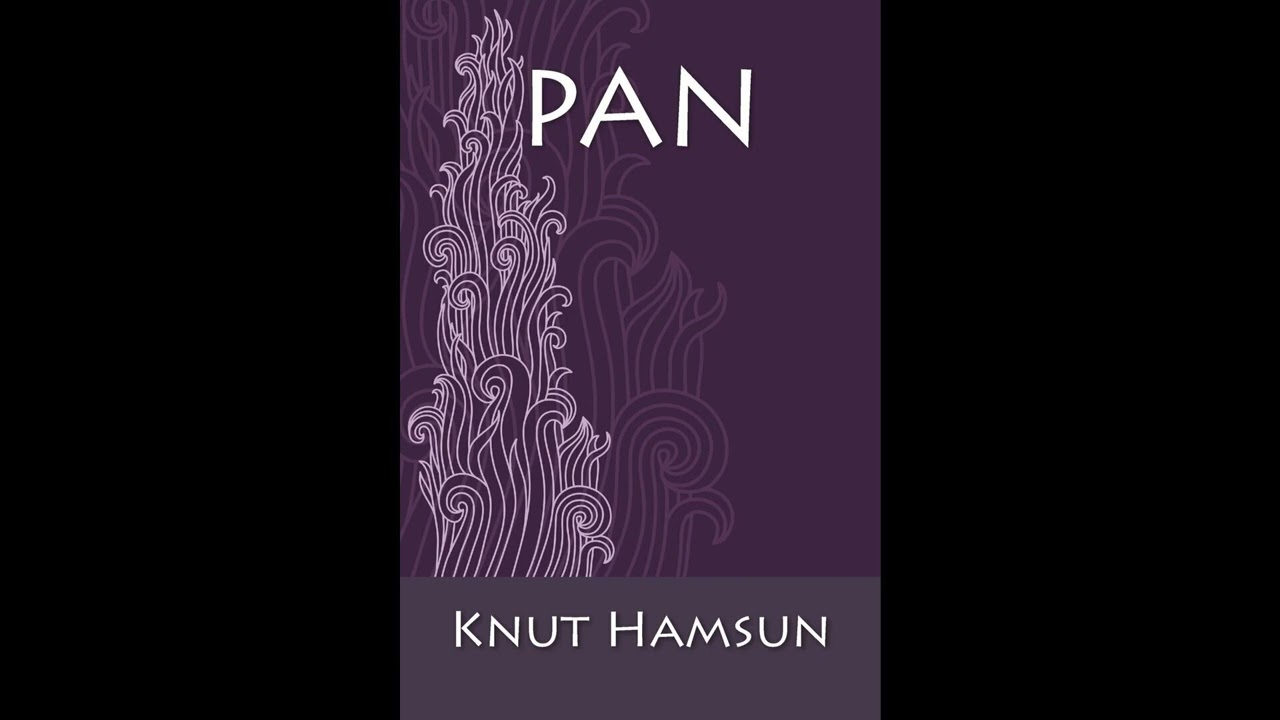
Pan
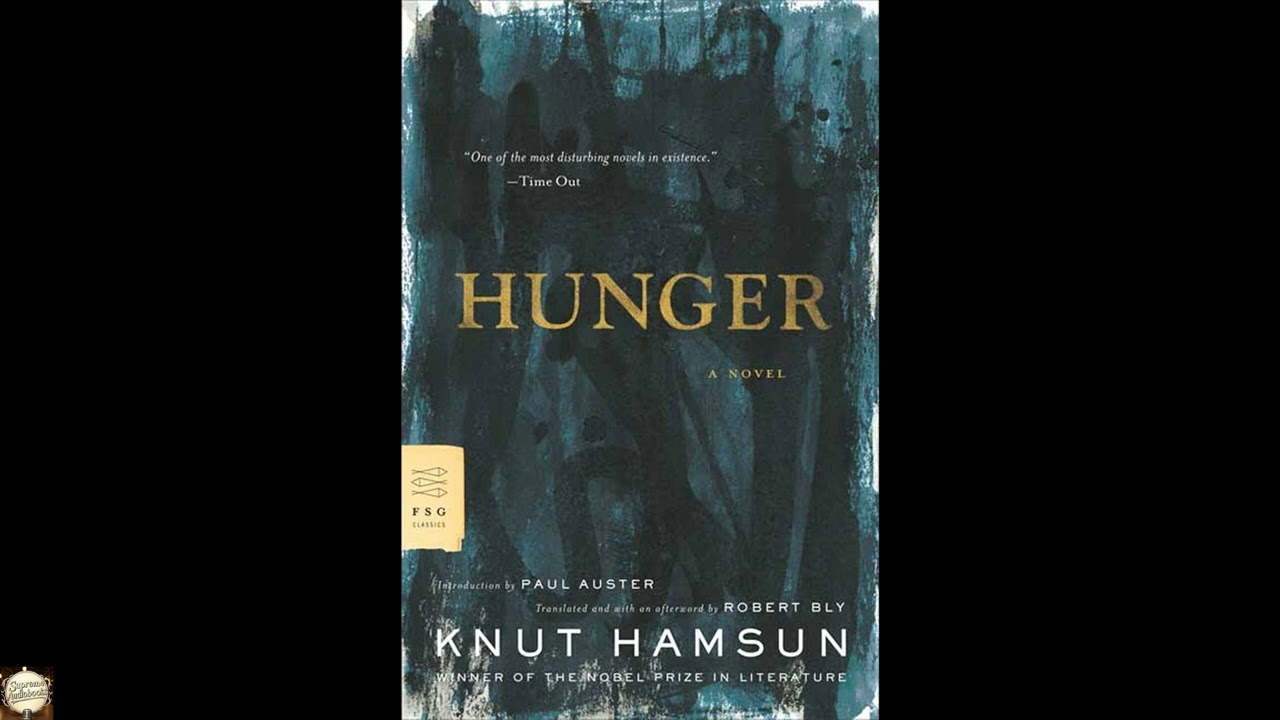
Enter the hushed, primeval world of Nordland, Norway, where the midnight sun casts an eternal, dreamlike glow upon a landscape both breathtaking and foreboding. Knut Hamsun’s Pan, first published in 1894, transports listeners to a place where human passions burn as intensely as the summer light, and the boundaries between man, beast, and nature blur into a singular, mesmerizing experience. This is not merely a story; it is a profound immersion into a consciousness grappling with love, obsession, solitude, and the untamed wilderness of the human heart. For anyone seeking to understand the currents of modern literature and the raw, unvarnished portrayal of psychological depth, Pan remains a foundational and deeply relevant work, challenging our notions of connection and belonging in a world often too complex for simple answers. The story unfolds through the fragmented, often unreliable recollections of Lieutenant Thomas Glahn, a retired military man who chooses to live a hermit-like existence in a remote hut in the northern Norwegian wilds. His only companions are his loyal dog, Esopus, and the endless, whispering forests, the silent mountains, and the restless sea. Glahn arrives seeking solace and freedom from the constraints of society, believing he can find a more authentic existence amidst the untamed beauty of nature. His days are spent hunting, fishing, observing the flora and fauna, and communing with the profound quiet. This idyllic solitude is irrevocably shattered with the arrival of other people, particularly the enigmatic and volatile Edvarda, the daughter of the local merchant. What begins as a tentative attraction between Glahn and Edvarda quickly spirals into a tumultuous and destructive obsession. Edvarda, both alluring and capricious, toys with Glahn’s affections, leading him into a dizzying dance of intense passion and agonizing rejection. Their relationship is marked by miscommunication, jealousy, and acts of impulsive cruelty from both sides. Glahn, with his intense, almost childlike connection to the natural world, struggles to navigate the complexities and games of human interaction, often reacting with irrationality and desperation. As his longing for Edvarda intensifies and repeatedly meets with frustration, Glahn’s carefully constructed world of solitude begins to unravel, exposing the raw nerves of his psyche and leading him down a path of escalating despair and self-destructive acts, ultimately compelling him to leave the land he so deeply loves. The author, Knut Hamsun, born Knud Pedersen in rural Lom, Norway, in 1859, lived a life as complex and often contradictory as his characters. His early years were marked by poverty and a restless spirit. He worked various odd jobs—shoemaker's apprentice, stone breaker, school teacher, clerk—and twice traveled to America in the 1880s, where he experienced firsthand the harsh realities of immigrant life and developed a deep skepticism towards industrial society. These experiences profoundly shaped his worldview and his literary output. Upon returning to Norway, Hamsun found his true calling as a writer, publishing his groundbreaking novel Hunger in 1890, which immediately established him as a significant new voice in European literature. Hunger, followed by Mysteries (1892) and Pan (1894), marked a radical departure from the prevailing literary trends of naturalism and social realism. Hamsun advocated for a new psychology in literature, focusing on the "unconscious life of the mind," the inexplicable impulses, and the intricate workings of subjective experience. His works were revolutionary in their intense psychological introspection, paving the way for authors like Franz Kafka, Hermann Hesse, and Thomas Mann. Hamsun's literary contributions were recognized globally when he was awarded the Nobel Prize in Literature in 1920 for his epic novel, Growth of the Soil, a work celebrating agrarian life and the primal connection to the land. However, his later years were tragically overshadowed by his public support for Nazi Germany during World War II, an affiliation that remains a deeply controversial aspect of his legacy and led to his ostracization in Norway after the war, despite his profound literary achievements. He died in 1952. At its core, Pan enacts the enduring tension between the wild, untamed spirit and the demands of human society. Glahn’s deep, almost spiritual connection to the natural world—the forests, the animals, the changing seasons—is portrayed as both a source of profound joy and a barrier to conventional human relationships. He finds solace in the rustling leaves and the calls of birds, treating his dog, Esopus, as a confidant, a clear example of his preference for the elemental over the social. This theme is vividly brought to life in scenes where Glahn retreats to his hut or wanders through the forest, finding a sense of belonging that eludes him in the company of people. Another central theme is the destructive power of obsessive love and unrequited desire. Glahn's fixation on Edvarda transforms from infatuation into a tormenting spiral of jealousy and irrational behavior. His desperate attempts to provoke her, his self-sabotaging acts, and his inability to escape her magnetic pull illustrate the dark, often irrational side of passion, showing how love can become a force of self-destruction when unmoored from reason. The novel also illuminates the profound sense of alienation and the struggles of the modern self to find authentic connection. Glahn is an outsider, unable to fully integrate into either the rustic community or the more refined social circles he occasionally encounters. His profound loneliness and his inability to express his deepest feelings in a way that others can understand underscore a universal human predicament—the isolation inherent in individual consciousness. His internal monologues, filled with longing and self-reproach, reveal a mind constantly at war with itself, a precursor to many alienated protagonists of twentieth-century literature. Furthermore, Pan masterfully captures the subtle nuances of human irrationality and the subconscious drives that dictate behavior. Characters, particularly Glahn and Edvarda, often act on impulse, defying logic and social expectation, their decisions driven by unexamined emotions and desires, offering a glimpse into the mysterious depths of the human psyche that Hamsun pioneered in his writing. Pan emerged at a pivotal moment in literary history—the fin de siècle of the late nineteenth century. This was a period characterized by rapid industrialization, social change, and a growing skepticism towards the scientific rationalism that had dominated much of the century. Intellectuals and artists began to turn inward, questioning objective reality and exploring the subjective experience. The rise of psychology as a nascent field of study, with figures like Sigmund Freud beginning their groundbreaking work, provided a new lens through which to view human behavior. Hamsun’s novel, published in 1894, perfectly captured this cultural zeitgeist. It rejected the prevailing naturalistic focus on environmental and social determinism, instead championing the inexplicable, the irrational, and the subconscious aspects of human life. It was a cry against the rigid structures of society and a celebration of primal instincts, reflecting a broader European movement towards symbolism, impressionism, and the early stirrings of literary modernism, positioning Hamsun at the forefront of this profound shift in artistic sensibility. Listening to Pan as an audiobook offers an unparalleled opportunity to immerse yourself in the psychological landscape of Lieutenant Glahn. The narrator's voice becomes the conduit to Glahn’s fractured consciousness, allowing you to inhabit his intense emotional shifts, his profound connection to nature, and his agonizing internal conflicts. The run length, totaling several hours, provides ample space for the story to unfold at its own deliberate, atmospheric pace. A skilled voice artist can beautifully convey the dreamlike quality of Hamsun's prose, highlighting the subtle nuances in Glahn's perceptions and the understated tension in the dialogue. Pay close attention to how the narration captures the haunting beauty of the Nordland setting, the intimate observations of wildlife, and the escalating desperation in Glahn’s interactions. The ebb and flow of the narrator's voice can illuminate the contrasts between Glahn's moments of blissful solitude and his tormented encounters with Edvarda, drawing you deeper into the novel's intoxicating and ultimately tragic atmosphere.
Enjoyed Pan? A few ways to support us
Audible & Amazon links are affiliate; we may earn a small commission at no extra cost.
About this production
Human narration by a volunteer reader from LibriVox.org, the public-domain audiobook project. LibriVox volunteers record literary works whose copyright has expired in the United States, releasing the resulting recordings into the public domain.
Pan by Knut Hamsun. The underlying text is in the U.S. public domain. We do not republish any modern copyrighted edition, translation, or commentary.
The 4K cinematic visuals accompanying this audiobook are generated by an AI image model from prompts derived from the source text. No copyrighted photos, paintings, or stock footage are used. AI generation is disclosed on every video on our YouTube channel as required by YouTube's altered/synthetic content policy.
English subtitles are transcribed from the LibriVox recording with OpenAI Whisper. Translations into the 11 other supported languages are produced by Meta's NLLB-200 neural translation model. No human translator's copyrighted translation is used.
Questions about sourcing or rights? See our DMCA & Sourcing policy or contact us.
Enjoyed this audiobook?
If you'd like to own a copy of Pan or hear a professionally produced edition, the links below help support free audiobook production at no extra cost to you.
As an Amazon Associate we earn from qualifying purchases. Audible / print links are affiliate.