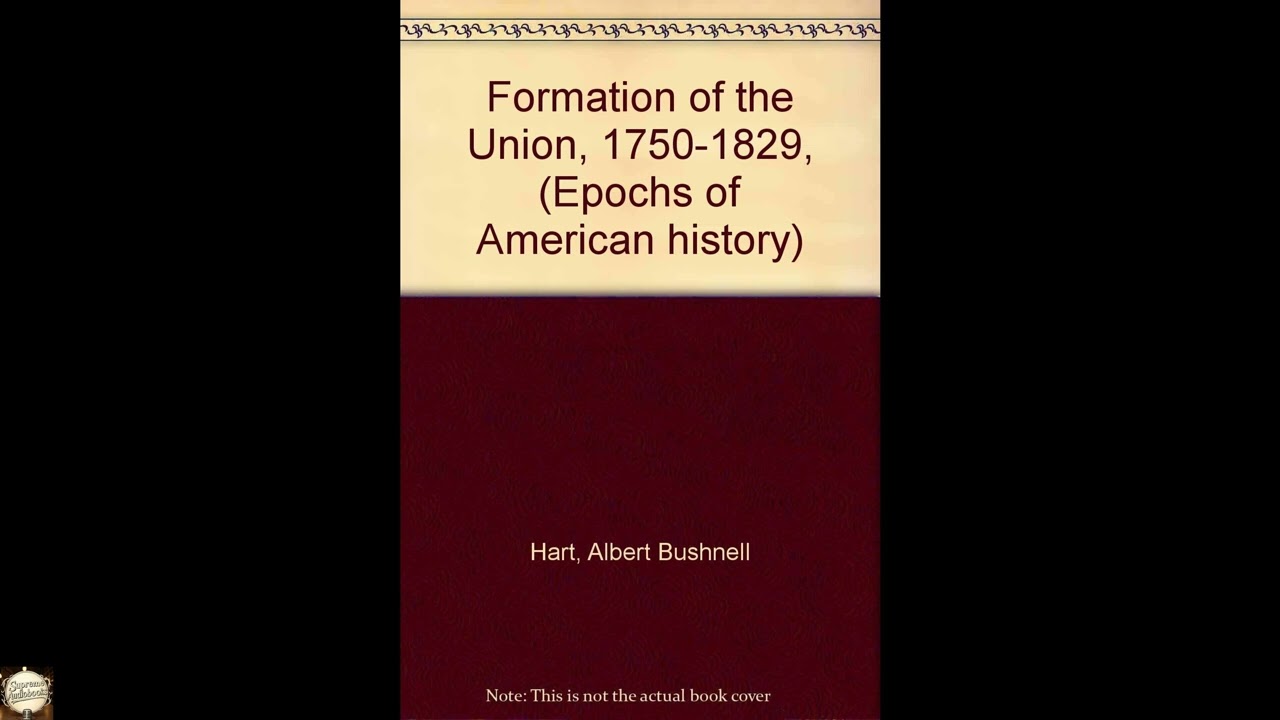
Formation of the Union, 1750-1829, (Epochs of American history)
Every nation has a birth story, a crucible of ideas and conflicts that forge its very soul. For the United States, that defining epoch stretches from the mid-eighteenth century to the dawn of the Jacksonian era, a period vividly captured in Formation of the Union, 1750-1829. This isn't merely a recounting of dates and battles; it is an enduring examination of how a disparate collection of colonies, driven by a yearning for self-determination, wrestled with internal divisions and external pressures to become a sovereign republic. Understanding this foundational era illuminates the DNA of American democracy, revealing the origins of its enduring strengths and its persistent challenges, making this account profoundly relevant for anyone seeking to comprehend the present through the lens of the past. The narrative unfolds as a grand historical drama, charting the transformation of scattered British territories into a cohesive nation. It commences with the deepening resentments of the colonial populace against perceived British overreach, detailing the economic policies and acts of imperial control that slowly but inexorably pushed the American colonies toward rebellion. We witness the escalating tensions from the Stamp Act controversies to the Boston Tea Party, the convocation of the Continental Congress, and the stirring calls for independence that echoed through nascent towns and rural settlements. The story then plunges into the crucible of the Revolutionary War, recounting the strategic military campaigns, the immense sacrifices, and the improbable victories against a formidable global power. From the harrowing winter at Valley Forge to the jubilant signing of the Treaty of Paris, the text portrays the arduous path to freedom, not as an inevitable triumph, but as a hard-won struggle for survival against daunting odds. Following the military victory, the focus shifts to the equally momentous and often more contentious task of constructing a viable government. The narrative meticulously outlines the critical period under the Articles of Confederation, revealing the inherent weaknesses of a loosely bound alliance and the urgent necessity for a stronger federal structure. The Constitutional Convention becomes a focal point, a forum where brilliant minds debated the very essence of republicanism, balancing individual liberties with the imperative of national unity. The account then traces the establishment of the early American republic under its new Constitution, detailing the first presidential administrations, the formation of political parties, and the significant challenges of westward expansion, international diplomacy, and defining the precise limits of federal power. It culminates at the close of the 1820s, a moment when the young nation, though still evolving, had firmly established its institutions and charted a course for its future, having weathered numerous tests of its collective will and political framework. This account stands as a significant example of foundational American historical scholarship, a text that emerged from an era deeply invested in understanding and narrating the origins of the United States. While its original authorship may not be individually attributed in a conventional sense, or has been lost to the passage of time, its inclusion within the "Epochs of American history" series signals its place as a recognized, comprehensive synthesis of the period. Such works often served as authoritative touchstones, shaping public understanding of national beginnings for generations. They were compiled or written not necessarily by a singular academic luminary but sometimes by committees of scholars, or by figures dedicated to distilling vast primary sources into accessible, flowing prose for a broad reading public eager to grasp the story of their nascent nation. The enduring presence of this work, classified as "Classic Literature," speaks to its historical influence and its role in establishing a particular interpretative framework for these pivotal years. It represents a tradition of historical writing that sought to craft a coherent national narrative, one that explained the complex process of nation-building and articulated the principles upon which the republic was founded. These seminal historical works often aimed to educate citizens about their shared heritage and the common values that ostensibly bound them together. By presenting a systematic overview of the period from the mid-eighteenth century through the early nineteenth, Formation of the Union offers a window into how earlier generations understood the key figures, the pivotal debates, and the fundamental compromises that brought the United States into being. Its continued relevance in literary and historical studies stems from its comprehensive sweep and its foundational status in the canon of American historical interpretation, acting as a baseline for subsequent academic inquiry and popular historical accounts. Within its pages, several core themes emerge with striking clarity, offering profound insights into the American experiment. One prominent theme is the struggle for self-governance, the arduous shift from colonial dependency to independent republicanism. The text vividly illustrates this through the escalating resistance to British taxation without representation, culminating in the Declaration of Independence. The subsequent Constitutional Convention further exemplifies this theme, showcasing the profound debates over the structure of a government accountable to its people, rather than to a monarch. Another compelling theme is the delicate balance between liberty and order. The period described constantly grappled with how to secure individual freedoms while maintaining a stable society, visible in the intense debates surrounding the Bill of Rights and the early challenges to federal authority, such as Shays' Rebellion, which underscored the fragile nature of new governing structures and the ever-present tension between popular will and established law. Furthermore, the account underscores the profound process of identity formation, the evolution from disparate regional loyalties (e.g., Virginian or Pennsylvanian) to a shared American identity. The common cause of revolution, the shared hardships of war, and the collective endeavor of crafting a union fostered a nascent sense of national belonging, an idea further solidified through the establishment of national institutions and symbols. Finally, the text constantly enacts the theme of compromise and conflict as the indispensable tools for forging a diverse nation. The Great Compromise at the Constitutional Convention, which balanced the interests of large and small states, and the contentious discussions surrounding slavery, are stark examples of how deeply entrenched regional and ideological differences necessitated negotiation, even when fundamental disagreements remained unresolved, shaping the young nation's character through a series of often difficult political accommodations. This substantial historical account likely emerged during a period of intense national self-reflection, possibly in the late nineteenth or early twentieth century. This was an era following the American Civil War, when there was a pressing need to reaffirm national unity and to articulate a coherent narrative of American origins. The professionalization of historical studies was also gaining momentum, with academics beginning to synthesize vast amounts of primary source material into comprehensive historical surveys intended for both scholarly and general audiences. The cultural landscape was marked by rapid industrialization, significant waves of immigration, and a burgeoning sense of American power on the world stage, all of which fueled a desire to understand the nation's foundational principles and its unique historical trajectory. Such a work would have served to educate a growing citizenry, providing a shared story of American exceptionalism and the challenges inherent in establishing and maintaining a democratic republic amidst ever-changing circumstances. It aimed to provide a stable, authoritative account of how the country came to be, acting as both an educational tool and a reinforcement of national identity during times of significant social and economic transformation. Listening to Formation of the Union, 1750-1829 as an audiobook offers a distinct and enriching way to absorb this foundational history. The several hours of narration allow for deep immersion, transforming what could be a dense academic text into an accessible, flowing chronicle. A skilled narrator brings clarity to complex political concepts and the intricacies of historical events, allowing the listener to grasp the sweep of the era without the need to visually navigate dense paragraphs or statistical tables. The spoken word can lend a sense of gravitas and drama to the pivotal moments—the impassioned debates of the Continental Congress, the tense deliberations of the Constitutional Convention, or the solemn pronouncements of early presidents. Listen for the measured pacing, which allows time for reflection on significant historical shifts, and for the narrative voice that conveys the profound stakes involved in the birth of a nation, painting a vivid mental picture of a period that forever shaped the American story.
Enjoyed Formation of the Union, 1750-1829, (Epochs of American history)? A few ways to support us
Audible & Amazon links are affiliate; we may earn a small commission at no extra cost.
About this production
Human narration by a volunteer reader from LibriVox.org, the public-domain audiobook project. LibriVox volunteers record literary works whose copyright has expired in the United States, releasing the resulting recordings into the public domain.
Formation of the Union, 1750-1829, (Epochs of American history) by Albert Bushnell Hart. The underlying text is in the U.S. public domain. We do not republish any modern copyrighted edition, translation, or commentary.
The 4K cinematic visuals accompanying this audiobook are generated by an AI image model from prompts derived from the source text. No copyrighted photos, paintings, or stock footage are used. AI generation is disclosed on every video on our YouTube channel as required by YouTube's altered/synthetic content policy.
English subtitles are transcribed from the LibriVox recording with OpenAI Whisper. Translations into the 11 other supported languages are produced by Meta's NLLB-200 neural translation model. No human translator's copyrighted translation is used.
Questions about sourcing or rights? See our DMCA & Sourcing policy or contact us.
View 10 famous quotes from this book →
Enjoyed this audiobook?
If you'd like to own a copy of Formation of the Union, 1750-1829, (Epochs of American history) or hear a professionally produced edition, the links below help support free audiobook production at no extra cost to you.
As an Amazon Associate we earn from qualifying purchases. Audible / print links are affiliate.