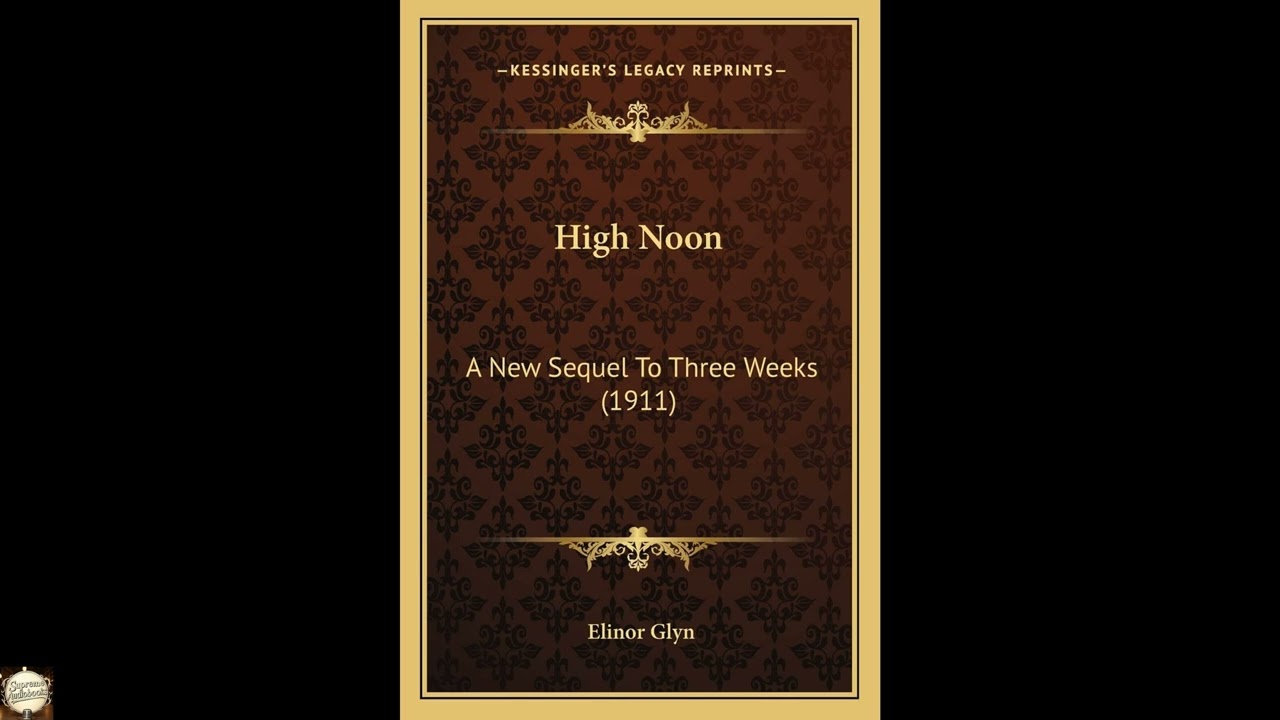
High Noon: A New Sequel To Three Weeks (1911)
Step into a world where scandal whispers through grand European salons and forbidden desires burn beneath the surface of polite society. Elinor Glyn's High Noon: A New Sequel To Three Weeks (1911) invites listeners back into the audacious, passionate realm she so brilliantly created, picking up the threads of love, consequence, and societal expectation that made her original novel a literary sensation. This is not merely a continuation; it is a profound reckoning with the aftermath of illicit passion, a story that asks what happens when the thrill of rebellion gives way to the enduring weight of reputation and the stubborn heart's unfulfilled longing. It speaks to anyone who understands the human cost of a moment's surrender and the quiet resilience required to live beyond the shadow of a grand affair, making it as relevant today as the whispers that followed its scandalous predecessor decades ago. The narrative of High Noon reacquaints us with Paul Verdayne, no longer the naive young man irrevocably altered by his clandestine encounter with the mysterious, unnamed Queen. Years have passed since the infamous "three weeks" that shattered his innocence and indelibly marked his future. We find Paul a changed figure, hardened by experience yet still bearing the emotional scars of a love that defied all conventions and ended in tragedy. He has sought solace and anonymity in the quieter corners of continental Europe, attempting to forge a new life far from the prying eyes of London society and the lingering ghosts of his past. Yet, the past is a relentless hunter, and whispers of his former liaison continue to precede him, casting a long shadow over every new acquaintance and every budding prospect for peace. His attempts at quietude are interrupted by a new, unforeseen entanglement: a young woman of formidable spirit and unconventional views, whose own circumstances lead her into Paul's orbit. This new figure, Lady Adeline Fairfax, is a whirlwind of sharp wit and independent thought, a product of a changing era yet still bound by the strictures of her aristocratic lineage. Their initial encounters are marked by a cautious dance of intrigue and intellectual sparring, as Paul, wary of further scandal, resists any emotional connection, while Lady Adeline, intrigued by the enigma surrounding him, finds herself drawn to his melancholic depth. The central conflict arises from Paul's deep-seated fear of history repeating itself, his apprehension that any attempt at happiness will inevitably lead to further societal condemnation, and Lady Adeline's desire for a love that transcends the superficialities of her world. Their connection forces Paul to confront the lasting impact of his time with the Queen, questioning whether true contentment can ever be found when one’s past is so inextricably linked to notoriety, and whether the courage to love again is worth the inevitable risk of public scrutiny and personal heartbreak. The story unfolds as a tense negotiation between desire and caution, expectation and defiance, pushing both characters to the brink of a decision that will redefine their understanding of love, loyalty, and the pursuit of a destiny free from the tyranny of memory. Elinor Glyn, born Elinor Sutherland in 1864, was a towering and often controversial figure in Edwardian and early 20th-century literature. Her life was as dramatic as her fiction, marked by financial struggles, a marriage to the older Clayton Glyn, and a reputation for bold fashion and unconventional behavior. After her husband's affairs became public and she struggled with debt, Glyn turned to writing, quickly discovering a talent for crafting sensational romantic tales that captivated a wide readership. She rose to international fame with the publication of Three Weeks in 1907, a novel so daring in its portrayal of an affair between a young Englishman and an older, enigmatic Queen that it became a byword for literary scandal. Glyn was not just a novelist; she was a cultural phenomenon, eventually relocating to Hollywood in the 1920s where she famously coined the term "It" – describing an indefinable quality of allure and magnetism – and became a celebrated screenwriter and tastemaker, leaving an indelible mark on popular culture. Her other notable works include Beyond the Rocks and It, both of which were adapted into successful films, solidifying her status as a pioneer in mass-market entertainment. Glyn's place in the literary canon is often debated, yet her undeniable influence on public imagination and her ability to tap into the era's hidden desires remain significant. She championed a brand of romance that, while often melodramatic, depicted women with a certain independence and sensual awareness, challenging the staid Victorian ideals that still permeated society. Her stories, populated by passionate aristocrats and morally ambiguous heroines, provided an escape for millions, while simultaneously provoking outrage from moral guardians. She was a master of constructing narratives that skirted the edge of propriety, making her characters' struggles with societal constraints resonate deeply with readers experiencing a rapidly changing world. Elinor Glyn passed away in 1943, leaving behind a legacy of books and films that continue to fascinate and sometimes shock new generations. At its core, High Noon powerfully enacts the theme of social convention versus personal desire, a recurring battleground in Glyn's fiction. Paul Verdayne’s very existence is a testament to the crushing weight of public opinion; his past affair, though deeply personal, has become a public spectacle, shaping his every interaction. For example, he instinctively recoils from Lady Adeline’s overtures not due to a lack of feeling, but from a profound fear of exposing her to the same scrutiny that has plagued him. This external pressure constantly clashes with his inner yearning for genuine connection and redemption. Another prominent theme is the enduring power of memory and legacy. The phantom of the Queen, the intensity of those "three weeks," and the societal judgment that followed are not merely backstory; they are active forces in Paul’s present. A scene where Paul gazes upon an old portrait, or overhears a snippet of conversation referencing the scandal, illustrates how his past dictates his present decisions, even dictating his perceived worthiness of future happiness. He lives not just with his memories, but with the memories of society itself. The book also addresses the intricacies of reputation and its consequences, particularly for those in high society. The characters are acutely aware of how their actions, perceived or real, can make or break their standing. Paul’s efforts to rebuild a respectable life are continually undermined by his past reputation, demonstrating the often-unforgiving nature of public memory. Even Lady Adeline, despite her independent spirit, must navigate the delicate balance between her own convictions and the expectations of her family and social circle. Finally, Glyn subtly introduces elements of resilience in the face of adversity. Despite his melancholic disposition, Paul does not completely succumb to despair. He seeks purpose, even if it is a quiet one, and his gradual thawing towards Lady Adeline shows a nascent will to reclaim agency over his own happiness, demonstrating a belief in the possibility of forging a new path even after profound loss and public shame. Elinor Glyn's works emerged during the Edwardian era, a period of immense social and cultural transformation in Britain and across Europe. It was an age marked by a superficial sense of stability and opulence for the upper classes, yet beneath the veneer of formality, profound shifts were occurring. The rigid class structure was beginning to crack under the pressure of industrialization, new wealth, and growing social awareness. Women, though still largely confined to domestic roles, were increasingly advocating for greater independence and suffrage, challenging the patriarchal norms that had dominated for centuries. It was also a time of heightened international tensions, leading up to the cataclysm of World War I. Against this backdrop, there was a public fascination with aristocratic life, scandalous affairs, and the breaking of social taboos, even as society preached strict morality. Glyn’s novels provided an escape into a world of forbidden passion and luxury, directly engaging with these societal contradictions. Her unflinching, albeit sensationalized, portrayal of female desire and the consequences of transgressing established moral codes struck a chord with a public eager for stories that reflected their own unspoken desires and anxieties about a world in flux, making her works both immensely popular and fiercely debated. To truly immerse oneself in the rich emotional landscape of High Noon, listening as an audiobook is the ideal medium. The narrator's voice brings Glyn's characteristic prose to life, allowing the listener to fully appreciate the blend of lush description, dramatic tension, and underlying emotional currents. The run length, several hours, offers ample time to become thoroughly engrossed in Paul’s continued struggles and the unfolding relationship with Lady Adeline, making it perfect for extended listening sessions, whether during a long commute or while enjoying a quiet evening at home. Pay close attention to the pacing, which often builds slowly, allowing the weight of Paul’s past to settle before new conflicts emerge, creating a sense of delicious anticipation. The subtle inflections in the narration’s voice will illuminate the internal turmoil of the characters, distinguishing Paul’s reserved melancholy from Lady Adeline’s spirited defiance. Furthermore, the heightened language and passionate dialogue, a Glyn hallmark, resonate with greater immediacy when spoken, allowing the atmosphere of elegant despair and burgeoning hope to envelop you completely.
Enjoyed High Noon: A New Sequel To Three Weeks (1911)? A few ways to support us
Audible & Amazon links are affiliate; we may earn a small commission at no extra cost.
About this production
Human narration by a volunteer reader from LibriVox.org, the public-domain audiobook project. LibriVox volunteers record literary works whose copyright has expired in the United States, releasing the resulting recordings into the public domain.
High Noon: A New Sequel To Three Weeks (1911) by Elinor Glyn. The underlying text is in the U.S. public domain. We do not republish any modern copyrighted edition, translation, or commentary.
The 4K cinematic visuals accompanying this audiobook are generated by an AI image model from prompts derived from the source text. No copyrighted photos, paintings, or stock footage are used. AI generation is disclosed on every video on our YouTube channel as required by YouTube's altered/synthetic content policy.
English subtitles are transcribed from the LibriVox recording with OpenAI Whisper. Translations into the 11 other supported languages are produced by Meta's NLLB-200 neural translation model. No human translator's copyrighted translation is used.
Questions about sourcing or rights? See our DMCA & Sourcing policy or contact us.
View 10 famous quotes from this book →
Enjoyed this audiobook?
If you'd like to own a copy of High Noon: A New Sequel To Three Weeks (1911) or hear a professionally produced edition, the links below help support free audiobook production at no extra cost to you.
As an Amazon Associate we earn from qualifying purchases. Audible / print links are affiliate.