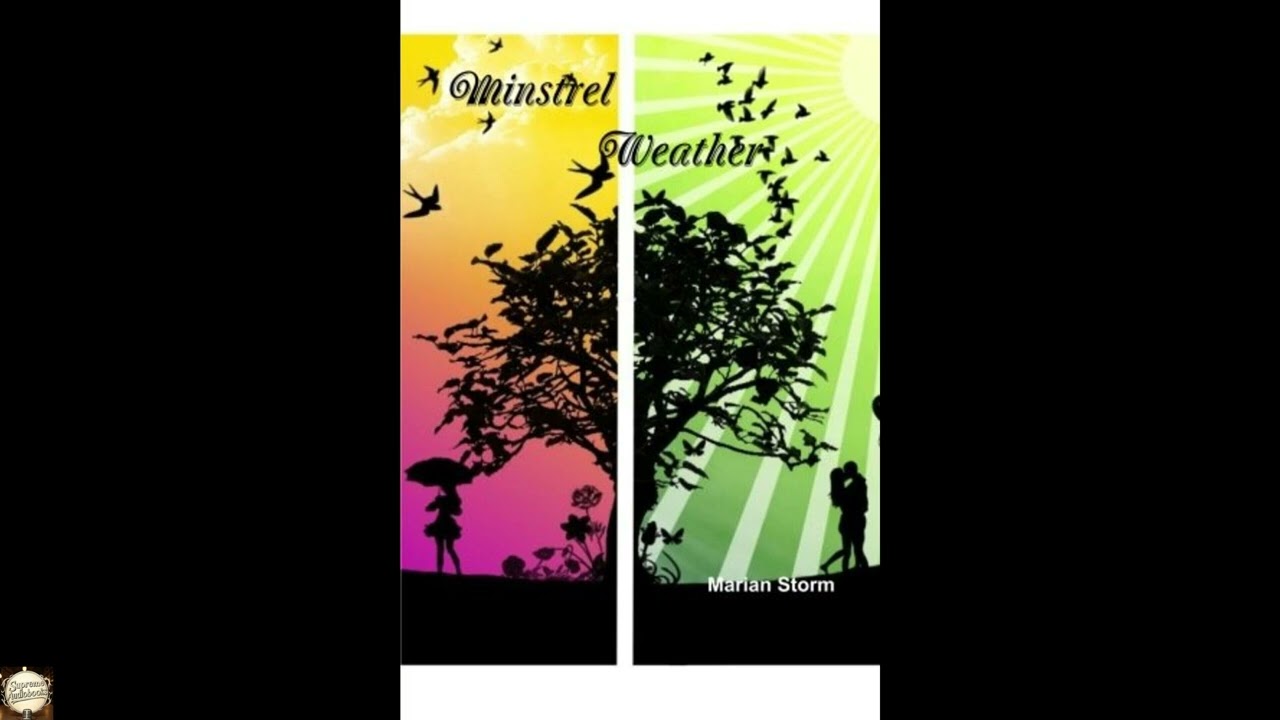
Minstrel Weather
Marian Storm's "Minstrel Weather" endures as a poignant echo from a bygone era, yet its core questions about personal liberty and the pull of community resonate with startling clarity even today. This seminal work, celebrated for its lyrical prose and incisive character studies, invites listeners to consider the true cost of authenticity in a world of rigid expectations. It is a quiet storm of a novel, building its emotional force through careful observation rather than dramatic upheaval, ultimately asking what it means to find one's true rhythm amidst life's unpredictable melodies. Listeners drawn to stories of individual spirit contending with societal currents will find its narrative both familiar and profoundly moving, a testament to struggles that persist through generations. The story unfolds in the quaint, though increasingly restless, New England town of Havenwood at the turn of the twentieth century. The air, still scented with pine and the salty tang of the nearby coast, is also beginning to carry the faint, unsettling hum of distant industry. Here we meet Elara Vance, a young woman whose spirit feels as expansive and shifting as the very "minstrel weather" of the novel's title—bright and clear one moment, shadowed by a sudden squall the next. She lives with her widowed mother and her aunt, beneath the watchful, often judgmental, gaze of a community steeped in tradition. Elara possesses an uncommon artistic sensitivity, a keen ear for music and a desire to articulate the unspoken beauty and sorrow she perceives in the world around her, a yearning often at odds with the domestic expectations for a woman of her standing. Elara's internal world clashes continually with the prescribed path laid out for her: marriage to a respectable local man, a life of quiet domesticity. Her burgeoning fascination with a transient musician, Silas Thorne—a man who carries his music and his melancholic past with him like a worn cloak—becomes a focal point for her rebellion. Silas, with his fiddle and his tales of travels beyond Havenwood, represents a freedom Elara has only dreamed of. Their connection, though largely unspoken and often misunderstood by others, acts as a catalyst, forcing Elara to confront the deep divide between her soul's true song and the constrained melody of her inherited life. The story follows Elara's attempts to navigate these desires, her quiet acts of defiance, and the painful decisions she must make as she seeks a path that honors her own truth without shattering the fragile bonds of family and community. Marian Storm, born Marian Elizabeth Hawthorne in the picturesque Berkshire hills of Massachusetts in 1873, spent her formative years steeped in the natural beauty and conservative social strictures of rural New England. Her early education, a mix of local schooling and extensive reading in her minister father's library, instilled in her a deep appreciation for classical literature and a keen observational eye for human behavior. Though she would later spend several influential years living in Boston and briefly in New York City, it was the small-town life and the stoic, often conflicted, characters of her youth that would become the wellspring of her most enduring fiction. Storm published "Minstrel Weather" in 1908, following two moderately successful novels, "The Elm and the Vine" (1901) and "Whispers from the Fjord" (1905), the latter reflecting a period of travel in Scandinavia. While her earlier works showcased her talent for psychological realism, it was "Minstrel Weather" that solidified her reputation and earned her a distinct place in the American literary canon. She was often associated with the Regionalist movement, though her writing transcended simple local color, using specific settings to frame universal struggles of identity and societal pressure. Storm continued to write until her death in 1942, producing short stories and essays that often returned to themes of memory, the passage of time, and the quiet heroism of ordinary lives. Her body of work stands as a vital bridge between the genteel realism of the late nineteenth century and the more unvarnished psychological insights that would characterize early twentieth-century American fiction. "Minstrel Weather" enacts several profound themes. One central idea is the perennial conflict between individual aspiration and the often-suffocating weight of societal expectation. Elara's quiet struggle to define herself against her community's rigid roles for women is evident in small, telling moments: her preference for solitude and sketching over tea parties, or her furtive visits to a hidden glade where she can practice her own, unconventional music. Another powerful theme is the inherent human need for artistic expression and the various forms it can take. Silas Thorne embodies this as a literal wandering minstrel, his music a raw conduit for emotion, while Elara's nascent artistry lies in her perception and her desire to articulate unspoken truths. The novel often contrasts Silas’s public, though humble, performance with Elara's private, internal symphony, showing how both are vital responses to the world. Furthermore, the book beautifully illustrates the theme of nature's unpredictable influence on human emotion and fate, tying directly to its evocative title. The unpredictable shifts in the New England sky—a sudden downpour, a burst of unexpected sunshine, a brooding fog—mirror the characters' internal states and the uncertain unfolding of their lives. These atmospheric changes are not mere backdrop; they become active participants in the narrative, reflecting Elara’s fluctuating hopes and fears, or the sudden turns in her relationships. The story also questions the true meaning of home and belonging, as Elara yearns for a place where her spirit can truly rest, while Silas's existence suggests that belonging might be found not in a fixed location, but in the freedom to move and create. When Marian Storm penned "Minstrel Weather," America was undergoing a seismic shift. The Gilded Age was giving way to the Progressive Era, marked by rapid industrialization, growing urban centers, and burgeoning social reform movements, including the fight for women's suffrage. Traditional rural communities, like Havenwood, found themselves at a crossroads, grappling with the allure and anxieties of modernity. Culturally, there was a growing appetite for realism in literature, a move away from sentimentalism towards a more honest portrayal of everyday life and its psychological complexities. Storm’s work emerged precisely from this tension, capturing the friction between the old ways and the new, between the quiet dignity of tradition and the urgent call for individual expression. It spoke to the anxieties of a generation witnessing profound changes to their social fabric, their gender roles, and their understanding of what constituted a fulfilling life. Listening to "Minstrel Weather" as an audiobook offers a singular opportunity to sink into Marian Storm’s exquisitely crafted language and the subtle emotional currents that define her characters. A skilled narrator can bring Elara Vance’s internal world to life, allowing listeners to hear the quiet yearning in her voice, the unspoken questions behind her reserved demeanor. The pace of the narration, much like the deliberate unfolding of the story itself, invites contemplation, giving space for the evocative descriptions of Havenwood and its surrounding landscape to paint vivid pictures in the mind's eye. Pay close attention to the way the dialogue reveals as much through what is not said as what is, and how the atmospheric descriptions—the changing weather, the sounds of the town, the silence of the woods—become an integral part of the emotional fabric. It is an experience that transforms the act of reading into an intimate encounter with a quietly powerful tale.
Enjoyed Minstrel Weather? A few ways to support us
Audible & Amazon links are affiliate; we may earn a small commission at no extra cost.
About this production
Human narration by a volunteer reader from LibriVox.org, the public-domain audiobook project. LibriVox volunteers record literary works whose copyright has expired in the United States, releasing the resulting recordings into the public domain.
Minstrel Weather by Marian Storm. The underlying text is in the U.S. public domain. We do not republish any modern copyrighted edition, translation, or commentary.
The 4K cinematic visuals accompanying this audiobook are generated by an AI image model from prompts derived from the source text. No copyrighted photos, paintings, or stock footage are used. AI generation is disclosed on every video on our YouTube channel as required by YouTube's altered/synthetic content policy.
English subtitles are transcribed from the LibriVox recording with OpenAI Whisper. Translations into the 11 other supported languages are produced by Meta's NLLB-200 neural translation model. No human translator's copyrighted translation is used.
Questions about sourcing or rights? See our DMCA & Sourcing policy or contact us.
Enjoyed this audiobook?
If you'd like to own a copy of Minstrel Weather or hear a professionally produced edition, the links below help support free audiobook production at no extra cost to you.
As an Amazon Associate we earn from qualifying purchases. Audible / print links are affiliate.