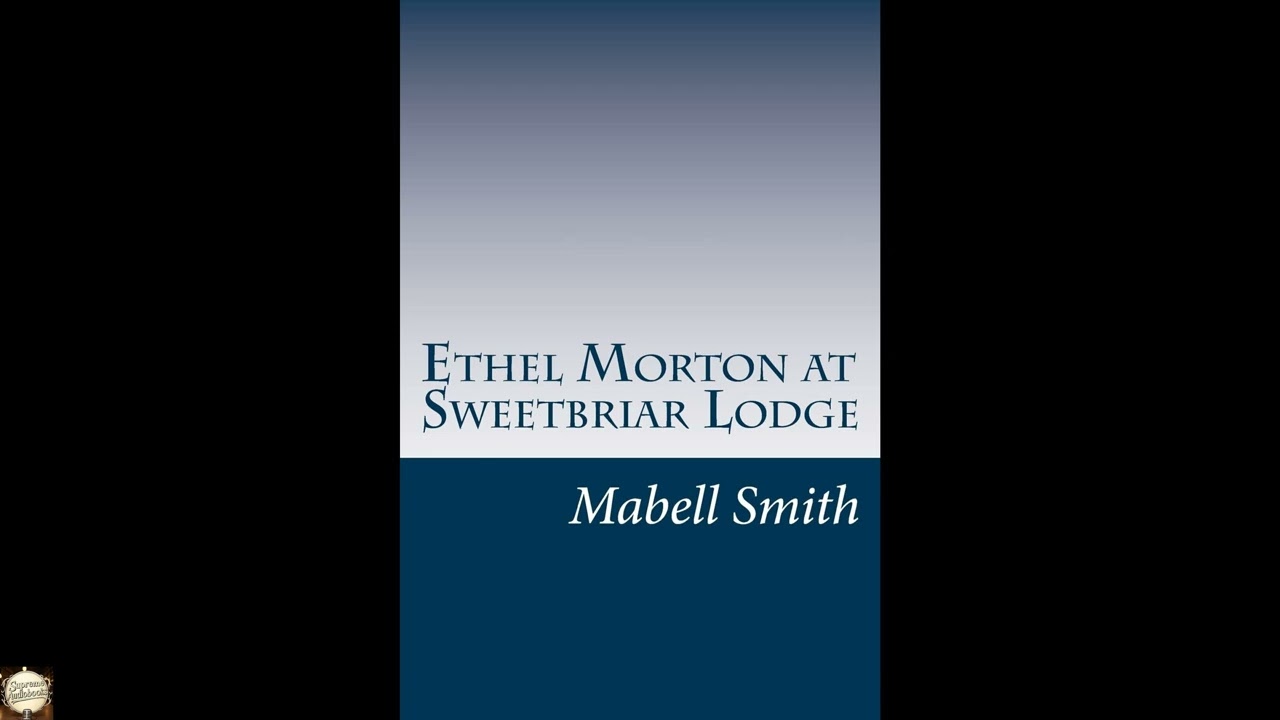
Ethel Morton at Sweetbriar Lodge
Step into a quiet corner of literary history with Mabell S. C. Smith’s endearing novel, Ethel Morton at Sweetbriar Lodge. This audiobook offers a delightful reprieve, transporting listeners to a gentler era where character and personal growth unfold with graceful earnestness. It stands as a testament to the enduring appeal of stories focused on the search for belonging and the quiet triumph of the human spirit, making it a soothing and thought-provoking listen for anyone seeking a respite from modern clamor and a connection to classic storytelling traditions. Discover a comforting narrative that reminds us of the power of simple virtues and the unexpected solace found in new beginnings. Our story opens with the arrival of Ethel Morton at the eponymous Sweetbriar Lodge, a secluded, somewhat rustic establishment nestled deep in the countryside. Ethel, a young woman recently faced with unexpected personal changes, finds herself navigating an entirely new chapter of life far from the bustling city she once knew. Sweetbriar Lodge is not the grand manor of her imaginings, but rather a charmingly timeworn haven run by the redoubtable Mrs. Albright, whose stern exterior belies a deeply kind heart. The lodge is home to a small, eclectic group of residents, each with their own quirks and secrets, all seeking a quiet retreat for various reasons. Ethel initially feels like a fish out of water, overwhelmed by the rural quiet and the unfamiliar routines, yearning for the familiar comforts of her past. The central tension arises from Ethel's struggle to adapt and to forge connections within this new community. She meets the quietly intellectual Miss Harriet, whose wisdom belies her frail appearance, and the somewhat dramatic Miss Charlotte, a woman of leisure who finds country life a constant source of amusement and exasperation. Ethel also encounters Mr. Davies, a distant relative of Mrs. Albright who manages the lodge’s grounds and carries an air of quiet melancholy. As Ethel slowly sheds her initial shyness, she begins to observe the subtle dramas and unspoken affections that weave through the lives at Sweetbriar Lodge. She learns of the lodge’s own history, a past filled with both joy and sorrow, and uncovers a minor mystery concerning a lost family heirloom that holds significance for Mrs. Albright. This gentle investigation, coupled with the daily rhythms of lodge life, prompts Ethel to look beyond her own immediate concerns and connect more deeply with her new surroundings and the people who inhabit them. Mabell S. C. Smith, the gifted author behind Ethel Morton at Sweetbriar Lodge, was an American writer, editor, and translator born in 1864, living until 1944. Her career spanned the late Victorian and early 20th century, a period of significant cultural transformation in America. Smith was a prolific author, known for her accessible prose and her ability to craft engaging narratives that often blended historical detail with compelling personal stories. She dedicated much of her literary energy to bringing historical figures and events to life for a wider audience, demonstrating a profound interest in American history and cultural heritage. Beyond Ethel Morton, Smith's bibliography includes titles like A Maid of Old New York, a historical novel that transported readers to colonial times, and The Spirit of the American Revolution, a non-fiction work showcasing her dedication to historical scholarship. She also penned Shakespeare's Stories, adapting the Bard's plays for younger readers, illustrating her versatility and commitment to literary education. While perhaps not a titan of the literary canon in the same vein as some of her contemporaries, Mabell S. C. Smith held a respected place as a popular author who skillfully entertained and informed, contributing significantly to the popular literary landscape of her time and offering readers thoughtful escapes into historical and domestic settings. Her writing often carried a moral undertone without being didactic, focusing instead on character development and the quiet heroism of everyday life. One of the central themes that unfolds gracefully throughout Ethel Morton at Sweetbriar Lodge is the idea of self-discovery through community. Ethel arrives feeling adrift, but through her interactions with the varied personalities at the lodge—from the pragmatic Mrs. Albright to the enigmatic Mr. Davies—she begins to find her own voice and purpose. An early scene where Ethel, feeling isolated, is gently drawn into a communal evening of reading aloud by Miss Harriet, exemplifies this. Her initial reluctance gives way to a sense of shared experience, slowly chipping away at her feelings of loneliness and prompting her to reconsider her own perceived limitations. The story also foregrounds resilience in the face of change. Ethel’s displacement is not a sudden, dramatic event, but a steady pressure she must learn to navigate. Her quiet determination to assist Mrs. Albright with the lodge’s challenges, even when feeling ill-equipped, showcases her growing inner strength and adaptability. Another significant theme is the allure of country life and simplicity as a balm for modern anxieties. Sweetbriar Lodge, with its unhurried pace and natural surroundings, stands in stark contrast to the hinted-at complexities of urban existence. The novel presents the restorative power of nature and the unpretentious joys of communal living. We see this in Ethel’s increasing appreciation for the lodge’s garden and the simple pleasure of an afternoon spent reading on the veranda. Finally, the novel touches upon the power of connection and quiet compassion. As Ethel gradually uncovers the individual stories of the lodge residents, she learns that everyone carries burdens and hopes. Her growing empathy, particularly towards Mr. Davies and his hidden struggles, highlights how understanding and kindness can bridge divides and foster genuine human bonds, creating a true sense of belonging where initially there was only isolation. Mabell S. C. Smith's writing emerged during a fascinating confluence of social and literary shifts. The late 19th and early 20th centuries in America were marked by the Progressive Era, a period of widespread social activism and political reform aimed at addressing problems caused by industrialization and urbanization. While Ethel Morton at Sweetbriar Lodge doesn't overtly engage with these grand political themes, it reflects a broader cultural interest in domestic life, the changing roles of women, and a certain nostalgia for simpler times as the country grappled with rapid modernization. Many authors of the period, particularly women writers, found an eager audience for stories that focused on personal growth, moral fortitude, and the intricacies of social dynamics within defined communities, often providing a comforting counterpoint to the era's accelerating changes. The rise of popular magazines and book clubs also created a robust market for accessible, character-driven fiction like Smith's. Listening to Ethel Morton at Sweetbriar Lodge as an audiobook transforms the quiet charm of Smith's prose into an immersive experience. The "several hours" run length allows the narrative to unfold at an unhurried, natural pace, perfectly complementing the story’s gentle rhythms and the gradual development of its characters. Pay close attention to the narrator’s voice work, which brings to life the distinct personalities of Sweetbriar Lodge—from Mrs. Albright’s no-nonsense demeanor to Miss Charlotte’s flighty exclamations and Ethel’s internal reflections. The carefully modulated pacing of the reading allows listeners to savor Smith’s descriptive passages and linger on moments of quiet introspection. The narration expertly balances dialogue with exposition, creating an intimate atmosphere that draws you into Ethel's world, making the rustle of leaves outside Sweetbriar Lodge and the quiet hum of conversation feel wonderfully real.
Enjoyed Ethel Morton at Sweetbriar Lodge? A few ways to support us
Audible & Amazon links are affiliate; we may earn a small commission at no extra cost.
About this production
Human narration by a volunteer reader from LibriVox.org, the public-domain audiobook project. LibriVox volunteers record literary works whose copyright has expired in the United States, releasing the resulting recordings into the public domain.
Ethel Morton at Sweetbriar Lodge by Mabell S C Smith. The underlying text is in the U.S. public domain. We do not republish any modern copyrighted edition, translation, or commentary.
The 4K cinematic visuals accompanying this audiobook are generated by an AI image model from prompts derived from the source text. No copyrighted photos, paintings, or stock footage are used. AI generation is disclosed on every video on our YouTube channel as required by YouTube's altered/synthetic content policy.
English subtitles are transcribed from the LibriVox recording with OpenAI Whisper. Translations into the 11 other supported languages are produced by Meta's NLLB-200 neural translation model. No human translator's copyrighted translation is used.
Questions about sourcing or rights? See our DMCA & Sourcing policy or contact us.
Enjoyed this audiobook?
If you'd like to own a copy of Ethel Morton at Sweetbriar Lodge or hear a professionally produced edition, the links below help support free audiobook production at no extra cost to you.
As an Amazon Associate we earn from qualifying purchases. Audible / print links are affiliate.