Arms and the Man
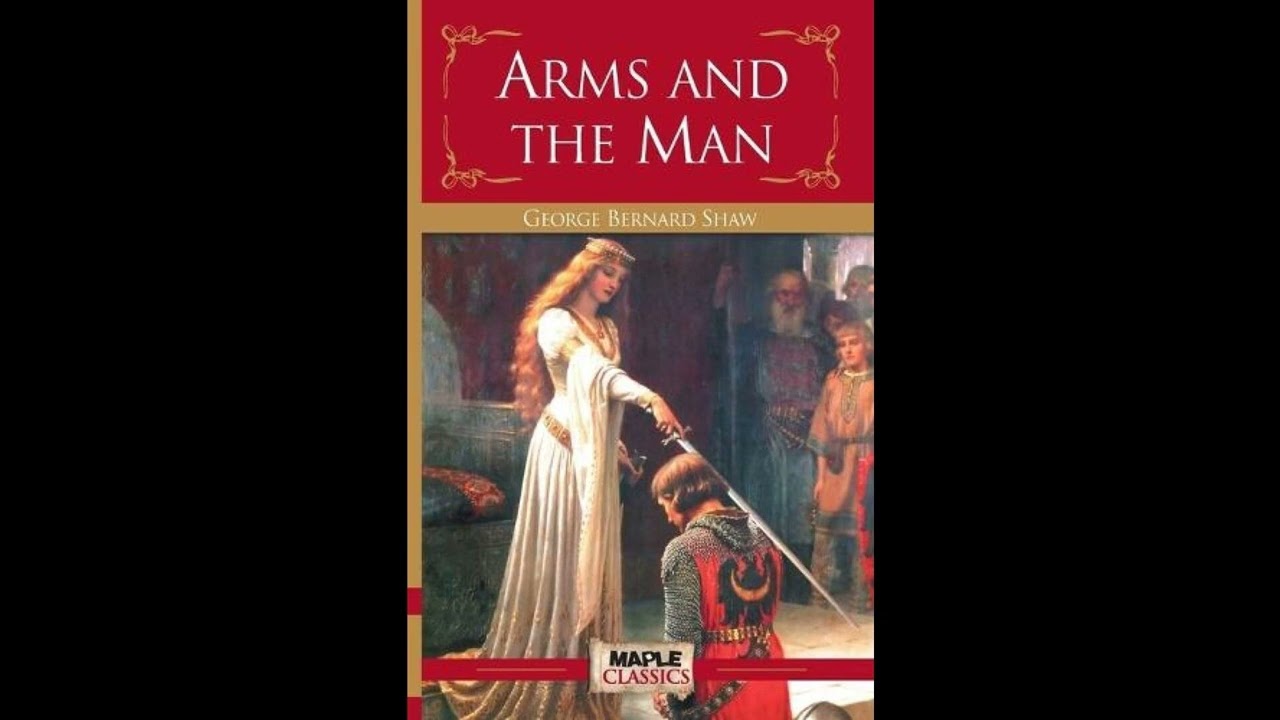
Imagine a world where the most effective weapon isn't a bullet, but a bar of chocolate. Picture a "hero" of war who carries sweets instead of cartridges, and whose battlefield strategy involves running away. This absurd, yet strangely logical, vision is at the heart of George Bernard Shaw's acclaimed play, Arms and the Man. First performed in 1894, this comedy upends every romantic notion about war, heroism, and even love, showing them to be flimsy facades over uncomfortable truths. It challenges audiences to look past the glorious myths we tell ourselves and instead confront the messy, often hilarious, realities beneath. Why should we care today? Because our world remains saturated with idealized images and convenient fictions, and Shaw's piercing wit offers a refreshing, necessary dose of clear-eyed skepticism that is as relevant now as it was over a century ago. The curtain rises on a tumultuous night in 1885 during the Serbo-Bulgarian War, in the cozy bedroom of Raina Petkoff, a young woman of the Bulgarian upper class. Raina is a creature of high romance, utterly besotted with her fiancé, the dashing Major Sergius Saranoff, whose recent, seemingly suicidal cavalry charge against Serbian forces has made him a national hero. Her head is filled with poetry, grand sentiments, and an unshakeable belief in the nobility of war and love. Her idyllic world is shattered when a desperate, dust-covered Swiss mercenary, Captain Bluntschli, bursts through her window seeking refuge from Bulgarian soldiers. He is a soldier, yes, but one who confesses to carrying chocolate creams instead of ammunition, who admits to a preference for survival over glory, and who speaks with an unnerving, practical candor that strips away Raina's illusions one by one. Bluntschli, the "chocolate cream soldier," represents a stark realism that directly confronts Raina's cherished ideals. Their initial encounters are a comedic clash of worldviews: her dramatic pronouncements met with his dry, common-sense observations. As the war ends and Sergius returns home, the precarious balance of the Petkoff household is further disrupted. Sergius, though outwardly heroic, proves to be as theatrical and prone to hypocrisy as Raina herself, his brave exterior hiding a profound ineptitude and a penchant for dramatic posturing. Shaw skillfully weaves in the lives of the household servants, the ambitious maid Louka and the pragmatic butler Nicola, whose own cynical observations and secret dealings expose further layers of social artifice and class distinctions within this seemingly genteel setting. The plot becomes a tangled web of mistaken identities, concealed affections, and inconvenient truths, forcing everyone to reconsider their perceptions of love, honor, and social standing. The humor arises from the characters' struggle to maintain their idealized self-images in the face of uncomfortable reality. The author behind this incisive comedy was George Bernard Shaw, born in Dublin, Ireland, in 1856. A self-taught intellectual, Shaw moved to London in 1876, struggling for several years as a novelist and music and drama critic before finding his voice as a playwright. He was a prominent socialist, a leading member of the Fabian Society, and an outspoken social reformer who believed art should be a vehicle for social change. Shaw was famously witty and sharp-tongued, renowned for his polemical prefaces to his plays, which often ran longer than the plays themselves. His life was one of relentless intellectual engagement, questioning societal norms, advocating for women's rights, and pushing for fundamental changes in economic and political structures. Shaw's prolific output spanned decades, securing him a unique place in English literature and earning him the Nobel Prize in Literature in 1925. He penned dozens of plays that continue to be performed worldwide, including the iconic Pygmalion (the basis for My Fair Lady), the morally complex Major Barbara, the philosophical Man and Superman, and the historical epic Saint Joan. Shaw belonged to a generation of playwrights who moved beyond the melodramas and farces prevalent in Victorian theatre, instead creating "plays of ideas" that used wit and dramatic conflict to dissect social problems and challenge conventional wisdom. He was a master of dialogue, crafting exchanges that were not only entertaining but also intellectually stimulating, forcing his audiences to think as much as they laughed. Arms and the Man enacts several profound themes through its spirited dialogue and character interactions. First and foremost, it offers a powerful critique of romantic idealism versus pragmatic realism. Bluntschli, with his practical approach to war and life, stands in stark contrast to Raina's starry-eyed view of heroism. When he describes cavalry charges as being less about bravery and more about luck or incompetence, or when he prefers to carry chocolate than waste cartridges, he exposes the absurdity of war's romantic facade. This theme extends to love, where the play suggests that genuine affection might arise more from shared understanding and practical compatibility than from grand, poetic declarations. Another central theme is the hypocrisy of social class and conventional morality. The play deftly reveals that servants like Louka and Nicola often possess more cunning, ambition, and clear-sightedness than their aristocratic employers. Louka’s bold pursuit of Sergius and Nicola’s detached calculation of his own advancement highlight how class barriers are often arbitrary and how true character can be found independently of social standing. Shaw also uses the play to challenge gender roles and expectations of the late 19th century. Raina, initially a demure romantic heroine, discovers her own capacity for deception and practicality, while Louka defies traditional subservience, asserting her will and desires in a world designed to keep her down. This play emerged at a fascinating juncture in history—the late Victorian era. Europe was undergoing significant social and intellectual shifts. The rise of realism in literature and theatre, influenced by playwrights like Henrik Ibsen, encouraged a move away from sentimentalism and towards a more unflinching portrayal of life. Shaw, a committed socialist, was deeply critical of the jingoistic nationalism and militarism that characterized much of late 19th-century European politics. He saw the romanticization of war as a dangerous illusion, one that blinded people to its true brutality and futility. Arms and the Man was, in many ways, a direct theatrical response to popular melodramas that glorified soldiers and nationalistic fervor, offering instead a comedic but pointed dissection of the real costs and motivations behind conflict. Its appearance signaled a broader cultural questioning of established hierarchies and cherished beliefs. Listening to Arms and the Man as an audiobook brings Shaw's brilliant dialogue and character dynamics to life in a uniquely engaging way. The play's relatively contained settings and small cast of memorable characters make it perfectly suited for the auditory medium. You will find yourself immersed in the rapid-fire exchanges, the witty repartee, and the underlying currents of irony and social commentary that define Shaw's writing. The narration will deliver the distinct voices of Raina, with her dramatic pronouncements, Bluntschli, with his dry pragmatism, and Sergius, with his bombastic heroism, allowing the humor to land with precision. Pay attention to the shifts in tone, the subtle pauses, and the delivery of key lines that underscore the characters' internal conflicts and the play's larger themes. The pacing should feel brisk, reflecting the quick-witted nature of the script, and the intimate atmosphere of a play being performed just for you makes this "several hours" experience pass quickly, leaving a lasting impression.
Enjoyed Arms and the Man? A few ways to support us
Audible & Amazon links are affiliate; we may earn a small commission at no extra cost.
About this production
Human narration by a volunteer reader from LibriVox.org, the public-domain audiobook project. LibriVox volunteers record literary works whose copyright has expired in the United States, releasing the resulting recordings into the public domain.
Arms and the Man by George Bernard. The underlying text is in the U.S. public domain. We do not republish any modern copyrighted edition, translation, or commentary.
The 4K cinematic visuals accompanying this audiobook are generated by an AI image model from prompts derived from the source text. No copyrighted photos, paintings, or stock footage are used. AI generation is disclosed on every video on our YouTube channel as required by YouTube's altered/synthetic content policy.
English subtitles are transcribed from the LibriVox recording with OpenAI Whisper. Translations into the 11 other supported languages are produced by Meta's NLLB-200 neural translation model. No human translator's copyrighted translation is used.
Questions about sourcing or rights? See our DMCA & Sourcing policy or contact us.
Enjoyed this audiobook?
If you'd like to own a copy of Arms and the Man or hear a professionally produced edition, the links below help support free audiobook production at no extra cost to you.
As an Amazon Associate we earn from qualifying purchases. Audible / print links are affiliate.