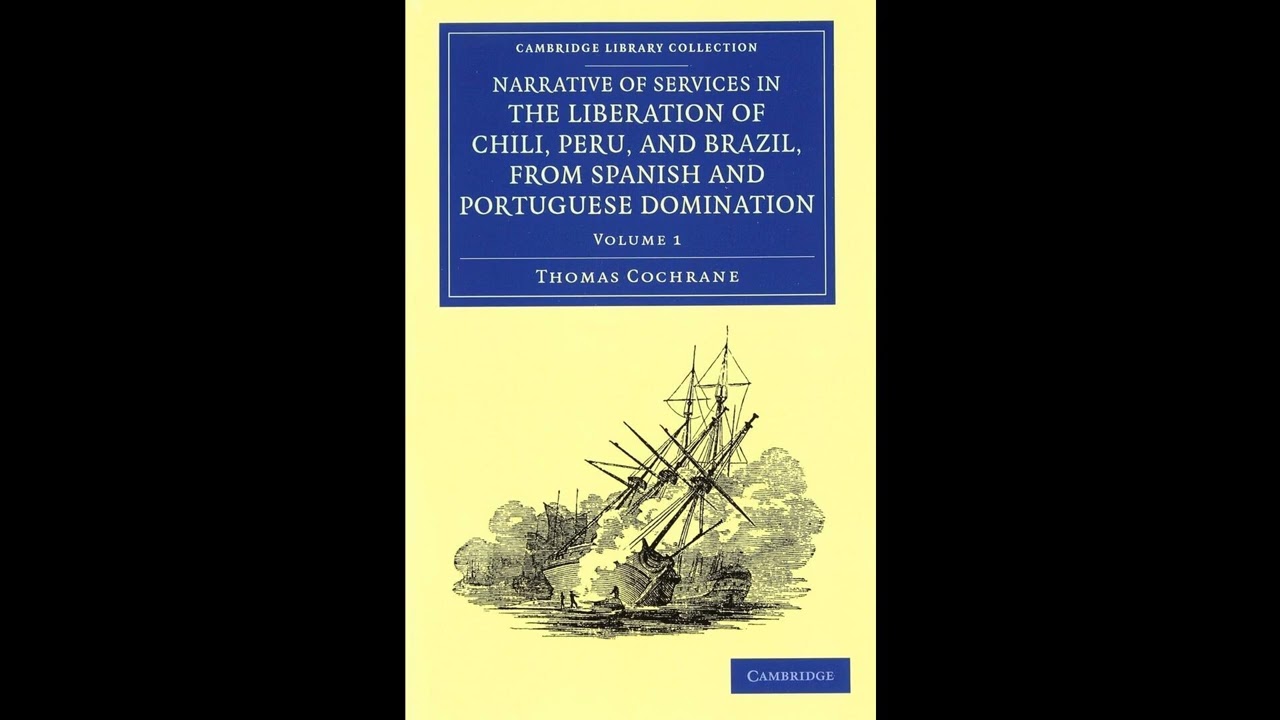
Narrative of Services in the Liberation of Chili, Peru, and Brazil, from Spanish and- Full Audiobook
Step into a world ablaze with revolution, where empires crumble and new nations are forged on the anvil of war. The "Narrative of Services in the Liberation of Chili, Peru, and Brazil from Spanish" stands as a vital, if anonymously authored, record from the very crucible of South American independence. This is more than a historical account; it is a raw, firsthand testament to the sheer audacity and human cost of achieving freedom. It invites us not merely to observe these monumental events, but to feel the salt spray of naval battles, hear the thunder of cannons, and comprehend the strategic brilliance and individual bravery that defined an era. For today's listener, this account resonates profoundly, offering insights into the universal human drive for self-determination, the complex dance of military strategy and political maneuvering, and the enduring legacy of colonial power structures. It chronicles a period of explosive geopolitical change whose repercussions echo through the continent's identity even now. The narrative transports us to the early nineteenth century, a time when the vast colonial holdings of Spain and Portugal in South America began to heave under the weight of oppression and the burgeoning spirit of liberty. Our narrator, an unnamed yet evidently deeply involved participant, guides us through a series of crucial campaigns across the southern cone of the continent. The story opens, presumably, with the initial efforts to free Chile, detailing the often desperate struggles against entrenched Spanish forces. Here, we encounter the logistical nightmares of equipping and maintaining a revolutionary army, the constant threat of naval blockade, and the fierce engagements that slowly, painstakingly, wrested control of territory. The descriptions vividly portray the challenges of land and sea, the stark realities of campaigning in diverse and often unforgiving landscapes, and the shifting loyalties and fierce rivalries among those fighting for independence. From Chile, the focus logically shifts to Peru, the heartland of Spanish power in South America, and thus the most formidable challenge for the independence movements. The narrative details the strategic importance of Lima, the complexities of dislodging a well-supplied colonial administration, and the critical role of naval supremacy in isolating and defeating the royalist strongholds. The listener experiences the tensions of amphibious landings, the cunning of siege warfare, and the decisive sea battles that gradually turned the tide. Finally, the account broadens to encompass the liberation of Brazil from Portuguese rule, a distinct yet interconnected struggle. The narrative illustrates how the spirit of independence was infectious, spreading across borders and inspiring diverse populations to cast off the shackles of European dominion. Though the author focuses on their personal observations and contributions, the grand arc of these continental movements remains central, presenting a sweeping panorama of a continent in flux. The authorship of this remarkable narrative remains unknown, a common circumstance for personal accounts and journals from this historical period. Rather than diminishing its value, this anonymity casts the work as a direct, unvarnished voice from the past, untainted by the later biases of fame or historical revisionism. The text belongs to a tradition of firsthand reports, memoirs, and campaign narratives written by participants in significant military and political events. It suggests an author who was not merely an observer but an active participant, someone with an intimate knowledge of military operations, naval strategy, and the personalities involved in the highest echelons of the revolutionary command. Perhaps a seasoned officer, an adventurous mercenary, or a political aide, the writer possessed a keen eye for detail and an evident understanding of the grand strategic picture. This choice of remaining unnamed might have been practical—to avoid political repercussions after the dust settled, to simply provide an honest account without personal glorification, or perhaps because the focus was entirely on the events themselves rather than the individual ego. Regardless, the "Narrative of Services" occupies a unique and significant place in the literary canon of historical testimony, offering an unparalleled glimpse into the making of nations from the ground up, penned by someone who truly stood on the front lines. Among the many powerful threads woven into the narrative, the overarching theme of the struggle for self-determination stands paramount. The book illustrates the sheer, indomitable will of the South American peoples to break free from centuries of colonial rule. For instance, the descriptions of seemingly impossible naval victories against larger, better-equipped Spanish fleets underscore the revolutionary fervor and strategic genius born of necessity. Similarly, the work clearly delineates the profound costs and incredible resilience demanded by such monumental undertakings, highlighting courage and sacrifice. The constant threat of battle, the arduous marches across inhospitable terrain, and the personal risks taken by countless individuals, including the narrator, paint a vivid picture of what it meant to fight for an ideal. One might recall a particular scene describing a desperate night engagement at sea, where the outcome hung on the grit of a few sailors, providing a palpable sense of immediate danger and individual heroism. A third prominent theme is the complexities of forging new nations from colonial remnants. While the narrative celebrates victories, it also implicitly reveals the political intrigues, rivalries among leaders, and the formidable challenges of establishing stable governance in the aftermath of revolution. The struggles for liberation were not monolithic; the book reveals the often-fragmented nature of the revolutionary leadership and the pragmatic compromises required to maintain momentum. Finally, the strategic importance of naval power emerges as a crucial recurring motif. Much of the narrative focuses on maritime campaigns – the blockading of ports, the amphibious assaults, the transportation of troops, and the fierce engagements at sea that determined the flow of the land war. The detailed accounts of ship movements and naval tactics demonstrate an intimate understanding of sea power as the decisive factor in controlling vast coastlines and isolated colonial strongholds. The period in which these events unfolded—the first decades of the nineteenth century—was one of profound global upheaval. Europe was consumed by the Napoleonic Wars, which inadvertently created the conditions for Latin American independence movements. Spain, weakened and distracted by French occupation, could no longer maintain its tight grip on its distant colonies. Inspired by the American and French Revolutions, Enlightenment ideals of liberty, equality, and national sovereignty took root across the continent. Great figures like Simón Bolívar and José de San Martín emerged, leading armies and dreaming of a unified continent. Culturally, this era saw the birth of national identities and a burgeoning interest in recording history as it happened, a literary trend that would grow into Romanticism’s celebration of heroic deeds and grand historical sweep. This narrative thus arose from a moment when the very idea of nationhood was being redefined, providing a contemporaneous perspective on the birth pangs of modern South America as new republics struggled to define their borders and their futures in a post-colonial world. As an audiobook, the "Narrative of Services" offers an exceptionally immersive and resonant experience. The many hours of listening allow for a true absorption into the historical moment, transforming a series of dated events into a vibrant, unfolding drama. The narration’s pacing might shift from the rapid intensity of battle sequences, where every cannon shot and strategic maneuver feels immediate, to moments of quiet reflection, observing the political undercurrents or the vast, untamed landscapes. A skilled narrator will bring forth the gravitas of historical events, lending a sense of authenticity to the narrator's observations and the recounted dialogue, allowing the listener to feel the weight of decisions made under pressure. You can listen for the subtle vocal cues that distinguish military figures, the urgency of command, or the weary hope of soldiers. The sonic atmosphere will evoke the roar of the ocean, the clamor of a port city preparing for war, or the hush before a decisive engagement, truly transporting one to the decks of frigates and the dusty battlefields where South American freedom was won.
Enjoyed Narrative of Services in the Liberation of Chili, Peru, and Brazil, from Spanish and- Full Audiobook? A few ways to support us
Audible & Amazon links are affiliate; we may earn a small commission at no extra cost.
About this production
Human narration by a volunteer reader from LibriVox.org, the public-domain audiobook project. LibriVox volunteers record literary works whose copyright has expired in the United States, releasing the resulting recordings into the public domain.
Narrative of Services in the Liberation of Chili, Peru, and Brazil, from Spanish and- Full Audiobook. The underlying text is in the U.S. public domain. We do not republish any modern copyrighted edition, translation, or commentary.
The 4K cinematic visuals accompanying this audiobook are generated by an AI image model from prompts derived from the source text. No copyrighted photos, paintings, or stock footage are used. AI generation is disclosed on every video on our YouTube channel as required by YouTube's altered/synthetic content policy.
English subtitles are transcribed from the LibriVox recording with OpenAI Whisper. Translations into the 11 other supported languages are produced by Meta's NLLB-200 neural translation model. No human translator's copyrighted translation is used.
Questions about sourcing or rights? See our DMCA & Sourcing policy or contact us.
Enjoyed this audiobook?
If you'd like to own a copy of Narrative of Services in the Liberation of Chili, Peru, and Brazil, from Spanish and- Full Audiobook or hear a professionally produced edition, the links below help support free audiobook production at no extra cost to you.
As an Amazon Associate we earn from qualifying purchases. Audible / print links are affiliate.