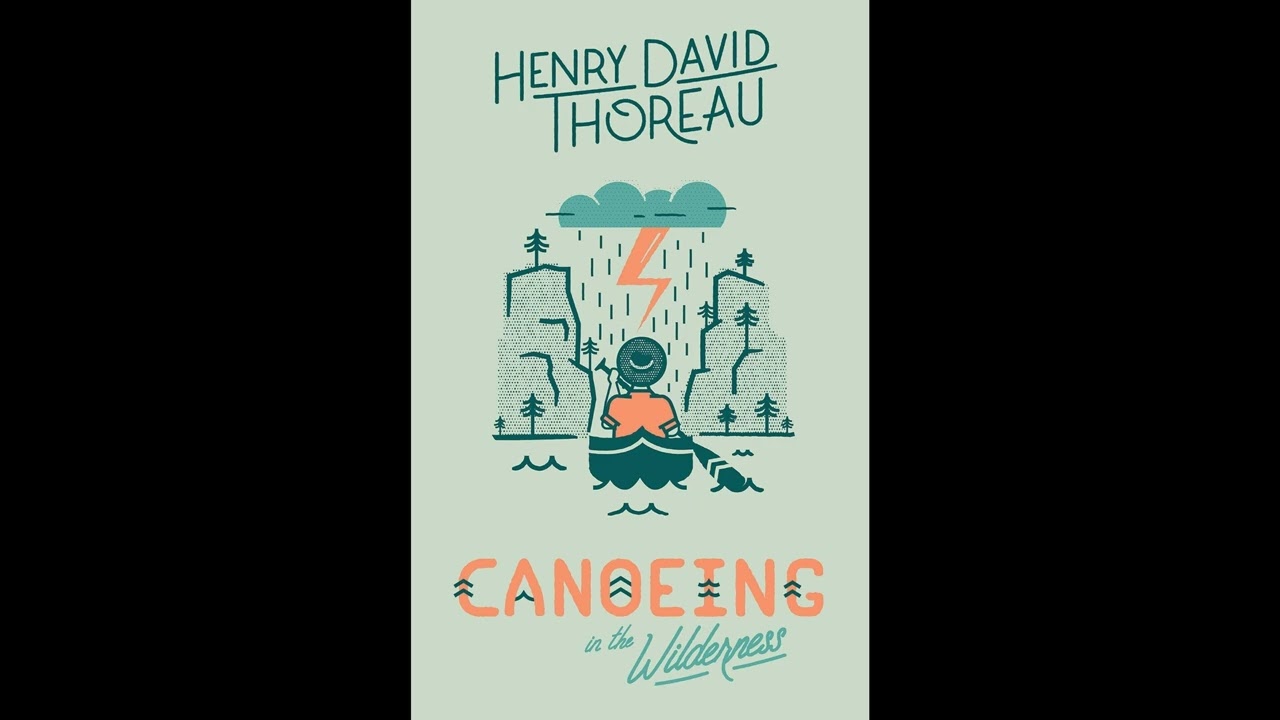
Canoeing in the Wilderness
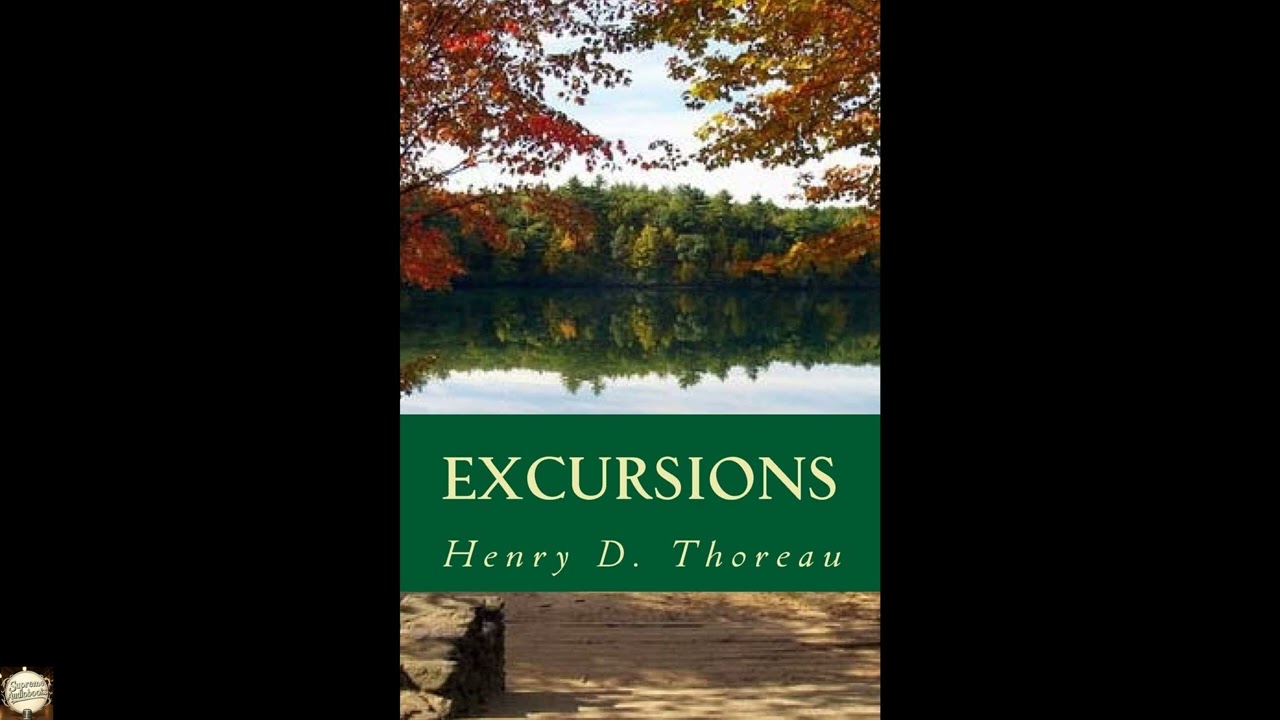
In an age where screens dominate our days and the clamor of connectivity often drowns out quiet thought, the call of the wild echoes with renewed urgency. Henry David Thoreau's Canoeing in the Wilderness offers a potent antidote, a resonant chronicle of self-reliance and profound observation amid the untouched grandeur of the Maine woods. This is more than a simple travelogue; it is an invitation to shed the superficialities of civilization and rediscover the fundamental rhythms of existence. Why should a listener care today? Because Thoreau's vision—his unwavering belief in the restorative power of nature and the clarity it brings to the human spirit—speaks directly to our modern longing for authenticity, peace, and a deeper understanding of our place in the natural world. His words provide a vital connection to a pre-industrial landscape and an enduring philosophy. The narrative unfolds through a series of expeditions into the wild heart of nineteenth-century Maine, a land still largely untamed. Our guide, Thoreau himself, sets out with various companions, including indigenous guides whose knowledge of the terrain and its ways proves indispensable. The setting becomes a character in itself: vast forests of pine and spruce, clear cold lakes reflecting an immense sky, and powerful rivers demanding skill and courage to navigate by birchbark canoe. We witness the meticulous preparations for these trips, from packing provisions to readying the delicate vessels that carry them deeper into isolation. As the small party pushes further away from settled lands, the daily routine becomes one of physical effort and keen sensory engagement. They paddle against currents, portage their canoes and gear around rapids, make camp under the stars, and fish for their supper. The story progresses not through dramatic external conflict, but through the accumulation of precise observations and the internal shifts they provoke. Thoreau meticulously records the calls of birds, the tracks of animals, the geology of the land, and the subtle interplay of light and shadow. The challenges are often those presented by nature itself—weather, difficult portages, the sheer scale of the wilderness—all met with a remarkable tenacity and philosophical composure. The arc is one of immersion, from initial wonder to a deeper, more integrated understanding of the wild environment and its inherent laws. Henry David Thoreau, born in Concord, Massachusetts, in 1817, was a philosopher, poet, naturalist, tax resister, abolitionist, surveyor, and pencil maker. A graduate of Harvard, he briefly worked as a teacher before dedicating himself to writing and living according to his own principles. His most celebrated experiment in minimalist living began in 1845, when he built a small cabin near Walden Pond, on land owned by his friend Ralph Waldo Emerson. For two years, two months, and two days, he lived a life of deliberate simplicity, observing nature, writing, and contemplating society, which culminated in his seminal work, Walden; or, Life in the Woods. Thoreau's association with the Transcendentalist movement, centered in Concord, significantly shaped his thought. This American philosophical and literary movement emphasized intuition, individualism, and the inherent goodness of both people and nature, advocating for a direct spiritual connection with the natural world rather than through organized religion. Besides Walden, his essay "Civil Disobedience" remains profoundly influential, articulating a theory of peaceful resistance against unjust laws that inspired figures like Mahatma Gandhi and Martin Luther King Jr. He died in 1862, leaving behind a profound legacy as one of America's most original thinkers and a pioneering voice for environmental consciousness. Within the pages of Canoeing in the Wilderness, Thoreau illuminates several core themes. Foremost is the profound restorative power of wild nature. He demonstrates this through detailed descriptions of the untouched landscape, portraying the grandeur of ancient forests and the purity of remote lakes as forces capable of clearing the mind and renewing the spirit. His encounters with bears, moose, and countless species of birds are not mere anecdotes; they serve as reminders of a complex ecosystem operating independently of human interference, a powerful counterpoint to the growing industrialization he witnessed. Another central idea is self-reliance, both practical and philosophical. He details the physical demands of paddling and portaging, the necessity of personal ingenuity in the face of natural obstacles, and the inner strength cultivated by solitude and direct engagement with the elements. He shows us how stripping away the conveniences of civilization reveals an essential human capacity for resilience. The text also highlights a critique of materialism and consumerism. By choosing to spend his time in the wilderness, living simply and observing, Thoreau implicitly contrasts this experience with the acquisition of wealth and status that preoccupied many of his contemporaries. His appreciation for the practical skills and deep knowledge of his Native American guides underscores a respect for alternative ways of knowing and living, often ignored by the dominant culture. Furthermore, the spiritual dimension of nature becomes apparent through his contemplative prose; the wilderness is not merely a resource but a sacred space where one might encounter deeper truths about existence. These writings emerged during a pivotal moment in American history. The mid-nineteenth century was a period of rapid industrial expansion, westward movement, and increasing urbanization, particularly in the Northeast. Thoreau's retreat to the Maine woods can be seen as a direct response to these societal shifts, a quest for a more authentic and uncorrupted experience of life that felt increasingly scarce in the settled world. The burgeoning Romantic movement, with its emphasis on emotion, individualism, and the sublime in nature, provided a fertile intellectual ground for his observations. Yet, Thoreau pushed beyond mere aesthetic appreciation, advocating for an active, philosophical engagement with the natural world. His expeditions were not just recreational trips but scientific and spiritual quests, designed to understand and articulate the essential truths he believed resided in an untamed landscape, which was fast disappearing under the axe and plow. To listen to Canoeing in the Wilderness as an audiobook is to receive Thoreau's observations and meditations directly, allowing his deliberate pacing to set the rhythm for your own attention. The spoken word brings his meticulous descriptions of the natural world to vivid life, inviting the listener to picture the shimmer of sunlight on water or the rustle of leaves in the forest. With a run length of several hours, it offers ideal companionship for long walks, quiet evenings at home, or periods of focused introspection. A skilled narrator can convey the careful precision of Thoreau's prose, his moments of awe, and his quiet philosophical resolve, creating an atmosphere that makes the listener feel present in the canoe, moving steadily through a landscape of profound beauty and humbling scale. It allows the power of his convictions to resonate, providing a grounding force in a hectic world.
Enjoyed Canoeing in the Wilderness? A few ways to support us
Audible & Amazon links are affiliate; we may earn a small commission at no extra cost.
About this production
Human narration by a volunteer reader from LibriVox.org, the public-domain audiobook project. LibriVox volunteers record literary works whose copyright has expired in the United States, releasing the resulting recordings into the public domain.
Canoeing in the Wilderness by Henry David Thoreau. The underlying text is in the U.S. public domain. We do not republish any modern copyrighted edition, translation, or commentary.
The 4K cinematic visuals accompanying this audiobook are generated by an AI image model from prompts derived from the source text. No copyrighted photos, paintings, or stock footage are used. AI generation is disclosed on every video on our YouTube channel as required by YouTube's altered/synthetic content policy.
English subtitles are transcribed from the LibriVox recording with OpenAI Whisper. Translations into the 11 other supported languages are produced by Meta's NLLB-200 neural translation model. No human translator's copyrighted translation is used.
Questions about sourcing or rights? See our DMCA & Sourcing policy or contact us.
Enjoyed this audiobook?
If you'd like to own a copy of Canoeing in the Wilderness or hear a professionally produced edition, the links below help support free audiobook production at no extra cost to you.
As an Amazon Associate we earn from qualifying purchases. Audible / print links are affiliate.