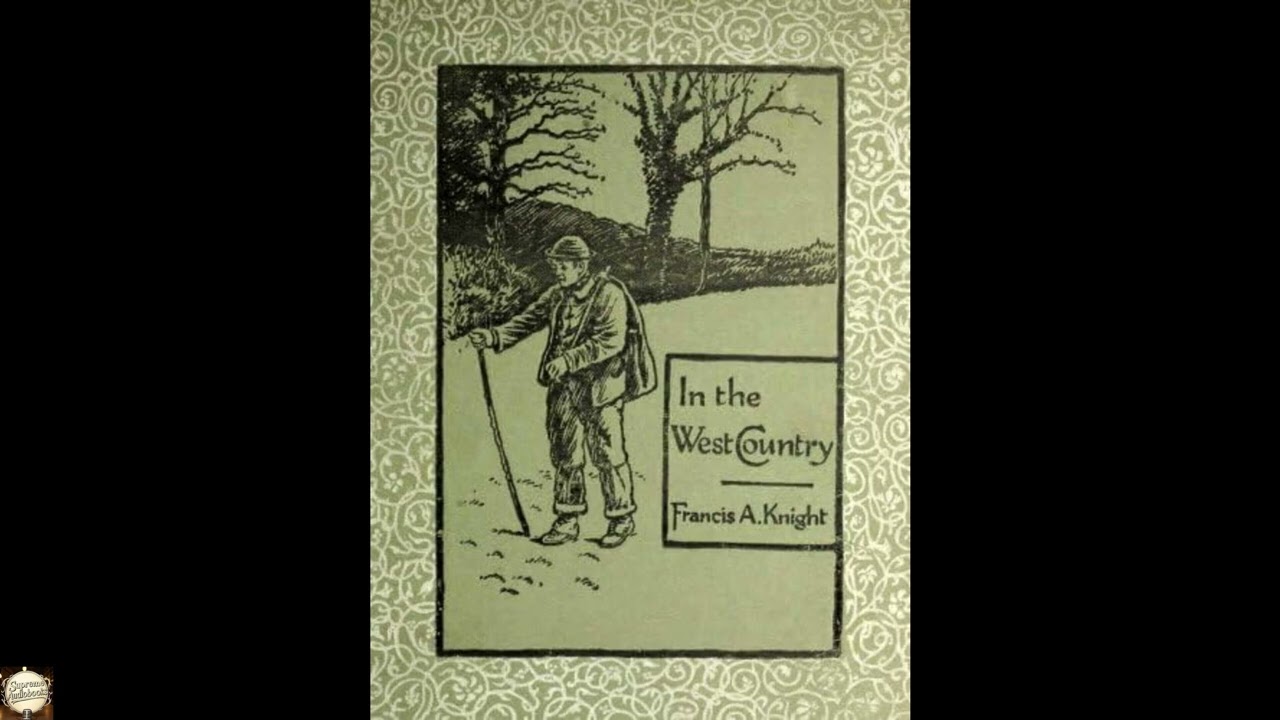
In the West Country
Escape the clamor of the modern world and surrender to the tranquil beauty captured in Francis A. Knight's "In the West Country," an audiobook that offers more than just a story—it presents a meditative passage back to a simpler existence. This isn't merely a recounting of events; it is an invitation to breathe deeply of fresh country air, to walk ancient lanes, and to commune with the enduring spirit of rural England. In an age dominated by speed, Knight's prose provides a grounding antidote, reminding us of the profound solace found in natural rhythms and the quiet wisdom of lives lived close to the earth. It speaks to a universal longing for authenticity and the quiet dignity of a landscape holding centuries of human stories within its folds. Prepare to lose yourself in an evocative portrait of a region steeped in history and natural grace. Francis A. Knight's "In the West Country" invites us to meander alongside its thoughtful narrator through the rolling hills, hidden valleys, and time-worn villages of England's southwestern reaches. The narrative, whether a fictionalized travelogue or a collection of deeply observed sketches, centers on an unnamed protagonist—a perceptive visitor or a native returning—who seeks a deeper understanding of this unique region. We encounter a panorama of characters: the stoic farmer tilling ancestral fields, the village elder with tales of local lore, and the independent artisans whose crafts reflect their surroundings. The narrative's core is a quiet unfolding, a sensitive observation of the relationship between people and their environment, rather than a dramatic conflict. The protagonist's initial curiosity evolves into a profound appreciation for the subtle beauties and persistent challenges of rural existence. We witness the changing seasons, each bringing its own rhythm to the landscape and its inhabitants. Any minor tensions, such as the whisper of progress threatening ancient ways, serve primarily to highlight the resilience and character of the West Country folk. Through encounters at the local inn, strolls along ancient roads, and visits to crumbling abbeys, a nuanced picture emerges of a region where history is etched into every stone wall. The story gently builds toward a deepened understanding of what it means to belong to a place, leaving a lingering impression of peace and rootedness. The gentle, observant spirit that imbues "In the West Country" is a direct reflection of its author, Francis Arnold Knight (1852-1915). Born in London, Knight spent much of his life immersed in the landscapes and communities of Somerset. An Anglican clergyman, he served as curate at Chew Magna and later as vicar of Wrington, roles that afforded him intimate access to the daily lives, histories, and spiritual rhythms of rural folk. This pastoral calling often informed his literary work, lending it a profound sense of respect for tradition, a quiet moral rectitude, and an abiding appreciation for the spiritual dimension of nature. Knight was a prolific writer, recognized as a significant voice in English regional and nature writing. His output included descriptive accounts of the West Country, historical studies, and works blending natural observation with local history and folklore. Among his notable publications are "The Seaboard of Mendip" (1902) and "A Corner of Arcady" (1906), which cemented his reputation as a sensitive chronicler of rural life. His prose is characterized by lucid descriptions, gentle humor, and deep reverence for the past, positioning him within a late Victorian and Edwardian tradition of writers who sought to capture the essence of regional England. The enduring appeal of "In the West Country" lies in its sensitive exploration of several profound themes. One primary theme is the connection between humanity and the natural world. Knight consistently highlights how the landscape shapes character, tradition, and spiritual outlook. For instance, the narrator describes the ancient Roman road, Fosse Way, not merely as a path but as a living artery connecting past civilizations to present-day villagers, illustrating how geological features and human endeavors intertwine. This deep ecological awareness grounds the narrative in a strong sense of place. Another significant theme is the tension between tradition and the march of modernity. Knight observes the subtle ways the West Country, while resilient, is touched by the outside world, perhaps noting a new farming implement alongside age-old methods. These are presented as gentle observations of a shifting world, where old ways persist even as new influences ripple through. The book also quietly celebrates the beauty of the commonplace and the wisdom of local knowledge, detailing wildflowers or the skills of a shepherd, elevating everyday observations into quiet revelations. Finally, it fosters a strong sense of nostalgia and the power of memory, presenting the landscape itself as a repository of collective memory, holding stories from centuries past. Francis A. Knight’s work, including "In the West Country," emerged during a transitional period in British history—the late Victorian and early Edwardian eras. This was a time of rapid industrialization and growing urban populations, leading to a widespread sense of nostalgia for a perceived "purer" rural past. Within the literary world, alongside naturalism and realism, a strong tradition of nature writing and regional literature flourished. Writers like Richard Jefferies and W.H. Hudson celebrated the English countryside, its wildlife, and its local characters, often documenting vanishing traditions and landscapes. Knight's detailed portrayal of the West Country fits squarely into this movement, offering readers a window into a part of England that, while slowly changing, still retained much of its ancient character, reflecting a cultural longing for connection to tradition and the natural world amidst modern progress. Listening to "In the West Country" as an audiobook offers a uniquely immersive and contemplative experience. The several hours of narration provide ample time to sink into the rhythms of Knight's prose and the serene atmosphere he conjures. A skilled narrator will bring a gentle, unhurried pace to the text, allowing listeners to absorb detailed descriptions of landscapes—the shade of green on a spring hillside, the sound of wind through ancient trees, the quiet chatter of a village market—without feeling rushed. The voice should convey learned calm, drawing listeners into the reflective quality of the narrative and transforming listening into a restorative escape, connecting with the enduring beauty of the English countryside.
Enjoyed In the West Country? A few ways to support us
Audible & Amazon links are affiliate; we may earn a small commission at no extra cost.
About this production
Human narration by a volunteer reader from LibriVox.org, the public-domain audiobook project. LibriVox volunteers record literary works whose copyright has expired in the United States, releasing the resulting recordings into the public domain.
In the West Country by Francis a (Francis Arnold) Knight. The underlying text is in the U.S. public domain. We do not republish any modern copyrighted edition, translation, or commentary.
The 4K cinematic visuals accompanying this audiobook are generated by an AI image model from prompts derived from the source text. No copyrighted photos, paintings, or stock footage are used. AI generation is disclosed on every video on our YouTube channel as required by YouTube's altered/synthetic content policy.
English subtitles are transcribed from the LibriVox recording with OpenAI Whisper. Translations into the 11 other supported languages are produced by Meta's NLLB-200 neural translation model. No human translator's copyrighted translation is used.
Questions about sourcing or rights? See our DMCA & Sourcing policy or contact us.
Enjoyed this audiobook?
If you'd like to own a copy of In the West Country or hear a professionally produced edition, the links below help support free audiobook production at no extra cost to you.
As an Amazon Associate we earn from qualifying purchases. Audible / print links are affiliate.