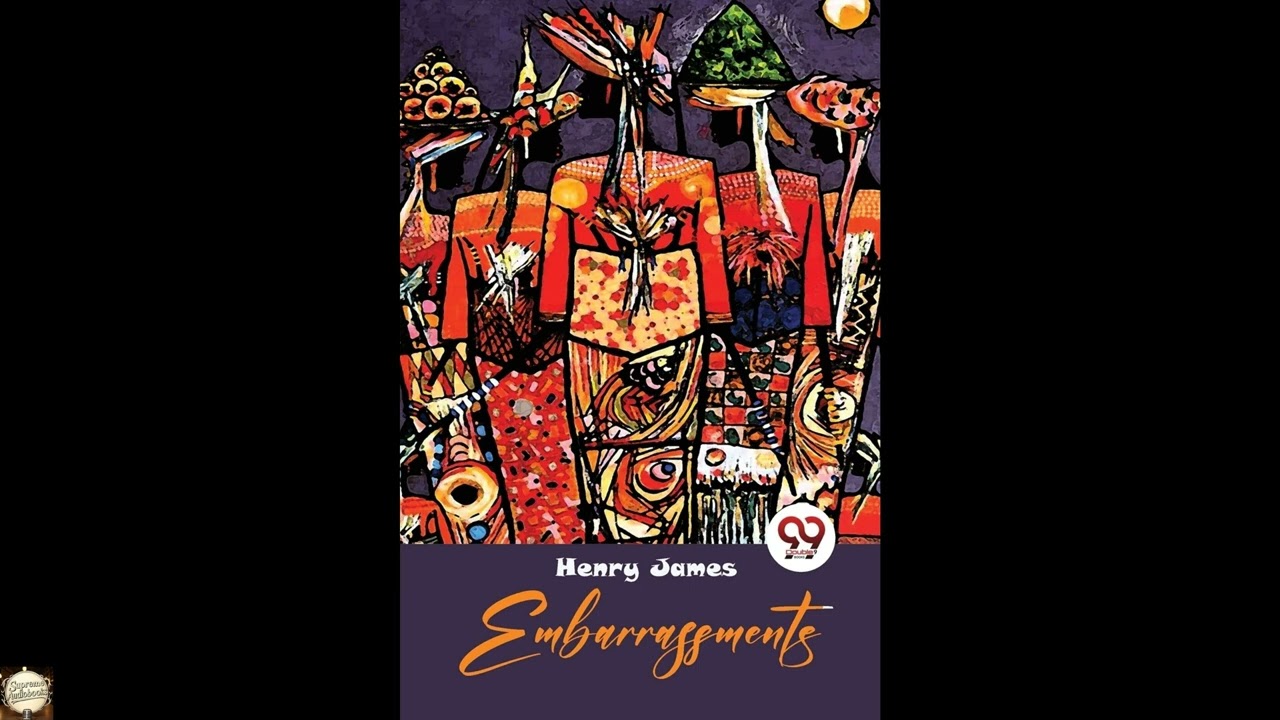
Embarrassments
Henry James’s collection Embarrassments stands as a compelling series of novellas, each a meticulously crafted psychological study, offering listeners a window into the nuanced anxieties and social predicaments of the late nineteenth century. Published in 1896, this volume distills James’s signature concerns—the nature of art, the clash between public expectation and private reality, and the often-unspoken rules governing human connection—into compact, potent narratives. For anyone who appreciates literature that questions the visible surface of life to reveal the intricate currents beneath, or who finds satisfaction in the slow reveal of human folly and aspiration, these stories offer both a challenge and a profound satisfaction. Their enduring relevance lies in James’s uncanny ability to dissect the human condition, making the "embarrassments" of his characters feel remarkably familiar even a century later. The collection presents four distinct yet thematically linked novellas. Perhaps the most famous, “The Figure in the Carpet,” immerses the listener in the esoteric world of English literary criticism. The narrator, a young critic, becomes obsessed with uncovering a profound, hidden meaning—the eponymous "figure in the carpet"—that a celebrated novelist, Hugh Vereker, insists runs through all his books. Vereker, amused by the narrator’s earnestness, confirms the existence of this secret, but refuses to disclose it directly, challenging the narrator to find it for himself. This sets off a tantalizing quest, a scholarly pursuit that escalates into a personal fixation. The secret passes, like a torch, from Vereker to his wife, then to a fellow critic who marries the now-widowed Mrs. Vereker, and so on, always just out of reach of the narrator. This intellectual detective story plays with the very act of artistic interpretation, questioning whether the artist’s true intention can ever be fully grasped by the audience, or if the search itself becomes the ultimate meaning. Another novella, "The Next Time," offers a poignant look at the struggles of a writer named Ray Limbert, whose artistic integrity perpetually sabotages his commercial prospects. Limbert is a literary genius, but his family's financial well-being depends on him producing popular, less demanding work. Despite his earnest efforts to compromise, his innate talent consistently elevates his prose beyond the masses’ appeal, leading to a series of financial failures and quiet despair. The "embarrassment" here is the public failure of a private artistic triumph, a deeply personal conflict between the demands of life and the unyielding call of art. Together, these stories, along with "Glasses" which examines vanity and physical decline, and "The Way It Came" which touches on spiritual yearning and spectral appearances, create a panoramic view of human psychological and social dilemmas. Henry James, born in New York City in 1843, was a pivotal figure straddling American and English literary traditions. His formative years were spent between America and Europe, an experience that cultivated his unique perspective on the cultural differences and social nuances that would become central to his fiction. His brother, William James, was a renowned philosopher and psychologist, indicative of the intellectual environment in which Henry matured. After beginning his literary career in the United States, James settled permanently in England in 1875, eventually becoming a British citizen shortly before his death in 1916. This transatlantic life profoundly influenced his perception of character, manners, and society. James’s vast literary output includes some of the most enduring novels of his era, among them The Portrait of a Lady, The Wings of the Dove, and The Ambassadors, all renowned for their psychological depth and intricate prose. He was a master of the novel of manners and psychological realism, developing narrative techniques such as the unreliable narrator and the limited point of view, which allowed him to examine his characters’ inner lives with unprecedented subtlety. His writing bridges the gap between the expansive, socially conscious Victorian novel and the more introspective, experimental forms of early modernism. James secured his place in the literary canon as an architect of the modern novel, known for his ability to craft rich, complex worlds through the careful articulation of consciousness. A central theme running through Embarrassments is the profound tension between artistic integrity and commercial demands. In "The Next Time," the brilliant writer Ray Limbert finds himself unable to produce "bad" or "popular" literature, even when his family's survival depends on it. Every attempt to write for the market results in a work of unexpected genius, illustrating the irrepressible nature of true artistic vision and the painful consequences of its collision with the realities of making a living. Limbert’s situation is a powerful dramatization of the artist’s struggle to remain true to their craft in a world that often values profit over purity. Another significant theme is the pursuit of elusive truth and the nature of interpretation. "The Figure in the Carpet" perfectly embodies this, as the narrator dedicates years to deciphering Vereker’s hidden "figure." This relentless search highlights the human desire for meaning, particularly in art, and the often-frustrating impossibility of fully accessing an artist’s private intent. The story suggests that perhaps the meaning of art is not a static secret to be found, but rather resides in the active, ongoing engagement of the interpreter, an endlessly unfolding process rather than a singular discovery. Related to this is social performance and the anxieties of reputation, particularly evident in "Glasses," where a woman’s vanity regarding her beauty overrides her declining eyesight, leading to social predicaments. James consistently shows how characters navigate the public gaze, and how private failings can become public "embarrassments." The late 1890s, when Embarrassments was published, was a period of significant cultural and social flux, often termed the fin-de-siècle. It was an era marked by a growing sense of modernity, rapid industrialization, and a questioning of traditional Victorian values. Intellectual and artistic circles were grappling with emerging psychological theories, anticipating the work of Freud, and an increasing focus on inner experience. Aestheticism, with its emphasis on "art for art's sake," was a prominent movement, creating a fertile ground for James's examination of the artist's role and the purpose of art. Politically, the British Empire was at its height, yet beneath the surface, anxieties about social change, class structure, and international relations were palpable. In the literary world, realism was the dominant mode, but writers like James were pushing its boundaries, moving towards a more intense psychological realism that delved into consciousness and perception. The novella, a form shorter than a novel but longer than a short story, offered James a perfect canvas for concentrated psychological studies without the sprawling scope of his longer works. Embarrassments emerged from this environment as James, a meticulous craftsman, refined his focus on the subtleties of human interaction, the dilemmas of professional life, and the intricate workings of the mind, offering sophisticated, nuanced portraits of individuals caught in the currents of a changing world. Listening to Embarrassments as an audiobook offers a singular opportunity to fully immerse oneself in Henry James’s distinctive prose. His sentences are famously long and elaborately structured, often mirroring the complex thought processes of his characters. A skilled narrator breathes life into these intricate constructions, guiding the listener through the nuances of his syntax and making the often-subtle shifts in tone and meaning apparent. The several hours of narration provide an ideal length for attentive listening, whether during a commute, while tending to household tasks, or during a quiet evening at home. Pay close attention to the narrator’s pacing, which will likely slow down to allow the listener to absorb the psychological detail and social observations that are the hallmarks of James’s craft. The voice acting will distinguish the various characters, from the earnest young critics to the world-weary artists, enhancing the subtle humor and underlying melancholy that often pervade these stories. The spoken word allows James’s brilliant dialogue and his carefully constructed atmosphere to truly unfold, transforming a challenging read into an engaging, deeply rewarding auditory experience.
Enjoyed Embarrassments? A few ways to support us
Audible & Amazon links are affiliate; we may earn a small commission at no extra cost.
About this production
Human narration by a volunteer reader from LibriVox.org, the public-domain audiobook project. LibriVox volunteers record literary works whose copyright has expired in the United States, releasing the resulting recordings into the public domain.
Embarrassments by Henry James. The underlying text is in the U.S. public domain. We do not republish any modern copyrighted edition, translation, or commentary.
The 4K cinematic visuals accompanying this audiobook are generated by an AI image model from prompts derived from the source text. No copyrighted photos, paintings, or stock footage are used. AI generation is disclosed on every video on our YouTube channel as required by YouTube's altered/synthetic content policy.
English subtitles are transcribed from the LibriVox recording with OpenAI Whisper. Translations into the 11 other supported languages are produced by Meta's NLLB-200 neural translation model. No human translator's copyrighted translation is used.
Questions about sourcing or rights? See our DMCA & Sourcing policy or contact us.
Enjoyed this audiobook?
If you'd like to own a copy of Embarrassments or hear a professionally produced edition, the links below help support free audiobook production at no extra cost to you.
As an Amazon Associate we earn from qualifying purchases. Audible / print links are affiliate.