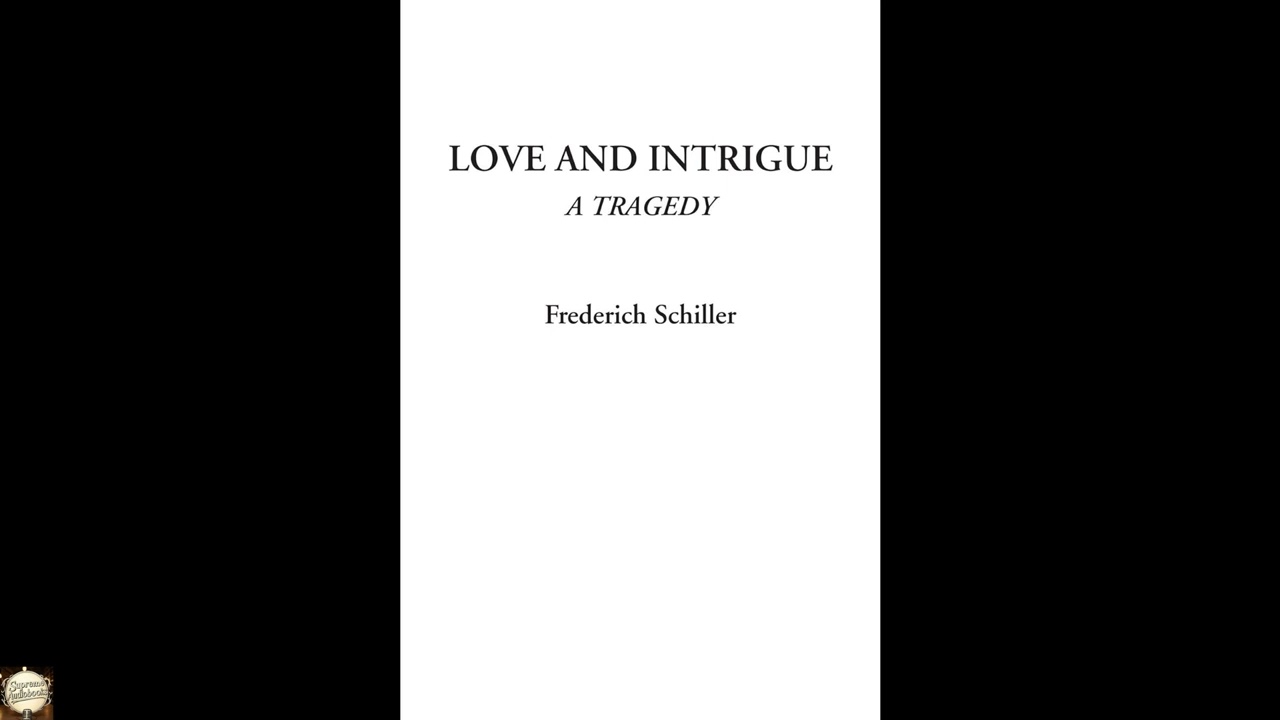
Love and Intrigue (A Tragedy)
"Love and Intrigue" tears open the glittering facade of aristocratic society to expose the raw, bleeding heart of forbidden love and the brutal machinery of power. Friedrich Schiller's searing tragedy, first published in 1784, remains as potent and relevant today as it was more than two centuries ago. It asks us to confront uncomfortable questions about social class, individual liberty, and the devastating consequences when human affection clashes with the rigid dictates of an oppressive regime. This is not merely a historical drama; it is a profound examination of the human spirit crushed under the heel of prejudice and political maneuver, a story that resonates deeply with anyone who has ever felt the sting of injustice or the agony of love denied. The story unfolds in a petty German ducal court, where outward splendor often masked moral decay. At its heart are Ferdinand von Walter, son of a powerful minister, and Luise Miller, daughter of a humble musician. Their love is passionate, sincere, a beacon of purity. Yet, their bond is utterly scandalous: a high-born nobleman falling for a commoner. Ferdinand's father, President von Walter, views this relationship as a grave threat to his political alliances and family prestige. He schemes relentlessly to break them apart, intending Ferdinand to marry Lady Milford, the Duke's influential mistress. The President enlists his cunning secretary, Wurm—a man with his own dark designs on Luise—to sow discord and suspicion. As manipulation gathers, Ferdinand and Luise are caught in a tightening web of deceit and calculated slanders, struggling to cling to their truth amidst a court determined to tear them apart. The plot steadily leads toward a devastating confrontation. Friedrich Schiller (1759-1805) stands as a towering figure of German literature, a playwright, poet, and historian whose works defined both Sturm und Drang and Weimar Classicism. His early life involved strict discipline at the Karlsschule military academy, which he was forced to attend. There, secretly, he nurtured literary aspirations, penning his first fiery dramas. His debut play, "The Robbers" (1781), exploded onto the German stage, shocking audiences with its passionate cry for freedom and critique of tyranny. This controversy led to Schiller's flight from Württemberg and a life as a freelance writer. He later found profound friendship with Johann Wolfgang von Goethe in Weimar, a partnership that profoundly influenced German letters, moving his work towards a more structured artistic vision. Beyond "Love and Intrigue," his notable contributions include the historical plays "Don Carlos," "Maria Stuart," and "William Tell." These works, alongside his dramatic theories and humanitarian ideals, resonated deeply with the Enlightenment, cementing his place as a national poet and a leading voice for liberty and human dignity. "Love and Intrigue" enacts several profound themes. Foremost is the stark nature of class conflict. The love between Ferdinand and Luise is doomed not by personal failing, but by the insurmountable social chasm separating a nobleman from a commoner. President von Walter's absolute refusal to countenance the match, viewing Luise as an impediment to his political ambitions—an "impudent wench" aspiring above her station—underscores this tragic divide. The court's structure, where status dictates every interaction, constantly reveals this. Another central theme is the corrupting influence of power and the destructive force of deceit. The ducal court is a hotbed of intrigue, where individuals like President von Walter and Wurm manipulate others for their own ends. The entire plot against Ferdinand and Luise is built on lies and engineered misunderstandings. Wurm's scheme to forge a love letter from Luise, coupled with threats against her family, illustrates how power can break wills and poison genuine affection with manufactured suspicion. This tragedy unfolds through whispered slanders and calculated betrayals, revealing how truth can be distorted and lives ruined by those who wield authority without conscience. Schiller wrote "Love and Intrigue" at a pivotal moment—the late 18th century. This period, simmering with revolutionary ideals of the Enlightenment, questioned the divine right of kings and absolutist power. Germany was then a fragmented collection of small states, many ruled by petty despots who mimicked larger European courts. Their extravagance often came at the expense of subjects, funding personal whims while common people struggled. The play emerged directly from the Sturm und Drang (Storm and Stress) literary movement, which sought to rebel against Enlightenment rationalism and embrace passionate individualism and dramatic intensity. Writers like Schiller criticized societal conventions, advocated personal freedom, and exposed the moral hypocrisy of the ruling class. "Love and Intrigue" served as a powerful critique of the aristocratic society Schiller experienced, exposing the moral bankruptcy of courts and the dehumanizing effects of rigid social strata, echoing widespread disquiet that would eventually erupt into broader political change. To truly grasp the raw emotional power of "Love and Intrigue," listening to it as an audiobook offers an unparalleled experience. The play is fundamentally driven by its powerful dialogue and intense emotional exchanges. A skilled narrator, bringing distinct voices to Ferdinand's idealism, Luise's despair, President von Walter's ruthless ambition, and Wurm's serpentine cunning, can transform the written words into a living, breathing drama. The pacing of a spoken performance allows the listener to fully absorb the rising tension, calculated pauses, and sudden outbursts of passion that define the tragic arc. Over its several hours, you will find yourself immersed in the claustrophobic atmosphere of the court, feeling the weight of the characters' dilemmas and the escalating pressure of the intrigue. Listen for the subtle shifts in tone as characters deceive and manipulate, and appreciate how the spoken word accentuates the profound irony and the heartbreaking inevitability of this classic tragedy.
Enjoyed Love and Intrigue (A Tragedy)? A few ways to support us
Audible & Amazon links are affiliate; we may earn a small commission at no extra cost.
About this production
Human narration by a volunteer reader from LibriVox.org, the public-domain audiobook project. LibriVox volunteers record literary works whose copyright has expired in the United States, releasing the resulting recordings into the public domain.
Love and Intrigue (A Tragedy) by Frederich Schiller. The underlying text is in the U.S. public domain. We do not republish any modern copyrighted edition, translation, or commentary.
The 4K cinematic visuals accompanying this audiobook are generated by an AI image model from prompts derived from the source text. No copyrighted photos, paintings, or stock footage are used. AI generation is disclosed on every video on our YouTube channel as required by YouTube's altered/synthetic content policy.
English subtitles are transcribed from the LibriVox recording with OpenAI Whisper. Translations into the 11 other supported languages are produced by Meta's NLLB-200 neural translation model. No human translator's copyrighted translation is used.
Questions about sourcing or rights? See our DMCA & Sourcing policy or contact us.
Enjoyed this audiobook?
If you'd like to own a copy of Love and Intrigue (A Tragedy) or hear a professionally produced edition, the links below help support free audiobook production at no extra cost to you.
As an Amazon Associate we earn from qualifying purchases. Audible / print links are affiliate.