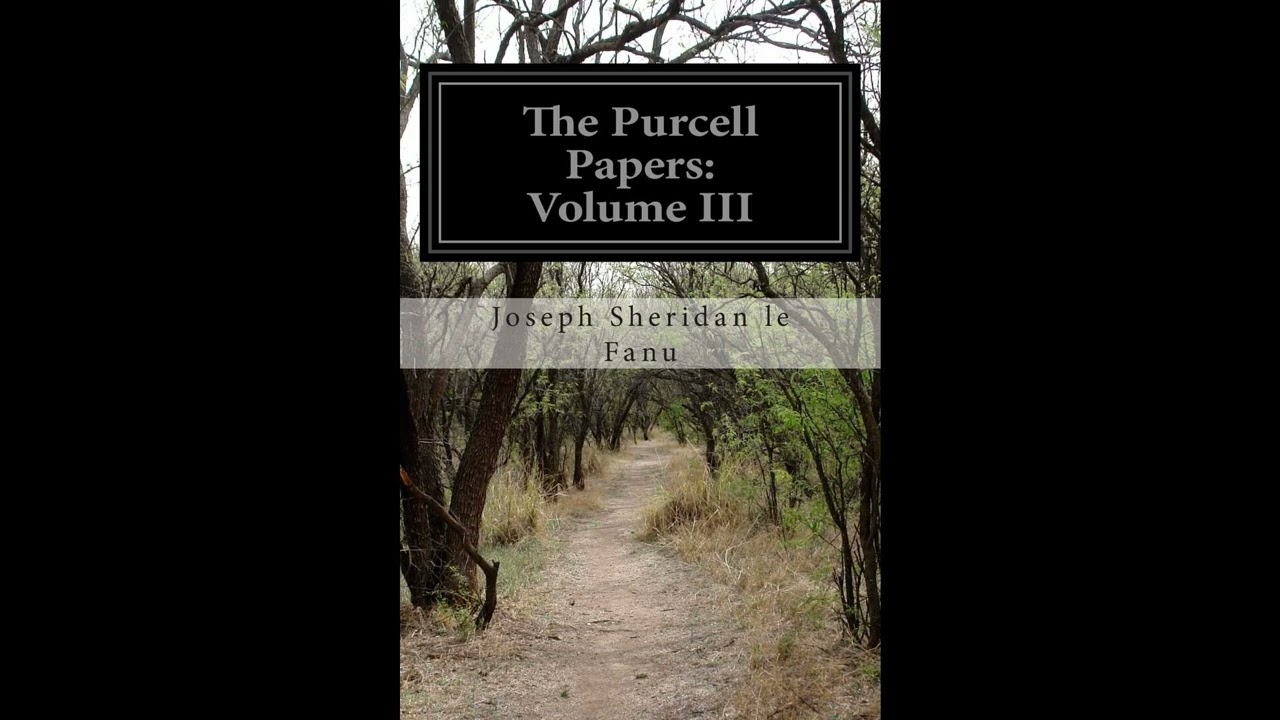
The Purcell Papers: Volume III
Step into the unsettling quiet of the past, where shadows lengthen in crumbling manor houses and the faint whisper of a long-dead secret might be the last sound you hear. Joseph Sheridan le Fanu’s The Purcell Papers: Volume III presents a collection of tales that plumb the depths of human fear, superstition, and the lingering malevolence that can cling to places and people. These stories are not mere campfire yarns; they are meticulously crafted exercises in dread, offering a unique window into the anxieties of a bygone era, yet speaking to our own primal fears of the unknown, the unseen, and the specters of our own making. If you appreciate a chilling narrative that builds its terror slowly, with psychological precision and an atmospheric chill that seeps into your bones, then these narratives, culled from the archives of the mysterious Reverend Francis Purcell, remain as potent and disquieting today as they were when they first emerged from the shadows. Reverend Francis Purcell, a fictional country clergyman from the early 19th century, acts as the purported collector and editor of these dispatches from the realm of the uncanny. His papers, supposedly discovered long after his passing, present a varied array of narratives, all sharing a thread of the inexplicable and the truly terrifying. Listeners are transported to the isolated corners of rural Ireland, to decaying estates where ancient families cling to their dwindling fortunes and their even older secrets. The characters encountered are often solitary figures – scholars, heirs, recluses, or those burdened by unspoken guilt – who find themselves inadvertently drawn into situations where the veil between the ordinary world and something far darker begins to fray. Each story within the collection offers its own distinct premise, but a recurring pattern involves the slow infiltration of the supernatural into everyday life. A peculiar sound emanating from an old chest, a strange figure glimpsed in a darkened corridor, or an unsettling premonition that refuses to dissipate. The central conflict in these tales is rarely one of outright battle; instead, it's a battle for sanity, a struggle against a creeping dread that often leaves its victims psychologically shattered, if not worse. The arc of these narratives is one of gradual revelation, where seemingly innocuous details accumulate to form a picture of overwhelming horror, leaving the listener to ponder the true nature of the evil that has been unveiled. While the specific outcomes vary, the enduring impression is one of profound unease and the unsettling notion that some questions are best left unanswered. Joseph Sheridan le Fanu, born in Dublin in 1814, was a towering figure in Victorian Gothic literature, though often overshadowed by his more widely known contemporaries. The son of a Protestant clergyman, his early life was shaped by his family’s position within the Anglo-Irish gentry, a class whose decline he would often portray with haunting accuracy in his fiction. Educated at Trinity College, Dublin, he initially pursued a career in law before dedicating himself to journalism and writing. He edited the influential Dublin University Magazine for many years, a platform through which many of his earliest stories, including some from The Purcell Papers, first saw publication. Le Fanu's literary output was extensive, encompassing sensation novels, historical romances, and, most famously, his chilling tales of the supernatural. Among his most celebrated works are Uncle Silas, a psychological thriller renowned for its villainy and suspense, and Carmilla, a novella that stands as a foundational text in vampire literature, predating Bram Stoker's Dracula and offering a sensual, unsettling take on the undead. His ability to evoke an atmosphere of profound dread through suggestion rather than explicit horror secured his place as a master of the ghost story, profoundly influencing later practitioners of the genre such as M.R. James and numerous others who sought to unnerve rather than merely startle. He passed away in Dublin in 1873, leaving behind a legacy of meticulously crafted tales that continue to send shivers down the spine. Within The Purcell Papers: Volume III, several pervasive themes coalesce, granting these stories their enduring resonance. A significant preoccupation is the supernatural and the unseen, which Le Fanu presents not as monstrous jumpscares but as insidious, often psychological intrusions. For instance, a character might be tormented not by a visible ghost but by an inexplicable, bone-chilling cold that follows them, or the sensation of an unseen presence watching from the corner of a room, slowly eroding their peace of mind. Another potent theme is decay and degeneration, frequently manifested through the crumbling estates and faded grandeur of the Anglo-Irish aristocracy. A scene might depict an ancestral home, once magnificent, now riddled with damp and dust, its former glory a stark contrast to the moral or physical ruin of its inhabitants, mirroring the internal rot that often consumes his characters. Furthermore, Le Fanu excels at depicting psychological terror and the fragility of sanity. His narratives often show characters descending into paranoia or delusion, blurring the lines between external spectral influence and internal mental collapse. A protagonist might begin to question their own perceptions, wondering if the horrors they experience are real or a figment of their increasingly strained mind. Finally, guilt and retribution often fuel the ghostly visitations and misfortunes that plague Le Fanu's characters. A past misdeed, a forgotten crime, or a generations-old curse frequently returns to haunt the innocent or the culpable, demonstrating a belief in a moral order where wrongdoing, no matter how buried, eventually demands a terrible reckoning. When these narratives first appeared, British and Irish society was navigating a period of profound change. The Victorian era saw rapid industrialization, scientific advancements that challenged traditional beliefs, and a burgeoning interest in spiritualism, which offered a curious blend of skepticism and a renewed fascination with the afterlife. Politically, Ireland remained under British rule, and Le Fanu, writing from his position within the Protestant Ascendancy, often infused his stories with the anxieties of a class feeling its power wane amidst social and economic shifts. The popularity of magazines like the Dublin University Magazine provided a fertile ground for serialized fiction, allowing authors like Le Fanu to build suspense over several issues. The conditions of the time—a society grappling with the rational versus the irrational, the old order giving way to the new, and the enduring power of folklore and superstition—created a rich environment for the emergence of such deeply atmospheric and psychologically astute ghost stories. Le Fanu's unique genius lay in his ability to tap into these collective anxieties, crafting tales that felt both deeply rooted in Irish tradition and universally unnerving. His work offers a unique lens through which to observe the cultural imagination of 19th-century Ireland, where ancient fears lingered even as modern thought began to take hold. Listening to The Purcell Papers: Volume III as an audiobook offers a uniquely immersive and chilling experience. Le Fanu's prose, with its deliberate pacing and exquisite detail, is perfectly suited for audio, allowing the listener to sink into the meticulously constructed atmospheres of dread. A skilled narrator will bring to life the varied voices and social strata of the characters, from the earnest clergyman to the haunted gentry, the cunning villain to the terrified victim. The several hours of content provide ample opportunity to become thoroughly enveloped in these tales, ideal for quiet evenings spent alone or for long drives where the mind is free to wander into the shadows Le Fanu so expertly conjures. Pay close attention to the subtle shifts in tone, the carefully placed pauses, and the way dialogue can reveal character not just through words, but through inflection and implied meaning. It is through these aural nuances that the true, creeping terror of Le Fanu’s world truly takes hold.
Enjoyed The Purcell Papers: Volume III? A few ways to support us
Audible & Amazon links are affiliate; we may earn a small commission at no extra cost.
About this production
Human narration by a volunteer reader from LibriVox.org, the public-domain audiobook project. LibriVox volunteers record literary works whose copyright has expired in the United States, releasing the resulting recordings into the public domain.
The Purcell Papers: Volume III by Joseph Sheridan le Fanu. The underlying text is in the U.S. public domain. We do not republish any modern copyrighted edition, translation, or commentary.
The 4K cinematic visuals accompanying this audiobook are generated by an AI image model from prompts derived from the source text. No copyrighted photos, paintings, or stock footage are used. AI generation is disclosed on every video on our YouTube channel as required by YouTube's altered/synthetic content policy.
English subtitles are transcribed from the LibriVox recording with OpenAI Whisper. Translations into the 11 other supported languages are produced by Meta's NLLB-200 neural translation model. No human translator's copyrighted translation is used.
Questions about sourcing or rights? See our DMCA & Sourcing policy or contact us.
Enjoyed this audiobook?
If you'd like to own a copy of The Purcell Papers: Volume III or hear a professionally produced edition, the links below help support free audiobook production at no extra cost to you.
As an Amazon Associate we earn from qualifying purchases. Audible / print links are affiliate.