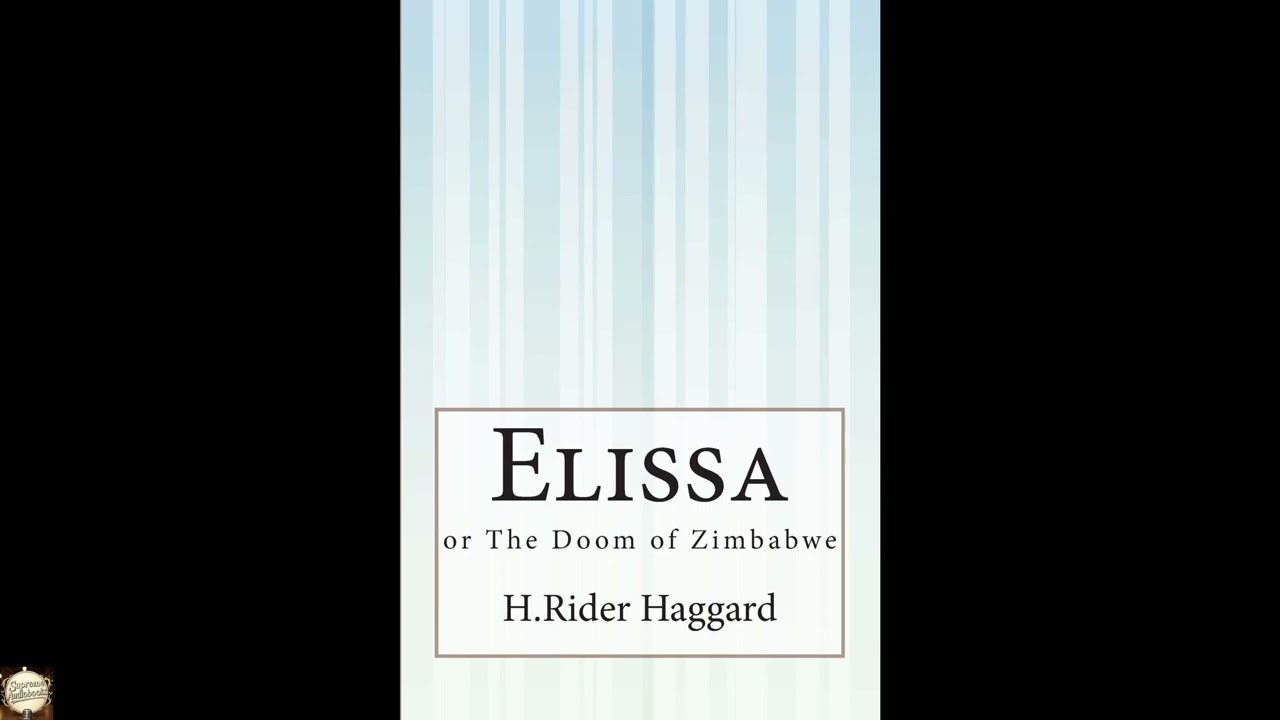
Elissa: or The Doom of Zimbabwe
H. Rider Haggard's Elissa: or The Doom of Zimbabwe transports listeners to an ancient world brimming with mystery, power, and tragic romance. This tale, less celebrated than his most famous sagas but equally potent, plunges into the heart of a fabled African kingdom, far before its discovery by European eyes. It is a story of a fierce queen, a prophesied downfall, and the clash of civilizations that resonates still today, touching upon themes of colonialism, forbidden love, and the inexorable march of destiny. Listeners will find themselves drawn into a narrative that anticipates much of the 20th century’s fascination with lost cities and forgotten empires, all while offering a poignant reflection on human ambition and the limits of power. Within the majestic, gold-walled city of Zimbabwe, a place of legend deep in the African continent, reigns Queen Elissa. Burdened by a violent childhood and a prophecy foretelling her kingdom's destruction should she love a foreign man, she is a resolute, often ruthless, leader. Her commitment is solely to her people and their ancient traditions. Beneath her formidable exterior lies the vulnerability of a woman who has known only duty. The arrival of a Phoenician trading ship, commanded by the bold Kor, shatters Zimbabwe’s isolation. Hailing from across the seas, Kor and his crew seek the fabled gold mines. Their intrusion challenges Elissa’s absolute authority and the kingdom's policies. As Kor negotiates, a dangerous attraction sparks between him and Elissa, threatening her resolve and society's fabric. Treachery brews, ancient curses resurface, and external threats loom, converging to fulfill the grim prophecy. Political machinations, burgeoning romance, and mounting doom create a gripping narrative, pushing both Elissa and Kor towards a destiny neither fully controls. Henry Rider Haggard, born in Norfolk, England, in 1856, stands as a towering figure in adventure fiction. At nineteen, he served as secretary to officials in South Africa, witnessing firsthand the landscapes, peoples, and complex dynamics of colonial encounter, including the Anglo-Zulu and First Boer Wars. These experiences provided the exotic backdrops for his stories. Upon his return to England, Haggard pursued storytelling. King Solomon’s Mines (1885) became an instant sensation, establishing him as a master of the "lost world" genre, followed by classics like She: A History of Adventure (1887) and Allan Quatermain (1887). Haggard practically invented the modern adventure novel, influencing countless writers. His narratives are characterized by vivid descriptions, fast-paced plots, and a sense of wonder, reflecting late Victorian imperial attitudes. Knighted in 1912, H. Rider Haggard passed away in 1925, leaving a legacy of over fifty novels that continue to entertain and provoke thought. Elissa: or The Doom of Zimbabwe is rich with compelling themes. One prominent idea is the clash of civilizations. The Phoenicians' arrival represents a collision of distinct cultures, each with its own values and beliefs. Haggard depicts mutual suspicion and misunderstanding, exemplified by Elissa’s wariness of Kor and the Phoenicians’ mercenary view of Zimbabwe’s resources. This cultural confrontation highlights anxieties inherent in global expansion, anticipating discussions about colonialism and cultural preservation. Another powerful theme is forbidden love and destiny. The tragic romance between Elissa and Kor is a crucible for larger forces. Elissa is bound by prophecy and oath, yet drawn to the person predicted to bring her ruin. This struggle between personal desire and predetermined fate, duty and heart, drives the story's emotional weight. The narrative also examines the allure and dangers of wealth and power, as Zimbabwe’s legendary gold mines attract foreign ambition and contribute to the kingdom’s vulnerability. Furthermore, the story subtly questions the nature of truth and legend, blurring lines between historical fact and mythical lore concerning ancient African empires. Elissa emerged from a particular moment in history—the late 19th and early 20th centuries—when the British Empire was at its zenith and the "Scramble for Africa" dominated geopolitical discourse. This period saw European powers rapidly dividing and colonizing the African continent, fueled by industrial needs, economic ambitions, and a belief in their own cultural superiority. Public fascination with "unexplored" territories, ancient civilizations, and the exotic "other" was widespread in popular literature. Haggard’s South African experiences provided him with firsthand insights into the continent and imperial expansion. His works often reflected prevailing attitudes, sometimes romanticizing adventure and occasionally perpetuating stereotypes, but also expressing genuine wonder. Elissa, with its powerful pre-colonial African kingdom and the arrival of an external trading power (Phoenicians as an ancient analogue for European expansion), can be seen as a commentary on these contemporary events, cloaked in historical romance. The novel tapped into the public's appetite for tales of discovery, danger, and grand civilizations. Listening to Elissa: or The Doom of Zimbabwe as an audiobook offers a truly immersive experience. The narrative, spanning several hours, unfolds at a compelling pace, allowing the listener to absorb the complex plot and evocative descriptions of ancient Zimbabwe. A skilled narrator can bring to life the diverse cast of characters—from the formidable Queen Elissa to the resourceful Kor and the various schemers—with nuanced voice work, distinguishing personalities and heightening emotional stakes. Haggard's rhythmic prose, particularly in descriptive passages and dramatic dialogue, lends itself exceptionally well to the spoken word, creating a vivid atmosphere. Listeners can savor the unfolding mystery, the tension of the forbidden romance, and the escalating sense of impending doom, making the ancient world of Zimbabwe palpable through sound.
Enjoyed Elissa: or The Doom of Zimbabwe? A few ways to support us
Audible & Amazon links are affiliate; we may earn a small commission at no extra cost.
About this production
Human narration by a volunteer reader from LibriVox.org, the public-domain audiobook project. LibriVox volunteers record literary works whose copyright has expired in the United States, releasing the resulting recordings into the public domain.
Elissa: or The Doom of Zimbabwe by H. Rider Haggard. The underlying text is in the U.S. public domain. We do not republish any modern copyrighted edition, translation, or commentary.
The 4K cinematic visuals accompanying this audiobook are generated by an AI image model from prompts derived from the source text. No copyrighted photos, paintings, or stock footage are used. AI generation is disclosed on every video on our YouTube channel as required by YouTube's altered/synthetic content policy.
English subtitles are transcribed from the LibriVox recording with OpenAI Whisper. Translations into the 11 other supported languages are produced by Meta's NLLB-200 neural translation model. No human translator's copyrighted translation is used.
Questions about sourcing or rights? See our DMCA & Sourcing policy or contact us.
Enjoyed this audiobook?
If you'd like to own a copy of Elissa: or The Doom of Zimbabwe or hear a professionally produced edition, the links below help support free audiobook production at no extra cost to you.
As an Amazon Associate we earn from qualifying purchases. Audible / print links are affiliate.