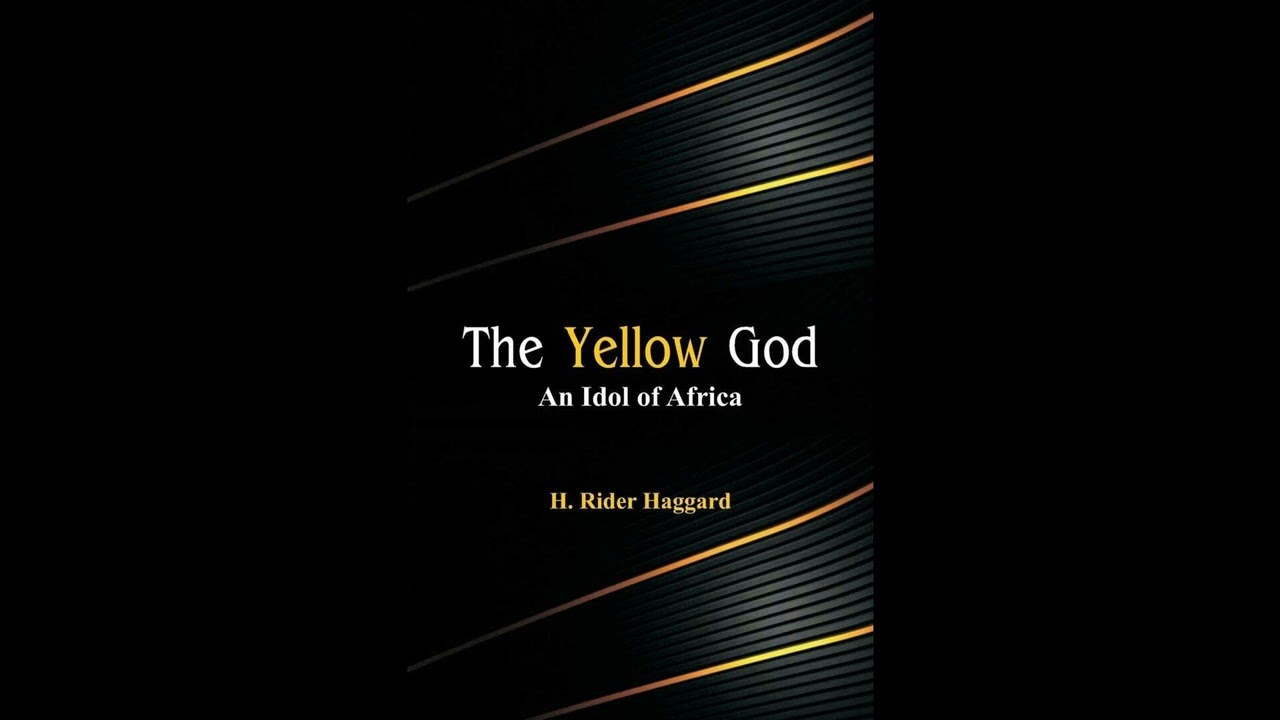
The Yellow God: An Idol of Africa
Step into a world where the allure of ancient power and the shadow of colonial ambition collide, where the untamed heart of Africa holds secrets that can both bestow immense fortune and unleash an insidious corruption. Sir H. Rider Haggard's The Yellow God: An Idol of Africa is more than a tale of adventure; it is a psychological drama wrapped in exotic mystery, a story that probes the dangerous depths of human obsession and the moral compromises made in pursuit of the ultimate prize. For those who seek not just a thrilling narrative but also a window into the complex anxieties of an earlier era, this book offers a gripping and thought-provoking listen, resonating with questions about power, greed, and cultural collision that remain potent even today. The story opens in England, introducing Robert Judson, a man whose life takes an unexpected turn with a peculiar inheritance. His uncle’s estate comes with a cryptic legacy: the responsibility to find a fabled idol, the "Yellow God," rumored to lie hidden deep within the African continent. This isn’t a simple quest for treasure; it’s a mission imbued with a sense of destiny, almost a curse, passed down through generations. Judson, initially hesitant, finds himself drawn into the orbit of this ancient mystery, propelled by a combination of duty, curiosity, and the tantalizing promise of untold wealth and influence that the idol is said to confer. His pursuit leads him away from the relative safety of Victorian society to the treacherous, sun-baked landscapes of Africa. Here, he encounters a diverse cast of characters: the enigmatic and beautiful Jeekie, a woman with deep ties to the region and its ancient beliefs; formidable tribal chiefs who guard the idol's secrets; and fellow adventurers, some driven by similar desires, others by darker intentions. The journey is fraught with peril, from the unforgiving environment and deadly wildlife to hostile indigenous tribes and the ever-present threat of betrayal. As Judson draws closer to the legendary Yellow God, the line between reality and superstition blurs, and he begins to question not just the nature of the idol itself, but the very fabric of his own morality and sanity. The idol, it seems, possesses a power far beyond mere material value, one that can warp minds and incite fierce loyalties, demanding a terrible price from those who seek to possess it. Sir H. Rider Haggard, born in 1856, was a novelist whose own experiences profoundly shaped his imaginative worlds. Having spent years in colonial South Africa during his youth, serving as a civil servant, he gained firsthand exposure to the continent's diverse cultures, its wild landscapes, and the complexities of imperial expansion. These formative years provided him with a wealth of material and an unparalleled authenticity that infused his fictional narratives. He trained as a lawyer and later pursued a career as a farmer in Norfolk, England, but it was his writing that captured the public imagination. Haggard's literary output positioned him as a towering figure in the adventure genre of the late 19th and early 20th centuries. He virtually invented the "lost world" subgenre with his seminal works like King Solomon's Mines (1885) and She (1887), novels that captured the thrill of discovery, the mystique of ancient civilizations, and the confrontation with the unknown. His stories were characterized by their sweeping scope, vivid descriptions of exotic locales, and a blend of action, romance, and supernatural elements. Haggard's distinct voice and pioneering narratives not only entertained millions but also significantly influenced generations of writers, laying groundwork for everything from modern fantasy to archaeological thrillers. The Yellow God enacts several compelling themes that elevate it beyond a simple adventure story. One central theme is the corrupting influence of greed and power. Judson's initial motivation, rooted in a sense of inherited duty, quickly transforms into an almost desperate compulsion as the allure of the idol's fabled power begins to take hold. We see how the prospect of ultimate wealth and control distorts judgment and justifies increasingly questionable actions, leading characters down paths they might never have considered before. Another potent theme is the clash of cultures and the ethics of colonialism. Haggard, writing from within the British imperial system, portrays the European quest for dominance and resources in Africa, highlighting the inherent tensions and often destructive consequences of such encounters. The reverence indigenous populations hold for the Yellow God stands in stark contrast to the acquisitive motivations of the European characters, underscoring a fundamental difference in values. Furthermore, the novel grapples with the power of myth and the supernatural versus rationalism. The Yellow God is not merely a piece of gold; it is depicted as possessing an almost sentient, malevolent influence, challenging the purely scientific or logical worldview of the protagonists. This mystical element forces characters to confront the limits of their understanding, inviting the reader to question what truly constitutes power – is it military might, material wealth, or something far more ancient and inscrutable? The story also touches upon the idea of destiny and the inescapable pull of a legacy, suggesting that some fates are predetermined, regardless of individual will. When The Yellow God was published in 1908, Britain was at the zenith of its imperial power, a period often referred to as the Edwardian era. The "Scramble for Africa" had largely concluded, and European powers controlled vast swathes of the continent, though the mysteries and dangers of its interior continued to fascinate and perturb Western audiences. There was a widespread public appetite for tales of heroic adventurers venturing into uncharted territories, bringing back treasures and stories from what was often termed the "Dark Continent." This era also saw a growing interest in archaeology and anthropology, fueling curiosity about ancient civilizations and exotic cultures. Haggard's work perfectly captured this zeitgeist, speaking to a society both proud of its imperial reach and subtly anxious about the moral implications and the untamed forces it sought to conquer. The novel emerged as a reflection of these dual sentiments: the thrill of the unknown and the underlying unease about the impact of Western intrusion. Listening to The Yellow God: An Idol of Africa as an audiobook offers a uniquely immersive experience, allowing the narrative to unfold with a dramatic urgency that print cannot fully replicate. A skilled narrator can amplify the suspense, bringing out the subtle nuances in Haggard's prose and lending distinct voices to the varied cast of characters, from the determined Judson to the mysterious Jeekie and the formidable tribal leaders. The several hours of listening time provide ample opportunity to become thoroughly lost in the story's expansive setting, perfect for long commutes or quiet evenings. You will notice the pacing, which builds slowly, meticulously establishing the sense of impending doom and the deepening psychological torment of the characters, punctuated by moments of intense action and high drama. The atmospheric descriptions of the African landscape truly come alive through spoken word, transporting you directly into the heart of the adventure, feeling the heat, hearing the sounds, and sensing the ancient, brooding presence of the Yellow God itself.
Enjoyed The Yellow God: An Idol of Africa? A few ways to support us
Audible & Amazon links are affiliate; we may earn a small commission at no extra cost.
About this production
Human narration by a volunteer reader from LibriVox.org, the public-domain audiobook project. LibriVox volunteers record literary works whose copyright has expired in the United States, releasing the resulting recordings into the public domain.
The Yellow God: An Idol of Africa by Sir H Rider Haggard. The underlying text is in the U.S. public domain. We do not republish any modern copyrighted edition, translation, or commentary.
The 4K cinematic visuals accompanying this audiobook are generated by an AI image model from prompts derived from the source text. No copyrighted photos, paintings, or stock footage are used. AI generation is disclosed on every video on our YouTube channel as required by YouTube's altered/synthetic content policy.
English subtitles are transcribed from the LibriVox recording with OpenAI Whisper. Translations into the 11 other supported languages are produced by Meta's NLLB-200 neural translation model. No human translator's copyrighted translation is used.
Questions about sourcing or rights? See our DMCA & Sourcing policy or contact us.
Enjoyed this audiobook?
If you'd like to own a copy of The Yellow God: An Idol of Africa or hear a professionally produced edition, the links below help support free audiobook production at no extra cost to you.
As an Amazon Associate we earn from qualifying purchases. Audible / print links are affiliate.