She
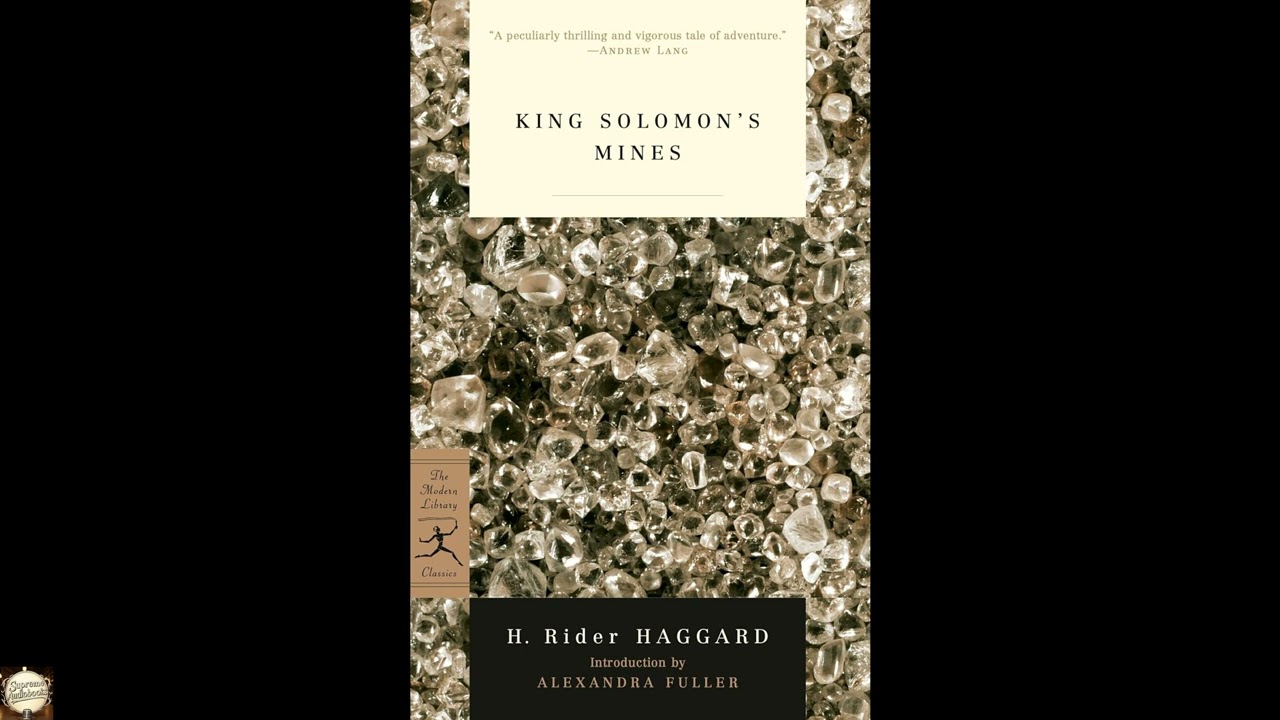
More than a century after its initial publication, H. Rider Haggard's She remains a work of astonishing imaginative power, a foundational text for the adventure genre, and a profound examination of love, power, and the terrifying prospect of immortality. This is not merely a tale of lost civilizations and daring exploits; it is a novel that wrestles with fundamental questions about human nature, the allure of absolute authority, and the enduring human desire to conquer death. Listeners today will find themselves drawn into a narrative that predates much of modern fantasy, yet speaks with surprising urgency to contemporary concerns about identity, obsession, and the moral ambiguities inherent in the pursuit of ultimate knowledge and control. It stands as a vivid testament to the capacity of fiction to transport us not just to distant lands, but to the farthest reaches of the human spirit. The story begins in the quiet academic world of Cambridge, England, where the orphaned Leo Vincey comes into possession of an ancient family heirloom: a mysterious chest containing a potsherd, a map, and a letter detailing a centuries-old vendetta. This legacy reveals that Leo is destined to avenge a wrong committed millennia ago and is intrinsically linked to a hidden power in the heart of Africa. Accompanied by his guardian, the scholarly Horace Holly, Leo sets sail for the African continent, following clues that lead them deep into uncharted territory. Their quest takes them through perilous swamps and into the dominion of the Amahagger, a primitive, cannibalistic tribe guarding the secrets of an ancient, forgotten land. Eventually, after facing incredible dangers and surviving brutal encounters, Holly and Leo arrive at the lost city of Kôr, where they meet the legendary Ayesha, known only as "She-who-must-be-obeyed." Ayesha is an enigmatic and breathtakingly beautiful queen, possessing powers that defy human understanding and a lifespan that stretches back more than two thousand years. She claims to have awaited Leo for two millennia, believing him to be the reincarnation of her ancient beloved, Kallikrates, whom she murdered in a fit of jealous rage. Under her spell, Leo finds himself drawn to her irresistible charm and immense authority, while Holly, ever the rational observer, struggles to comprehend her supernatural existence and the dark history that underpins her eternal reign. The narrative builds as Ayesha promises Leo the same gift of immortality she possesses, leading them to the source of her unnatural life: a mysterious pillar of fire deep within the heart of a volcanic cave, a place where time and mortality seem to lose their meaning, but where the stakes for existence itself are incredibly high. H. Rider Haggard was a truly fascinating figure, a product of the Victorian age whose experiences shaped his extraordinary literary output. Born in England in 1856, he spent a significant portion of his youth in South Africa, arriving there at the age of nineteen to work for the colonial government. His years in Natal and the Transvaal, where he witnessed the annexation of the Transvaal Republic and met many indigenous leaders, provided him with an unparalleled understanding of the land, its peoples, and the complex dynamics of imperial expansion. These experiences formed the bedrock of his most celebrated adventure novels, infusing them with an authenticity and vivid detail that set them apart. Upon his return to England and after a period as a barrister, Haggard turned to writing fiction, achieving immediate and widespread success with King Solomon's Mines in 1885. This was quickly followed by She, first serialized in 1886-1887, and other popular titles like Allan Quatermain and Nada the Lily. He is often credited with popularizing the "Lost World" genre, stories of intrepid explorers discovering hidden civilizations and ancient secrets in remote corners of the globe. Haggard's work stands at the intersection of adventure, proto-fantasy, and colonial literature, influencing generations of writers from Edgar Rice Burroughs to J.R.R. Tolkien and C.S. Lewis, who recognized the mythic power and narrative drive in his tales. He passed away in 1925, leaving behind a legacy of over fifty novels. At its core, She engages deeply with the concept of immortality and its profound implications for the human condition. Ayesha, having lived for two thousand years, embodies both the grandeur and the immense loneliness of endless existence. Her laments about watching empires rise and fall, seeing loved ones perish, and carrying the burden of ancient memories illustrate that perpetual life, while seemingly a blessing, can also be a crushing curse. Her power, derived from this unnatural longevity, is awe-inspiring but also alienating, making her a figure of both desire and terror. The novel also critically examines the prevalent themes of colonialism and the "Scramble for Africa" that dominated the late nineteenth century. The English protagonists venture into what they perceive as an uncivilized wilderness, bringing with them their own cultural assumptions and expectations. Yet, they confront a civilization far older and more complex than their own, forcing a reevaluation of their own place in the world and the limits of their understanding, even as the narrative occasionally reflects the prevailing imperial attitudes of its era. The period in which She was written, the late 1880s, was a time of immense change and cultural ferment in Britain. The British Empire was at its zenith, and public imagination was captivated by tales of exploration, discovery, and the exotic "other" lands being brought under imperial influence. Scientific advancements, particularly Darwin's theories of evolution, had challenged traditional beliefs and sparked fascination with ancient history, forgotten species, and the origins of humanity. This era saw a hunger for stories that combined adventure with a sense of wonder and the fantastic, often set in newly accessible parts of the world. Haggard's personal experiences in Africa, coupled with the prevailing public appetite for narratives of discovery and the exotic, made his work resonate deeply. She emerged from this crucible of imperial ambition, scientific curiosity, and a flourishing literary market for escapist, yet thought-provoking, fiction. To experience She as an audiobook offers a unique immersion into its richly imagined world. A skilled narrator can perfectly capture the dual nature of Horace Holly: his initial skepticism and scholarly remove, evolving into awe and terror in the face of Ayesha's power. The dramatic pacing of the story, from the methodical build-up of the initial quest to the harrowing adventures in the African wilds and the hypnotic allure of Ayesha's presence, truly shines through when expertly voiced. Listen for the subtle shifts in tone that convey the narrative's blend of high adventure, philosophical introspection, and moments of chilling supernatural dread. The dialogue, particularly Ayesha's centuries-honed pronouncements, gains an incredible weight and presence when delivered with appropriate gravitas and an ethereal quality, allowing listeners to fully appreciate the novel's atmospheric tension and the compelling, often unsettling, power of its central, immortal queen.
Enjoyed She? A few ways to support us
Audible & Amazon links are affiliate; we may earn a small commission at no extra cost.
About this production
Human narration by a volunteer reader from LibriVox.org, the public-domain audiobook project. LibriVox volunteers record literary works whose copyright has expired in the United States, releasing the resulting recordings into the public domain.
She by H. Rider Haggard. The underlying text is in the U.S. public domain. We do not republish any modern copyrighted edition, translation, or commentary.
The 4K cinematic visuals accompanying this audiobook are generated by an AI image model from prompts derived from the source text. No copyrighted photos, paintings, or stock footage are used. AI generation is disclosed on every video on our YouTube channel as required by YouTube's altered/synthetic content policy.
English subtitles are transcribed from the LibriVox recording with OpenAI Whisper. Translations into the 11 other supported languages are produced by Meta's NLLB-200 neural translation model. No human translator's copyrighted translation is used.
Questions about sourcing or rights? See our DMCA & Sourcing policy or contact us.
Enjoyed this audiobook?
If you'd like to own a copy of She or hear a professionally produced edition, the links below help support free audiobook production at no extra cost to you.
As an Amazon Associate we earn from qualifying purchases. Audible / print links are affiliate.