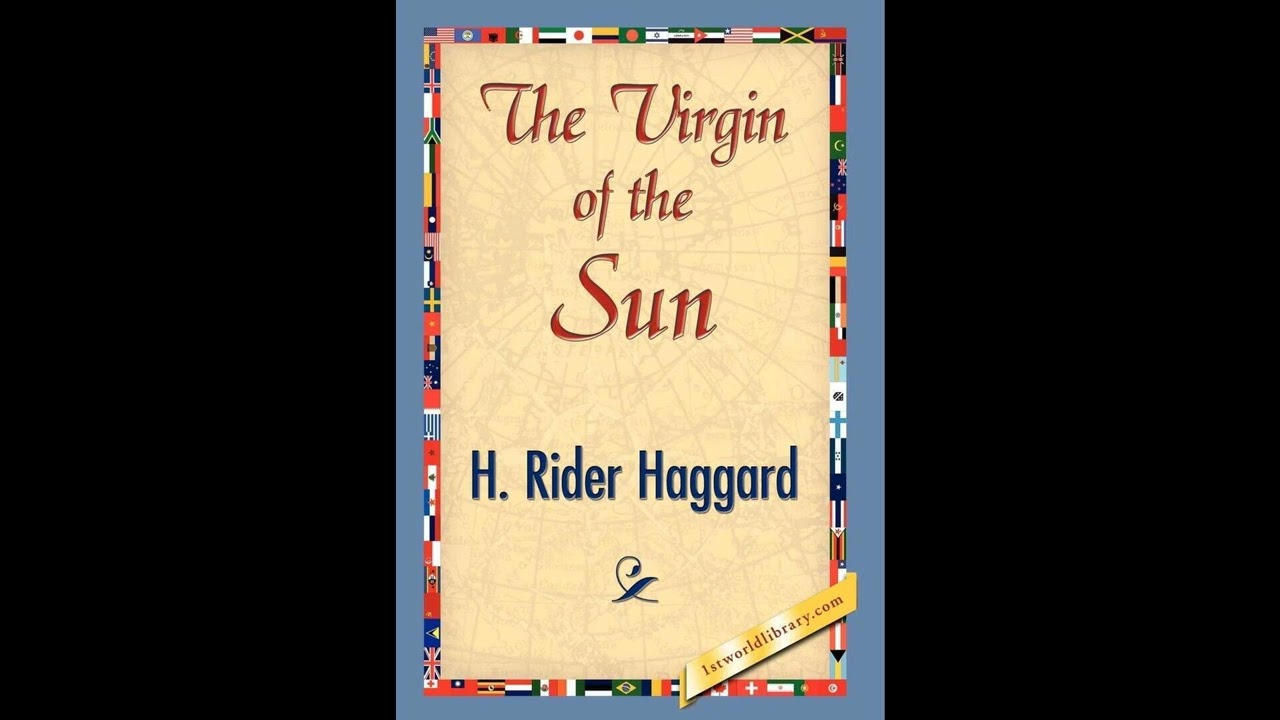
The Virgin of the Sun
Step into a world long vanished, a realm of ancient gods and sun-drenched empires, with Sir H. Rider Haggard’s The Virgin of the Sun. This isn't just a tale of daring feats and mysterious lands; it’s a vibrant confrontation between cultures, a probing of destiny, and a testament to the human spirit’s yearning for discovery and belonging. Written by a titan of adventure fiction, this audiobook transports you to the majestic Andes, inviting you to witness the grandeur and fragility of a civilization on the brink of profound change. Its echoes of colonialism, spiritual awe, and romantic idealism still resonate, offering both thrilling escape and a contemplative look at how different worlds collide. Our story introduces Hubert, an Englishman cast adrift by fate and circumstance, who finds himself not in the familiar landscapes of Europe, but in the heart of the powerful Inca Empire in Peru. Through a series of improbable yet exhilarating events, Hubert is drawn into the elaborate and mystifying society of the Incas, a culture ruled by ancient rites, strict hierarchies, and the worship of Inti, the Sun God. He quickly discovers that his very existence among them is both a miracle and a peril, especially when he crosses paths with the titular figure – the Coya, the revered Virgin of the Sun. Her sacred role, intertwined with the spiritual and political fabric of the empire, creates an insurmountable barrier between their worlds. As Hubert navigates the labyrinthine customs and perilous politics of the Inca court, he becomes entangled in a growing web of intrigue and prophecy. He witnesses firsthand the splendor of a civilization thriving on sophisticated knowledge and profound spiritual devotion, yet also sees the underlying tensions and the looming shadows that threaten its existence. His presence, an anomaly in a rigidly ordered society, stirs both hope and suspicion, forcing him to confront not only external dangers but also his own understanding of duty, love, and what it truly means to be civilized. The narrative steadily builds towards a confrontation where Hubert must make impossible choices, weighing his own desires against the fate of an entire people, all while a powerful, unspoken connection forms between him and the sacred Coya. Sir H. Rider Haggard, born in Norfolk, England, in 1856, forged a remarkable literary career that would define the genre of adventure fiction for generations. His early life in South Africa, where he worked as a secretary to the Lieutenant-Governor of Natal and later held various administrative positions, provided him with an inexhaustible wellspring of inspiration. The landscapes, the diverse cultures, and the political tensions of the region deeply informed his worldview and lent an authentic, albeit filtered, exoticism to his narratives. Upon his return to England, Haggard channeled these experiences into his writing, creating tales that transported readers to uncharted territories and confronted them with primal human dramas. His literary output was prolific, with many of his works remaining popular to this day. King Solomon's Mines (1885) and She (1887) stand as his most celebrated novels, introducing iconic characters like Allan Quatermain and Ayesha ("She-who-must-be-obeyed") and pioneering the "lost world" subgenre. Haggard was a master storyteller, known for his grand imagination, swift pacing, and vivid descriptions that painted landscapes of untamed wilderness and ancient ruins. He solidified his place in the canon as a key figure in late Victorian and Edwardian popular literature, influencing everyone from Rudyard Kipling to J.R.R. Tolkien, and establishing a template for heroic fantasy and archaeological adventure that continues to resonate. He was knighted in 1912 for his public service, particularly in agriculture and empire, and continued writing almost until his death in 1925. At its core, The Virgin of the Sun grapples with the profound theme of cultural collision. Haggard adeptly portrays the awe and misunderstanding that arise when a European protagonist, Hubert, encounters a sophisticated, yet entirely alien, civilization. Through Hubert’s eyes, the listener experiences the intricate social structures, the deeply held spiritual beliefs, and the majestic rituals of the Inca, contrasting them subtly with his own European sensibilities without overtly denigrating either. This clash is most poignant in the relationship between Hubert and the Coya, whose sacred vows and position represent the unbreachable divide between their respective worlds, symbolizing the broader difficulty of true integration between disparate cultures. Another central theme is destiny versus free will. The Inca society is presented as one steeped in prophecy and fate, with every individual’s role seemingly predetermined by ancient custom and divine decree. Hubert, as an outsider, inadvertently disrupts this order, forcing individuals to question their established paths and make choices that defy tradition. The Coya, in particular, embodies this internal conflict, torn between her hallowed duties and the burgeoning emotions stirred by Hubert's arrival. This dynamic allows Haggard to question the rigidity of predestination and underscore the powerful, often disruptive, force of individual agency when confronted with the expectations of an entire culture. When The Virgin of the Sun was published in 1922, the world was still reeling from the aftermath of the First World War. There was a prevailing sense of disillusionment in Europe, a stark contrast to the pre-war confidence in progress and empire. This societal mood created fertile ground for escapist literature, allowing readers to retreat into narratives of grand adventure, noble heroism, and the discovery of unspoiled, exotic lands. Simultaneously, the early 20th century was a period of intense archaeological discovery—most notably, the opening of Tutankhamun's tomb in 1922 itself—which fueled public fascination with ancient civilizations, hidden treasures, and long-lost secrets. Haggard, a seasoned writer by this point, tapped into this renewed cultural interest in the ancient and the unknown. His later works, including The Virgin of the Sun, offered a comforting return to the familiar tropes of discovery and romance in distant lands, providing a sense of order and clear-cut heroism that many found lacking in their contemporary world. The enduring appeal of tales set in idealized, often romanticized, ancient empires like the Inca allowed Haggard to revisit his signature blend of historical speculation, myth, and high adventure, satisfying a public hungry for narratives that transcended the harsh realities of modern life. Listening to The Virgin of the Sun as an audiobook offers a uniquely immersive way to experience Haggard’s storytelling. The narrator becomes your guide through the bustling markets of Cuzco, the solemn halls of the Sun Temple, and the breathtaking vistas of the Andes, lending voice to the rich descriptive passages and the passionate dialogue that define Haggard’s style. The unhurried pace of the narration allows the listener to fully absorb the intricate details of Inca life and the building tension of Hubert’s predicament, rather than rushing through the prose. With several hours of content, this production provides ample time to lose yourself in the adventure, allowing the distinct voices of the characters—from the stoic Inca priests to the compassionate Coya—to truly come alive, making the clash of worlds and the unfolding drama all the more vivid and poignant.
Enjoyed The Virgin of the Sun? A few ways to support us
Audible & Amazon links are affiliate; we may earn a small commission at no extra cost.
About this production
Human narration by a volunteer reader from LibriVox.org, the public-domain audiobook project. LibriVox volunteers record literary works whose copyright has expired in the United States, releasing the resulting recordings into the public domain.
The Virgin of the Sun by H. Rider Haggard. The underlying text is in the U.S. public domain. We do not republish any modern copyrighted edition, translation, or commentary.
The 4K cinematic visuals accompanying this audiobook are generated by an AI image model from prompts derived from the source text. No copyrighted photos, paintings, or stock footage are used. AI generation is disclosed on every video on our YouTube channel as required by YouTube's altered/synthetic content policy.
English subtitles are transcribed from the LibriVox recording with OpenAI Whisper. Translations into the 11 other supported languages are produced by Meta's NLLB-200 neural translation model. No human translator's copyrighted translation is used.
Questions about sourcing or rights? See our DMCA & Sourcing policy or contact us.
Enjoyed this audiobook?
If you'd like to own a copy of The Virgin of the Sun or hear a professionally produced edition, the links below help support free audiobook production at no extra cost to you.
As an Amazon Associate we earn from qualifying purchases. Audible / print links are affiliate.