Dr. Breen's Practice
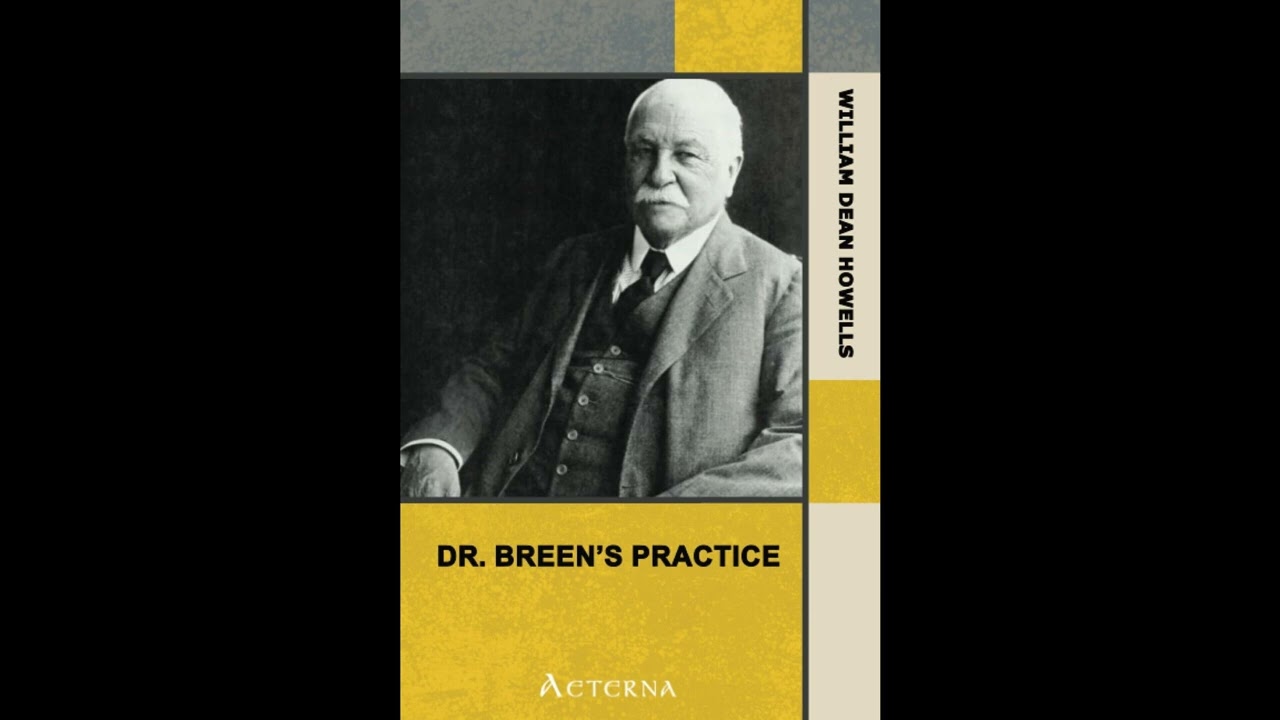
Step into the world of a pioneering woman doctor in a time when such a profession was nothing short of revolutionary. William Dean Howells’s Dr. Breen's Practice invites listeners to witness the personal and professional struggles of Grace Breen, a newly qualified physician navigating the skepticism and social constraints of late nineteenth-century America. More than a simple story of medical triumph, this novel is a keen observation of societal expectations, gender roles, and the enduring quest for self-realization against a backdrop of evolving social norms. It offers a window into the challenges faced by those who dared to defy convention, and its questions about vocation, belief, and the nature of healing resonate powerfully even today. The story unfolds in a charming New England seaside resort, a seemingly idyllic setting that belies the internal and external conflicts Grace Breen must confront. Recently graduated from medical school, Dr. Breen carries the weight of her unconventional choice and the hopes of a burgeoning movement for women’s professional equality. She accepts a difficult case: Mrs. Louise Maynard, a young woman suffering from a mysterious nervous ailment, whose symptoms defy easy diagnosis and whose temperament proves particularly challenging. Grace’s professional mettle is tested not only by the complexities of Mrs. Maynard’s condition but also by the subtle and overt doubts cast upon her abilities by the community, her patient, and a society unaccustomed to female physicians. Adding to her predicament is the presence of Walter Libby, a suitor whose initial dismissive attitude toward her career path forces Grace to confront the tension between her personal desires and her professional aspirations. As Grace endeavors to establish her authority and validate her competence, she grapples with the delicate balance of scientific rigor, empathetic care, and the societal pressures that threaten to undermine her confidence. The narrative carefully traces her efforts to understand Mrs. Maynard’s elusive illness, challenging Grace’s medical training and forcing her to consider approaches beyond traditional remedies. The story follows Grace’s development as she seeks to prove herself, both to others and to herself, ultimately leading her to a deeper understanding of her own calling and the meaning of true healing. Howells masterfully crafts a narrative that focuses on the everyday challenges and quiet triumphs, leaving the listener to ponder Grace’s ultimate choices in her personal and professional life without revealing the final outcome. William Dean Howells (1837-1920) stood as one of the most influential figures in American letters during his lifetime, often referred to as the "Dean of American Letters." Born in Martins Ferry, Ohio, Howells was largely self-educated, developing his literary acumen through extensive reading and work in his father's printing and newspaper offices. His early career as a journalist eventually led him to a diplomatic appointment as U.S. consul to Venice during the Civil War, a period that enriched his understanding of European culture and human nature. Upon his return, Howells settled in Boston and became a pivotal force in American literature, most notably through his tenure as editor of The Atlantic Monthly from 1871 to 1881. During his decade at The Atlantic, Howells championed a new generation of American writers and solidified his reputation as a leading proponent of literary realism. He was a close friend and intellectual peer of both Mark Twain and Henry James, and his writings and critical essays shaped the direction of American fiction for decades. Beyond Dr. Breen's Practice, his substantial body of work includes seminal novels such as The Rise of Silas Lapham, a shrewd examination of social mobility and business ethics, and A Modern Instance, a unflinching look at a troubled marriage. Howells’s literary output consistently reflected his commitment to depicting life as it truly was, focusing on ordinary people and their moral dilemmas rather than romanticized heroes or melodramatic plots. His enduring legacy lies in his role as a crucial bridge between the genteel traditions of earlier American literature and the more probing, socially conscious realism that followed. At its core, Dr. Breen's Practice addresses the powerful theme of gender roles and professional ambition. Grace Breen's struggle to be taken seriously as a physician directly confronts the societal norms of her era, which largely confined women to domestic spheres. Her patient, Mrs. Maynard, for example, initially expresses discomfort with a woman doctor, embodying the prevailing prejudices Grace must overcome. This skepticism forces Grace to contend not only with external judgment but also with her own internal doubts about her suitability for a profession considered masculine. Another central concern woven into the narrative is the multifaceted nature of illness and healing. Mrs. Maynard’s “nervous ailment” is portrayed with ambiguity, raising questions about the interplay of physical and psychological distress, and the limitations of purely medical interventions. Grace’s frustration with her patient’s fluctuating symptoms and psychological resistance compels her to consider the broader context of health, including emotional well-being and the patient’s will to recover. The book subtly suggests that healing can sometimes stem as much from personal agency and a compassionate presence as from a doctor's prescribed remedies. This novel emerged from a period of profound transformation in America, the late nineteenth century, following the Civil War. It was an era marked by rapid industrialization, burgeoning cities, and significant social changes, including the nascent women's rights movement. While women were gradually gaining more access to higher education and entering certain professions, their path was often fraught with resistance and skepticism, particularly in fields like medicine. The medical profession itself was undergoing professionalization, moving from a more informal practice to one rooted in scientific rigor and formal training, making Grace Breen's credentials even more noteworthy. Culturally, there was a widespread fascination with "nervous disorders," often attributed to the stresses of modern life and frequently diagnosed in women, which provides a rich backdrop for Mrs. Maynard's illness. Howells’s commitment to literary realism perfectly captured this moment, presenting an authentic portrayal of contemporary American life, reflecting its social complexities and ethical quandaries without resort to idealized or sensationalized depictions. Listening to Dr. Breen's Practice as an audiobook offers a uniquely immersive experience, allowing the nuanced prose of William Dean Howells to truly unfold. A skilled narrator breathes life into Grace Breen’s thoughtful internal monologues and the often-subtle societal interactions that define her world. The story’s deliberate pacing, characteristic of Howells’s realism, becomes an advantage in audio format, encouraging listeners to savor the details of character development and social commentary. Over its several hours of run time, the listener can become fully absorbed, whether during a commute, while performing household tasks, or simply relaxing. The vocal performances illuminate the precise and often revealing dialogue, bringing out the authentic voices of the era – the polite yet pointed exchanges, the unspoken judgments, and the genuine warmth. This spoken rendition deepens the listener's connection to the characters and the unique atmosphere of a woman forging her own path in a changing world.
Enjoyed Dr. Breen's Practice? A few ways to support us
Audible & Amazon links are affiliate; we may earn a small commission at no extra cost.
About this production
Human narration by a volunteer reader from LibriVox.org, the public-domain audiobook project. LibriVox volunteers record literary works whose copyright has expired in the United States, releasing the resulting recordings into the public domain.
Dr. Breen's Practice by William Dean Howells. The underlying text is in the U.S. public domain. We do not republish any modern copyrighted edition, translation, or commentary.
The 4K cinematic visuals accompanying this audiobook are generated by an AI image model from prompts derived from the source text. No copyrighted photos, paintings, or stock footage are used. AI generation is disclosed on every video on our YouTube channel as required by YouTube's altered/synthetic content policy.
English subtitles are transcribed from the LibriVox recording with OpenAI Whisper. Translations into the 11 other supported languages are produced by Meta's NLLB-200 neural translation model. No human translator's copyrighted translation is used.
Questions about sourcing or rights? See our DMCA & Sourcing policy or contact us.
Enjoyed this audiobook?
If you'd like to own a copy of Dr. Breen's Practice or hear a professionally produced edition, the links below help support free audiobook production at no extra cost to you.
As an Amazon Associate we earn from qualifying purchases. Audible / print links are affiliate.