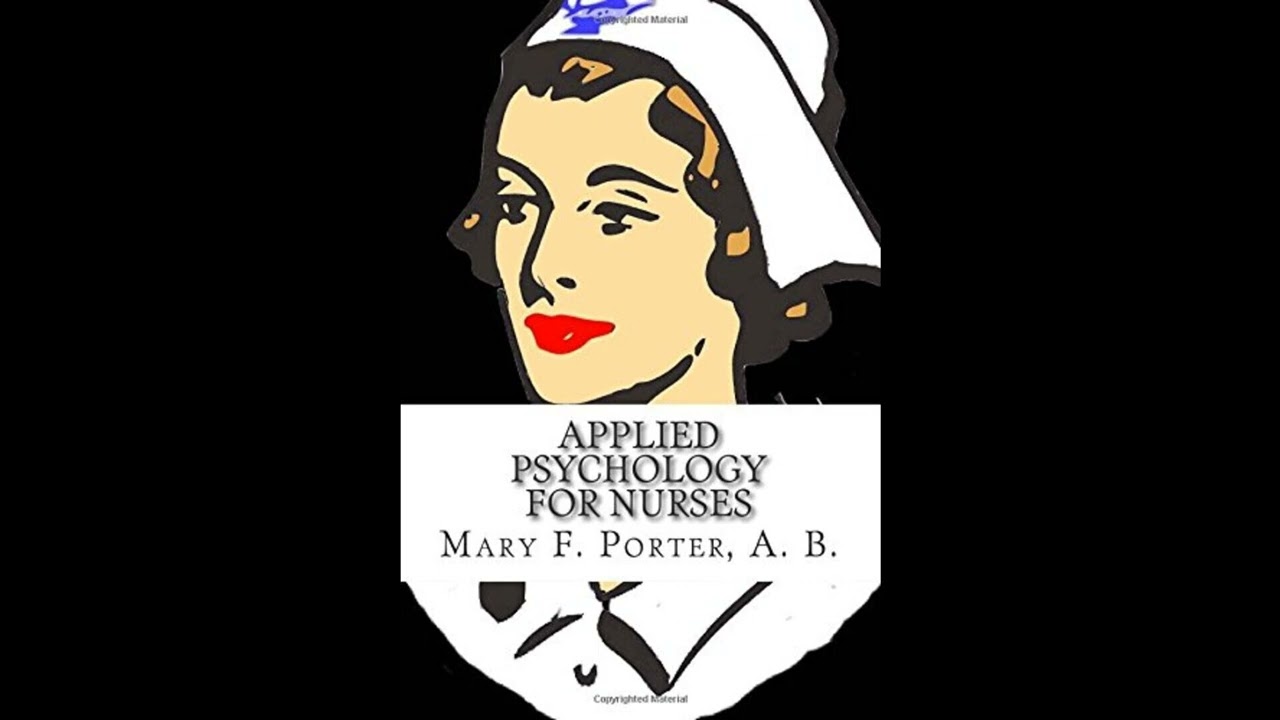
Applied Psychology for Nurses
Step back in time to an era when the foundations of modern healthcare were being laid, and the burgeoning science of psychology began to cast its light into the practical world of patient care. "Applied Psychology for Nurses" by Mary F. Porter, A. B., is not a self-help guide from yesterday, but a rare and illuminating window into the intellectual landscape that shaped the nursing profession at its critical juncture. This audiobook offers a unique opportunity to understand the very origins of psychological thinking in healthcare, revealing how early practitioners grappled with the complex interplay of mind and body long before these concepts became commonplace. For anyone interested in the history of medicine, the evolution of psychological thought, or the demanding role of nursing, this foundational text provides insight into the values and scientific approaches that once guided caregivers, offering a fresh perspective on challenges that remain surprisingly relevant today. Within the pages of this insightful volume, listeners are transported to the hospital wards and sickrooms of a bygone era, where nurses, often fresh from their training, faced a myriad of human conditions. The "story" here is less a narrative of individual characters and more a systematic instruction manual, guiding the nurse through the principles of understanding human behavior and emotion. Porter's text introduces the main "characters" not as individuals, but as archetypes: the suffering patient, whose physical ailments are often compounded by fear, anxiety, or loneliness; and the nurse, striving to provide not just medical care, but also psychological comfort and support. The central "conflict" addressed throughout the text is the inherent difficulty of attending to the whole person—how to apply a nascent understanding of the human mind to alleviate distress, foster recovery, and manage the often overwhelming emotional demands of the caregiving profession. The book proceeds through a methodical "arc," beginning with fundamental observations of human nature and progressing towards more nuanced applications of psychological principles in clinical settings. From recognizing the signs of mental fatigue in a patient to understanding the psychological impact of pain or prolonged illness, Porter outlines methods for careful observation and empathetic engagement. The instruction extends to practical advice on how to foster a positive mental environment for recovery, manage difficult patients, and even maintain the nurse's own psychological well-being in the face of demanding circumstances. Listeners will find the text a fascinating blueprint for how an emerging scientific discipline was integrated into the daily practice of hands-on care, offering a rare glimpse into the intellectual framework that underpinned the compassionate service of early nurses. Mary F. Porter, credited with the academic distinction of A. B.—likely an Artium Baccalaureus, or Bachelor of Arts—represents a fascinating, albeit somewhat enigmatic, figure from an earlier academic landscape. Specific biographical details for authors of specialized instructional texts from her era often prove elusive, as such works were valued more for their content than for the personal story of their creator. Yet, the very existence of "Applied Psychology for Nurses" speaks volumes about the author's likely background and intellectual pursuits. Porter was almost certainly an educated woman, a rarity in many fields during earlier periods, and her command of both emerging psychological theories and practical nursing applications suggests a background as either a nurse educator, a psychologist with a keen interest in practical application, or perhaps both. Her work stands as a testament to the pioneering spirit of individuals who sought to elevate nursing from a largely vocational pursuit to a profession grounded in scientific understanding and informed compassion. Though not a canonical figure in traditional literary studies, Mary F. Porter holds a significant place in the history of applied sciences and the development of professional nursing. Her ability to synthesize theoretical concepts with practical demands positions her among the early educators who shaped modern healthcare. She belonged to a generation that championed the integration of scientific inquiry into everyday practice, moving beyond intuitive or anecdotal approaches to patient care. Her contribution lies not in crafting fictional narratives or poetic verse, but in structuring knowledge in a way that empowered caregivers and advanced the understanding of human needs within the medical context. This text, therefore, is a historical landmark, marking a specific moment in the evolution of both nursing and psychology. Among the significant themes that resonate through "Applied Psychology for Nurses" is the profound emphasis on empathy and careful observation. Porter continually instructs the nurse to look beyond the purely physical symptoms, advocating for an understanding of the patient's emotional state. For example, she might discuss how a patient's apparent recalcitrance could stem from fear or loneliness rather than outright defiance, suggesting that a nurse's calm demeanor and attentive listening can be as therapeutic as any medication. Another key theme is the professionalization of nursing, as the book consistently advocates for a systematic, evidence-based approach to care. Rather than relying solely on intuition, nurses are guided to apply reasoned psychological principles, lending a scientific rigor to their duties. This might be seen in sections detailing how to methodically assess a patient's mental state through structured interaction, rather than simply reacting to outbursts. The text also highlights an early understanding of the mind-body connection, positing that a patient's psychological state directly influences their physical recovery. Porter might illustrate this by explaining how persistent anxiety can hinder healing or how a positive mental attitude can bolster a patient's resilience. Nurses are thus tasked with fostering environments conducive to mental well-being alongside physical comfort, recognizing the holistic nature of health. Finally, the book underscores the ethical responsibility inherent in the nursing profession, especially concerning the psychological welfare of patients. It frames the nurse's role as not just administering treatment but also safeguarding the patient's dignity and emotional stability, even in vulnerable states. This responsibility might be demonstrated through advice on how to handle confidential patient information or how to address the psychological needs of dying patients with sensitivity and respect. "Applied Psychology for Nurses" emerged during a pivotal era—the late nineteenth or early twentieth century—a period marked by profound shifts in scientific understanding and societal organization. Psychology was rapidly distinguishing itself from philosophy, with figures like Wilhelm Wundt establishing the first psychology laboratories and William James publishing foundational texts on the scientific study of the mind. Concurrently, nursing was undergoing its own revolution, moving from an untrained, often undervalued domestic role to a respected profession, largely influenced by the pioneering work of Florence Nightingale and the establishment of formal training schools. This was a time when the broader scientific community was pushing for empirical methods and systematic knowledge in all fields, including human care. The book thus arose from the confluence of these movements: the burgeoning science of psychology seeking practical applications, and the professionalizing field of nursing eager for scientific grounding to enhance patient care and solidify its professional standing. It perfectly encapsulates the era's intellectual drive to understand and improve the human condition through systematic study and application. Listening to "Applied Psychology for Nurses" as an audiobook brings this historical document to life in a way that reading the physical text cannot quite achieve. The spoken word imbues the instructional prose with a sense of direct address, as if one is attending a lecture or a training session from over a century ago. The narration, extending across several hours, allows the listener to absorb Porter's meticulous explanations and advice at a thoughtful pace, making it ideal for focused listening during quiet moments or for engaging with historical thought during a commute. Pay particular attention to the language used—the specific terminology, the cadence of the instruction, and the gentle but firm tone that likely characterized professional guidance during that period. The voice captures the atmosphere of earnest scientific endeavor, offering a compelling connection to the foundational ideas that shaped the caring professions and providing a unique auditory experience of intellectual history in motion.
Enjoyed Applied Psychology for Nurses? A few ways to support us
Audible & Amazon links are affiliate; we may earn a small commission at no extra cost.
About this production
Human narration by a volunteer reader from LibriVox.org, the public-domain audiobook project. LibriVox volunteers record literary works whose copyright has expired in the United States, releasing the resulting recordings into the public domain.
Applied Psychology for Nurses by Mary F. Porter, A. B. The underlying text is in the U.S. public domain. We do not republish any modern copyrighted edition, translation, or commentary.
The 4K cinematic visuals accompanying this audiobook are generated by an AI image model from prompts derived from the source text. No copyrighted photos, paintings, or stock footage are used. AI generation is disclosed on every video on our YouTube channel as required by YouTube's altered/synthetic content policy.
English subtitles are transcribed from the LibriVox recording with OpenAI Whisper. Translations into the 11 other supported languages are produced by Meta's NLLB-200 neural translation model. No human translator's copyrighted translation is used.
Questions about sourcing or rights? See our DMCA & Sourcing policy or contact us.
Enjoyed this audiobook?
If you'd like to own a copy of Applied Psychology for Nurses or hear a professionally produced edition, the links below help support free audiobook production at no extra cost to you.
As an Amazon Associate we earn from qualifying purchases. Audible / print links are affiliate.