The Landlord at Lion's Head - Complete
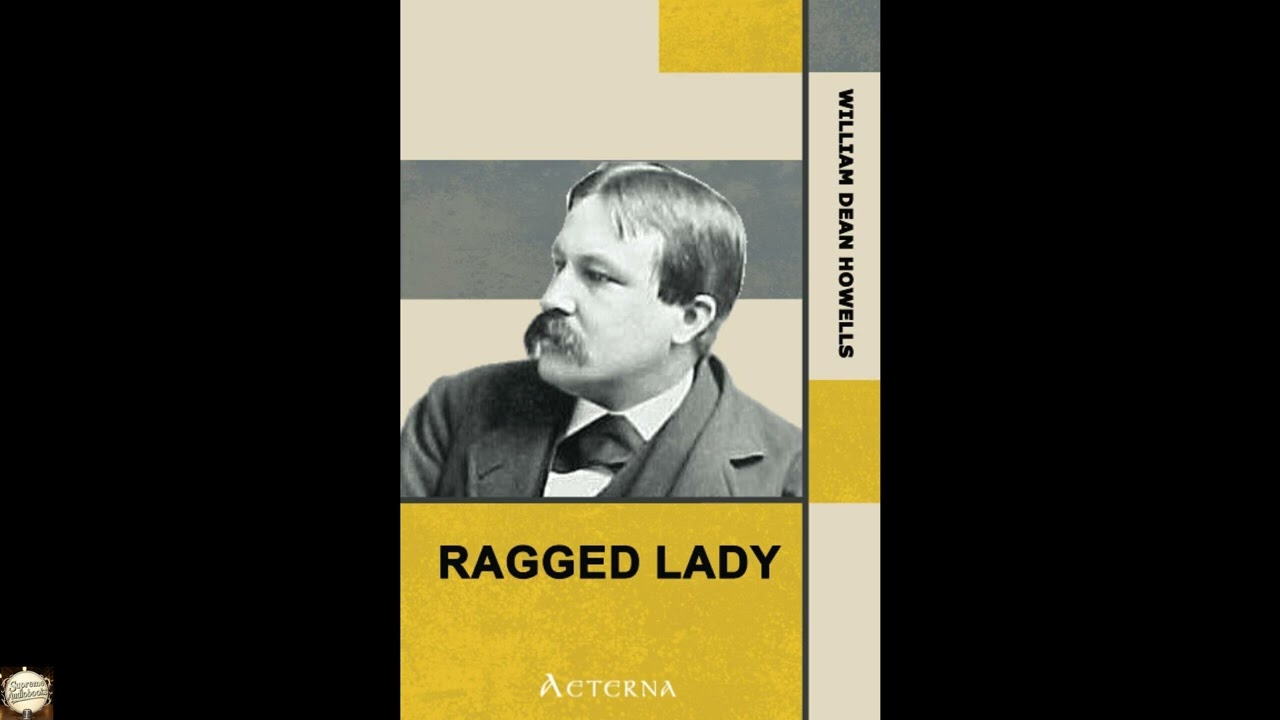
William Dean Howells's The Landlord at Lion's Head steps onto the literary stage as a keenly observed psychological drama, inviting listeners to confront the complexities of human nature and the shifting moral landscape of late 19th-century America. It is a story that probes the enigmatic charm and unsettling amorality of its central figure, Jeff Durgin, a character whose raw, untamed essence poses a direct challenge to the genteel society he encounters. Why does this tale, published over a century ago, resonate now? Because the questions it asks about ambition, self-delusion, and the impact of one's personality on others remain acutely relevant. Howells, with his signature realistic lens, compels us to look beyond simplistic judgments, presenting a figure who is both irresistibly charismatic and deeply problematic, forcing us to consider how far society can or should accommodate a truly unconventional spirit. The narrative unfolds against the picturesque, yet increasingly commercialized, backdrop of Lion's Head, a mountain resort in rural New England. Here, a Boston artist named Westover, visiting for a period of artistic contemplation, finds his peace disturbed—and his curiosity piqued—by the arrival of Jeff Durgin. Young Durgin is first encountered as a wild, untutored youth, part of the struggling farm family that hosts Westover. He possesses an almost elemental force, a natural intelligence, and a startling lack of social graces, yet an undeniable magnetism. As the years pass, Westover observes Durgin's transformation from a local "natural wonder" into a Harvard student and later, a figure moving within the more refined circles of Boston. The core of the story revolves around Durgin's relationships with the women in his life: the quiet, intellectually sharp Cynthia Whitwell, who initially teaches him; the more conventional and socially ambitious Annie Faulkner; and the various other figures drawn into his orbit. What emerges is a chronicle of Durgin's impact on everyone around him. He is a person who defies easy categorization, alternately charming and infuriating, brilliant and perplexing. He seems to operate on a different moral plane, often disregarding social conventions and emotional boundaries in pursuit of his own desires and ambitions. Westover, acting as a kind of detached, yet deeply engaged, narrator, tries to decipher Durgin's true character, grappling with the question of whether Durgin's actions are merely the product of a unique personality, or if they betray a more fundamental flaw in his moral constitution. The story follows Durgin's trajectory as he attempts to navigate the demands of society, higher education, and romantic entanglement, always leaving a trail of fascination and confusion in his wake, leading to situations where his unconventional choices force others to re-evaluate their own principles. William Dean Howells (1837-1920) stood as one of the most influential American literary figures of his era, often hailed as the "Dean of American Letters." Born in Martins Ferry, Ohio, Howells's early life was marked by his father's career as a newspaper editor, which instilled in him a profound appreciation for language and the nuances of everyday life. Though largely self-educated, his keen intellect and dedication to literature quickly became apparent. A pivotal moment in his career came with his appointment as editor of the prestigious Atlantic Monthly in 1871, a position he held for a decade, through which he championed a new generation of American writers and defined the emerging literary movement of realism. Howells’s literary output was prodigious, encompassing novels, essays, and criticism. He became a leading advocate for realism, arguing passionately against the romantic excesses of earlier literature and insisting that fiction should accurately depict the lives and moral dilemmas of ordinary Americans. His most acclaimed novels, such as The Rise of Silas Lapham (1885) and A Modern Instance (1882), meticulously detail the social customs and ethical challenges faced by the rising middle class. He moved beyond the sentimental and the melodramatic, focusing instead on psychological accuracy and the subtle conflicts inherent in human interaction, cementing his place as a crucial bridge between the genteel literary tradition of the 19th century and the more modern, socially conscious literature of the 20th. The Landlord at Lion's Head powerfully enacts several core themes, most notably the perennial conflict between nature and civilization. Jeff Durgin, with his almost primitive energy and disregard for established decorum, functions as a living embodiment of untamed nature pushing against the artificialities of social convention. When he refuses to conform to expectations even as he aspires to social advancement, Howells highlights the deep-seated tension between an individual's innate character and the pressures of societal assimilation. Another potent theme is the potentially destructive nature of ego and self-absorption. Durgin's actions, whether in his academic pursuits or his romantic entanglements, often prioritize his own desires, leaving others bewildered or hurt. For example, his casual disregard for the feelings of a young woman he once loved, even as he pursues another, clearly illustrates a self-centeredness that ripples outward, affecting everyone around him, making us question where self-actualization ends and moral failing begins. The book also delves into the complex role of observation and judgment. Westover, as an artist and a witness, struggles to understand Durgin, to paint a definitive portrait of his character. He is constantly revising his opinions, seeing Durgin through different lenses—as a force of nature, a social climber, a genius, a cad. This constant reassessment speaks to the difficulty of truly knowing another person, especially one as elusive as Durgin, and suggests that our perceptions are always colored by our own biases and values, reflecting the very real challenge of moral discernment. Published in 1897, The Landlord at Lion's Head emerged from a period of profound transformation in America, often referred to as the Gilded Age. The nation was grappling with the aftermath of the Civil War, rapid industrialization, burgeoning cities, and the rise of a new wealthy class alongside significant social inequality. These cultural shifts spurred a re-evaluation of traditional values, class structures, and individual identity. Howells, a keen observer of these changes, used his fiction to hold a mirror up to American society, dissecting the manners and morals of an increasingly complex world. His embrace of realism was a direct response to this environment, seeking to portray life "as it is" rather than as idealized romantic visions might depict it. The book's focus on a character like Durgin, who seems to straddle the lines between old rural values and new urban ambitions, perfectly encapsulates the anxieties and opportunities of the era, questioning what kind of person would thrive, or simply survive, in this new American landscape. Listening to The Landlord at Lion's Head as an audiobook offers a singular opportunity to immerse oneself in Howells's meticulously crafted prose. The subtle shifts in tone, the understated humor, and the carefully chosen dialogue truly come alive through a skilled narrator's voice. The run length provides ample room for the story to unfold at a natural pace, allowing listeners to fully appreciate the slow burn of Durgin's character development and Westover's contemplative observations. A good narrator will highlight the nuances of Howells's psychological portraits, giving distinct inflections to the varied characters—from the rustic New Englanders to the refined Bostonians—and conveying the specific atmosphere of both the rugged mountain landscape and the polished drawing rooms. It allows the listener to absorb the intricate social dynamics and the philosophical undercurrents that make Howells a pivotal figure in American literature, experiencing the story as a thoughtful friend might recount a perplexing yet utterly compelling tale.
Enjoyed The Landlord at Lion's Head - Complete? A few ways to support us
Audible & Amazon links are affiliate; we may earn a small commission at no extra cost.
About this production
Human narration by a volunteer reader from LibriVox.org, the public-domain audiobook project. LibriVox volunteers record literary works whose copyright has expired in the United States, releasing the resulting recordings into the public domain.
The Landlord at Lion's Head - Complete by William Dean Howells. The underlying text is in the U.S. public domain. We do not republish any modern copyrighted edition, translation, or commentary.
The 4K cinematic visuals accompanying this audiobook are generated by an AI image model from prompts derived from the source text. No copyrighted photos, paintings, or stock footage are used. AI generation is disclosed on every video on our YouTube channel as required by YouTube's altered/synthetic content policy.
English subtitles are transcribed from the LibriVox recording with OpenAI Whisper. Translations into the 11 other supported languages are produced by Meta's NLLB-200 neural translation model. No human translator's copyrighted translation is used.
Questions about sourcing or rights? See our DMCA & Sourcing policy or contact us.
Enjoyed this audiobook?
If you'd like to own a copy of The Landlord at Lion's Head - Complete or hear a professionally produced edition, the links below help support free audiobook production at no extra cost to you.
As an Amazon Associate we earn from qualifying purchases. Audible / print links are affiliate.