Doctor Therne
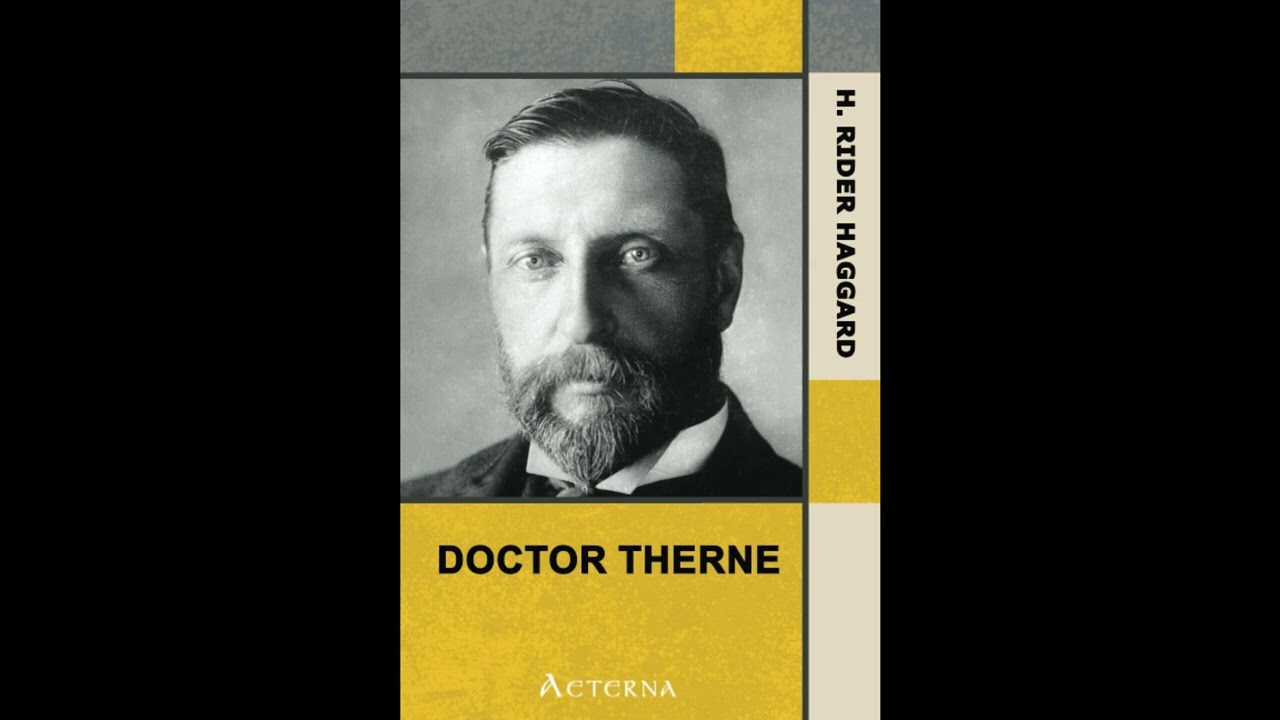
H. Rider Haggard, known throughout the English-speaking world for his sweeping tales of African adventure, presents a starkly different kind of drama in Doctor Therne. This novel steps away from lost cities and heroic quests, instead plunging into the deeply personal and ethical struggles of a medical man in late Victorian England. It is a story that dissects ambition, morality, and the complex duties of a physician to both his patients and his profession, offering a chilling examination of how good intentions can pave a path to profound moral compromise. Even today, with medical ethics at the forefront of public discourse and scientific advancement presenting new dilemmas, Therne’s difficult choices resonate, forcing us to consider the fine line between pragmatism and personal integrity. The narrative introduces us to Dr. Therne, a capable and initially well-respected physician practicing in a quiet English village. He is a man of science, earnest in his dedication to his work, but also acutely aware of the social and professional advancements that a successful career might bring. When a virulent smallpox epidemic grips the region, Therne finds himself at the forefront of a desperate public health crisis. The community, steeped in traditional beliefs and often suspicious of modern medicine, resists his efforts, making his task even more arduous. As the disease spreads and panic grows, Therne is confronted with a series of increasingly agonizing decisions. He believes he sees a way to halt the contagion, a drastic measure that promises salvation but carries with it significant ethical baggage and potentially devastating personal consequences. The story meticulously details his inner turmoil as he grapples with his conscience, his professional duty, and the insidious whispers of ambition. The central conflict quickly crystallizes around Therne's scientific conviction versus the moral and social fabric of the community he serves. He holds a secret that could shatter lives, disrupt society, and redefine his own legacy—a secret born of desperate circumstances and a desire to control an uncontrollable plague. The novel traces his attempts to navigate this perilous situation, to justify his actions, and to maintain the fragile trust placed in him by his patients, even as his own soul becomes increasingly burdened. It is a slow, methodical unfolding of a man caught in a web of his own making, where every choice, no matter how small, adds to the inexorable weight of his dilemma, drawing him closer to a reckoning he cannot escape. Sir Henry Rider Haggard, born in Norfolk, England, in 1856, carved out an extraordinary life that deeply informed his literary output. After an early education, he moved to South Africa at the age of 19, serving first as secretary to the Governor of Natal and later as a registrar of the High Court of the Transvaal. His years in the colony were formative, exposing him to the continent's diverse cultures, its dramatic landscapes, and the burgeoning conflicts of imperial expansion. These experiences provided the raw material for his most celebrated works, transforming him from a civil servant into one of the late Victorian era's most popular authors. Upon returning to England, he initially studied law but soon turned to fiction, quickly finding immense success. Haggard is primarily remembered for pioneering the genre of adventure fiction, often set in exotic, uncharted territories. His first major success, King Solomon’s Mines, published in 1885, introduced the iconic big-game hunter Allan Quatermain and captivated readers with its thrilling narrative of treasure hunts and tribal kingdoms. This was followed by other bestsellers such as She: A History of Adventure, which brought forth the immortal queen Ayesha, and Allan Quatermain, continuing the adventures of his beloved character. Haggard's tales, while undeniably entertainment, also reflect the prevailing attitudes of the British Empire, blending romance, exploration, and often complex portrayals of indigenous cultures. He remains a significant figure in the literary canon, influencing generations of authors from Robert E. Howard to J.R.R. Tolkien, and his works continue to be read for their imaginative power and storytelling prowess. Doctor Therne stands as an interesting outlier in Haggard's body of work, yet it enacts themes that are present, albeit in different guises, throughout his oeuvre. A primary theme is the conflict between individual ambition and ethical responsibility. Therne, driven by a desire to prove his scientific acumen and perhaps secure a more prestigious future, makes choices that incrementally erode his moral standing. For instance, early in the epidemic, his desire to be seen as the effective savior of the town begins to outweigh a more cautious, patient approach, leading him down a path of increasing compromise. Another powerful theme is the role of science and medicine in society, particularly when faced with public fear and ignorance. The book highlights the tension between expert knowledge and community trust, showing how easily fear can breed suspicion, making the implementation of even beneficial public health measures fraught with peril. The book also addresses the heavy burden of secrets and the corrosive power of guilt. Therne's central ethical transgression, which the story carefully builds towards without revealing its exact nature, isolates him and forces him into a constant state of internal conflict. His attempts to maintain a facade of control and competence while inwardly wrestling with his conscience provide much of the novel’s psychological tension. We see him making small, seemingly innocuous decisions that, when viewed retrospectively, reveal a pattern of increasing moral blindness, culminating in a moment that defines his character and fate. This intense focus on psychological degradation sets Doctor Therne apart from Haggard’s more outward-facing adventure stories, providing a deeper look into the human condition when under extreme pressure. When Doctor Therne was written and published in the late 1890s, the world was undergoing tremendous shifts. The Victorian era was drawing to a close, marked by rapid industrialization, scientific discoveries that challenged old certainties, and the expansion of the British Empire to its zenith. In the scientific realm, particularly medicine, breakthroughs by figures like Louis Pasteur and Robert Koch had revolutionized understanding of disease, firmly establishing germ theory and leading to new approaches in public health and sanitation. However, these advancements were often met with a mix of awe, skepticism, and outright fear from a populace not always ready to abandon folk remedies or deeply ingrained prejudices. Epidemics, while increasingly understood, still held a terrifying power, and the ethical implications of new medical interventions were hot topics of debate. Haggard, known for his fantastical tales, here turned his gaze to these very contemporary and pressing concerns, reflecting the societal anxieties surrounding science, progress, and the moral compass of those entrusted with public welfare. Listening to Doctor Therne as an audiobook transforms this taut psychological drama into an even more immediate and immersive experience. The narrator's voice becomes crucial in conveying the escalating tension within Dr. Therne, giving dimension to his internal monologues and the gradual decay of his ethical resolve. Over several hours of listening, the listener can truly appreciate the nuanced pacing, how Haggard slowly builds the pressure on his protagonist, moving from initial moral quandaries to an inescapable confrontation with conscience. The subtle inflections in dialogue reveal the unspoken fears and societal pressures bearing down on the characters, particularly Therne himself. The spoken word allows the atmosphere of a community grappling with disease and distrust to become palpable, drawing you into the doctor's isolated world where every decision carries the weight of life and death, making Therne's tragic arc all the more compelling to witness.
Enjoyed Doctor Therne? A few ways to support us
Audible & Amazon links are affiliate; we may earn a small commission at no extra cost.
About this production
Human narration by a volunteer reader from LibriVox.org, the public-domain audiobook project. LibriVox volunteers record literary works whose copyright has expired in the United States, releasing the resulting recordings into the public domain.
Doctor Therne by H. Rider Haggard. The underlying text is in the U.S. public domain. We do not republish any modern copyrighted edition, translation, or commentary.
The 4K cinematic visuals accompanying this audiobook are generated by an AI image model from prompts derived from the source text. No copyrighted photos, paintings, or stock footage are used. AI generation is disclosed on every video on our YouTube channel as required by YouTube's altered/synthetic content policy.
English subtitles are transcribed from the LibriVox recording with OpenAI Whisper. Translations into the 11 other supported languages are produced by Meta's NLLB-200 neural translation model. No human translator's copyrighted translation is used.
Questions about sourcing or rights? See our DMCA & Sourcing policy or contact us.
Enjoyed this audiobook?
If you'd like to own a copy of Doctor Therne or hear a professionally produced edition, the links below help support free audiobook production at no extra cost to you.
As an Amazon Associate we earn from qualifying purchases. Audible / print links are affiliate.