Plunkitt of Tammany Hall
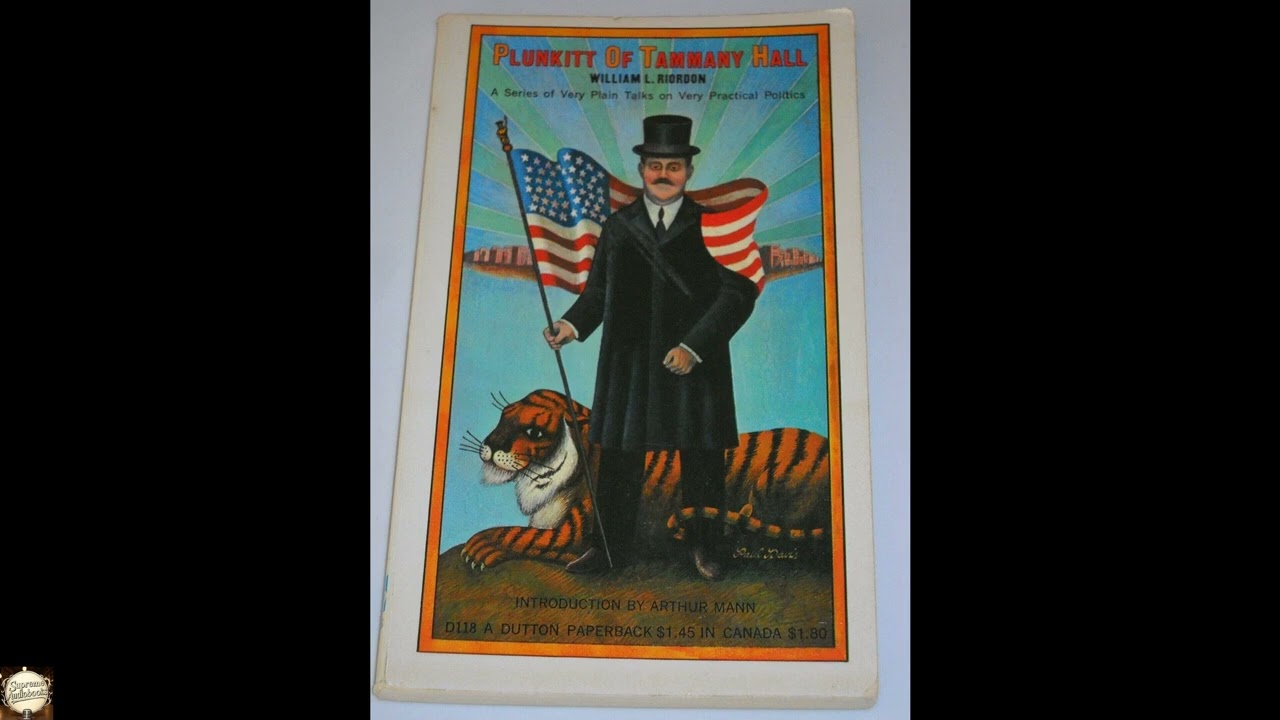
Step into the smoke-filled backrooms and bustling street corners of turn-of-the-century New York City with Plunkitt of Tammany Hall, a unique collection of "plain talks" that offers an unparalleled, unvarnished look at the inner workings of one of America's most infamous political machines. Recorded and compiled by journalist William L. Riordan, this isn't merely a historical curiosity; it's a vibrant, often shockingly honest, masterclass in pragmatic power and political maneuvering that remains startlingly relevant. Anyone curious about the true nature of grassroots politics, the enduring appeal of patronage, or the fundamental differences between rhetoric and reality in public service will find themselves engrossed by Plunkitt’s candid wisdom, a voice from the past that speaks directly to the political questions of today. The setting for these enlightening conversations is the sidewalks and courthouses of New York’s lower wards, specifically the shoeshine stand at the old County Courthouse, where George Washington Plunkitt held court. From this unlikely "stump," Plunkitt, a district leader for Tammany Hall who also served as an Assemblyman and State Senator, would dispense his theories on politics, life, and getting ahead. The narrative, if one can call it that, unfolds not as a conventional story with a plot and characters, but as a series of direct, often humorous, and always shrewd monologues. Plunkitt lays bare his philosophy, distinguishing between "honest graft" – profiting from insider knowledge of public works – and "dishonest graft," which he defined as outright theft. Listeners encounter Plunkitt as a formidable figure, a man whose entire life was dedicated to understanding and mastering the mechanics of local power. He presents himself as a devoted public servant, albeit one with a very particular interpretation of that role. His goal was to serve his constituents and, in return, ensure their loyalty and votes, thereby solidifying his own position and the power of Tammany Hall. There is no central conflict in the traditional sense; instead, the work presents a continuous "conflict" between Plunkitt's raw, street-smart pragmatism and the idealistic, often naive, views of the reformers he so frequently criticizes. The "arc" of the story is the listener's gradual immersion into Plunkitt's world, understanding his unique moral compass, and witnessing the sheer ingenuity with which he navigated the cutthroat arena of urban politics, all without a hint of shame or apology. William L. Riordan, the individual credited as the author, played an essential role as the discerning transcriber and compiler of George Washington Plunkitt’s regular pronouncements. Riordan was a journalist for the New York Evening Post around the turn of the twentieth century, and it was his keen ear and journalistic integrity that preserved Plunkitt’s distinctive voice for posterity. He wasn't inventing dialogue or crafting a fictional persona; rather, he was meticulously capturing the exact words, the precise cadence, and the authentic dialect of a man who genuinely believed in the system he practiced. Riordan’s significance lies almost entirely in this singular act of literary preservation. Without his commitment to documenting Plunkitt’s "plain talks," a crucial, firsthand account of American urban politics would likely have been lost. He acted as the conduit, the impartial recorder who allowed Plunkitt to speak for himself, unfiltered, to a wider audience. This dedication to capturing an authentic voice places Riordan’s contribution within the broader scope of realistic storytelling and early journalistic efforts to expose the true machinations behind public life, even when the subject himself was unapologetically defending those very mechanisms. At its core, Plunkitt of Tammany Hall enacts several enduring themes. One prominent theme is practical politics, often referred to as realpolitik. Plunkitt’s discussions differentiate "honest graft" from "dishonest graft" – a key concept. He argues that it is only natural for a politician, privy to information about upcoming public improvements like a new park, to purchase land in its vicinity beforehand. This, in his view, is not corruption but simply using one's opportunities, a stark contrast to outright stealing from the public purse. His candidness forces a re-evaluation of ethical boundaries in public service. Another significant theme is the profound importance of patronage and loyalty. Plunkitt repeatedly emphasizes that a politician's job is to "look after his district." He recounts how he always had time for constituents, whether it was finding a job for an out-of-work laborer, helping someone navigate legal troubles, or even personally delivering coal to a struggling family in winter. These acts of direct assistance, Plunkitt explains, are not selfless charity; they are investments that generate reciprocal loyalty and, critically, votes on election day. His oft-quoted maxim, "I seen my opportunities and I took 'em," applies just as much to cultivating support as it does to making a quick dollar. This work emerged during a fascinating period in American history, often referred to as the Gilded Age transitioning into the Progressive Era. New York City, like many American metropolises, was experiencing explosive growth due to massive immigration waves, rapid industrialization, and significant social upheaval. Political machines like Tammany Hall thrived in this environment, offering vital, albeit often self-serving, social services to a burgeoning immigrant population in exchange for political support. Simultaneously, a rising tide of reformers, often middle-class and Protestant, began to push back against the perceived corruption and inefficiency of these machines, advocating for civil service reform, good government, and greater transparency. It was against this backdrop of immense societal change and intensifying political struggle that Riordan took down Plunkitt’s words. The book offers a unique counter-narrative to the prevailing reformist literature of the time. While journalists like Lincoln Steffens were exposing the shame of the cities, Plunkitt was explaining the necessity and logic of the system from an insider’s perspective. It provided contemporary readers, and continues to provide modern listeners, an intimate look at the prevailing political culture of the late nineteenth and early twentieth centuries, directly from the mouth of one of its most unapologetic practitioners. Listening to Plunkitt of Tammany Hall as an audiobook transforms a historical document into an immediate and engaging experience. The very nature of the text – a series of "plain talks" or informal lectures – lends itself perfectly to an audio format. A skilled narrator can bring Plunkitt’s distinctive personality to life, capturing the gruff charm, the shrewd intelligence, and the unmistakable street wisdom of a man who lived and breathed urban politics. You can almost hear the casual swagger in his voice, the unhurried pacing of someone confident in his convictions, and the colorful, direct language that was his hallmark. This is not a book for silent, academic study alone; it's a conversation you're invited to eavesdrop on, a performance of an authentic American voice, making the historical context and Plunkitt’s unique worldview feel surprisingly present and alive.
Enjoyed Plunkitt of Tammany Hall? A few ways to support us
Audible & Amazon links are affiliate; we may earn a small commission at no extra cost.
About this production
Human narration by a volunteer reader from LibriVox.org, the public-domain audiobook project. LibriVox volunteers record literary works whose copyright has expired in the United States, releasing the resulting recordings into the public domain.
Plunkitt of Tammany Hall by William L. Riordan. The underlying text is in the U.S. public domain. We do not republish any modern copyrighted edition, translation, or commentary.
The 4K cinematic visuals accompanying this audiobook are generated by an AI image model from prompts derived from the source text. No copyrighted photos, paintings, or stock footage are used. AI generation is disclosed on every video on our YouTube channel as required by YouTube's altered/synthetic content policy.
English subtitles are transcribed from the LibriVox recording with OpenAI Whisper. Translations into the 11 other supported languages are produced by Meta's NLLB-200 neural translation model. No human translator's copyrighted translation is used.
Questions about sourcing or rights? See our DMCA & Sourcing policy or contact us.
Enjoyed this audiobook?
If you'd like to own a copy of Plunkitt of Tammany Hall or hear a professionally produced edition, the links below help support free audiobook production at no extra cost to you.
As an Amazon Associate we earn from qualifying purchases. Audible / print links are affiliate.
More Audiobooks
American Eloquence, Volume 2; Studies In American Political History (1896)
Rodney The Partisan (1890)
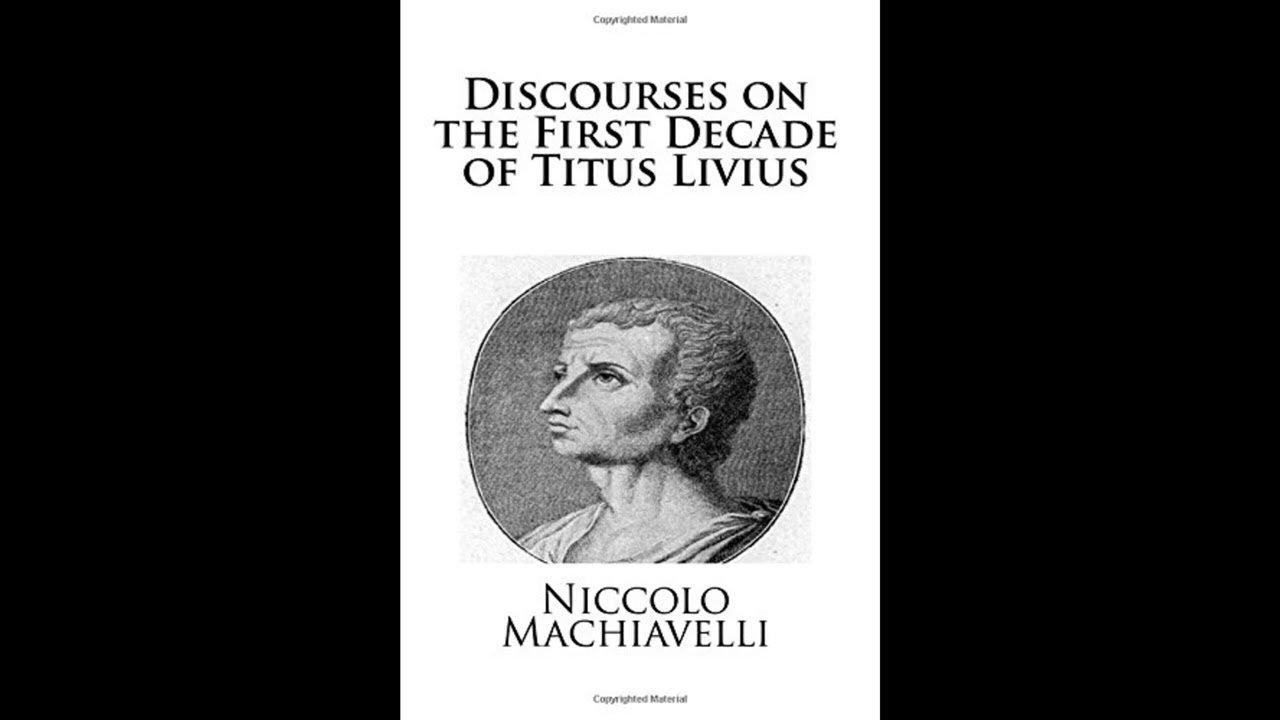
Discourses on the First Decade of Titus Livius
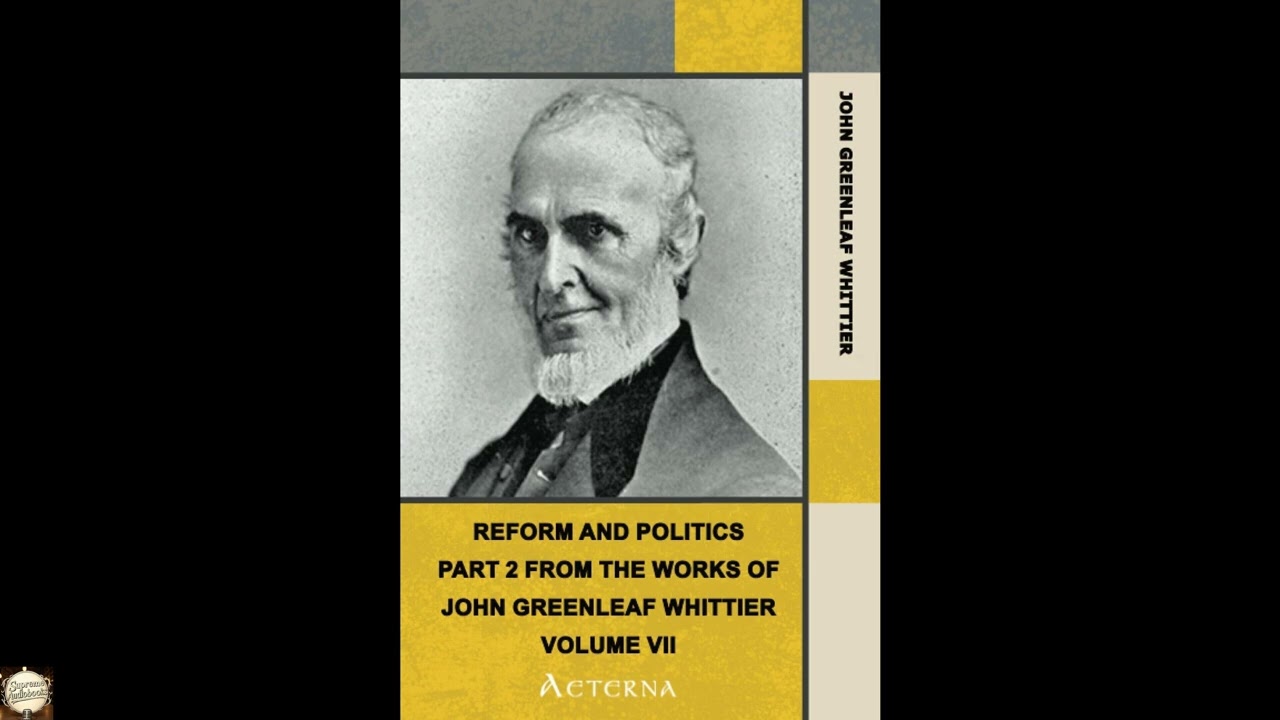
Reform and Politics. Part 2 from The Works of John Greenleaf Whittier, Volume VII